
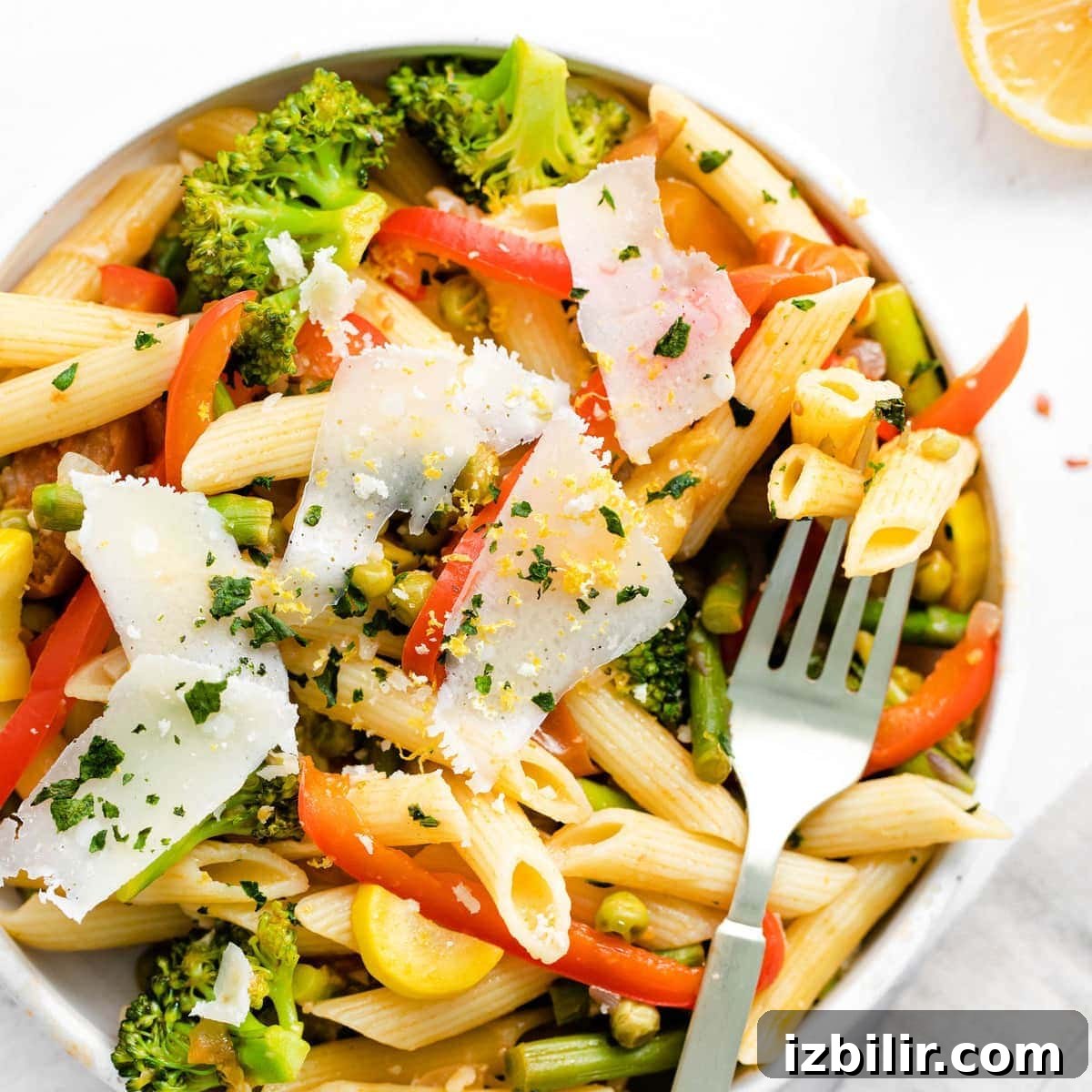
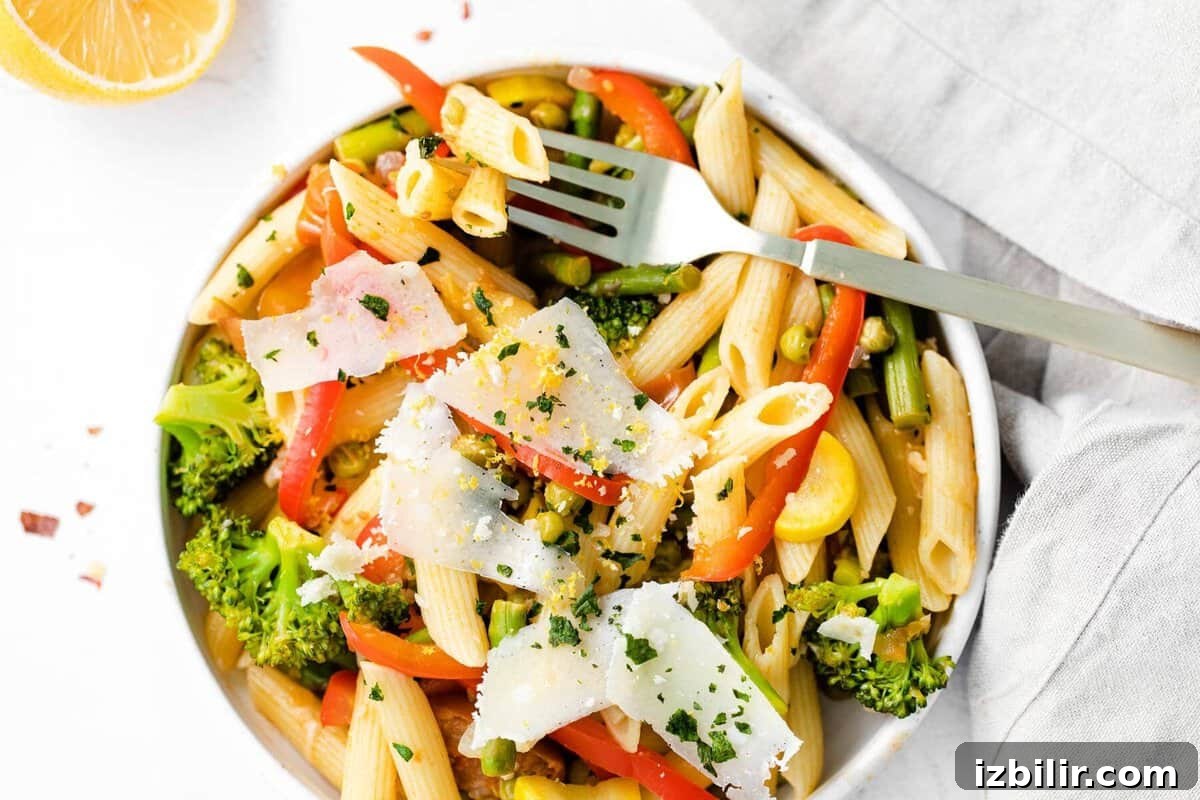
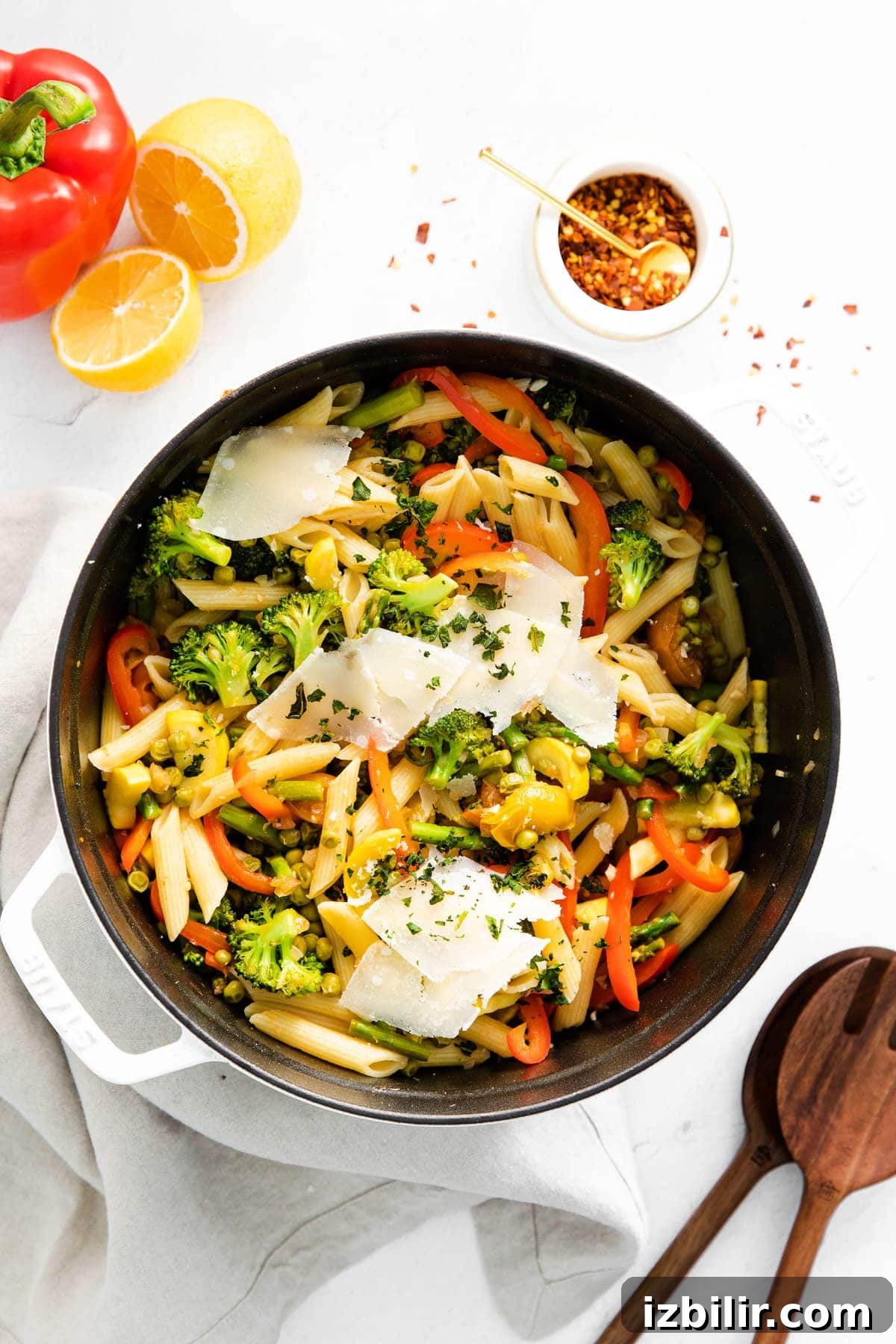
Calling all veggie lovers! This 30-Minute Pasta Primavera is one of the easiest and most satisfying weeknight dinners. It’s packed with colorful spring vegetables — tender asparagus, crisp bell pepper, sweet yellow squash, bright broccoli and juicy cherry tomatoes — all tossed with penne in a light, savory broth-based sauce that clings to every bite.
Featured Comment
“A super flavorful yet delightfully light pasta dish. It was wonderful.” — Richard
The best part: this whole dish comes together in about 30 minutes using simple pantry staples and whatever fresh vegetables you have on hand. It’s naturally vegetarian, highly customizable, and still feels like a cozy, comforting bowl of pasta. Below you’ll find a clear step-by-step method, easy swaps to adapt the recipe, and the best ways to store and reheat leftovers.
What is Pasta Primavera?
Pasta primavera is a classic Italian-inspired pasta that celebrates fresh vegetables. “Primavera” means spring in Italian, so the dish traditionally showcases seasonal spring produce. This version uses a light, broth-based sauce rather than cream, keeping the flavor bright and the dish lighter while still satisfying.
Pasta Primavera — What You Need
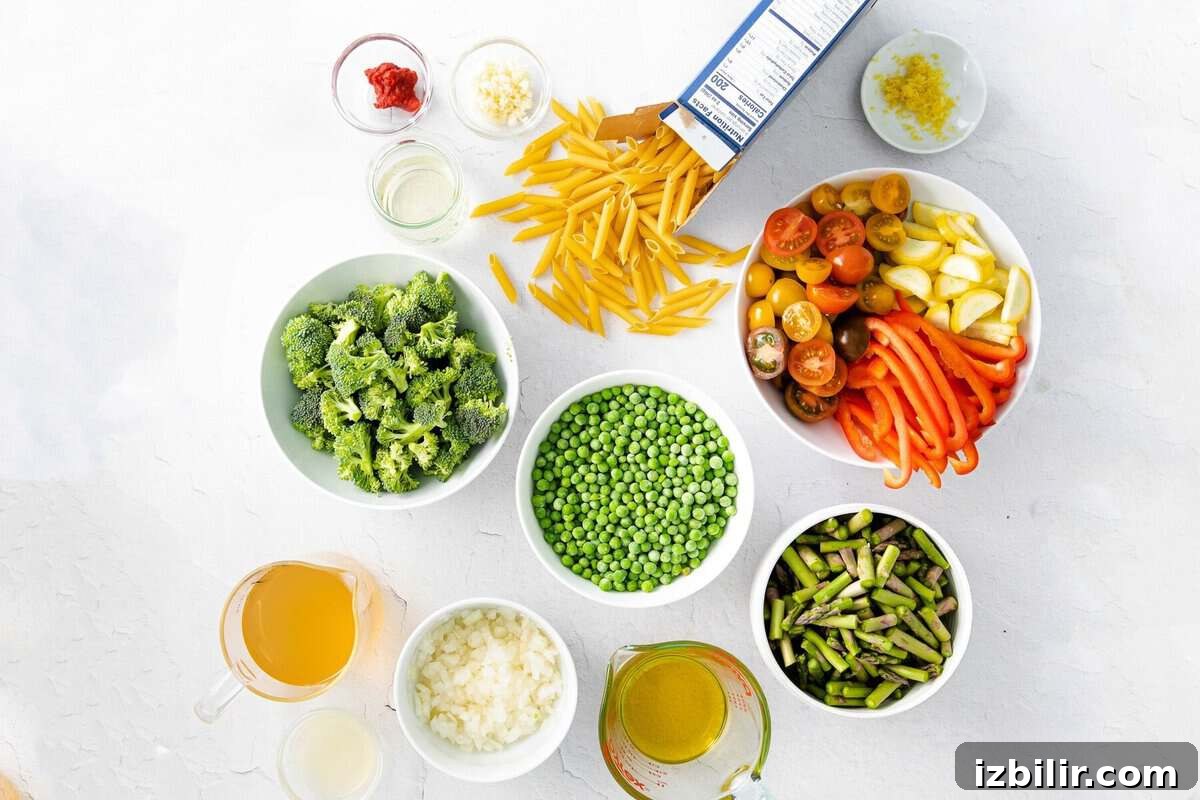
Ingredients listed include amounts in the full recipe card below.
Veggies
- Asparagus (cut into bite-sized pieces)
- Broccoli (cut into florets)
- Yellow squash (sliced)
- Red bell pepper (chopped)
- White onion (minced)
- Cherry tomatoes (halved)
- English peas (fresh or frozen)
Seasonings & Sauce
- Minced garlic
- Dry white wine (optional for deglazing)
- Vegetable broth
- Tomato paste
- Lemon juice and lemon zest
- Salt and ground black pepper
Pasta
- Penne pasta (or your favorite pasta shape)
Optional Toppings
- Fresh basil and grated Parmesan cheese
How to Make Pasta Primavera
This recipe keeps vegetables crisp and full of flavor by staggering when you add them to the pan. Follow these steps for the best texture and the most flavorful sauce.
First, cook the pasta
Bring a large pot of salted water to a boil and cook penne until just before al dente. Drain and set aside — the pasta will finish cooking briefly when tossed in the sauce.
Prepare the vegetables
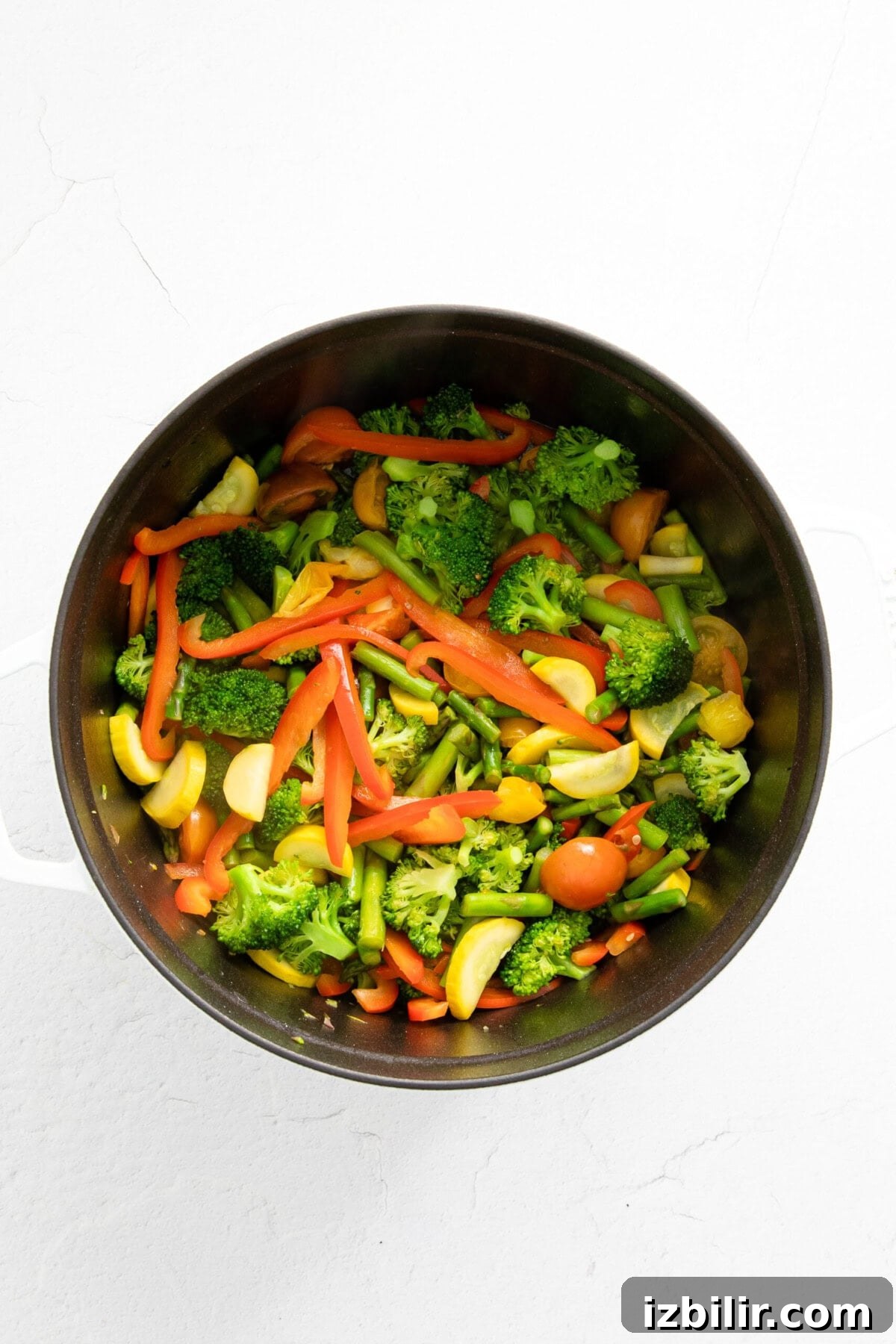
Heat a couple tablespoons of olive oil in a deep pan or Dutch oven over medium-high heat. Add the asparagus first with a pinch of salt and sauté 2–3 minutes. Add broccoli and sauté another 2–3 minutes, until it begins to brown. Add yellow squash, red pepper and half the cherry tomatoes with a touch more salt and cook 1–2 minutes more. Transfer the sautéed vegetables to a bowl and set aside.
Why add the veggies at different times? Staggering cook times ensures each vegetable becomes tender-crisp rather than mushy.
Prepare the sauce
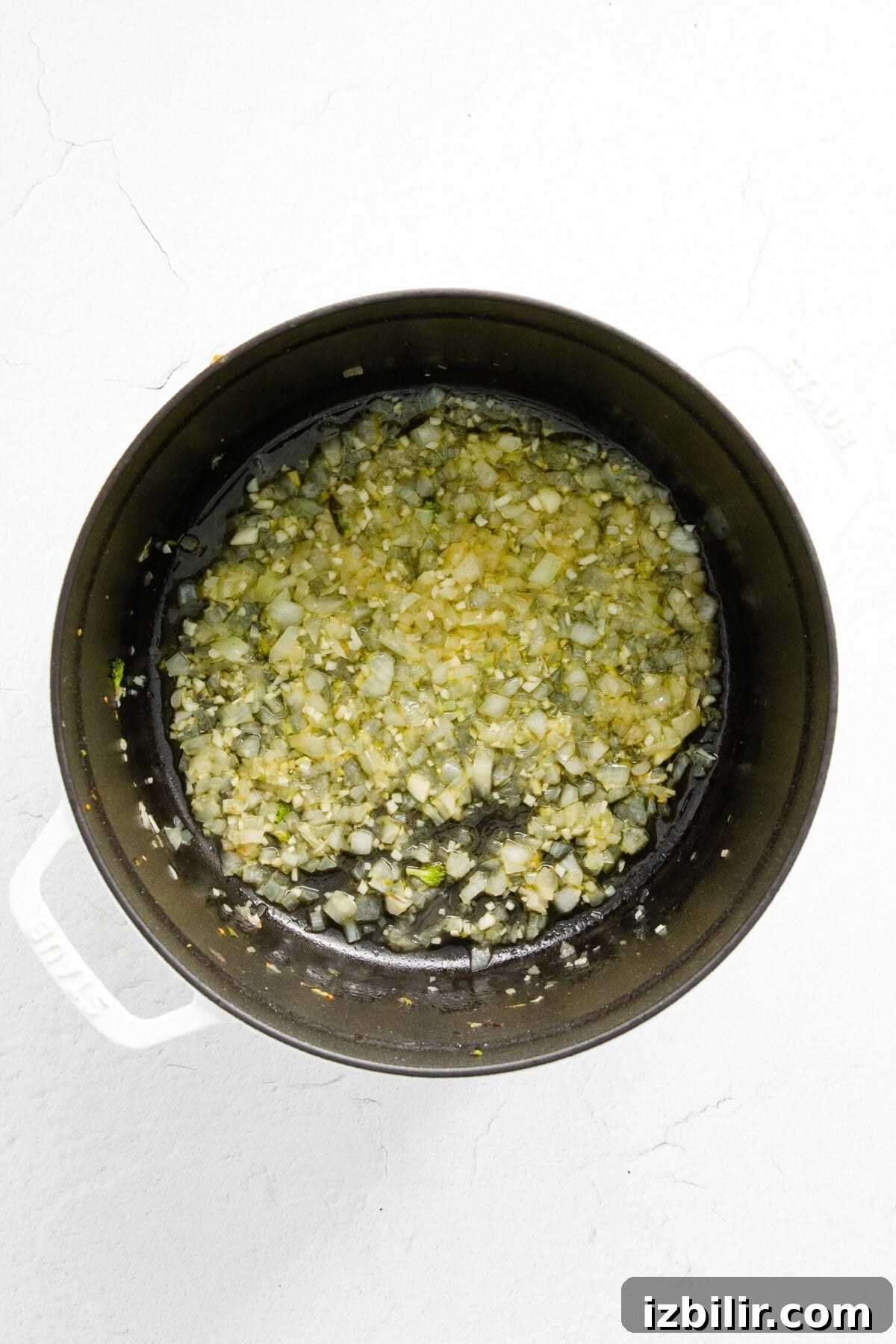
In the same pot, add more olive oil and sauté the onion over medium-high heat until it begins to brown, about 3–4 minutes. Add the garlic and cook another minute. Deglaze the pan with white wine, scraping up any browned bits. Add the remaining cherry tomatoes and coat them in oil.
Stir in vegetable broth, tomato paste, lemon juice, lemon zest, pepper and the remaining salt. Whisk until the tomato paste is fully dissolved. Bring the mixture to a boil, then reduce to medium-low and add the peas. Simmer until the sauce reduces by roughly half, about 10–15 minutes.
All together now
Add the reserved vegetables and cooked pasta to the pot, toss until everything is well coated and heated through. Serve with grated Parmesan and torn fresh basil, plus extra lemon zest if you like.
Easy Substitutions
This recipe is very flexible. Swap one vegetable for another 1:1 or change the pasta shape to what you have on hand:
- Use any pasta shape — bow ties, rotini, rigatoni or pappardelle will work.
- If you prefer a non-vegetarian broth, chicken or beef broth works in place of vegetable broth.
- Green beans can replace asparagus; any color bell pepper works in place of red; green squash can substitute for yellow squash; any onion variety is fine; fresh or frozen peas both work.
How to Store & Reheat
Cool the pasta completely, then transfer to an airtight container and refrigerate for 3–5 days. To reheat, warm the pasta in a large skillet over medium heat with a few tablespoons of broth, stirring occasionally until heated through. This helps revive the sauce and prevents the pasta from drying out.
What to Serve With Pasta Primavera
This pasta is a complete meal on its own, but you can round it out with:
- Protein: grilled chicken, shrimp, or broiled salmon for extra protein
- Simple green salad with lemon vinaigrette
- Crusty garlic bread or a warm baguette for sopping up sauce
- Additional roasted vegetables if desired
Pasta Primavera FAQ
Can I make this ahead of time? Yes. Cook pasta and vegetables separately and store them in airtight containers. Reheat and toss together when ready to serve.
Can I use a different pasta shape? Absolutely. Use whatever pasta you have — shapes with ridges or tubes catch the sauce well.
How do I avoid mushy vegetables? Add harder vegetables first and softer ones later, and don’t overcook while sautéing. Staggering cook times is the key.
Is it healthy? Yes. Packed with vegetables and a broth-based sauce, this pasta is lighter than cream-based alternatives while still full of flavor.
Pasta Primavera Recipe (Printable)
Prep time: 5 mins — Cook time: 25 mins — Total: 30 mins — Serves: 4
Ingredients
- 12 oz penne pasta
- 1/4 cup olive oil, divided
- 1 lb asparagus, cut into bite-sized pieces
- 2 cups broccoli florets
- 1 medium yellow squash, cut into bite-sized pieces
- 1 large red pepper, chopped
- 1/2 white onion, minced
- 2 tbsp minced garlic
- 1/4 cup dry white wine (optional)
- 10 oz cherry tomatoes, halved (divide into two portions)
- 1.5 cups vegetable broth
- 1 tbsp tomato paste
- 2 tbsp lemon juice
- 2 tsp lemon zest
- 1 tsp salt, divided
- 1/2 tsp ground black pepper
- 2 cups English peas (fresh or frozen)
- Parmesan cheese and fresh basil, for serving
Instructions
- Cook the penne in salted boiling water until just before al dente. Drain and set aside.
- Heat 2 tbsp olive oil in a large pan over medium-high heat. Sauté asparagus with 1/4 tsp salt for 2–3 minutes. Add broccoli and cook 2–3 minutes until edges brown.
- Add yellow squash, red pepper, half the cherry tomatoes and 1/8 tsp salt. Sauté 1–2 minutes, then transfer vegetables to a bowl.
- Add remaining 2 tbsp olive oil to the pan. Sauté onion with 1/8 tsp salt until it begins to brown (3–4 minutes). Add garlic and cook 1 minute.
- Deglaze with white wine, scraping up browned bits. Add remaining cherry tomatoes and coat in oil.
- Stir in vegetable broth, tomato paste, lemon juice, lemon zest, pepper and remaining salt. Whisk until combined. Bring to a boil, reduce to medium-low and add peas. Simmer until reduced by half (10–15 minutes).
- Add reserved vegetables and cooked pasta to the sauce. Toss to combine and heat through.
- Serve topped with grated Parmesan and fresh basil; finish with extra lemon zest if desired.
Nutrition (approx.)
Calories: 326 kcal • Carbohydrates: 40 g • Protein: 11 g • Fat: 14 g • Fiber: 9 g • Sugar: 12 g
Nutrition estimates are approximate and should be used for guidance only.