
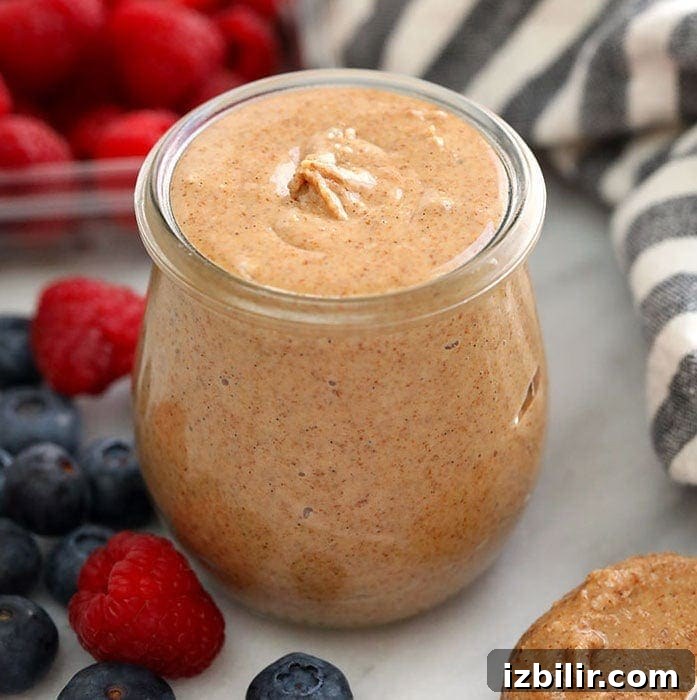
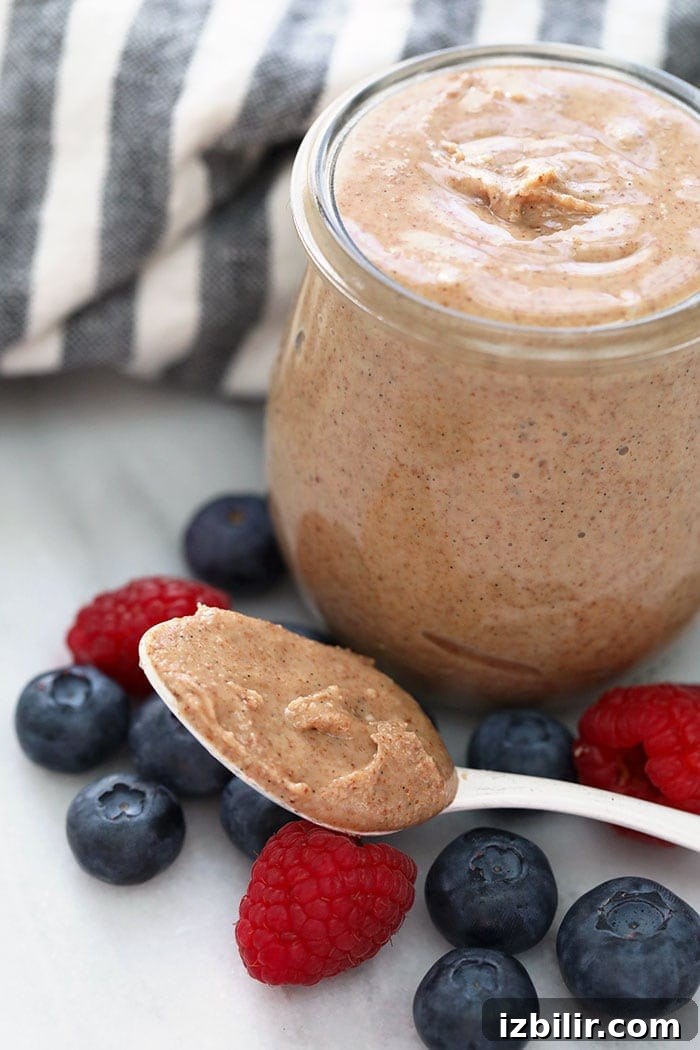
Learn how to make rich and creamy vanilla bean almond butter with a simple homemade recipe that uses whole ingredients: raw almonds, maple syrup, vanilla bean paste, sea salt, and a touch of coconut oil if needed.
What is almond butter?
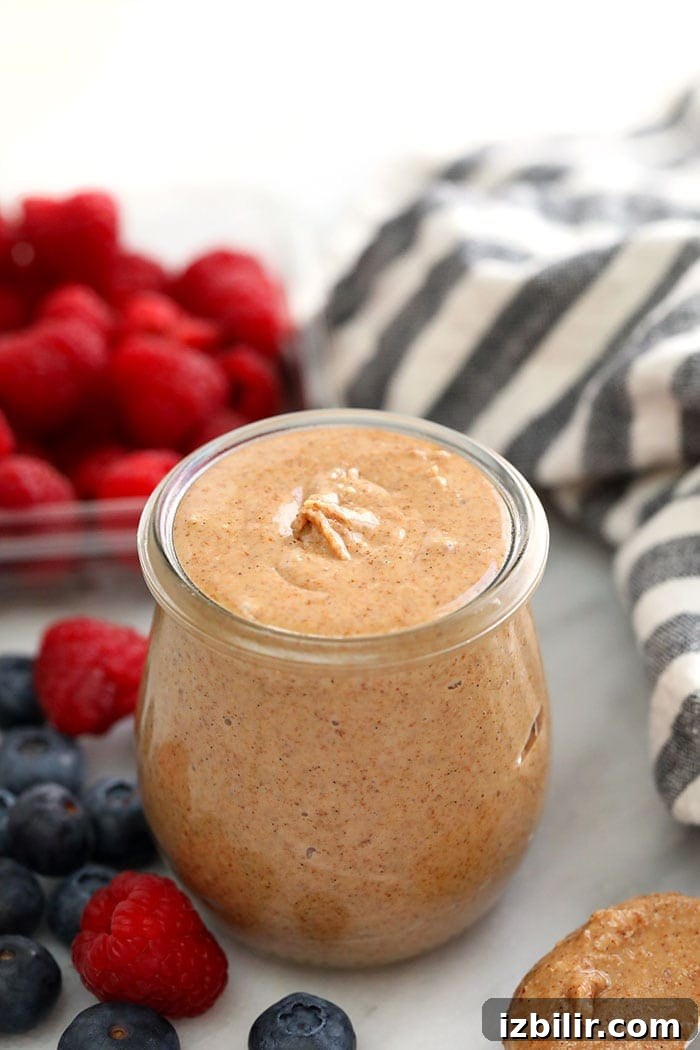
Almond butter is a spread made by grinding whole almonds until they release their natural oils and form a smooth or slightly textured paste. It has a mild, naturally sweet flavor and works well in both sweet and savory dishes. You can spread it on toast, pair it with fruit like apples or bananas, blend it into smoothies, or use it in baking and sauces.
Almond butter is an increasingly popular alternative to peanut butter, particularly for households managing peanut allergies, as long as the product is processed in a peanut-free facility.
Almond Butter Nutrition
Almond butter is rich in unsaturated fats and provides a decent amount of protein and fiber. A general estimate per tablespoon:
- Approximately 98 calories
- About 9 g fat (mostly unsaturated)
- Around 3 g carbohydrates
- About 1 g sugar
- Roughly 3 g protein
Almond Butter vs. Peanut Butter
Both almond butter and peanut butter are made by grinding nuts into a spread. The main difference is the nut used: almonds versus peanuts. Nutritionally they are similar, though almond butter tends to be slightly higher in monounsaturated fats and vitamin E.
Note: Almond butter is peanut-free only when it is produced in a facility that does not handle peanuts. Always check product labeling if peanut-free processing is required.
How to Make Almond Butter
Ingredients
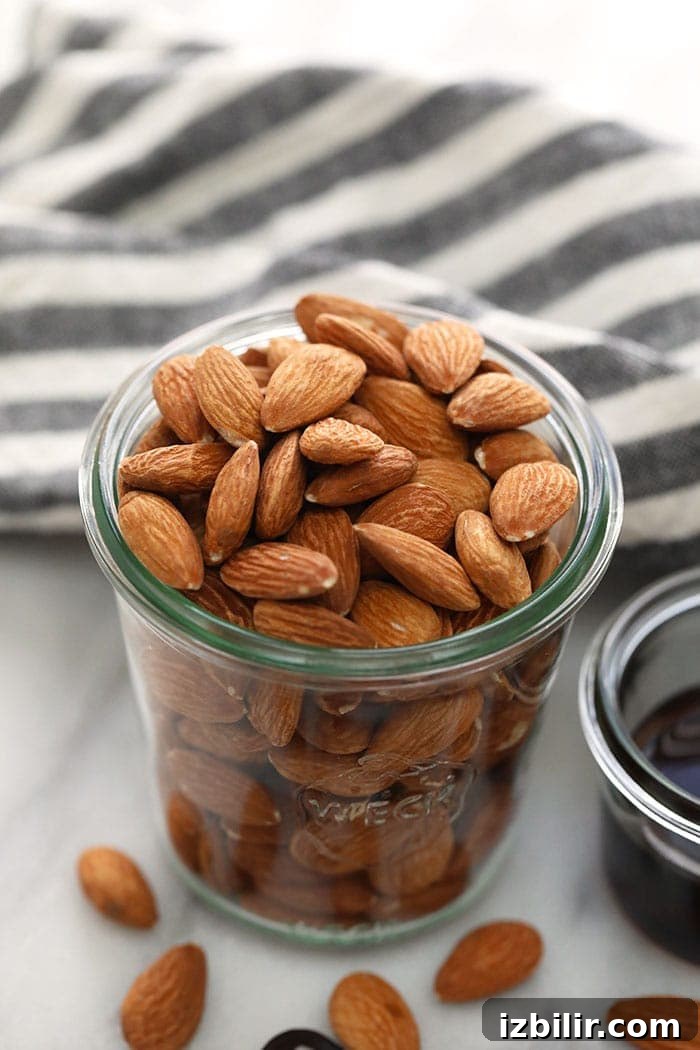
- 2 cups raw almonds
- 2 tablespoons maple syrup
- Paste from 1/2 vanilla bean (or 1/2 teaspoon vanilla bean paste)
- Sea salt, to taste
- Optional: 1–4 teaspoons coconut oil, partially melted (only if needed for consistency)
Step 1 — Roast the almonds
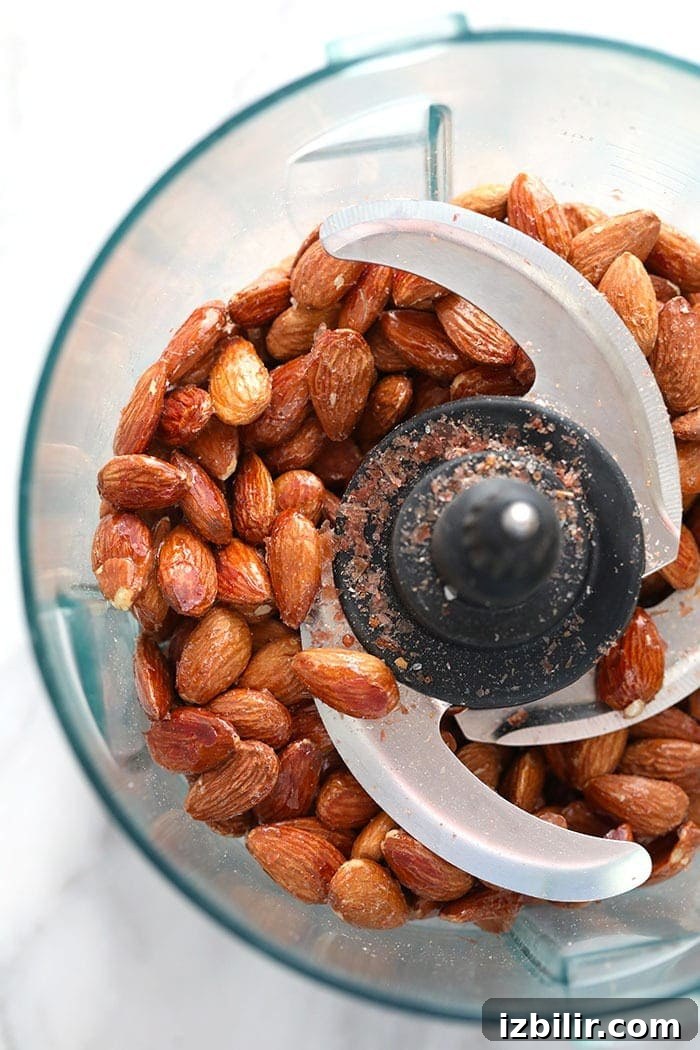
Roasting the almonds enhances flavor and helps release their natural oils. Preheat the oven to 350°F (175°C). Line a baking sheet with foil and spread the almonds in a single layer. Drizzle the maple syrup over the almonds and sprinkle lightly with sea salt. Toss to coat them evenly, then roast for 8–10 minutes. Remove from the oven and allow the almonds to cool for 5–10 minutes before processing.
Step 2 — Process into butter
Once the almonds are completely cool, transfer them to a high-speed food processor. Process on high, pausing to scrape the sides as needed. The almonds will pass through stages—from chopped to coarse meal, then clumping, and finally a smooth or semi-smooth butter. This can take around 4–6 minutes depending on your machine.
If the mixture is slow to come together or seems dry, add coconut oil one teaspoon at a time until the texture loosens and becomes slightly drippy. Many recipes use about 2–3 teaspoons in total, but add only what you need.
Step 3 — Add flavor
When the almond butter reaches your preferred consistency, add the vanilla bean paste (from 1/2 vanilla bean) and pulse briefly to combine. Taste and adjust salt or sweetener as needed.
Optional flavor additions: a pinch of ground cinnamon, a touch of honey instead of maple syrup, or a chai spice blend for warmth and complexity.
Step 4 — Store and enjoy
Transfer the almond butter to a clean mason jar or an airtight container. It keeps best refrigerated or stored in a cool, dark place. Homemade almond butter lacks preservatives, so consume within a few months for best flavor and freshness.
Ways to Use Homemade Almond Butter
There are many delicious ways to enjoy almond butter:
- Smoothies: Add a spoonful for creaminess and protein.
- Toast: Spread on toast and top with banana slices, berries, or a drizzle of honey.
- Baking: Use in cookies, muffins, or quick breads as a peanut-butter substitute.
- Almond butter cups and confections: Make nut butter cups, energy bites, or freezer fudge using almond butter.
- As a dip or sauce: Thin with a little warm water, coconut milk, or soy sauce for savory dressings and satay-style dips.
Storage
Because homemade almond butter contains no preservatives, its shelf life is shorter than many store-bought options. Keep it in an airtight container and store it in the refrigerator or another cool, dark place. Properly stored, it will remain fresh for up to three months. Always use a clean spoon to avoid introducing moisture or contaminants.
Q&A
Is almond butter healthier than peanut butter?
Both are nutritious options. Almond butter tends to be higher in monounsaturated fats and vitamin E, while peanut butter can be slightly higher in protein per serving. Both are healthy when consumed in moderation.
What can I eat almond butter with?
Use almond butter as a spread on fruit or toast, add it to smoothies, stir it into oatmeal, include it in sandwiches, or use it in baking and savory sauces.
Should I refrigerate almond butter?
Refrigeration is not strictly necessary, but it helps prolong freshness and prevent oil separation. If you plan to keep almond butter for several weeks, refrigeration is recommended.
Is it cheaper to make your own almond butter?
Homemade almond butter can sometimes be more expensive than mass-produced options because almonds are sold at retail prices. However, when almonds are on sale or bought in bulk, making your own can be cost-effective and lets you control ingredients.
Why is my almond butter not getting creamy?
If it’s not becoming smooth, keep processing—high-speed processors often take several minutes to develop creaminess. If needed, add a small amount of neutral oil (like coconut oil) to help the mixture turn silky and drippy.
What oil is best to use when making nut butter?
Coconut oil is commonly used to adjust consistency, but any neutral-flavored oil can work. Use sparingly so the butter doesn’t become overly oily.
Recipes and Ideas with Almond Butter
Try almond butter in waffles, cookie bars, energy bites, or as a peanut-butter substitute in classic recipes like banana bread and smoothies. Homemade almond butter offers a rich flavor and versatile texture that enhances both sweet and savory dishes.
Nutrition (approximate per serving)
Per serving (estimate): 199 kcal, 15 g fat, 10 g carbohydrates, 8 g protein, 3 g fiber, 4 g sugar. Nutrition values are approximations and will vary depending on ingredient brands and portion sizes.