
40
Tamales
Salvadoran Chicken Tamales
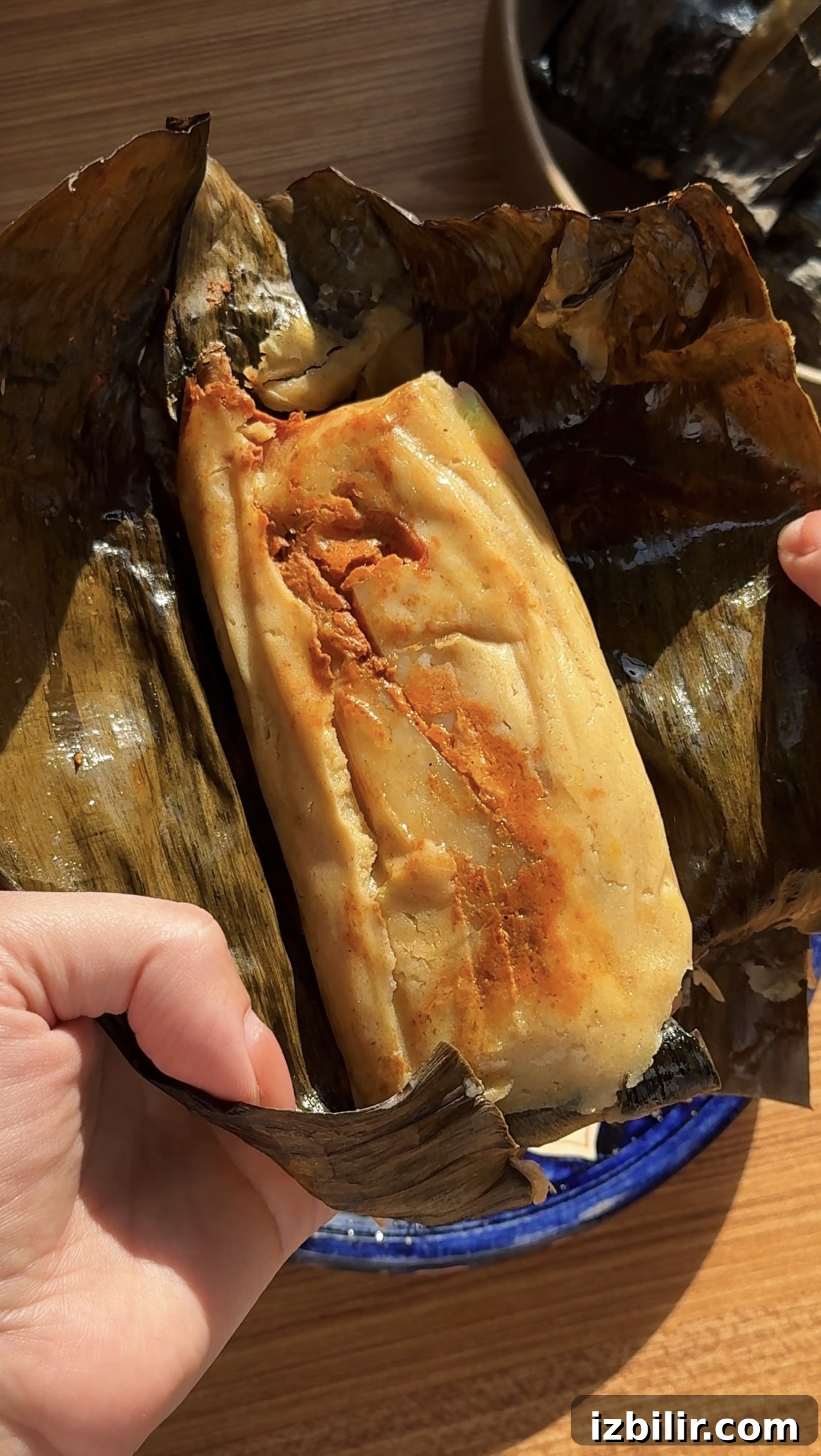
These Salvadoran Chicken Tamales are a beloved traditional dish featuring tender shredded chicken simmered in aromatic broth, a flavorful red pepper and seed-based sauce, and seasoned masa made with chicken broth. The filling and masa are wrapped in banana or plantain leaves and steamed until soft and fragrant. They are a festive favorite at holidays, birthdays, and family gatherings—worth the effort for the depth of flavor and the comforting texture.
Making these tamales takes time but can be broken into steps: cook the chicken and prepare the sauce ahead of time, then mix and cook the masa on assembly day before filling and steaming. The result is a richly seasoned tamal with layers of texture from potatoes, peppers, and olives tucked into each parcel.
4 hours
Equipment
-
Large steamer pot or tamalera
-
High-speed blender or food processor
-
Large mixing bowl and wooden spoon
Ingredients
To make the tamales
- 1 bundle of banana or plantain leaves, cleaned and softened
- 16 cups water
- 2 lbs chicken breast
- 1/2 large onion, halved
- 6–8 garlic cloves
- 3 tbsp chicken bouillon
- 1/2 tbsp ground cumin
- 1/2 tbsp garlic powder
- 1/2 tbsp dried oregano
- 2 tbsp achiote powder (annatto)
- 2 sprigs fresh rosemary
- 1/2 bunch fresh mint
- Salt and pepper, to taste
- 2 bay leaves
- 8 cups Maseca (corn masa flour)
- 8 cups reserved chicken broth
- 2 cups vegetable oil (or another neutral oil)
- 2 large russet potatoes, peeled and sliced into strips
- 2 red bell peppers, sliced into strips
- About 40 green olives
To make the sauce
- 1/4 cup pepita (pumpkin) seeds
- 2 tbsp sesame seeds
- 2 red bell peppers
- 4 tomatoes, quartered
- 1/4 large onion, chopped
- 4 cups water (for rehydrating chiles)
- 4 dried California chiles (or similar mild red chiles)
Instructions
-
Prepare the leaves: Fully submerge the banana or plantain leaves in a large pot of boiling water and rehydrate them for about 20 minutes. Remove and set aside to cool. Softening the leaves makes them pliable and less likely to tear when wrapping.
-
Cook the chicken: In a separate large pot, combine 16 cups of water, the chicken, halved onion, garlic, chicken bouillon, cumin, garlic powder, oregano, achiote powder, rosemary, mint, salt, pepper, and bay leaves. Simmer over medium heat for 45 minutes, or until the chicken is cooked through and tender.
-
Shred and reserve: Remove the chicken, shred it into medium pieces, and set aside. Strain and reserve the broth—you will use about 8 cups for the masa and the remainder as needed.
-
Toast seeds and roast vegetables: In a dry skillet, toast the pepitas and sesame seeds for about 5 minutes until fragrant. Remove and set aside. In the same skillet, roast the red bell peppers, tomatoes, and onion until charred in spots, about 8–10 minutes. Roasting adds depth and a subtle smoky flavor.
-
Rehydrate chiles: In a small pot, bring 4 cups of water to a boil, add the dried chiles, and simmer for 8–10 minutes until softened. Transfer the rehydrated chiles and their cooking liquid to a blender along with the toasted seeds, roasted peppers, onion, and tomatoes. Blend until completely smooth, then strain the mixture through a fine sieve to remove any skins or seeds.
-
Warm the filling: Combine the strained red sauce with the shredded chicken in a skillet and heat gently until it reaches a simmer. Taste and adjust seasoning with salt and pepper. Turn off the heat and allow the filling to cool slightly while you prepare the masa.
-
Make the masa: In a large bowl, dissolve and knead the Maseca with about 8 cups of the reserved chicken broth until a uniform dough forms. Add a generous pinch of salt. Gradually add more broth and mix until the masa has a thinner, more pourable consistency—similar to thick soup. Work the dough with your hands or a spoon for about 5 minutes to ensure there are no lumps.
-
Color and finish the masa: Stir in about 1 cup of the prepared red sauce and add oil as needed to make the masa slightly runny but still spreadable. Adjust seasoning to taste. Cook the masa over medium-low heat, stirring constantly with a wooden spoon, for 30–40 minutes until it thickens to a smooth, spreadable consistency. Constant stirring prevents lumps and helps develop flavor.
-
Cut and soften leaves: Cut the leaves into manageable squares (about 12×12 inches). If needed, pass the leaves briefly over a low flame or steam them to make them more pliable.
-
Assemble the tamales: Place about 1/2 to 3/4 cup of masa in the center of a leaf square. Add a spoonful of shredded chicken, a slice of potato, a strip of bell pepper, and an olive. Fold the leaf tightly to enclose the filling and seal the edges. Secure with a thin strip of leaf or food-safe twine if necessary.
-
Steam the tamales: Arrange assembled tamales in a large steamer, laying them flat and packing them snugly. Add 7–8 cups of water to the bottom of the steamer, ensuring the water does not touch the tamales. Steam for 45 minutes, checking occasionally and adding water if needed so it does not evaporate completely.
-
Serve: Serve tamales warm. Unwrap the leaf just before eating to preserve aroma. These are wonderful with a mild Salvadoran-style salsa, pickled vegetables, or fresh curtido.
Notes & Tips
- You can prepare the chicken and red sauce one day ahead to save time on assembly day. Store the shredded chicken and sauce refrigerated in airtight containers.
- If banana or plantain leaves are unavailable, parchment paper is an acceptable substitute, though the aroma from leaves will be missing.
- The cooked masa should be similar to thick porridge—spreadable but not runny. If it’s too stiff, add small amounts of warm broth or oil until the right texture is reached.
- Use a food-safe twine or thin strips of softened leaf to secure tamales if the leaf tears. Keep them tightly wrapped so filling does not escape during steaming.
- Tamales freeze well. Cool completely, wrap each tamal individually in foil or plastic wrap, and freeze. To reheat, steam from frozen until heated through, about 20–30 minutes depending on size.
- Keep an eye on the steamer water level while cooking; adding hot water as needed prevents interruptions in steaming and ensures even cooking.
- Serving suggestions: pair with a mild tomato-based salsa, pickled onions, curtido, or a squeeze of lime for brightness. Tamales are also excellent alongside rice and beans for a fuller meal.
- Variations: this method works with other fillings—such as pork, beef, or vegetarian options—by swapping the protein and adjusting seasonings accordingly.
Preparing Salvadoran tamales is a hands-on, communal activity in many homes. Allow enough time, enlist helpers for wrapping, and enjoy the process—these tamales reward patience with deep, savory flavors and a comforting texture that brings people together.
Enjoy this recipe? Share your thoughts below!