
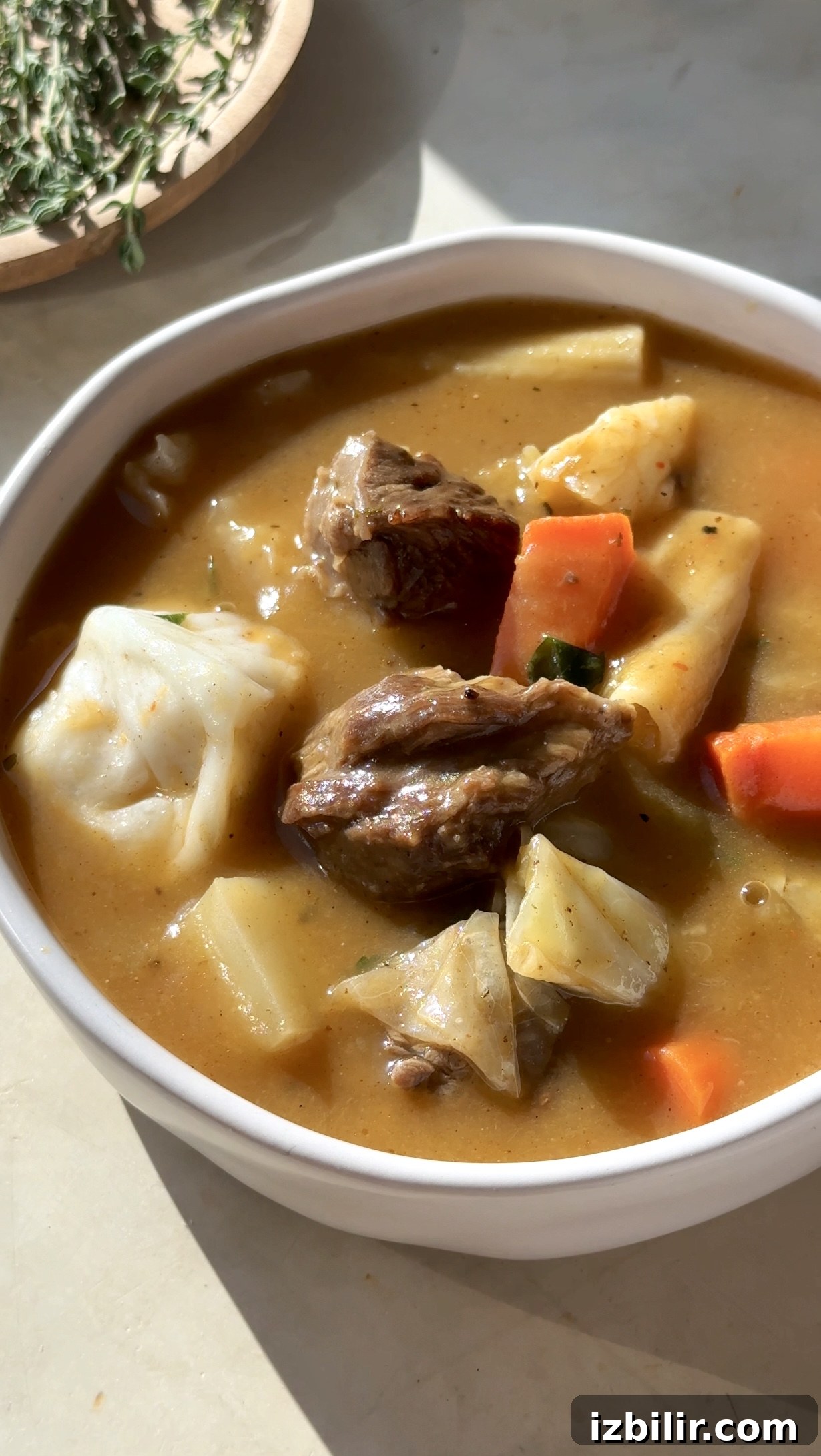
Soup Joumou
Servings: 8 | Total Time: 2 hrs 30 mins
Summary
Soup Joumou is a rich, comforting Haitian soup traditionally served on New Year’s Day to honor Haiti’s independence. It combines seared beef and a creamy pumpkin or butternut base with a medley of root vegetables, short pasta, and fragrant herbs. A whole scotch bonnet pepper is often steeped in the broth to add gentle heat and aroma without overpowering the soup. The result is a layered, nourishing stew that is both hearty and soul-warming — perfect for celebratory gatherings or slow weekend cooking.
This version emphasizes classic technique: sear the beef for depth of flavor, simmer to tenderize, blend roasted or boiled squash into a silky puree, and finish with fresh parsley and cabbage for brightness. The soup develops even more flavor if made ahead and can be frozen for later meals.
Equipment
- Large Dutch oven or heavy-bottomed pot
- Blender or immersion blender
- Chef’s knife and cutting board
- Wooden spoon or ladle
- Large measuring cups and spoons
Ingredients
- 1/2 cup neutral oil (vegetable or canola)
- 2 lbs beef stew meat or beef chuck roast, cut into large chunks
- Salt and black pepper, to taste
- 20–24 cups water, or more as needed
- 3–4 lbs butternut squash or pumpkin, peeled and chopped
- 1/2 medium onion, chopped
- 4 cloves garlic, minced
- 1 leek, sliced (white and light green parts only)
- 1/2 of a malanga, peeled and diced (or substitute yuca/taro)
- 1/2 tsp crushed red pepper (optional)
- 2–3 sprigs fresh thyme
- 2 tbsp tomato paste
- 2 bay leaves
- 2 carrots, peeled and sliced
- 2 potatoes, peeled and chopped
- 2 turnips, peeled and diced
- 1 lb short pasta (such as rigatoni)
- 1/2 small cabbage, chopped
- 1 cup chopped fresh parsley
- 1 whole scotch bonnet pepper (optional; keep whole for mild heat)
Instructions
- Season the beef generously with salt and black pepper. Heat the oil in a large Dutch oven over medium-high heat until shimmering.
- Sear the beef in batches, taking care not to overcrowd the pot. Brown the pieces on all sides, 5–7 minutes per batch, to build caramelized flavor. Remove each batch and set aside.
- Return all the seared beef to the pot and add 20–24 cups of water, just enough to cover the meat comfortably. Bring to a boil, then reduce the heat to a gentle simmer. Cover and cook for about 1 hour, or until the beef is tender. Skim off any foam or scum that rises to the surface during the first part of the simmering.
- Once the meat is tender, remove it from the pot and set aside. Keep the cooking liquid (the broth) in the pot for the next step.
- Add the chopped squash, chopped onion, minced garlic, and sliced leek to the broth. Simmer until the squash and aromatics are very tender, about 20–30 minutes.
- When the vegetables are soft, transfer them with about 2 cups of the hot broth to a blender. Blend until very smooth and silky, then return the puree to the pot. Alternatively, use an immersion blender directly in the pot for a rustic finish.
- Return the beef to the pot along with the diced malanga (or yuca), tomato paste, crushed red pepper (if using), thyme sprigs, and bay leaves. Stir to combine and simmer on low for 15 minutes to marry the flavors.
- Add the carrots, potatoes, turnips, and the short pasta. Continue simmering until the root vegetables are tender and the pasta is cooked through, about 8–12 minutes depending on pasta size. If the pasta cooks faster than the veggies, you may cook pasta separately and add it at the end to prevent overcooking.
- Stir in the chopped cabbage and parsley and adjust seasoning with salt and pepper. If you used a whole scotch bonnet pepper, remove it now to avoid excessive heat. Simmer for a final 3–5 minutes until the cabbage is just wilted.
- If the soup is too thick, thin it with additional hot water or broth to reach your preferred consistency. Remove thyme sprigs and bay leaves before serving.
- Ladle the soup hot into bowls and serve immediately. This soup pairs beautifully with crusty bread or a simple green salad for a complete meal.
Notes & Tips
- Traditionally, Soup Joumou is made with calabaza (a Caribbean squash), but you can use butternut squash or pumpkin with excellent results.
- Steeping a whole scotch bonnet pepper in the soup adds aroma and gentle heat without making it overly spicy. Remove the pepper before serving for milder flavor.
- For deeper flavor, make the soup a day ahead. Refrigerating and reheating allows the flavors to meld and intensify.
- To avoid mushy pasta, add the pasta in the last minutes of cooking or boil it separately and add just before serving.
- Soup Joumou freezes very well. Cool completely, portion into airtight containers, and freeze for up to 3 months. Thaw overnight in the refrigerator and reheat gently on the stovetop, adding a splash of water or broth if needed.
- Adjust the texture by blending more or less of the squash. For a chunkier soup, reserve a portion of the cooked squash and stir it back in after blending.
- When searing beef, hot oil and a dry surface on the meat help achieve better browning. Pat beef dry with paper towels before seasoning and searing.