
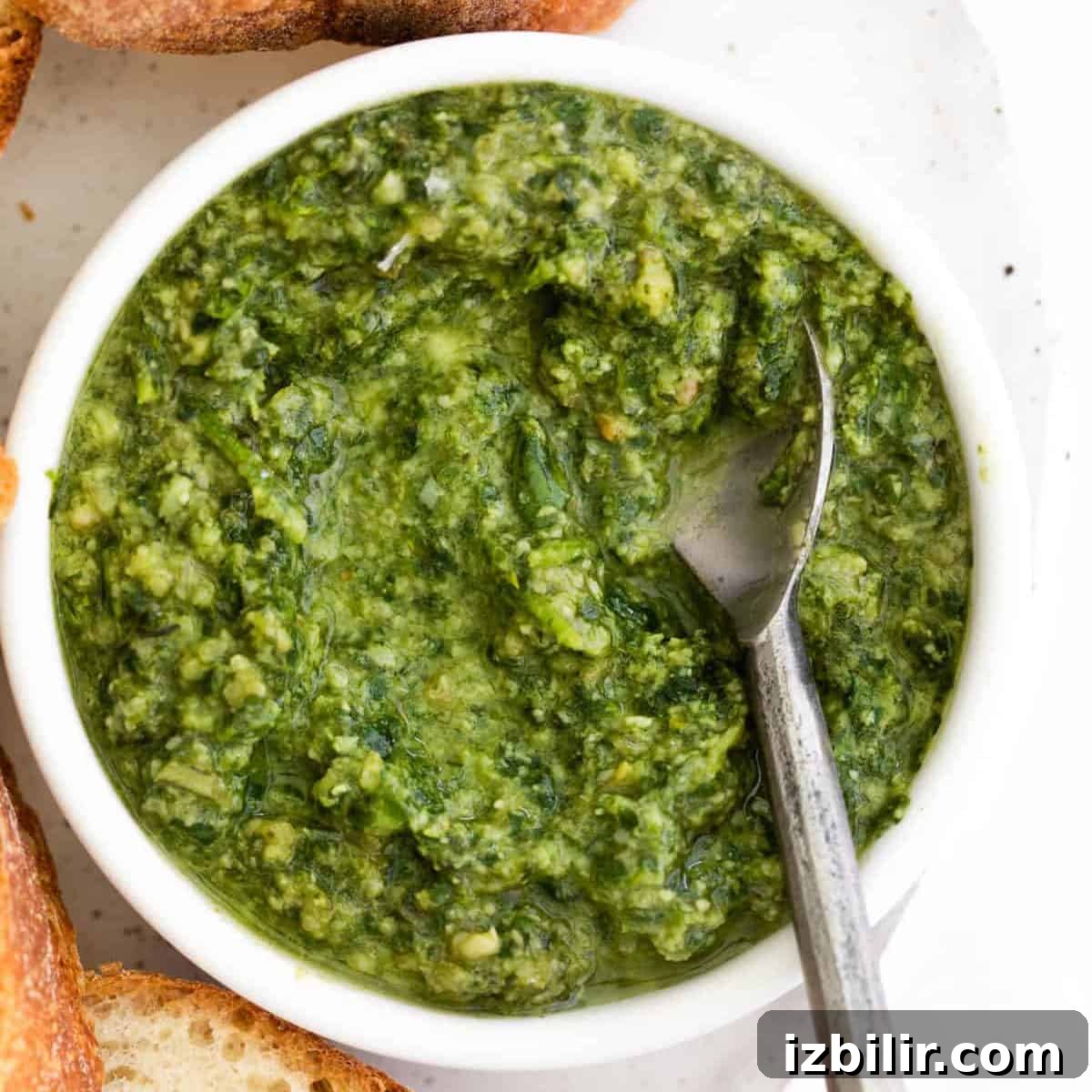
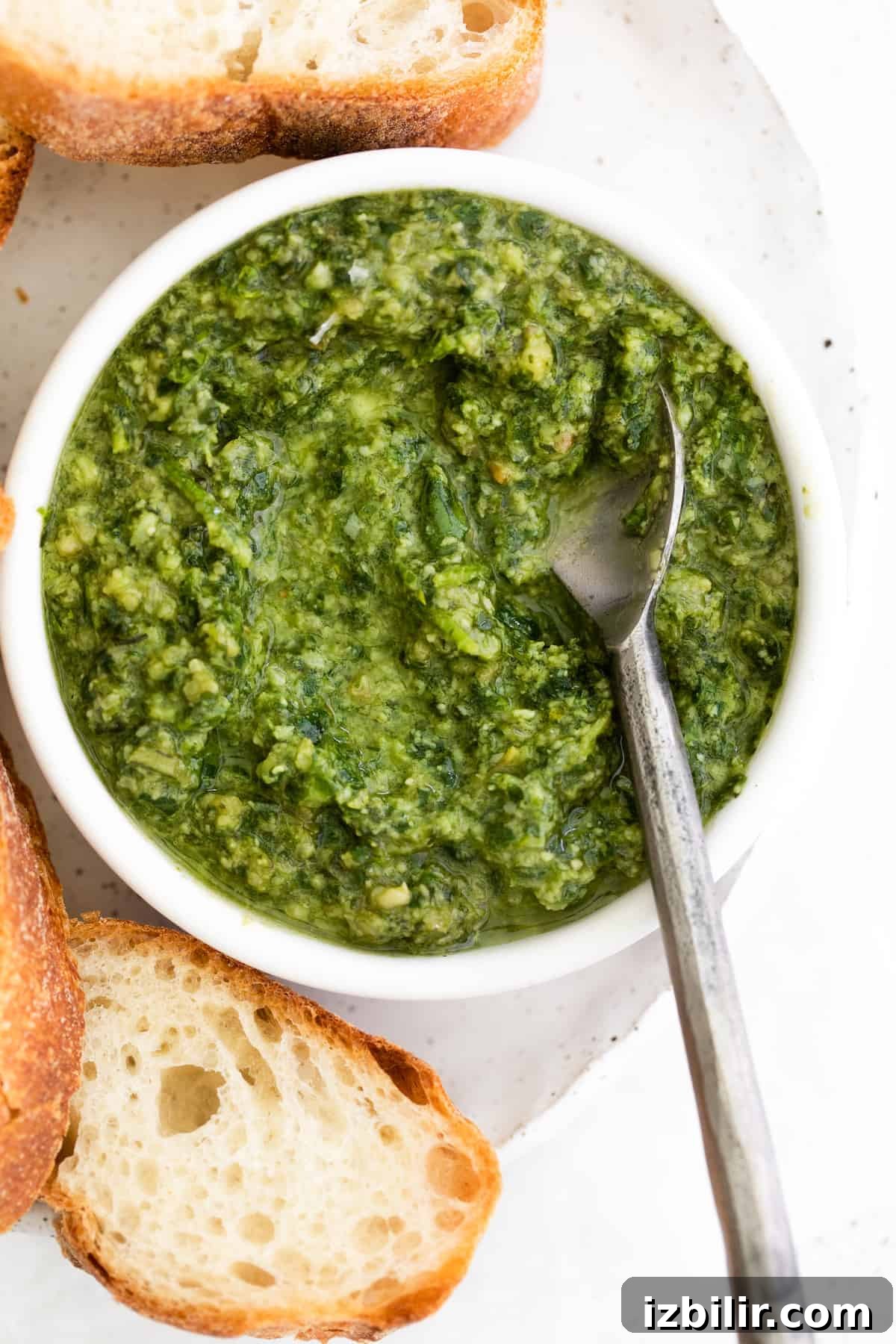
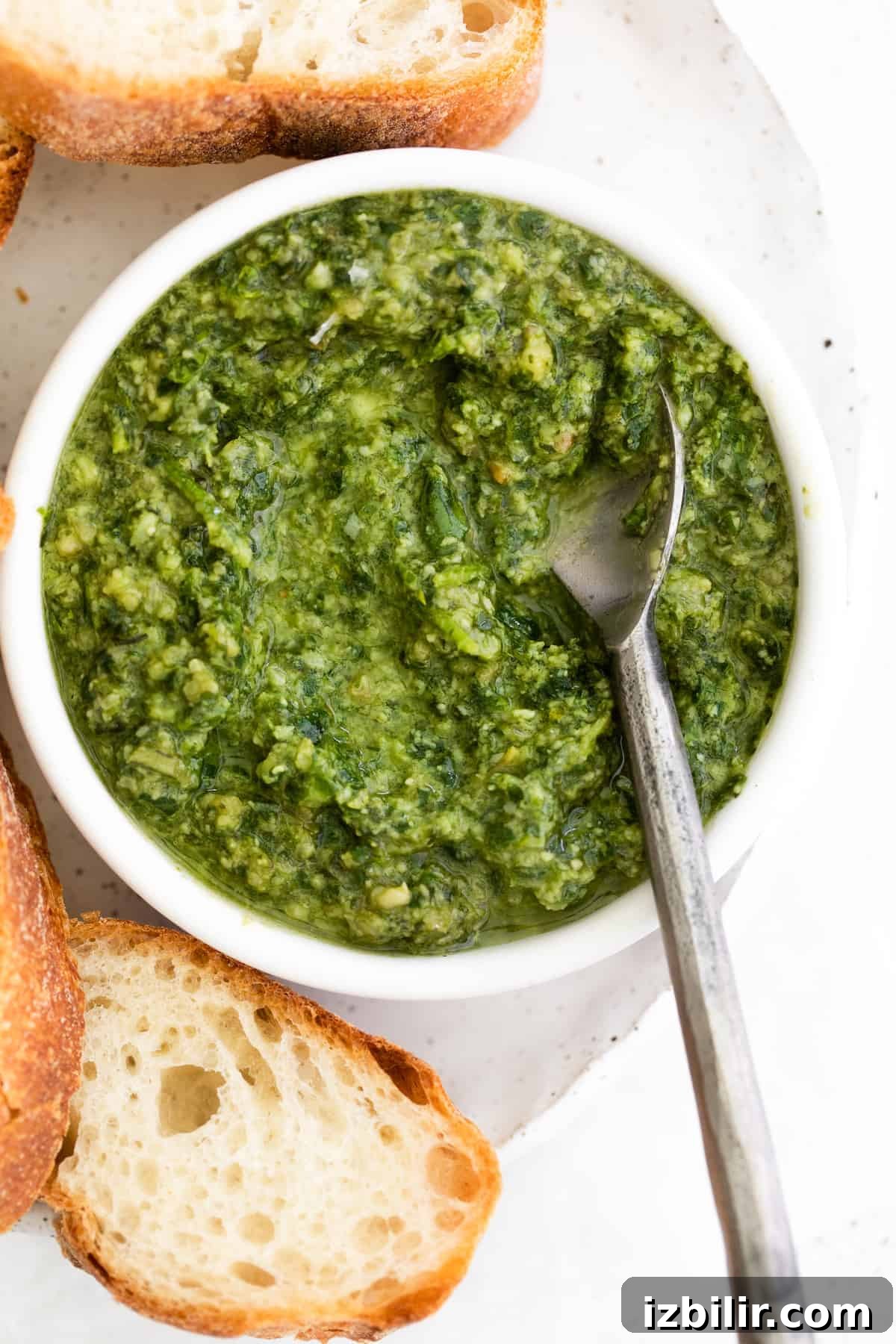
Fresh basil pesto is a quick, flavorful sauce made from simple ingredients: fresh basil leaves, Parmesan cheese, garlic, lemon juice, pine nuts, and olive oil. This homemade pesto bursts with bright herb flavor and is an excellent way to use up garden basil or a bunch from the market. It’s ideal for tossing with pasta, spreading on sandwiches, dipping with bread, or using as a marinade for chicken, fish, or vegetables.
Making pesto at home is easy and economical — and it tastes far fresher than jarred versions. The key is to pulse the ingredients until you have a coarse puree; don’t over-process or the sauce can become too smooth or even a bit slimy. Aim for a slightly gritty texture so you keep that pleasing bite from the nuts and cheese.
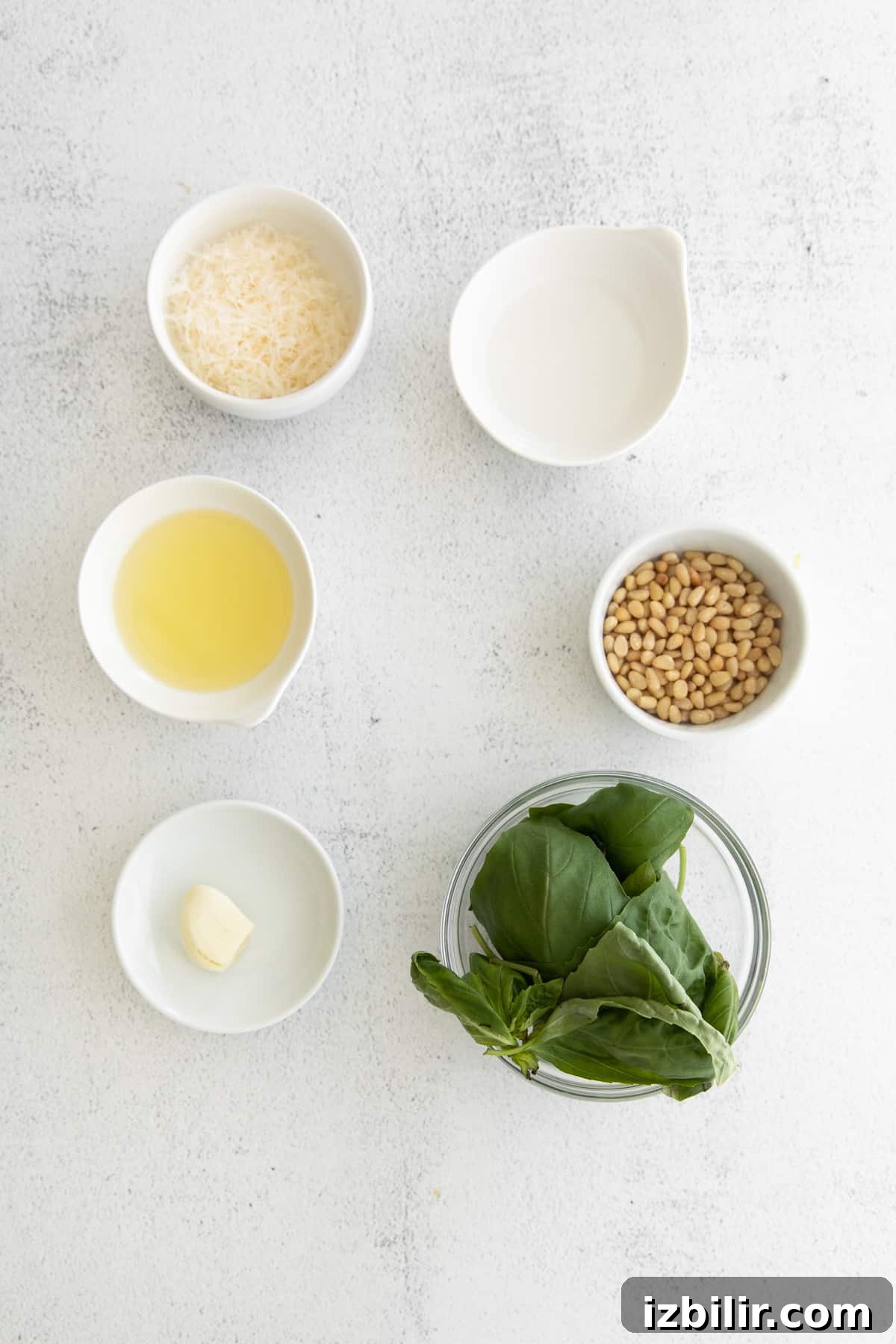
What You Need for Pesto Sauce
Fresh basil leaves: Fresh basil is the star. Use leaves stripped from the stems — young tender leaves are best for a bright, sweet flavor.
Olive oil: Extra virgin olive oil yields the richest, most buttery flavor and helps create a silky, saucy consistency.
Parmesan cheese: Grated Parmesan adds savory, salty depth. You can substitute other hard cheeses like Asiago or Romano if needed.
Pine nuts: Traditionally used in pesto for their mild, buttery taste. Raw pine nuts are common, but toasting them briefly will deepen their flavor.
Garlic cloves: One medium clove gives a gentle garlic punch; increase if you prefer a stronger garlic flavor.
Lemon juice: Fresh lemon juice brightens the sauce and balances the richness of the oil and cheese.
Salt: Kosher or fine sea salt rounds out the flavors — start with a small pinch and adjust to taste.
Ingredient Swaps + Variations
- Greens: If you don’t have basil, try baby spinach or tender kale for an easy swap. The flavor will change, but the technique remains the same.
- Nuts: Cashews, almonds, or pecans make excellent alternatives to pine nuts and are often more affordable.
- Cheese: Substitute another hard cheese like Asiago or Romano. To keep things dairy-free, use nutritional yeast for a cheesy flavor.
- Oil: If desired, grape-seed or avocado oil can be used in place of olive oil for a more neutral taste.
- Vegan option: Omit cheese and add nutritional yeast or a bit of toasted sunflower seeds for richness. A vegan version keeps the same texture and a similar herb-forward flavor.
Homemade Pesto FAQ
Do I need to toast the pine nuts? Toasting is optional. Raw pine nuts give a mild flavor; lightly toasting them in a dry skillet brings out more nuttiness.
Can I use dried basil? Dried basil lacks the fresh aromatic oils of the fresh leaves and is not recommended for traditional pesto.
Can I use a blender instead of a food processor? Yes. A blender will work but may require you to stop and scrape the sides more often. Pulse carefully to avoid overheating or over-blending.
Is pesto healthy? Pesto is made from fresh herbs, nuts, cheese, and olive oil. It provides healthy fats and plant nutrients, though portions are calorie-dense, so enjoy in moderation.
More Basil Pesto Ideas
- Pesto Chicken Salad — mix pesto into shredded chicken for a flavorful twist on a classic.
- Sweet Potato Pizza Bites — use pesto as a base topping for roasted sweet potato slices.
- Naan Breakfast Pizzas — spread pesto on naan for a quick savory breakfast or snack.
Pesto Storage
Store fresh pesto in an airtight container in the refrigerator for 3–5 days. Fresh homemade pesto lacks preservatives, so it will not keep as long as commercially jarred pesto. To help prevent browning, smooth the surface and pour a thin layer of olive oil over the top before sealing.
How to Freeze Pesto
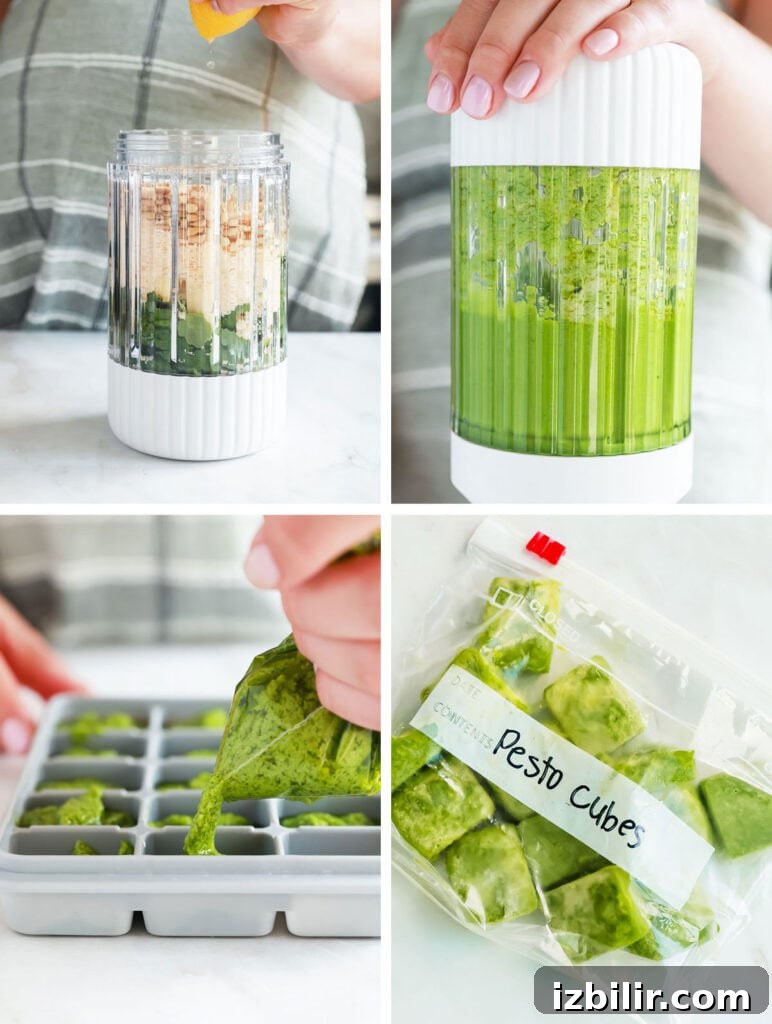
Freezing pesto preserves flavor and lets you save excess basil when it’s abundant. A convenient method is to portion pesto into an ice cube tray, freeze, then transfer the pesto cubes into a sealed freezer bag.
- Spoon 1 to 2 tablespoons of pesto into each compartment of an ice cube tray, filling about three-quarters full.
- Freeze for at least 2–8 hours until solid.
- Pop the frozen pesto cubes out and transfer them to an airtight container or gallon freezer bag.
- Freeze for up to 3 months. To thaw, leave cubes at room temperature for about an hour or gently defrost in a skillet over low heat.
How to Serve Pesto Sauce
Pesto is extremely versatile. Here are several easy serving ideas:
- Marinade: Use pesto as a marinade for chicken, shrimp, or vegetables before grilling.
- Salad dressing: Thin pesto with extra olive oil or a little water to make a vibrant dressing for greens, grain bowls, or roasted vegetables.
- Sauce: Toss pesto with hot pasta, steamed vegetables, or grilled proteins for an instant, flavorful meal.
- Dip: Serve as a dip for crusty bread, crudités, or crackers.
- Spread: Spread on sandwiches, wraps, or flatbreads in place of mayonnaise or mustard.
Easy Basil Pesto
This quick pesto comes together in about five minutes. Combine the ingredients in a food processor, pulse until mostly smooth but still slightly textured, and adjust oil and salt to reach your desired consistency and seasoning.
Ingredients
- 1 cup packed fresh basil leaves (about 20–22 leaves)
- 1/4 cup grated Parmesan cheese
- 1 tablespoon fresh lemon juice
- 1 medium clove garlic
- 2 tablespoons pine nuts
- 3 tablespoons olive oil (add more as needed)
- Salt, to taste
Instructions
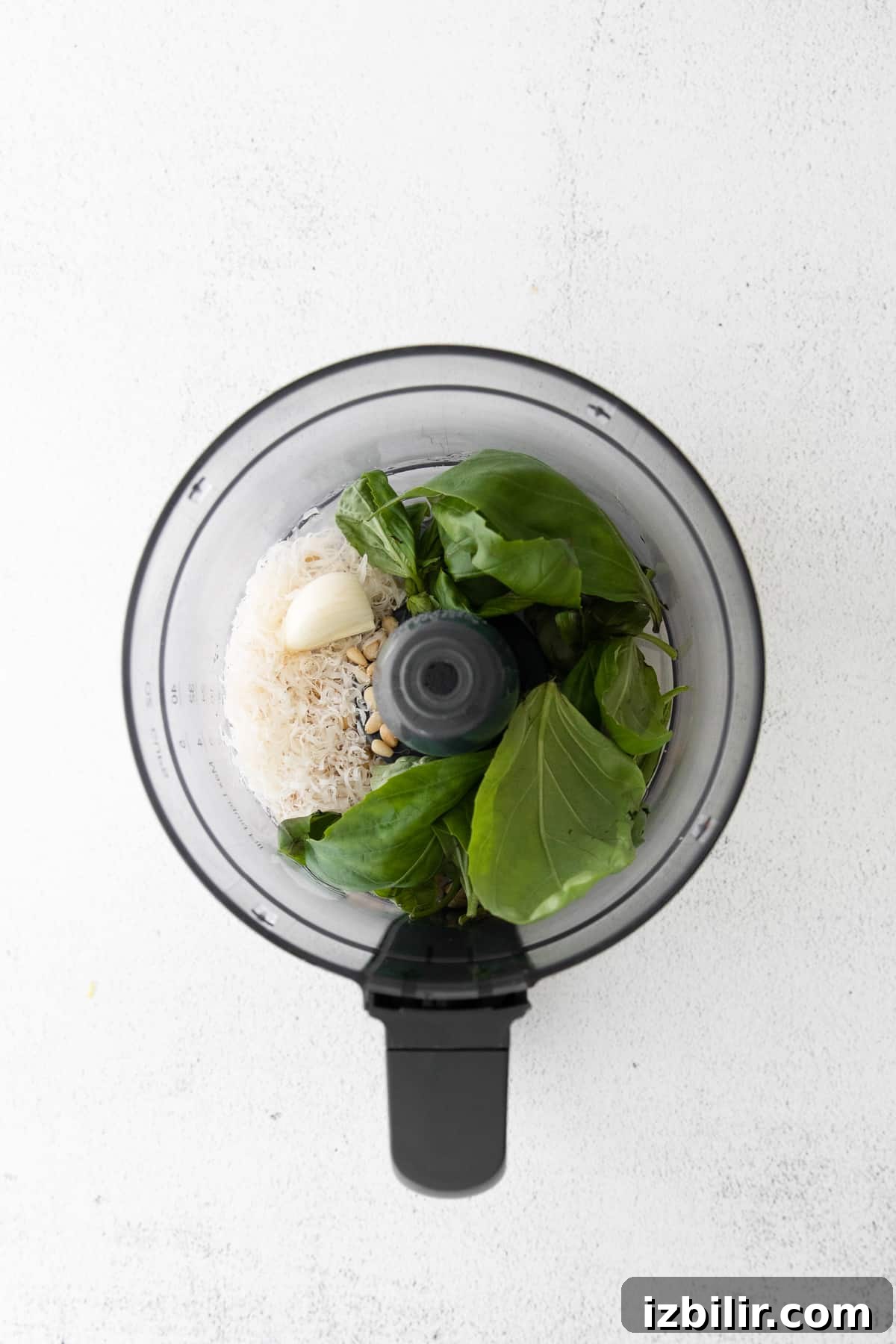
- Place basil, Parmesan, lemon juice, garlic, and pine nuts into a food processor.
- Pulse on high for about 1–2 minutes, stopping to scrape down the sides as needed. Keep the texture slightly coarse — a little grittiness gives pesto its best mouthfeel.
- If the pesto is too thick, add olive oil a teaspoon at a time and pulse until the sauce reaches your preferred consistency. Taste and season with salt.
Tips & Notes
- Makes about 1/3 cup pesto. Serving size is roughly 2 tablespoons.
- Do not over-process; over-blending can change the texture.
- Storage: Refrigerate in an airtight container for up to 5 days. Pour a thin layer of olive oil on top to reduce browning.
- To freeze: Spoon 1–2 tablespoons into a silicone ice cube tray. Freeze for at least 8 hours, then transfer cubes to a freezer bag for up to 3 months.
Nutrition (per serving)
Calories: 145 kcal; Carbohydrates: 2 g; Protein: 3 g; Fat: 15 g; Fiber: 0 g; Sugar: 0 g. Nutrition values are estimates and should be used as a guideline.
Enjoy this simple, fresh basil pesto as a delicious, homemade condiment that elevates everyday meals. Feel free to experiment with nut and cheese combinations until you find your perfect version.