
Servings:
2
loaves
2
loaves
Pan de Muerto
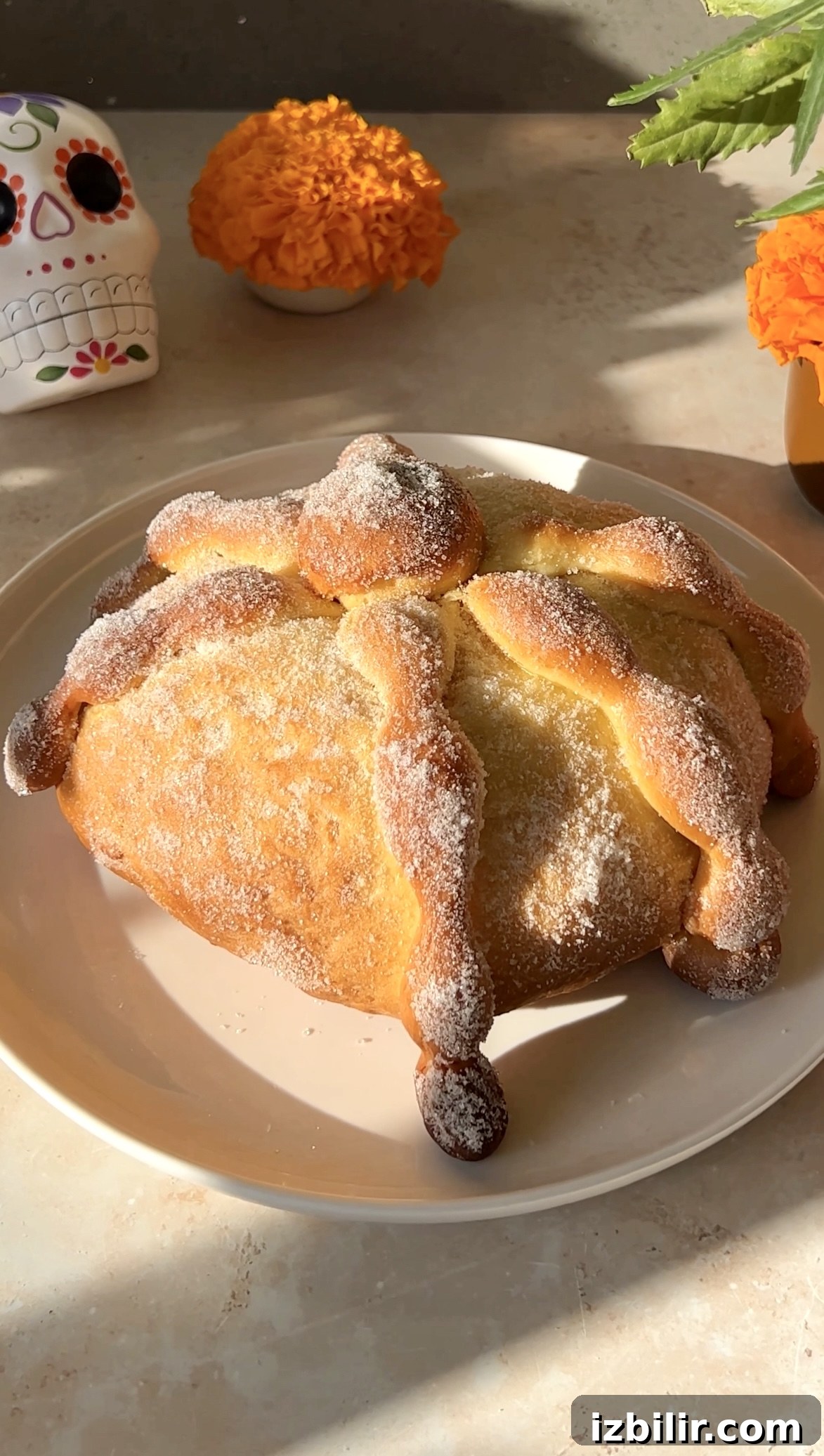
Pan de Muerto is a soft, fluffy sweet bread traditionally made to honor Día de Muertos. Infused with orange zest and a hint of orange blossom water, this recipe captures the holiday’s delicate flavors and the symbolic bone-shaped topping that decorates each loaf.
Prep:
45
45
Cook:
45
45
Rest/chill time:
10
10
Total:
12
12
Save Recipe (use your browser to bookmark)
Rate Recipe (scroll to comments)
Print Recipe (use browser print)
Rate Recipe (scroll to comments)
Print Recipe (use browser print)
Equipment
-
Stand mixer (recommended) or heavy-duty mixing bowl and strong arms for kneading
-
Mixing bowls
-
Baking sheet and parchment paper
Ingredients
- 4 cup all-purpose flour
- 1/4 oz active dry yeast
- 2/3 cup lukewarm milk
- 1/2 cup granulated sugar
- 1/2 tsp salt
- 4 large eggs
- Zest of 1 orange
- 1/2 tsp orange blossom water (optional)
- 1/2 cup unsalted butter, at room temperature
- 2 tbsp melted butter, for brushing
- 1/4 cup granulated sugar, for sprinkling
Instructions
-
Activate the yeast: In the bowl of a stand mixer (or a medium bowl), whisk together ½ cup of the flour, ⅓ cup lukewarm milk, and the active dry yeast. Let the mixture rest for 25–30 minutes until it becomes foamy and fragrant, indicating the yeast is active.
-
Combine ingredients: Add the remaining flour, the rest of the milk, granulated sugar, salt, eggs, orange zest, and orange blossom water (if using) to the yeast mixture. Attach the flat paddle or dough hook and mix on low speed until the ingredients are just combined and a shaggy dough forms.
-
Incorporate butter: With the mixer running, add the room-temperature butter in small pieces. After all the butter is added, increase to medium speed and beat for 10–15 minutes. The dough should become soft, silky, and start to pull away from the sides of the bowl. If using a mixer, this develops gluten and ensures a tender crumb.
-
First rise: Shape the dough into a ball and place it in a lightly greased bowl. Cover with a clean towel or plastic wrap and let it rise in a warm spot for 1½ to 2 hours, until it has nearly doubled in size.
-
Deflate and chill: Gently punch the dough down, bring the edges toward the center, and flip it seam-side down. Cover with plastic wrap and refrigerate for at least 4 hours or overnight. Chilling improves flavor and makes the dough easier to shape.
-
Rest at room temperature: When you’re ready to bake, remove the dough from the fridge and let it rest at room temperature for 1 hour so it becomes pliable.
-
Shape loaves and bones: On a lightly floured surface, pinch off a small piece of dough about the size of a lime and set it aside for the decorative “bones.” Divide the remaining dough into two equal portions and shape each into a smooth round loaf. Place the loaves on a parchment-lined baking sheet.
-
Form decorations: From the reserved dough, pinch two small balls for the tops and divide the rest into six strips. Roll each strip into a slightly flattened, bone-like shape by pressing gently with your fingers. These will sit across the tops of the loaves.
-
Assemble: Lightly brush the tops of each loaf with a bit of water to help the decorations adhere. Arrange three bone-shaped strips in a crisscross pattern on each loaf. Brush the center again with water and press the small dough ball into the middle of each loaf.
-
Second rise: Cover the assembled loaves with a towel and let them rise until doubled, about 1½ to 2 hours. They should look puffy and soft before baking.
-
Bake: Preheat the oven to 350°F (175°C). Bake the loaves for 20 minutes, then tent loosely with foil to prevent over-browning and continue baking for another 20–25 minutes, until the crust is deep golden brown and the loaves sound hollow when tapped.
-
Finish and serve: Allow the loaves to cool completely on a wire rack. Brush liberally with melted butter and sprinkle generously with granulated sugar for a classic finish. Serve sliced with coffee or hot chocolate.
Notes & Tips
- Ensure the milk is lukewarm, not hot. Temperatures that are too high can kill the yeast; lukewarm milk helps yeast activate properly.
- Orange blossom water provides a subtle floral note that is traditional in some recipes. If you don’t have it, omit it— the orange zest still gives excellent flavor.
- Chilling the dough overnight enhances the flavor and makes the dough easier to shape. If short on time, refrigerate for at least 4 hours.
- When brushing with melted butter and sprinkling sugar, do so after the loaves are fully cooled to preserve the coating and achieve the classic finish.
- Storage: Keep leftover bread in an airtight container at room temperature for up to 3 days. For longer storage, slice and freeze the loaves; thaw slices at room temperature or gently warm before serving.
- Variation: For a richer crumb, substitute a few tablespoons of the milk with heavy cream or add a touch more egg yolk; adjust gently so the dough consistency remains soft but not sticky.
Enjoyed this recipe? Leave a comment below and share how your loaves turned out!