
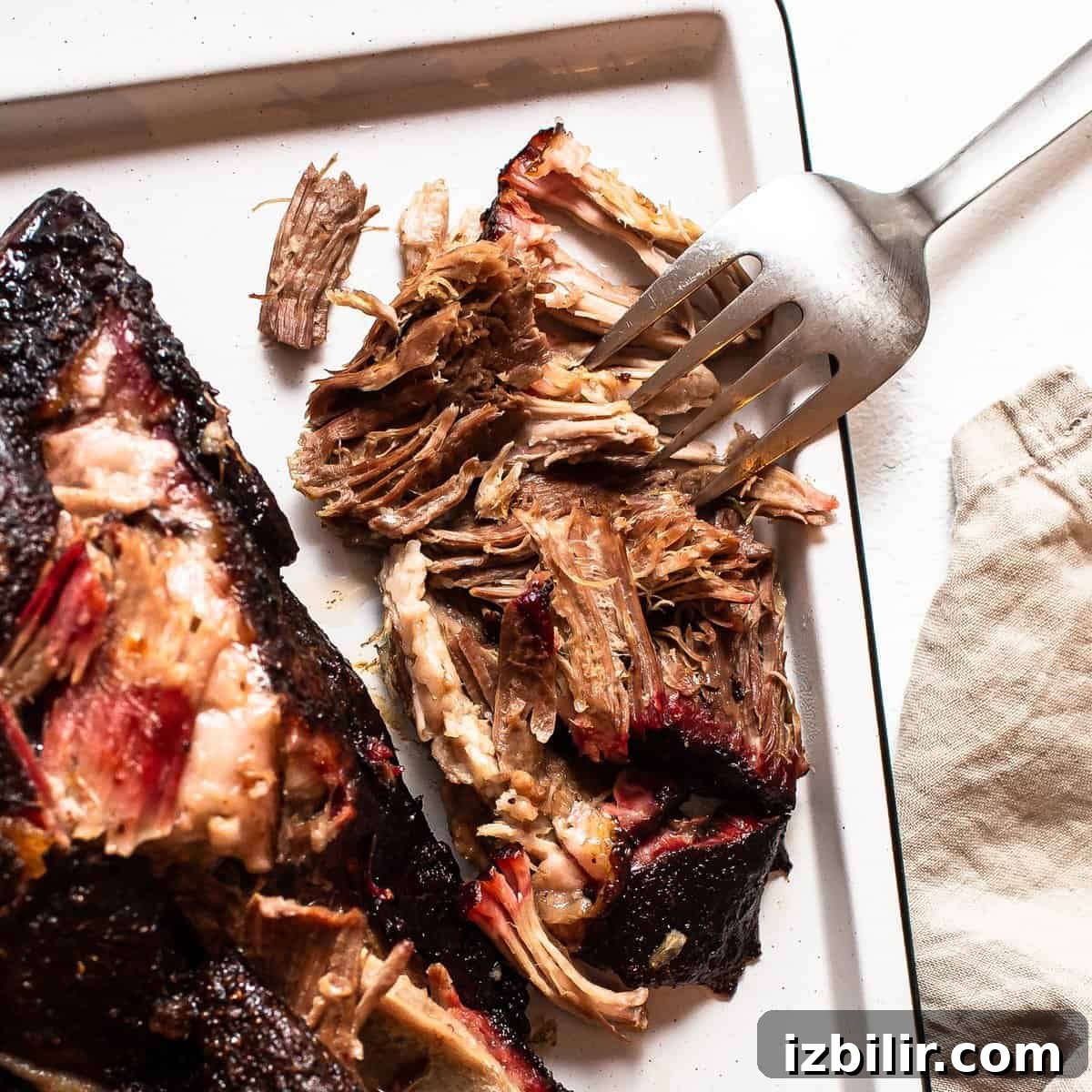
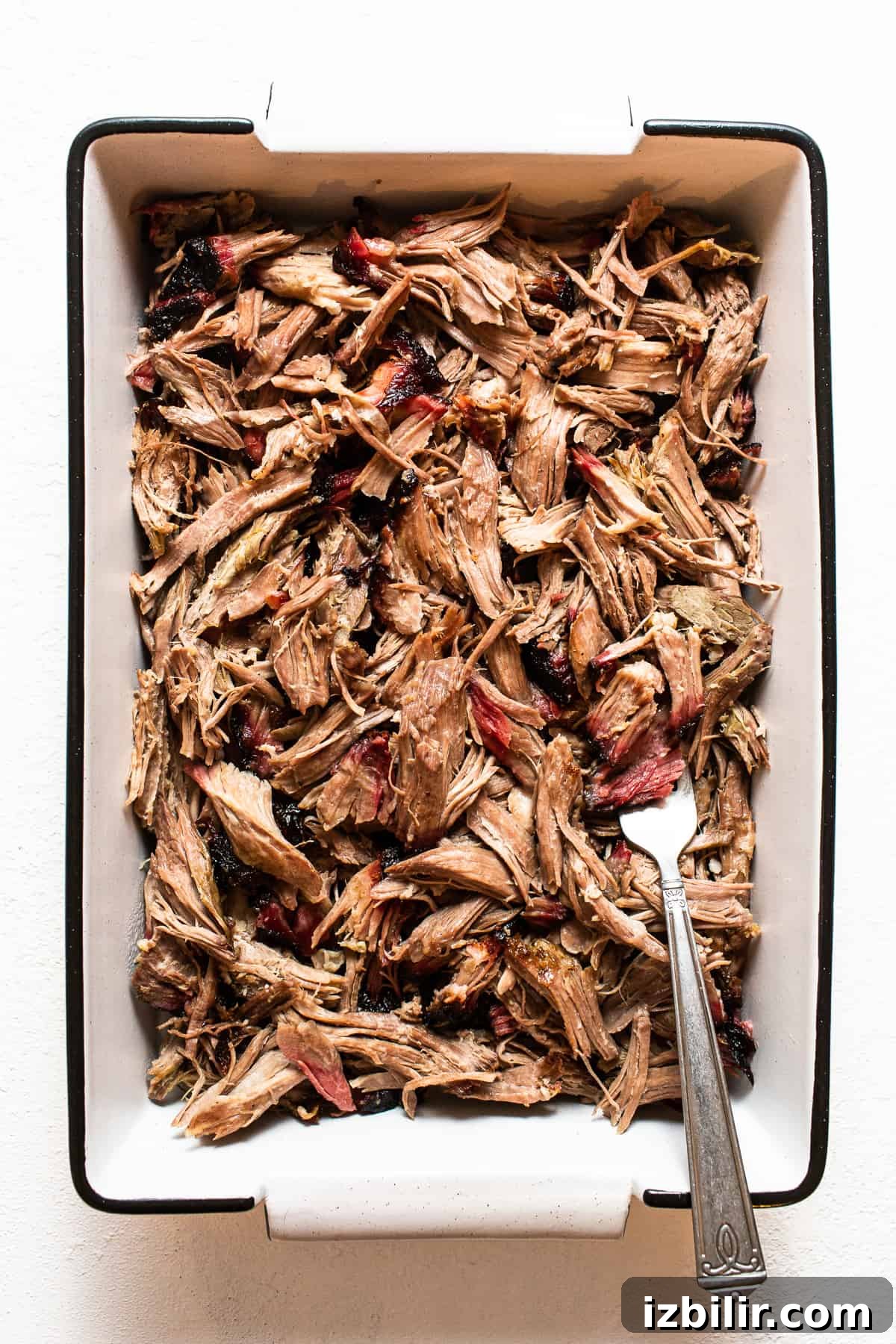
This smoked pork shoulder is rubbed with a flavorful dry rub, smoked low and slow for several hours, and refreshed with an apple‑juice spritz for extra moisture and flavor. The result is juicy, tender shredded pork perfect for sandwiches, tacos, bowls, and meal prep.
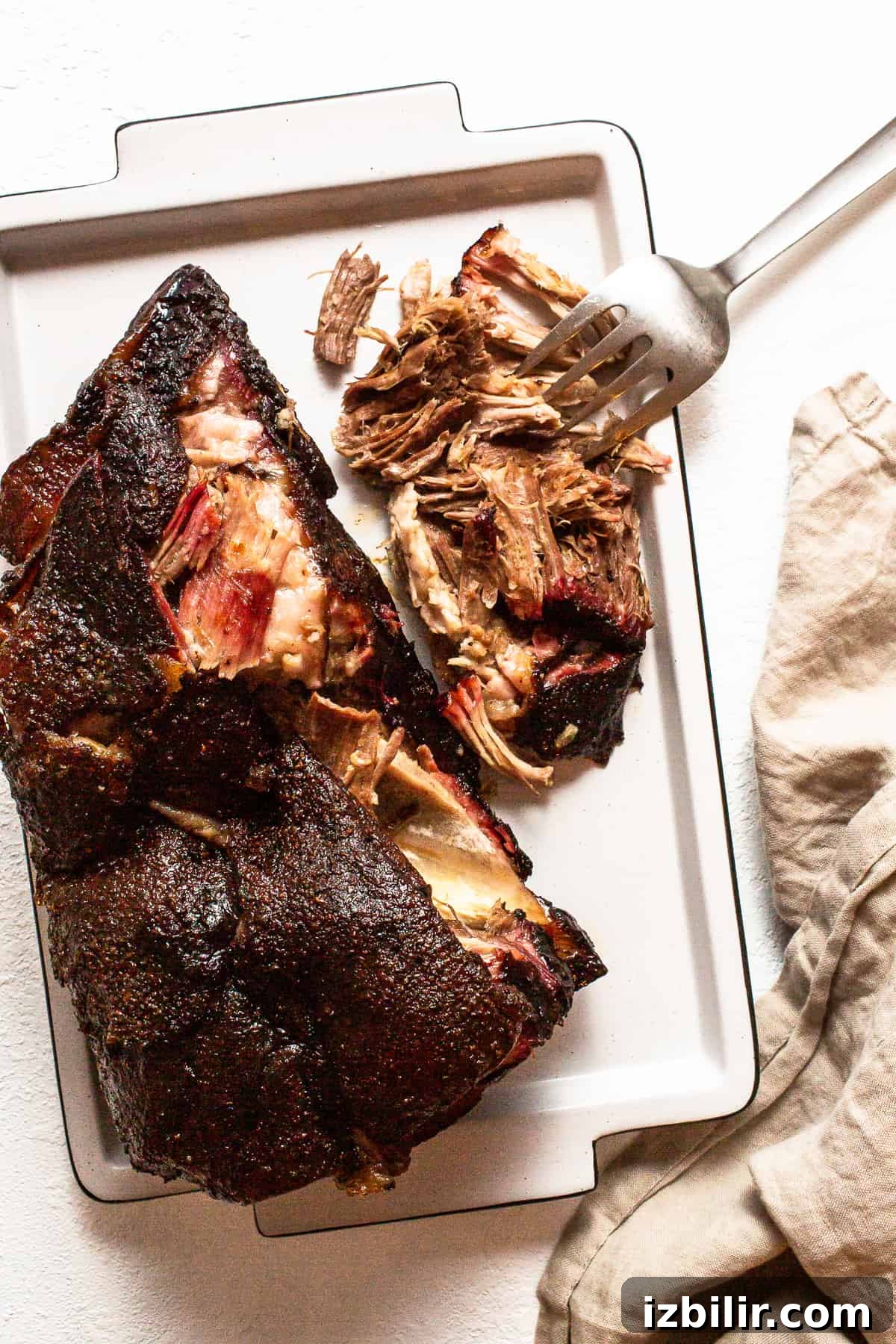
The Best Smoked Pork Shoulder
Smoked pork shoulder is beloved for its rich smoke flavor, balance of sweet and savory spices, and melt‑in‑your‑mouth texture when cooked properly. Cooking the shoulder at a low temperature for many hours renders connective tissue and fat, producing tender meat that easily shreds. Using a simple apple juice spritz during the cook helps maintain moisture and adds a subtle fruity brightness.
Tips Before You Start
Before you begin, consider these practical tips to ensure success:
- Call your butcher or grocery meat counter in advance if you need a 7 lb. bone‑in pork shoulder—these larger cuts can be limited in stock.
- Have extra pellets or wood chips on hand. Running out mid‑cook will drop the smoker temperature and extend cooking time.
- Good woods for pork include hickory for a classic smoky flavor, or fruit woods such as apple or cherry for a milder, slightly sweet profile.
- Give your smoker time to stabilize at the target temperature before adding the meat.
What Is Pork Shoulder?
Pork shoulder is a cut from the pig’s front leg and shoulder area. It contains more fat and connective tissue than leaner cuts like pork loin, which makes it ideal for low‑and‑slow cooking methods such as smoking or braising. The same general shoulder cut may be labeled as pork shoulder, pork butt, Boston butt, or picnic shoulder—names vary by butcher and region.
Other names for pork shoulder
- Pork butt
- Picnic shoulder
- Picnic roast
- Boston butt
What You Need
- Pork shoulder: a bone‑in 6–8 lb. shoulder is ideal for this recipe. Bone‑in shoulders contribute extra flavor and help the meat stay juicy.
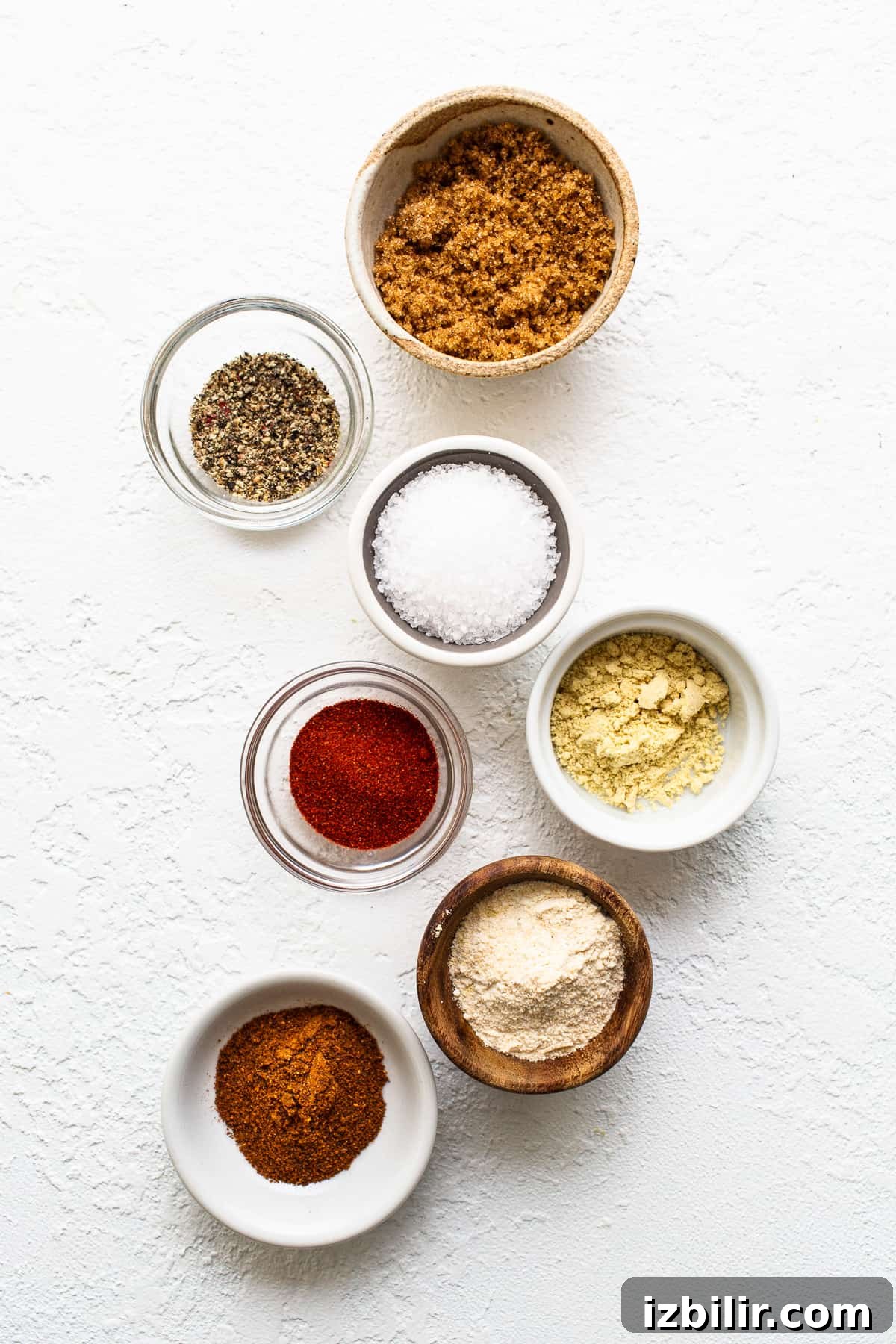
- Dry rub: a blend of salt, dark brown sugar, garlic powder, paprika, chili powder, mustard powder, and black pepper creates a sweet‑savory crust. Don’t skimp on the salt—it seasons and helps tenderize the meat.
- Smoking fuel: pellets or wood chips. Make sure you have enough to maintain smoke throughout the cook. Fruit woods or hickory both work well.
- Apple juice spritz: a small spray made of apple juice, bourbon, maple syrup, and apple cider vinegar to mist the shoulder during smoking to preserve moisture and build flavor.
FAQ
A 7 lb. pork shoulder typically takes about 7–8 hours at 250°F, though times vary by size, smoker type, and ambient conditions. Monitor internal temperature rather than clock time alone.
What internal temperature indicates the pork is done?
For shreddable pulled pork, aim for an internal temperature between 195°F and 205°F. Remove the pork and let it rest 20–30 minutes before shredding to allow juices to redistribute.
Can you over‑smoke pork shoulder?
Yes—too much smoke can overwhelm the meat’s natural flavor. More importantly, keep an eye on internal temperature so the meat doesn’t dry out.
Can you freeze smoked pork shoulder?
Yes. Let the shredded pork cool, then transfer it to a freezer‑safe container or bag. It will keep for up to three months.
How can you use smoked pork shoulder?
Shredded smoked pork is versatile—use it for sandwiches, tacos, nachos, wraps, grain bowls, or simply served with roasted vegetables.
How to Make Smoked Pork Shoulder
- Preheat the smoker: Clean the grates and preheat to 250°F. Add your chosen pellets or wood chips so smoke is steady when you add the meat.
- Prepare the dry rub: Combine 1.5 tablespoons coarse salt, 1.5 tablespoons dark brown sugar, 1 tablespoon garlic powder, 1.5 teaspoons paprika, 1.5 teaspoons chili powder, 1 teaspoon mustard powder, and 1 teaspoon black pepper. Mix well.
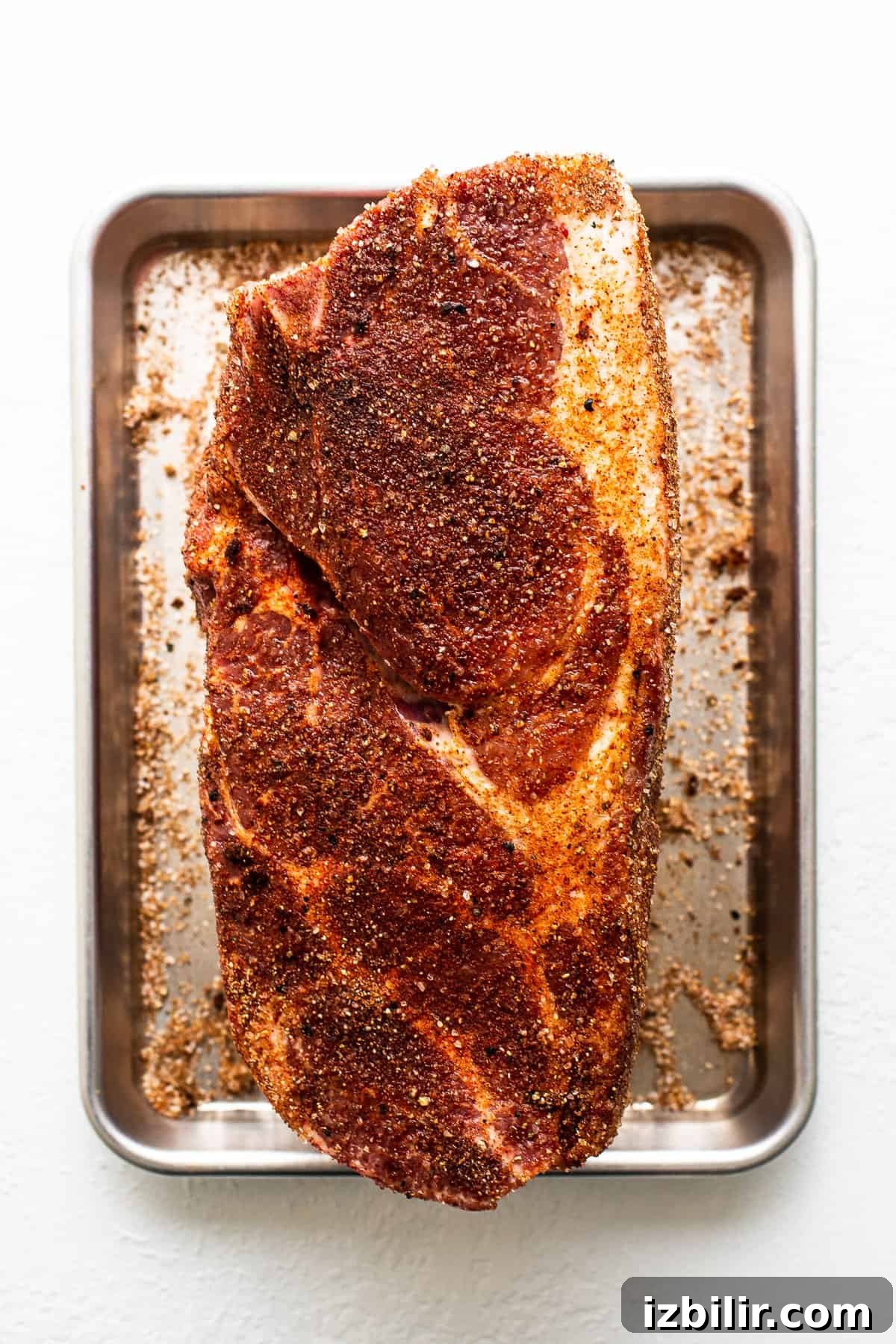
- Rub and rest: Massage the rub all over the pork shoulder, coating thoroughly. Wrap in plastic and refrigerate for at least 2 hours or overnight for deeper flavor.
- Make the spritz: In a small spray bottle combine 1/4 cup apple juice, 1/4 cup bourbon (optional), 2 tablespoons maple syrup, and 2 teaspoons apple cider vinegar. Shake to combine.
- Smoke the pork: Place the pork on the smoker and cook 7–8 hours at 250°F. Spritz the meat every hour to hour‑and‑a‑half to keep the surface moist and help build a sticky bark.
- Reduce temperature late in the cook: After about 6 hours, you can lower the smoker to 200°F to finish more gently if desired.
- Check doneness and rest: When the internal temperature reaches 195–205°F, remove the shoulder and rest 20–30 minutes before shredding.
- Serve: Shred or slice and serve on buns, in tacos, over nachos, or in bowls with roasted veg or potatoes.
Top Tips
- Avoid opening the smoker frequently—each time you open it you lose heat and smoke, which lengthens cooking time and can affect bark development.
- Keep extra pellets or wood chips on hand and check levels periodically during the cook.
- Use a reliable instant‑read thermometer to monitor internal temperature; it’s the most accurate way to know when the pork is ready.
Charcoal Grill Directions
If you don’t have a smoker, you can approximate the method on a charcoal grill using indirect heat:
- Place soaked wood chips in a foil pan, cover with foil, and poke holes to allow smoke to escape. Position the pan under the grill grates in a back corner.
- Light the charcoal and adjust vents to maintain a low, steady temperature. When smoke appears, add the pork to the grill on the cool side away from direct coals.
- Monitor and replenish wood chips and coals as needed to maintain steady smoke and temperature.
Serving Ideas
- Nachos: top chips with shredded smoked pork, cheese, pickled onions, and crema.
- Tacos: warm tortillas with pork, minced onion, cilantro, and a squeeze of lime.
- With vegetables: pair with steamed broccoli or roasted sweet potatoes for a balanced meal.
- In a bowl: serve shredded pork over roasted potatoes, quinoa, or rice with greens and hummus.
Storage
Allow the pork to cool completely, then store in an airtight container in the refrigerator for 5–7 days. For longer storage, freeze shredded pork in a freezer‑safe bag for up to three months.
Ingredients (for 12 servings)
- 1.5 tablespoons coarse salt
- 1.5 tablespoons dark brown sugar
- 1 tablespoon garlic powder
- 1.5 teaspoons paprika
- 1.5 teaspoons chili powder
- 1 teaspoon ground mustard powder
- 1 teaspoon ground black pepper
- 7–8 lb. bone‑in pork shoulder (pork butt)
Apple Juice Spritz
- 1/4 cup apple juice
- 1/4 cup bourbon (optional)
- 2 tablespoons maple syrup
- 2 teaspoons apple cider vinegar
Instructions
- Combine the dry rub ingredients in a bowl and mix thoroughly.
- Coat the pork shoulder evenly with the dry rub, massaging it into all surfaces. Wrap and refrigerate for at least 2 hours or overnight.
- Preheat your smoker to 250°F and prepare the apple juice spritz in a spray bottle.
- Place the pork on the smoker and smoke for 7–8 hours, spritzing every hour to hour‑and‑a‑half.
- After about 6 hours, you may lower the smoker to 200°F to finish if desired.
- Remove the pork when internal temperature reaches 195–205°F. Rest 20–30 minutes, then shred and serve.
Tips & Notes
- Cooking times vary by smoker, weather, and meat size—use internal temperature as your guide.
- Adjust the dry rub spices to suit your taste; add smoked paprika, cayenne, or brown sugar for different flavor profiles.
- You will typically need enough pellets or chips to last the full cook—plan for roughly 20 lb. of pellets for a long cook on many pellet smokers.
Nutrition (approximate per serving)
Calories: 426 kcal · Carbohydrates: 6 g · Protein: 52 g · Fat: 19 g · Fiber: 1 g · Sugar: 5 g
Photography: images used in this post were provided by the original photographer credited with the recipe.