
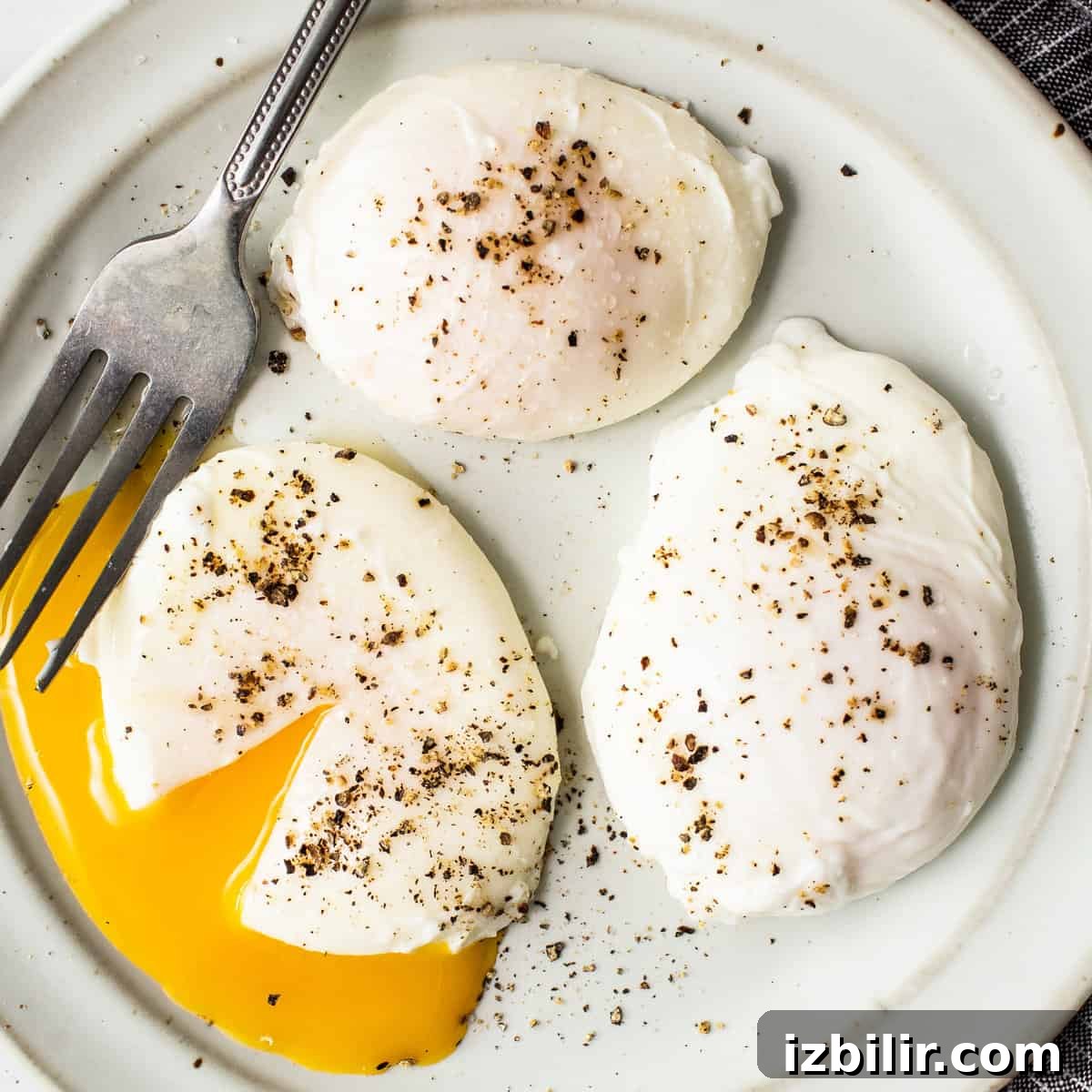
Looking for the best poached eggs recipe? This straightforward method produces firm, glossy egg whites and rich, runny yolks even if you’re new to poaching. A few simple tools and clear steps are all you need to make restaurant-quality poached eggs at home.
With a little practice, you’ll master perfectly poached eggs that are ideal for breakfast, brunch, or an easy, elegant meal any time of day.
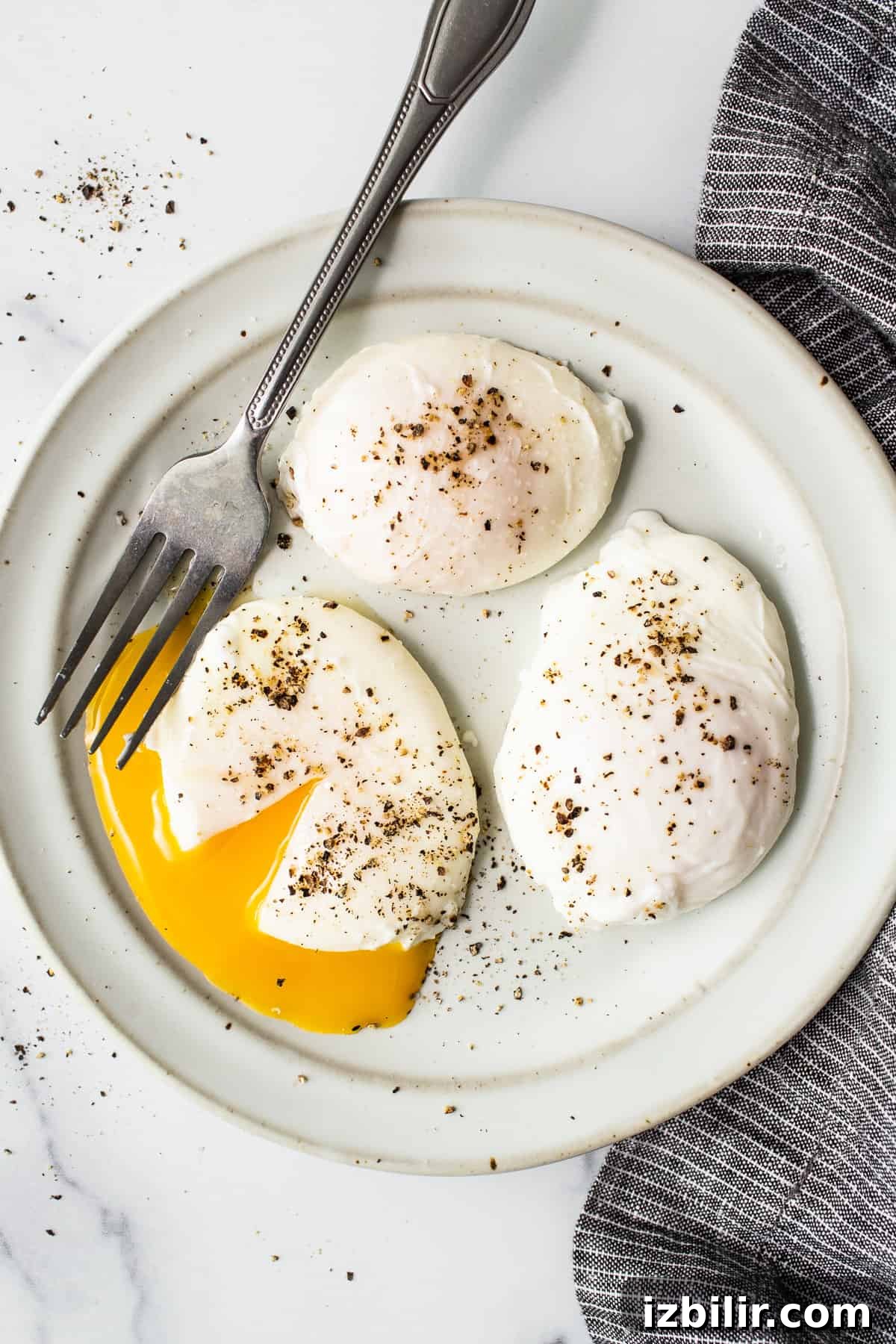
The Perfect Poached Eggs
Poaching eggs can seem intimidating at first — balancing water temperature, handling delicate whites, and achieving a jammy yolk can take a few tries. The good news: you don’t need special skills or equipment to get consistent results. This guide distills the technique into clear, reliable steps so your poached eggs turn out beautifully every time.
Why I love this recipe
- Step-by-step directions that produce consistent results.
- Glossy, set whites with soft, runny yolks.
- No added fat required — a lighter way to enjoy eggs.
- Easy to scale for meal prep or serving a crowd.
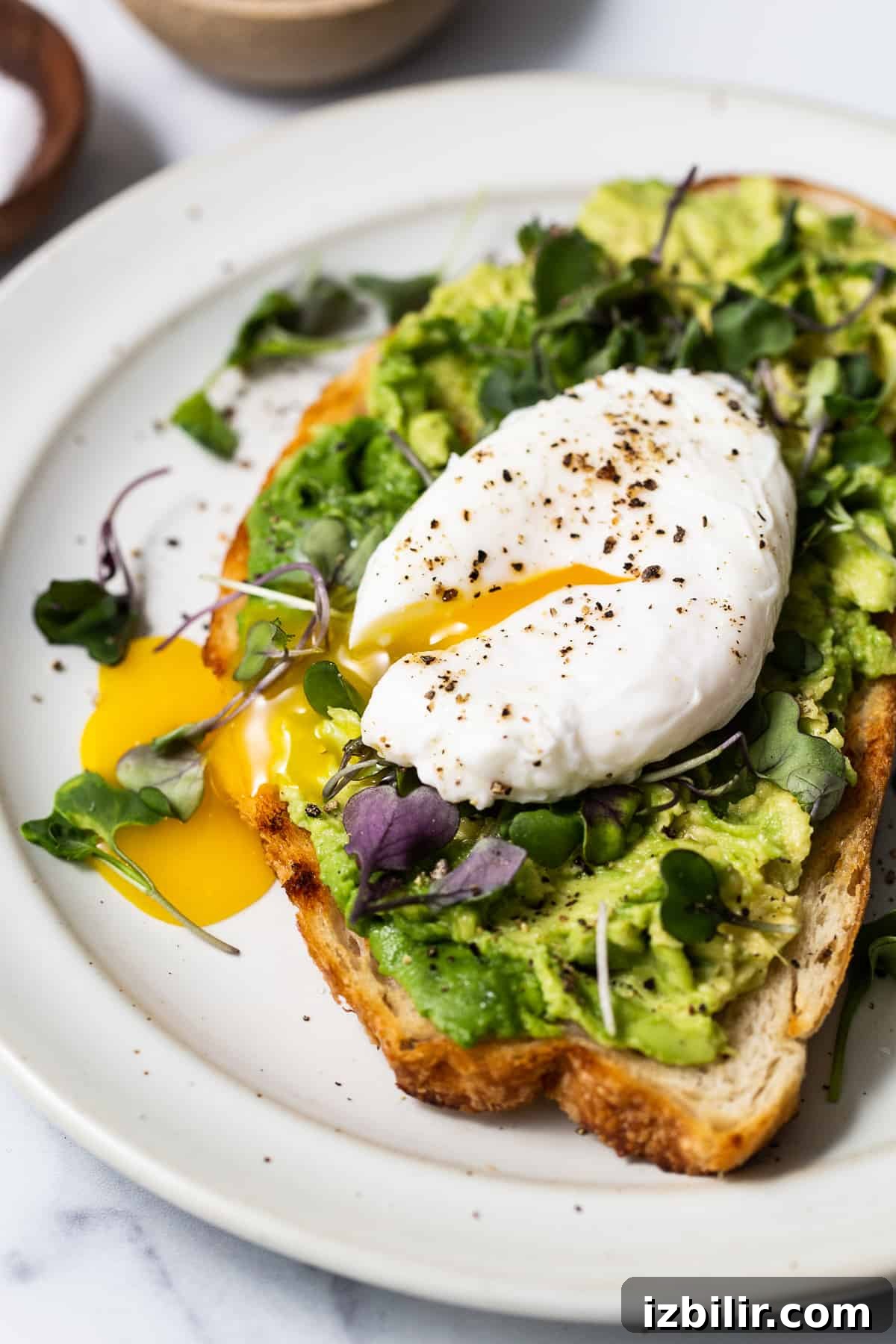
What are poached eggs?
A poached egg is gently cooked in simmering water after being removed from its shell. Poaching cooks the egg without added grease, preserving moisture and nutrients while yielding tender whites and a runny or slightly set yolk depending on cook time.
Why poach eggs?
Poached eggs are a low-fat cooking method because they cook directly in water rather than in oil or butter. They offer a delicate texture and pair beautifully with toast, salads, grain bowls, and classic dishes like eggs Benedict. Beyond taste, poaching is a quick technique that can be repeated for multiple eggs with minimal cleanup.
What you need
You probably already have everything required. Keep it simple:
- Large pot or deep skillet with water
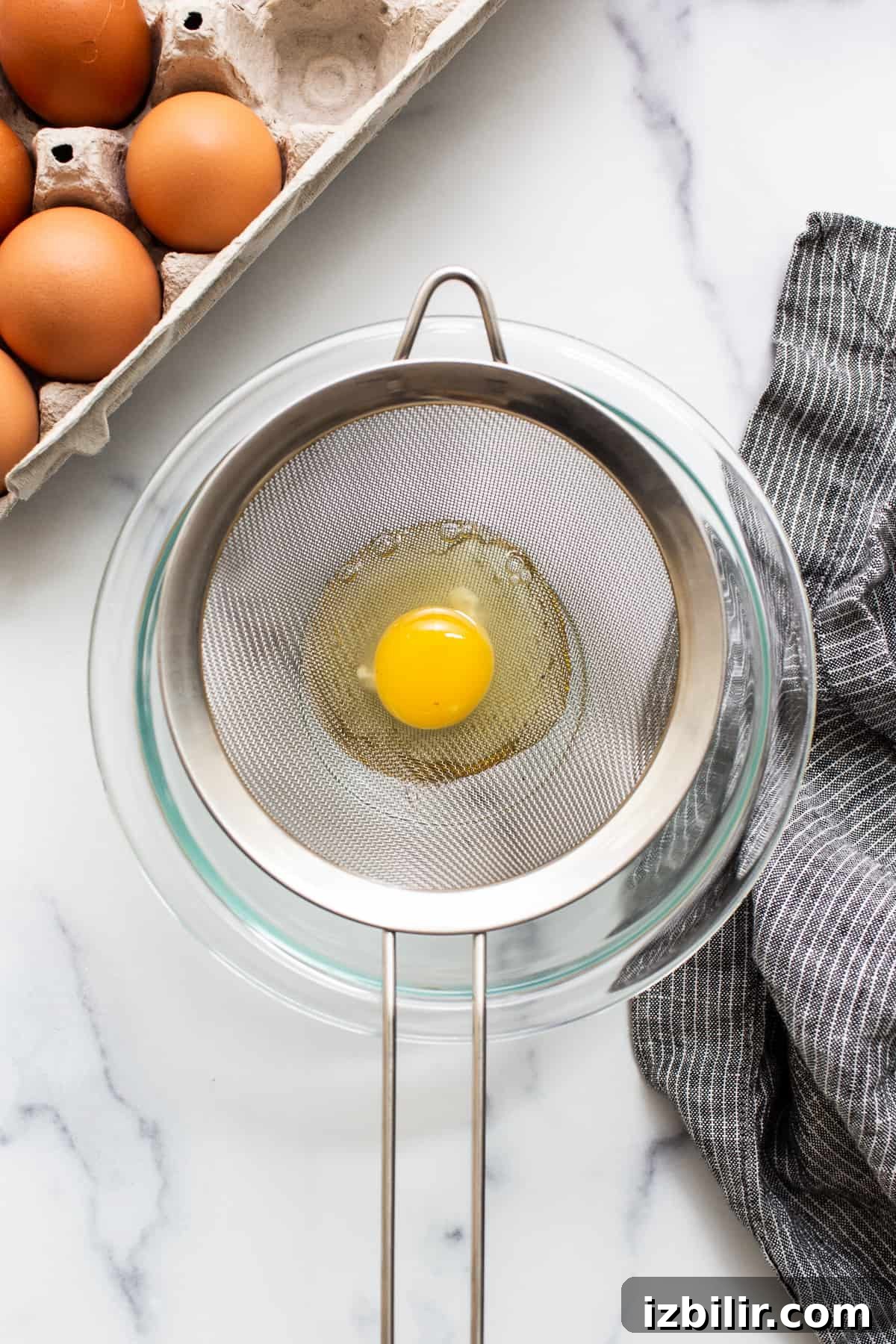
- Fine mesh strainer (or small sieve)
- Small bowl
- Spoon or slotted spoon
If you have egg poaching cups, they’re handy but not necessary. The strainer method works reliably and helps remove the loose watery whites that can cause wisps in the poaching water.
How to make a perfect poached egg
1. Bring the water to a gentle boil
Fill a wide pot with several inches of water, add a pinch of salt, and heat until it reaches a rolling boil. Reduce the heat so the water holds a gentle simmer — small bubbles should rise, but the surface should not be aggressively boiling. Too much movement will tear the egg white; too cool and the white will spread.
2. Strain the excess whites
Crack an egg into a fine mesh strainer held over a small bowl. Let the thin, watery white drain away. This step removes the loose strands that otherwise create wisps in the pot and helps the poached egg hold a neater shape.
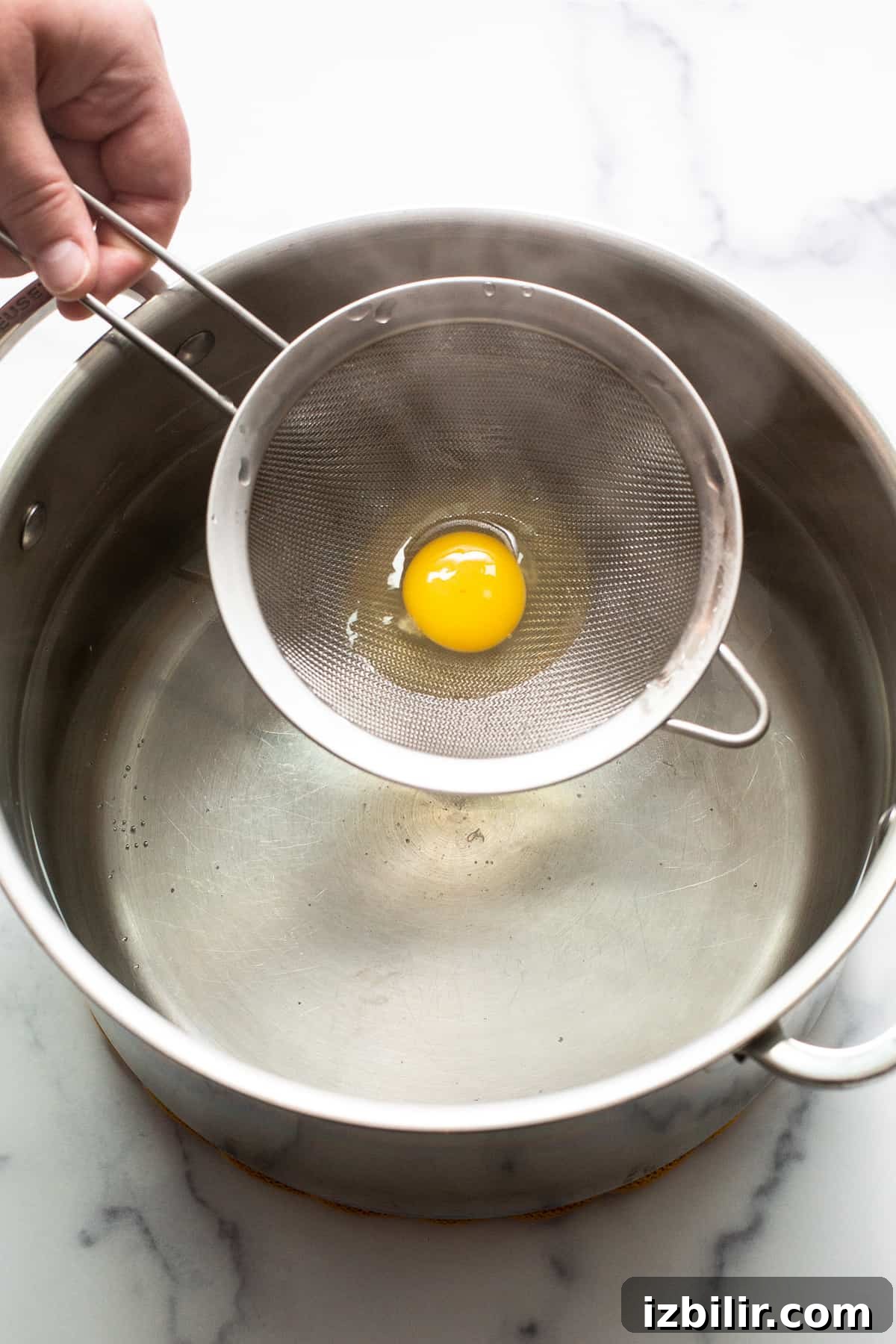
3. Add the egg and begin cooking
Lower the strainer with the egg into the simmering water so the white begins to set. When the white has a small layer set around the yolk, gently tip the egg from the strainer into the water. The pre-set white will help keep the yolk contained.
4. Use a gentle whirlpool
Stir the water slowly in a circular motion to create a mild whirlpool; this encourages the egg to wrap into itself and form a tidy round shape. After about 20–30 seconds of stirring, stop and let the egg cook undisturbed. For a soft, runny yolk, poach 2–3 minutes; for a slightly firmer yolk, aim for 3–4 minutes; add an extra minute or two for fully set yolks.
Lift the egg with a slotted spoon to check doneness and let any excess water drain before serving.
Make-ahead poached eggs
Poached eggs keep well and are easy to prep in advance for a breakfast spread or meal prep.
- Immediately after poaching, transfer eggs to an ice water bath to stop cooking and firm the white. Replace water as needed until eggs are fully cool.
- Store cooled eggs in an airtight container in the refrigerator for up to 5 days.
- To reheat, warm eggs gently in hot (not boiling) water for 1–3 minutes until heated through. Avoid boiling water, which will overcook the yolk and toughen the white.
- Drain on a paper towel and serve with your favorite accompaniments.
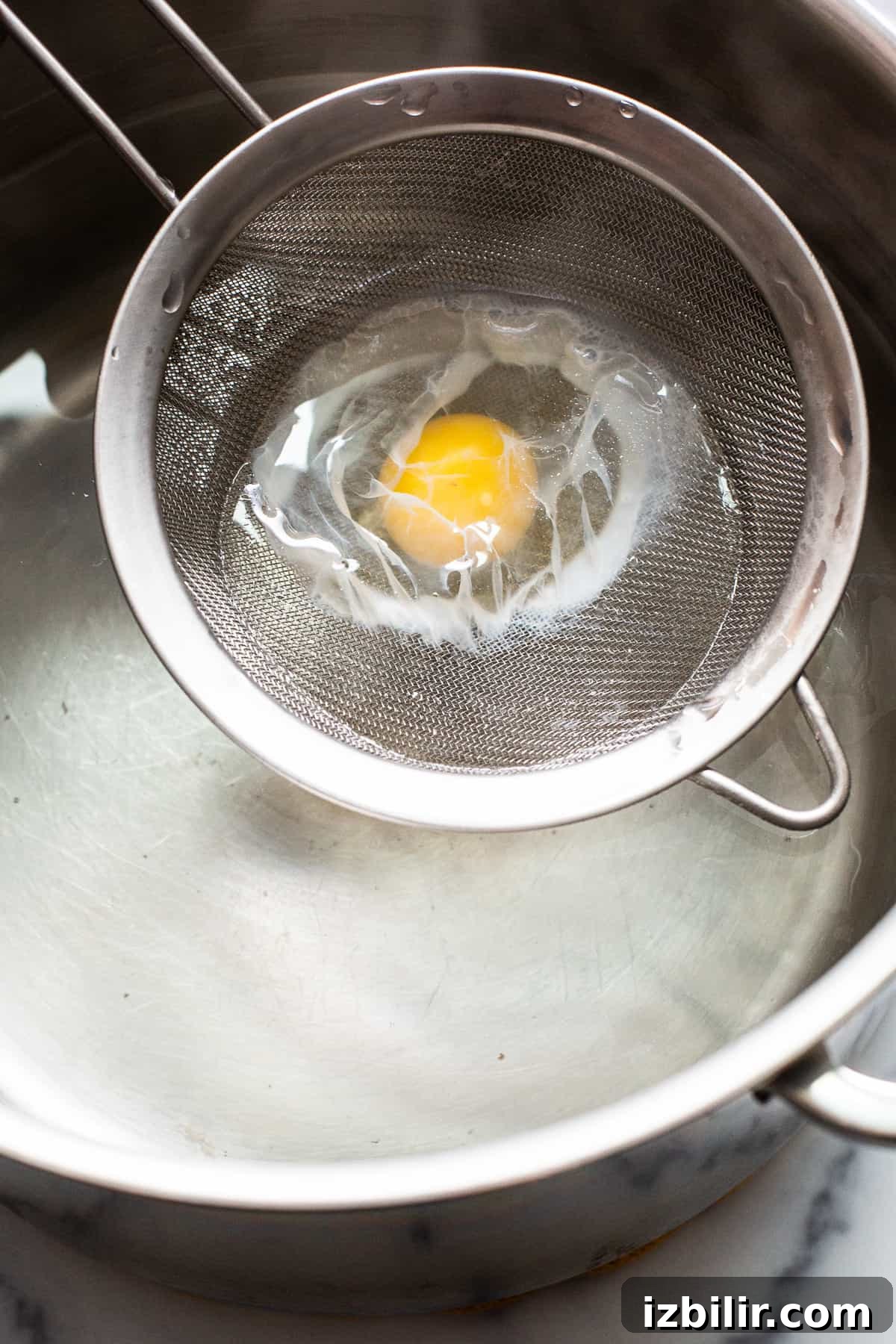
Top tips for perfect poached eggs
- Use fresh eggs: Fresher eggs hold their shape better and have firmer whites.
- Strain the whites: A fine mesh strainer removes the loose, watery white that creates wisps in the poaching water and improves presentation.
- Control the temperature: Aim for a gentle simmer. Too cold and the egg spreads; too hot and the white becomes ragged.
- Adjust timing by size: Medium and large eggs will cook at slightly different rates — adjust your poaching time accordingly.
- Poach multiple eggs: You can poach two or more eggs at once by using the strainer method and placing eggs gently into the water. Keep space between eggs so they don’t stick together.
FAQs
Cook time depends on how runny you want the yolk. About 2 minutes yields a very runny yolk, 3–4 minutes gives a slightly jammy center, and 5+ minutes produces a firmer yolk. Test one egg by lifting it with a slotted spoon and gently pressing it with a teaspoon.
Vinegar isn’t required, but a small splash of vinegar or lemon juice can help coagulate the whites more quickly. It’s optional; many cooks skip it and still get great results, especially when using the strainer method.
Either the water is too cool (the egg spreads and dissolves) or it’s boiling too vigorously (the white becomes torn and wispy). Maintain a gentle simmer to keep the egg intact and to avoid stringy bits in the water.
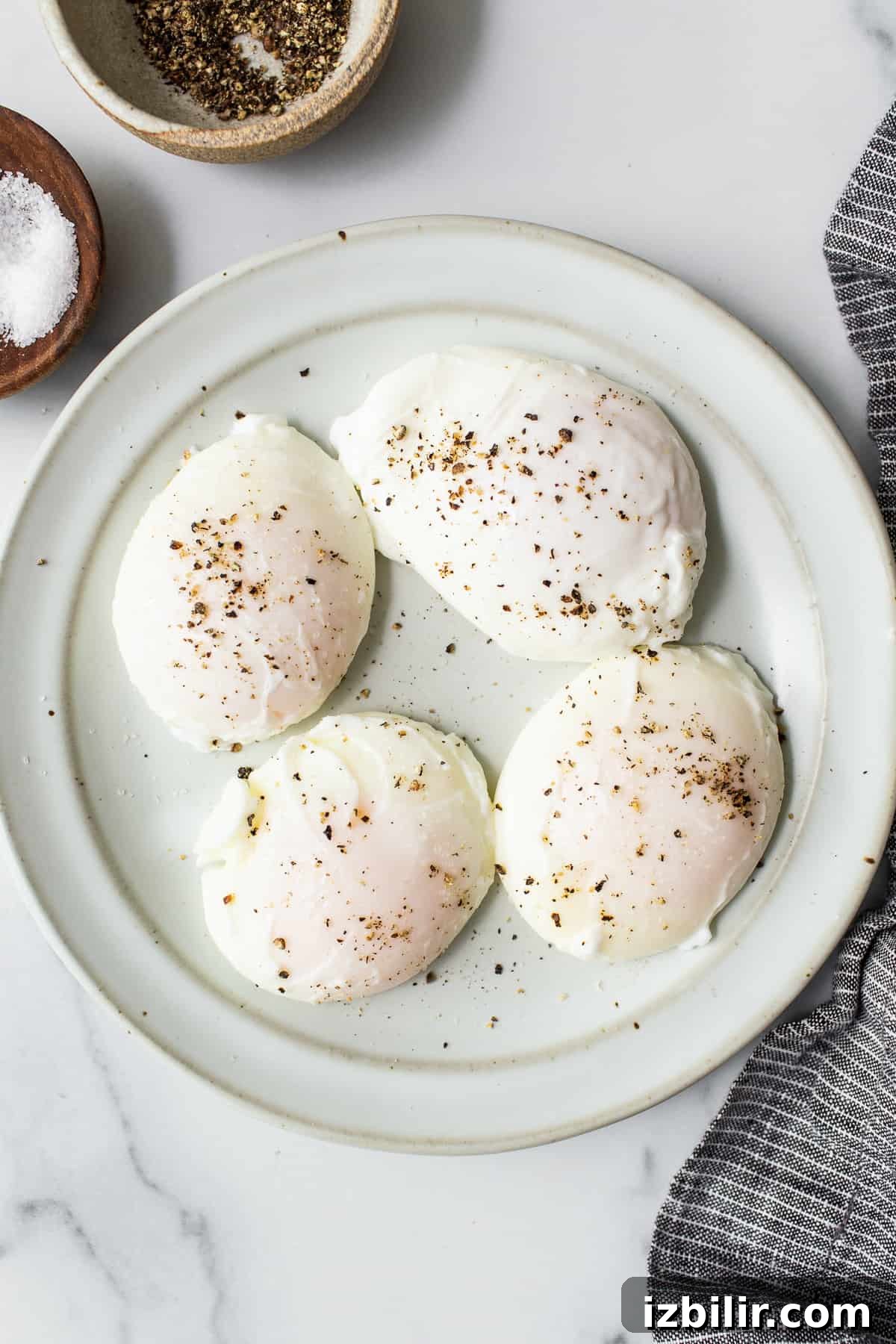
What to serve with poached eggs
- Avocado toast or whole-grain toast
- Crispy bacon or breakfast sausage
- Greens or a light salad
- Grains like quinoa or farro bowls
- Pancakes, waffles, or French toast for a heartier brunch
- Yogurt and granola on the side for contrast
Storage and reheating
After poaching, place eggs in an ice water bath until cool, then store in an airtight container in the refrigerator for up to five days. To reheat, warm eggs gently in hot (not boiling) water for 1–3 minutes, then drain and serve. You can also reheat briefly in the microwave on low power, covered, but this risks overcooking the yolk if done too long.
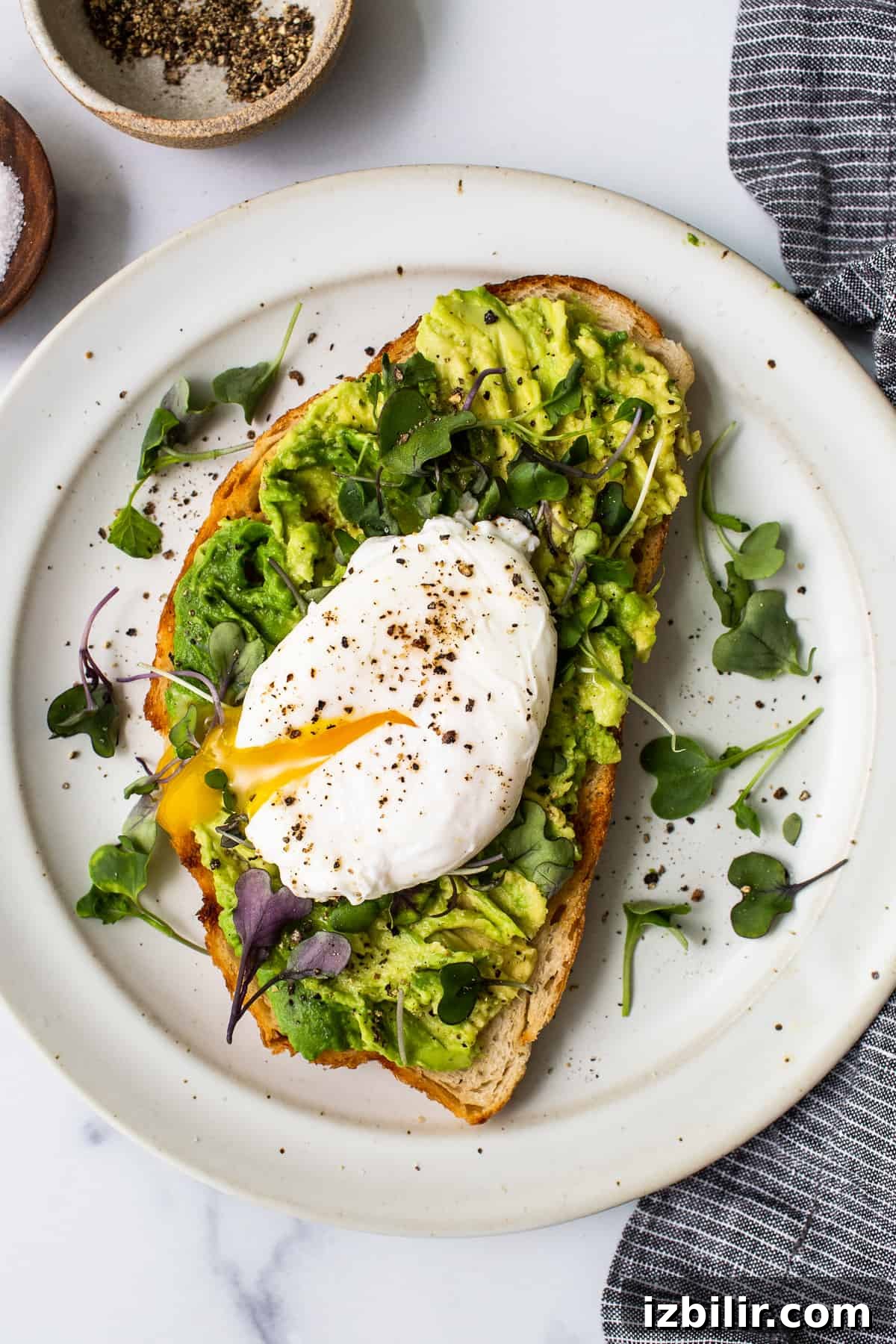
Photography: Photos in this post were taken by Ashley McGlaughlin.
Perfect Poached Eggs
This easy method delivers glossy whites and golden, runny yolks — ideal for both beginners and those who want consistent results.
Recipe details
- Prep time: 5 minutes
- Cook time: 3–4 minutes (per batch)
- Total time: about 9 minutes
- Servings: 4
Ingredients
- 4 large eggs*
- Salt (for the water)
Instructions
- Bring a large pot of salted water to a gentle boil, then reduce to the lowest setting to maintain a simmer.
- Place a fine mesh strainer over a small bowl. Crack an egg into the strainer and let the thin white drain away.
- Lower the strainer with the egg into the simmering water. When the white begins to set, gently tip the egg into the water so the white folds over the yolk.
- Gently stir the water to create a mild whirlpool and let the egg cook undisturbed for 3–4 minutes for a slightly jammy yolk. Adjust time for softer or firmer yolks.
- Use a slotted spoon to lift the egg from the water. Drain and serve immediately, or transfer to an ice bath to store for later.
- Repeat with remaining eggs.
Tips & notes
- Fresher eggs produce better-shaped poached eggs.
- Cook times vary with egg size — medium eggs will need slightly less time than large eggs.
- The fine mesh strainer eliminates excess white and improves presentation.
Nutrition (per egg)
Calories: 63 kcal; Carbohydrates: 0.3 g; Protein: 6 g; Fat: 4 g; Sugar: 0.2 g. Nutrition values are estimates and should be used as approximations.