
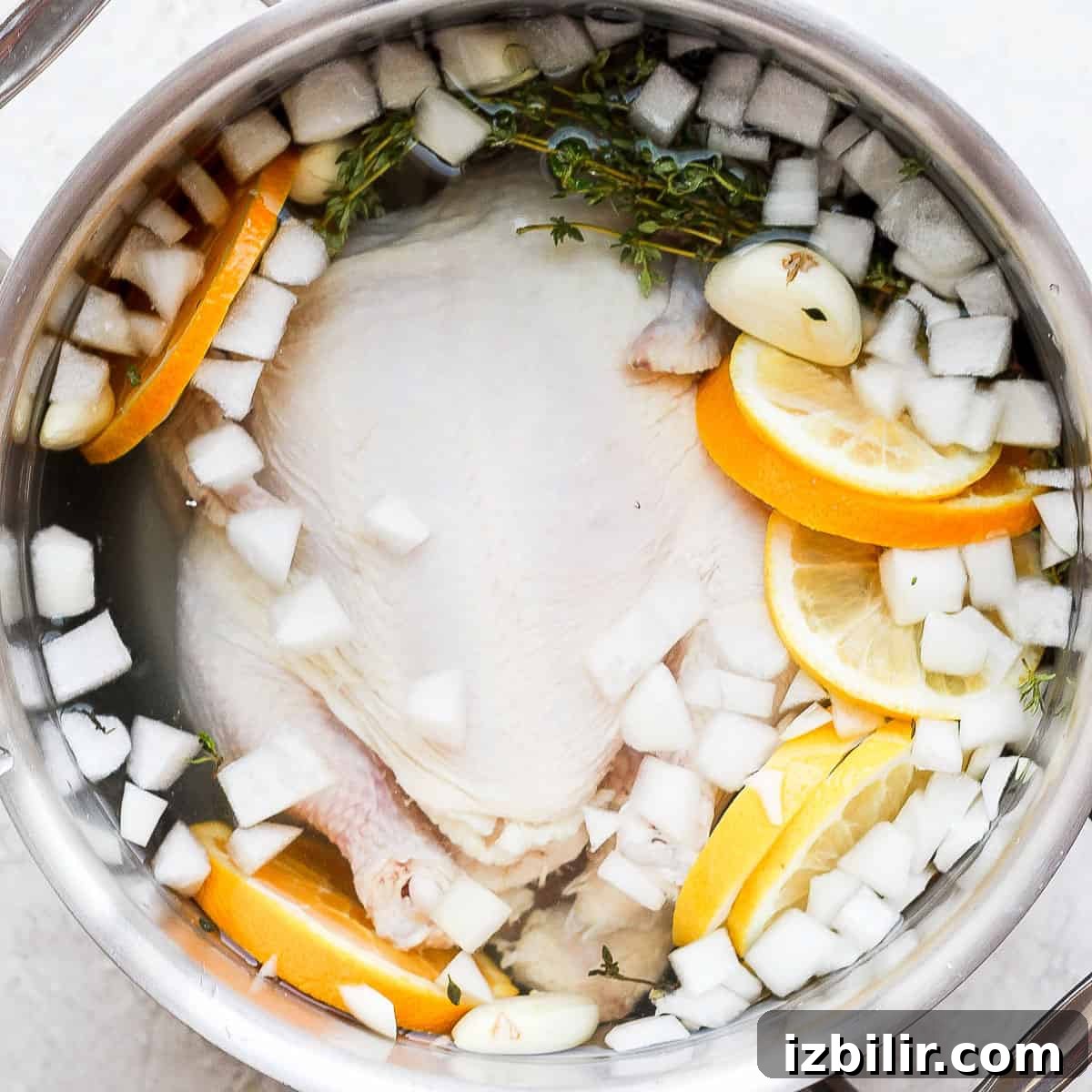
This simple, classic whole chicken brine delivers the juiciest, most flavorful whole roasted or grilled chicken you’ve ever made. Use this wet brine before grilling, smoking, or roasting for reliably tender, moist results.
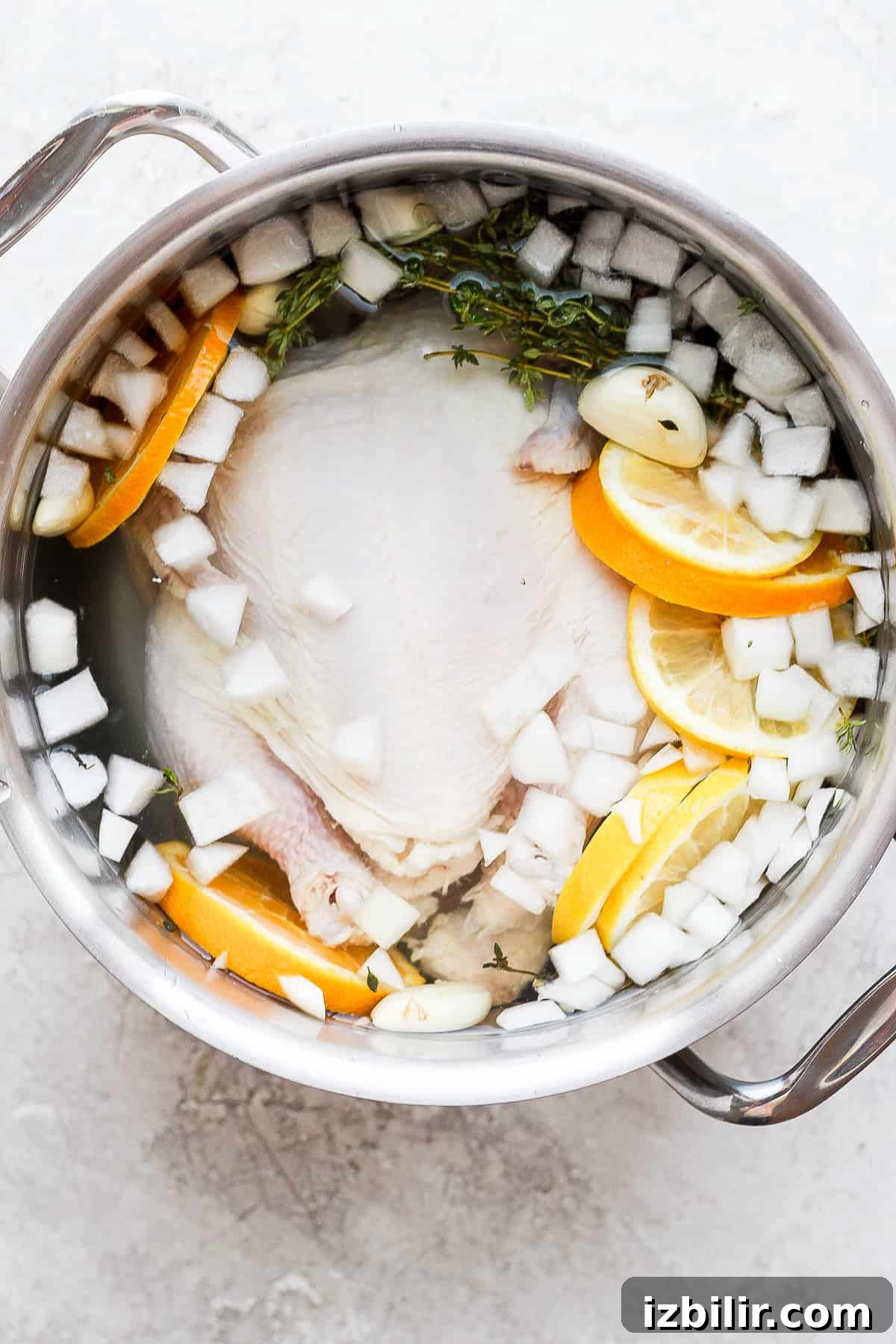
Our Go-To Whole Chicken Brine
Brining a whole chicken might sound technical, but it’s very straightforward. This wet brine uses water, kosher salt, aromatics, citrus, and fresh herbs to gently season and hydrate a whole bird. It requires minimal prep and yields a noticeable improvement in flavor and texture—especially for lean cuts like chicken.
Why Brine a Chicken?
There are three primary benefits to brining a whole chicken:
- Enhanced flavor: The salt-infused brine seasons the meat throughout rather than just on the surface, producing a deeper, more balanced savory taste.
- Improved texture: Brining helps loosen muscle fibers, which makes the cooked meat more tender and pleasant to bite into.
- Better moisture retention: Salt encourages the meat to hold onto water during cooking, resulting in juicier breast and thigh meat after roasting or grilling.
Because chicken and other lean meats have low fat, brining is especially useful to prevent dryness and improve bite and mouthfeel.
Dry Brine vs. Wet Brine
This recipe uses a wet brine, meaning it combines salt with water and aromatics so the bird soaks in the seasoned liquid. A dry brine only uses salt and relies on the meat’s own moisture to dissolve and distribute the salt, producing similar benefits with less liquid. Both methods are effective; choose wet brine when you want added aromatics and citrus infused into the bird.
Chicken Brine Ingredients
- 9 cups water
- 1/2 cup kosher salt
- 4 cloves garlic, smashed
- 1 small white onion, chopped
- 1/2 orange, thinly sliced
- 1/2 lemon, thinly sliced
- 5 sprigs fresh thyme
- 4 lb whole chicken, thawed
Choosing a Whole Chicken
This brine is scaled for a roughly 4 lb whole chicken. If your bird is larger, increase the liquid so the chicken can be fully submerged—doubling the brine for much bigger birds is common. Make sure the chicken is completely thawed before brining and that the container you use fits comfortably inside your refrigerator.
How to Brine a Chicken
Brining a chicken is simple and only takes a few steps. Follow this process for a reliably juicy bird:
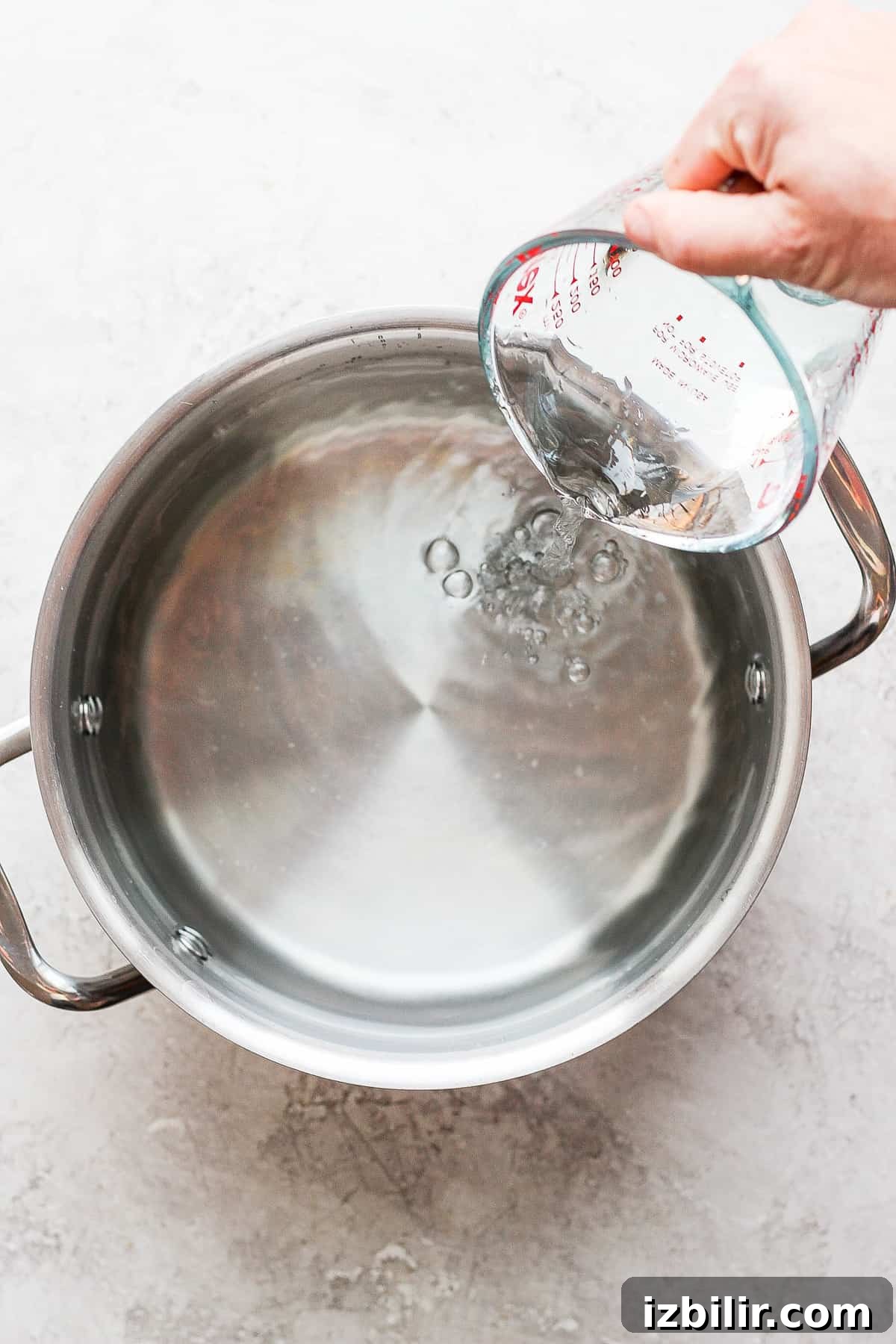
- Fill a large pot, bucket, or bowl with 9 cups of cold water.
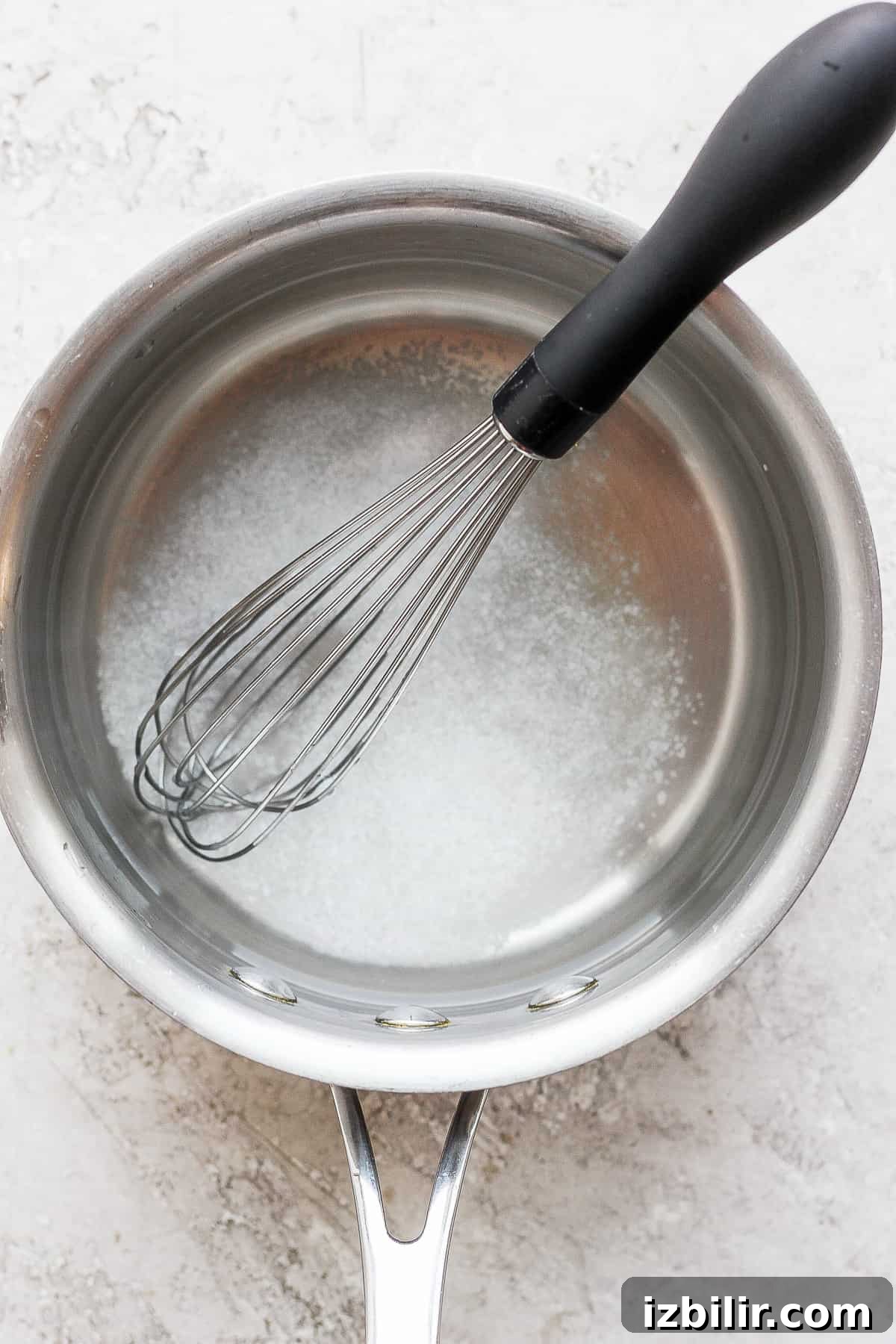
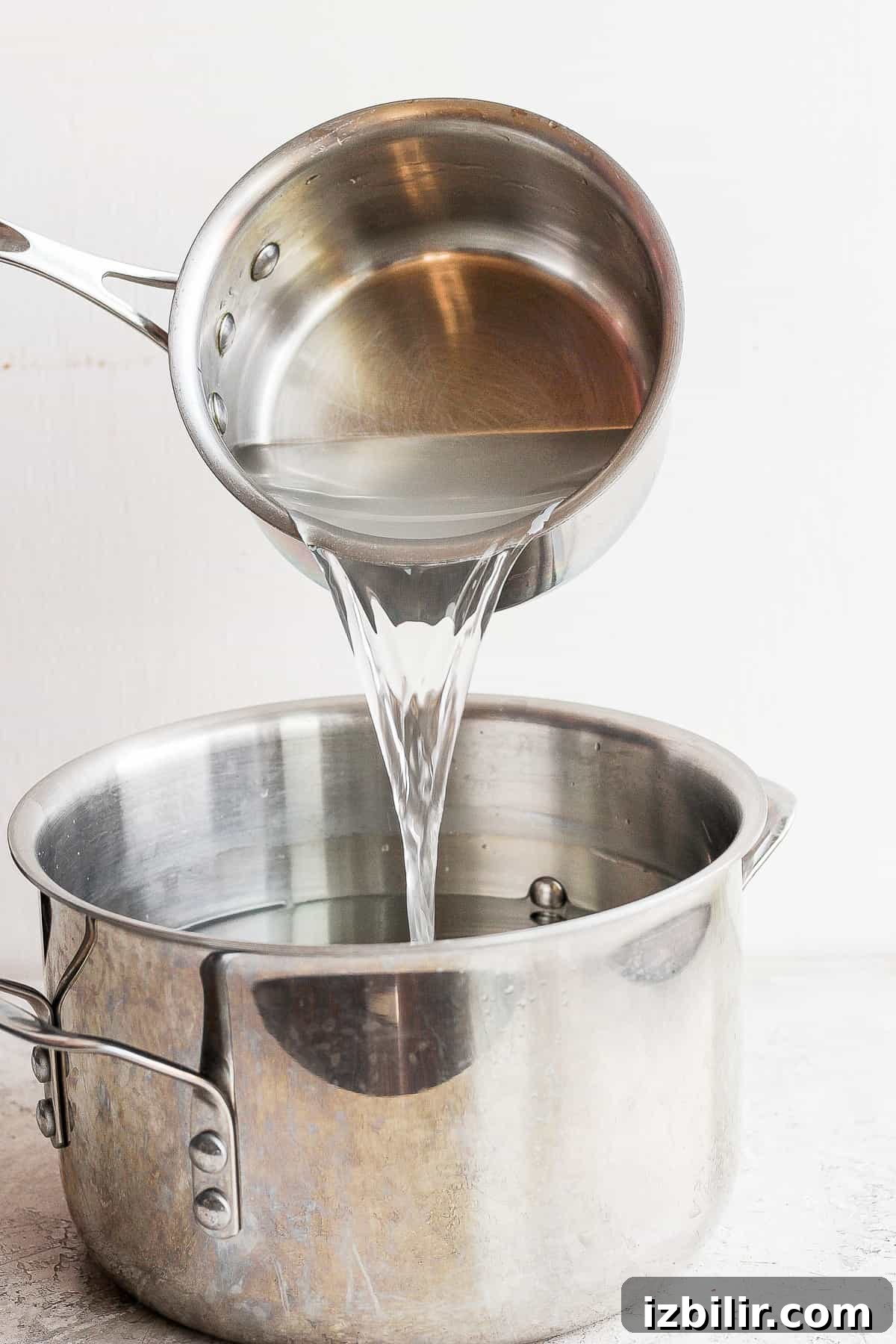
- Remove 1 cup of that water into a small saucepan. Add the kosher salt to the saucepan and heat gently over medium heat, whisking until the salt dissolves. Do not boil. Remove from heat and let cool slightly.
- Pour the salted water back into the large container and whisk to combine with the remaining cold water.
- Add the smashed garlic, chopped onion, orange and lemon slices, and sprigs of fresh thyme. Stir to disperse the aromatics throughout the brine.
- Place the whole chicken in the brine, breast side down, and ensure it is fully submerged. If needed, weigh it down with a plate or sealed bag of water.
- Cover and refrigerate for 12 hours or overnight.
- When ready to cook, remove the chicken from the brine, pat dry with paper towels, season as desired, and proceed with grilling, smoking, or roasting. Patting the skin dry helps it brown and crisp properly.
Tips for Best Results
- Keep the chicken chilled while brining—always refrigerate to prevent bacterial growth.
- If you prefer less salt, reduce the kosher salt slightly, but the salt is essential to the brine’s tenderizing and moisture-retaining effects.
- Remove excess aromatics and citrus before cooking to prevent burning if grilling at high heat.
- For crisper skin after a wet brine, allow the bird to rest uncovered in the fridge for a few hours after removing it from the brine to air-dry the skin.
Chicken Brine FAQs
Why should I brine a chicken?
Brining holds moisture in the meat and infuses it with flavor, producing a juicier, more flavorful chicken than unbrined preparations.
Does brining make chicken salty?
Properly balanced brines do not leave the finished chicken tasting overly salty. The salt helps alter the muscle proteins so the meat holds onto more moisture and cooks more tenderly.
Does brining make chicken tender?
Yes. The salt in the brine helps relax and break down tough muscle fibers, resulting in a more tender texture when cooked.
Storage and Safety
Always brine in the refrigerator, not at room temperature. Keep the chicken fully submerged and stored at a consistent chilled temperature. After cooking, refrigerate leftovers within two hours and consume within three to four days.

Nutrition Note
Nutrition information varies based on portion size and how the chicken is prepared after brining. Any nutrition values should be treated as estimates and will change depending on added oils, rubs, or sauces used at cooking time.
Final Thoughts
A simple wet brine is one of the easiest ways to upgrade a whole chicken. With just salt, water, citrus, garlic, onion, and a few herb sprigs, you can take a standard bird and turn it into something juicy, tender, and deeply flavorful. Try this brine before your next roast, grill, or smoke—you’ll notice the difference.