
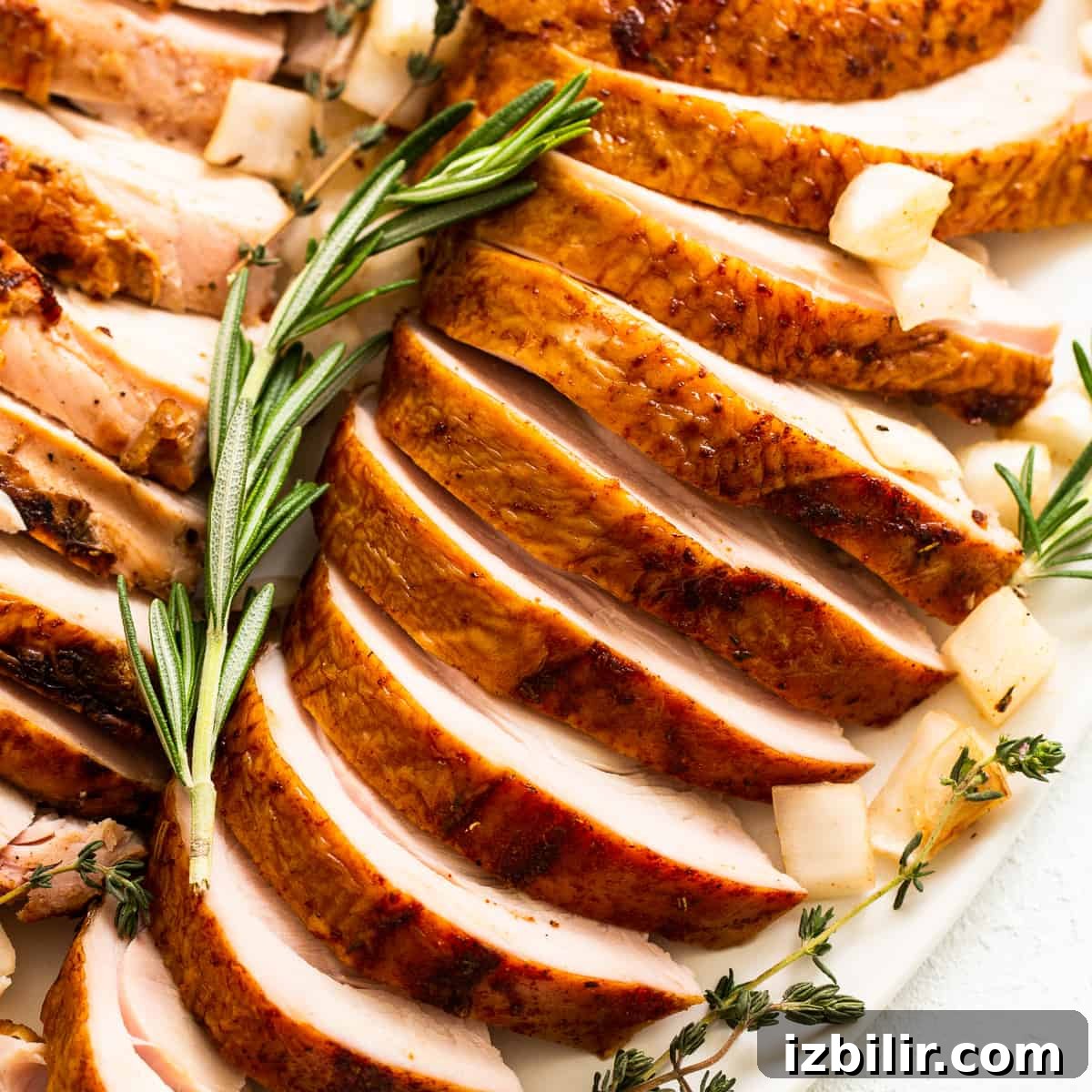
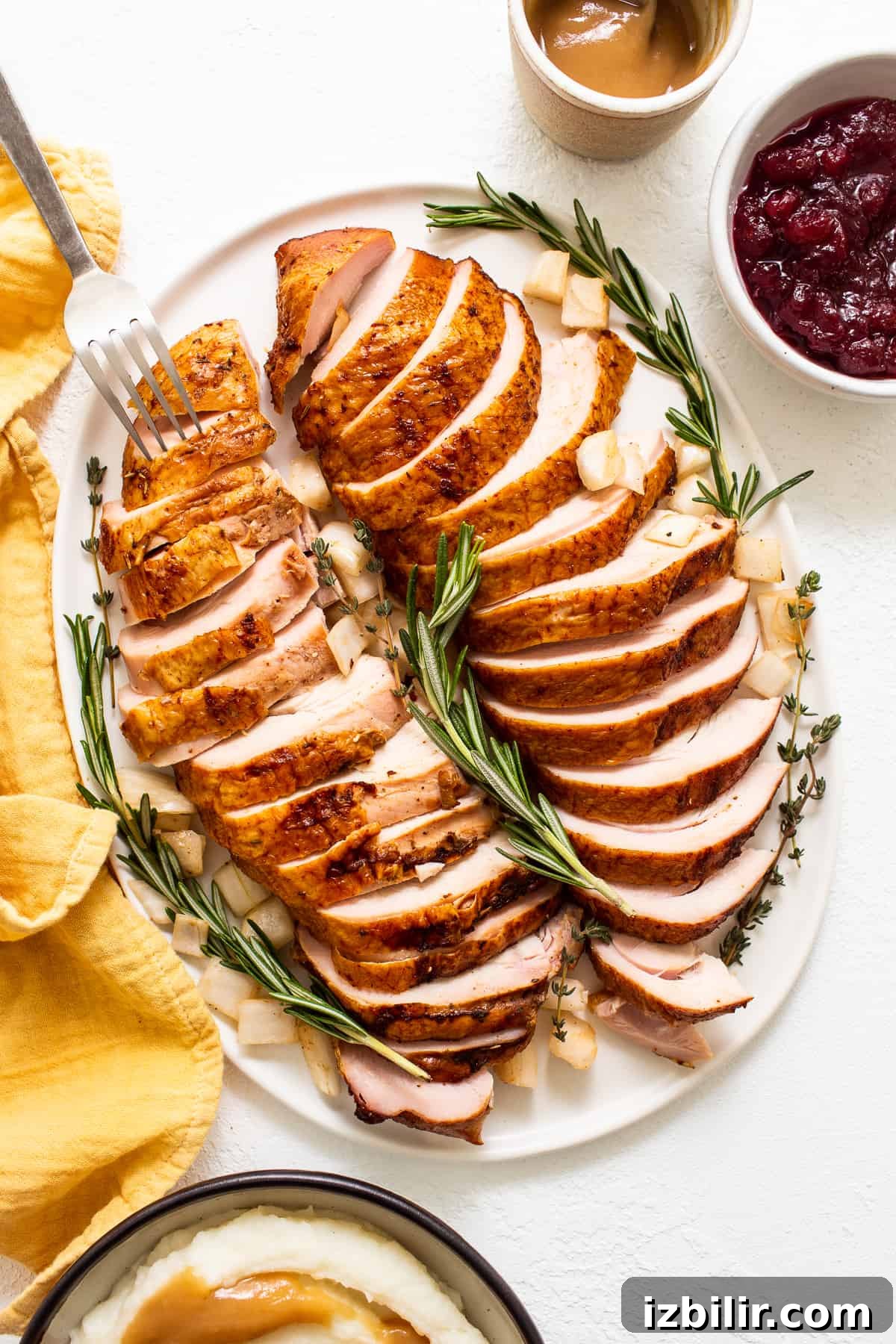
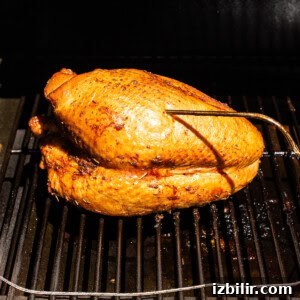
This smoked turkey breast is juicy, flavorful, and finishes with crisp, smoky skin. It’s perfect for a smaller Thanksgiving or any gathering where a whole turkey would be too much. Leftovers are excellent for turkey salad or quesadillas.
If you need more turkey, try a whole smoked turkey, a traditional roasted turkey, or other Thanksgiving mains. This recipe is ideal when you want all the smoky flavor but less carving and easier oven space management.
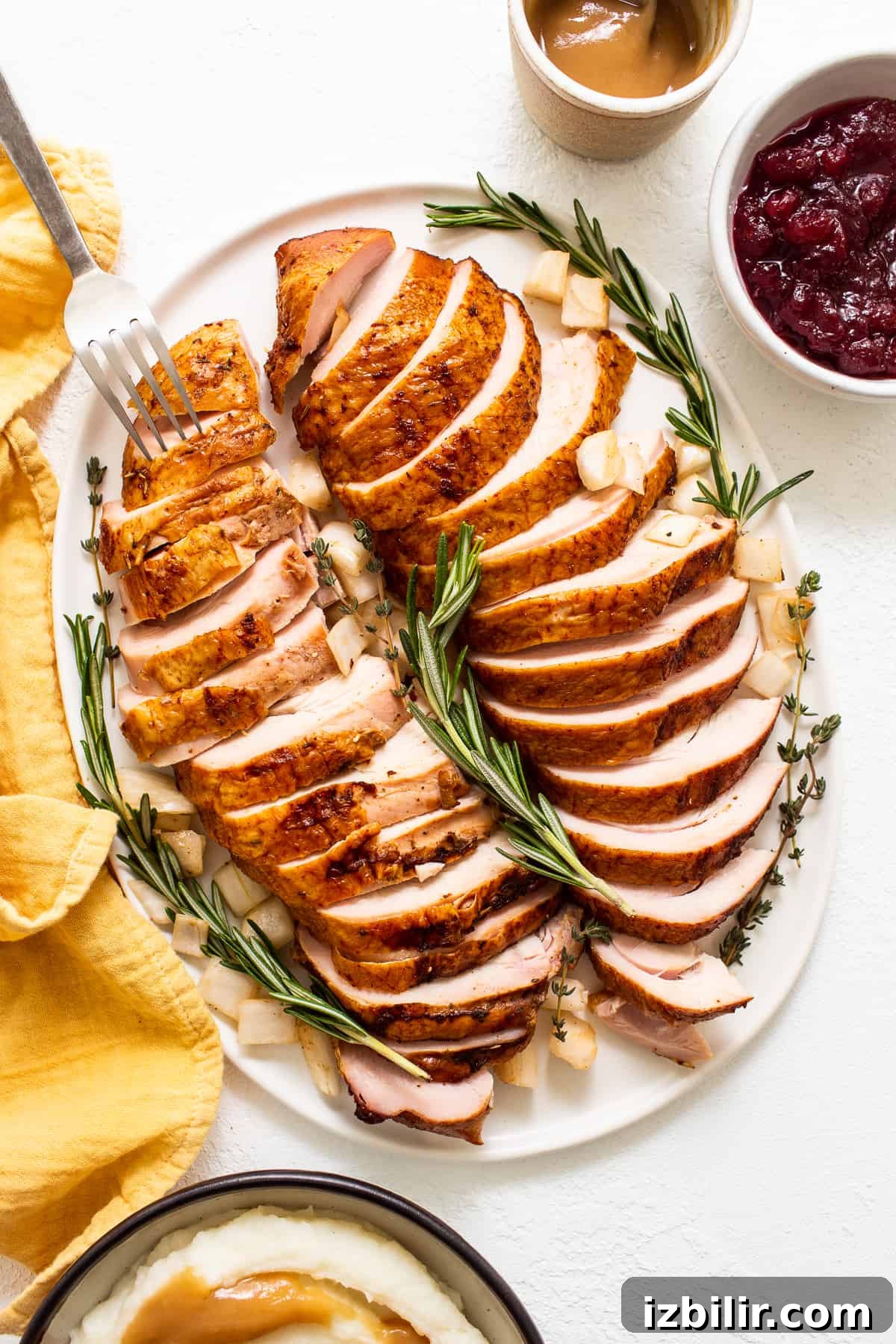
When a full bird is more than you need, a bone-in smoked turkey breast delivers concentrated turkey flavor with less fuss. This recipe brines the bird, seasons it with a savory turkey rub, and finishes it slowly in a smoker while being spritzed with an orange-and-vinegar mixture to keep the meat moist and the skin crisp.
I’ve been hooked on smoking turkey since trying a full smoked turkey recipe. The pellet smoker adds a subtle complexity and frees up oven space. This particular method was developed so you can smoke a turkey breast and turkey legs together if desired.
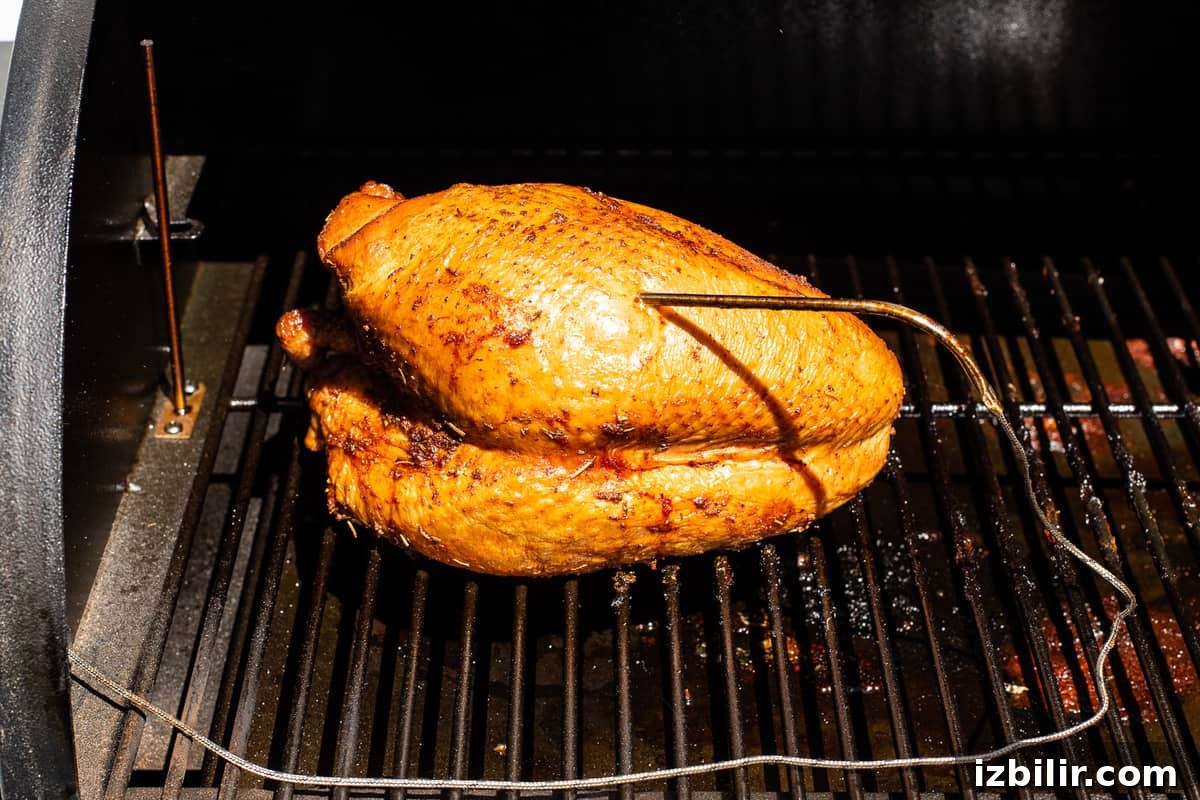
Quick overview: Brine the turkey breast overnight, apply a dry rub, and smoke at a low temperature (around 240ºF) for roughly 2.5–4 hours, spritzing occasionally with an orange juice and apple cider vinegar mixture until the internal temperature reaches 165ºF.
What you need for smoking a turkey breast
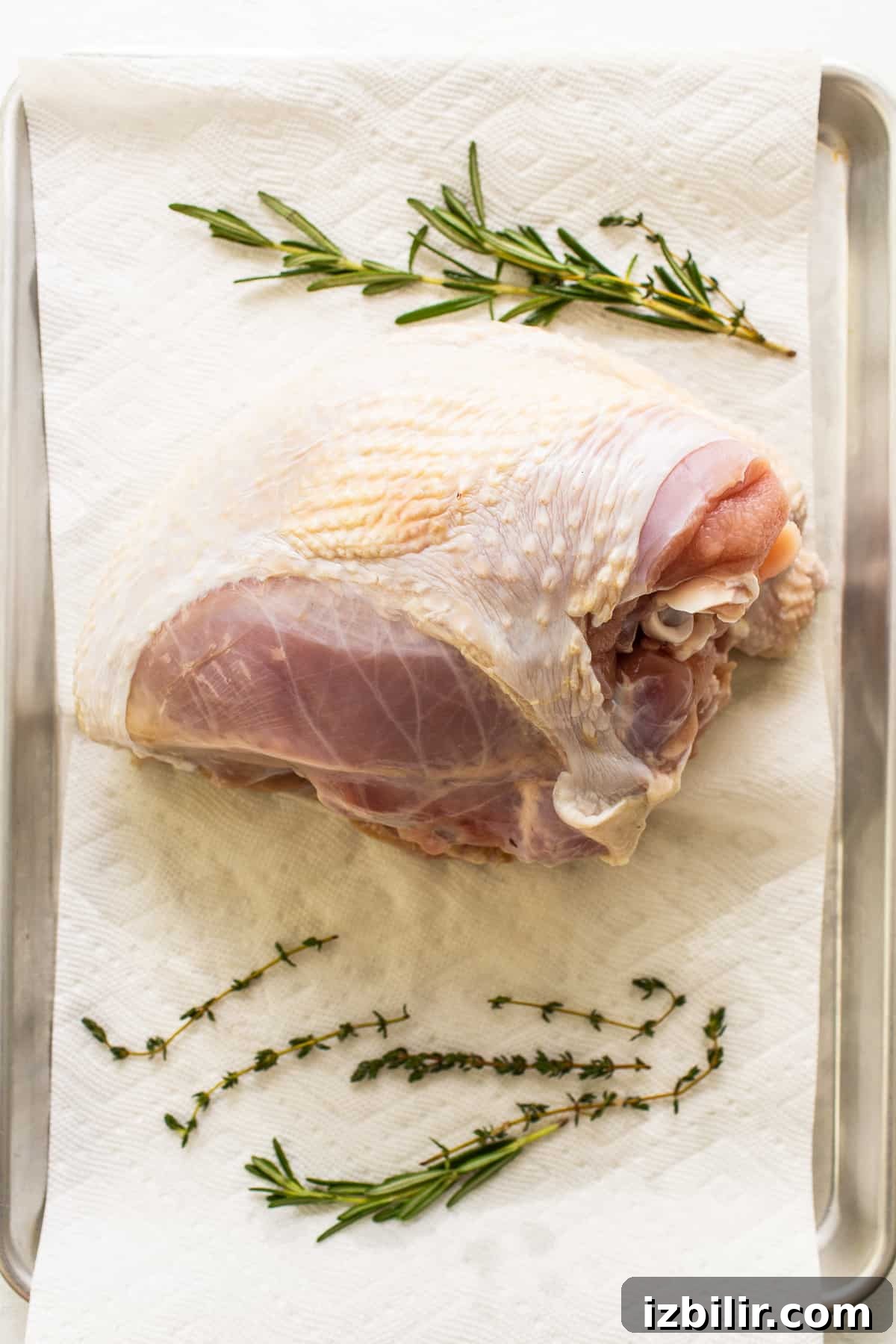
- Turkey breast – A 4–6 pound bone-in turkey breast that is completely thawed. Look for an untreated bird (not pre-brined). This size will serve about 6 people with sides.
- Brine ingredients – Cold water, kosher salt, fresh rosemary, fresh thyme, whole peppercorns (optional), garlic, and white onion. The brine seasons and helps the meat retain moisture.
- Turkey seasoning – A well-balanced dry rub of sweet and savory spices adds great flavor. Use your favorite poultry or turkey seasoning if you prefer a store-bought blend.
- Spritz – Fresh orange juice combined with a splash of apple cider vinegar keeps the meat moist and encourages a beautiful, slightly glazed skin.
- Smoker pellets – Use a neutral hardwood blend or a mild flavored pellet. Pellets labeled for poultry work well.
Smoked turkey breast variations
- Dry brine option: Instead of a wet brine, try a dry-brine method for similar results with less liquid to manage.
- Different rubs: Substitute any poultry seasoning you like—herby, spicy, or sweet blends will all complement turkey.
- Alternative spritz: Apple juice or a mixture of apple juice and vinegar works well for a slightly different finish.
FAQ
Thermometer: A reliable instant-read meat thermometer is invaluable. It removes guessing and ensures the turkey reaches a safe internal temperature without overcooking.
Storage
Store leftover smoked turkey in an airtight container in the refrigerator for up to 7 days.
Can I freeze smoked turkey breast?
Yes. Let the turkey cool completely, portion it as desired, place in freezer-safe bags or containers, and freeze for up to 3 months. Thawed turkey is great for soups, casseroles, salads, and sandwiches.
More favorites
Thanksgiving turkey recipes
- Smoked Turkey
- Roasted Thanksgiving Turkey
- Baked Turkey Tenderloin
- Smoked Turkey Legs
- Sous Vide Turkey
- Spatchcock Turkey
How to serve your smoked turkey breast
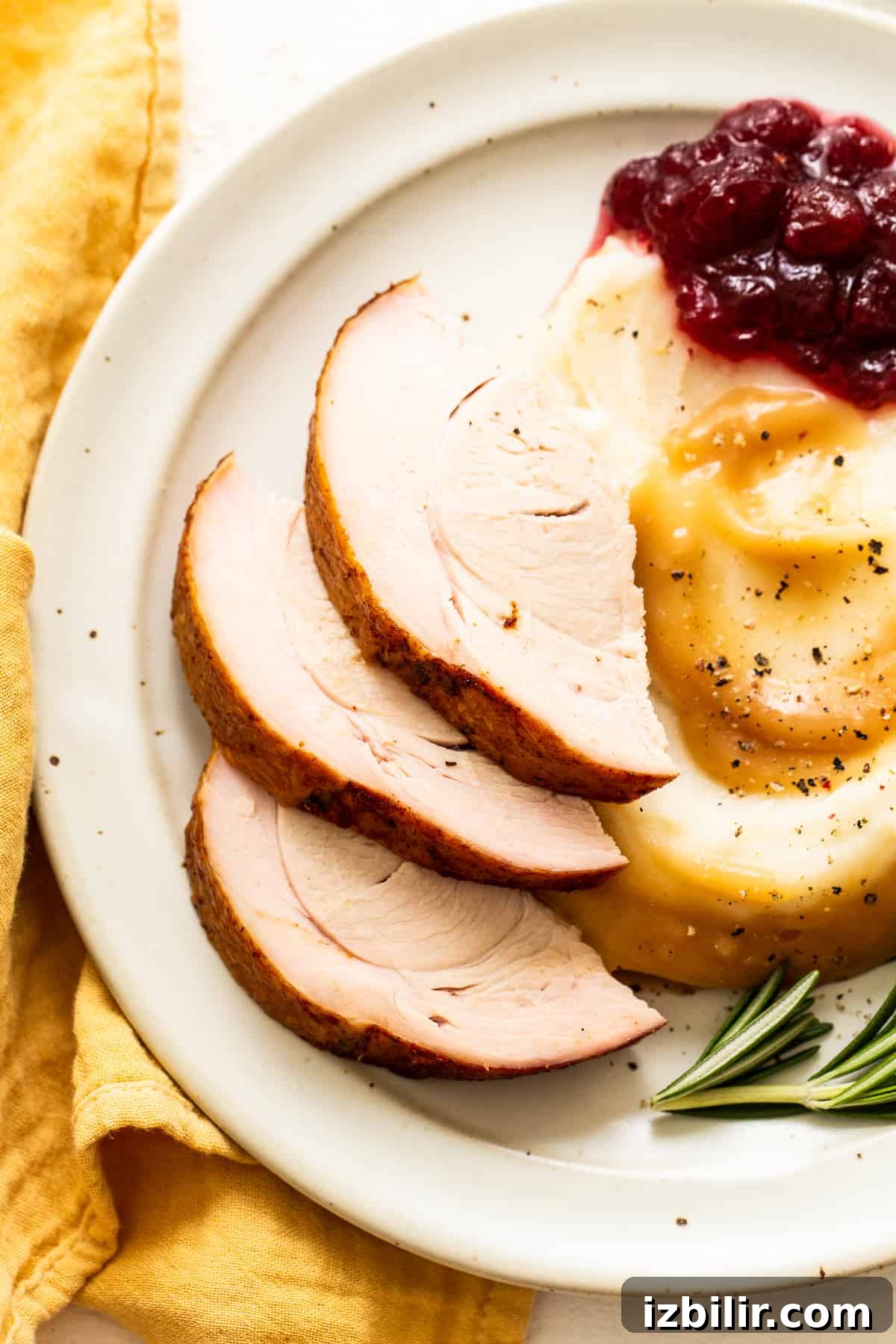
Serve with homemade turkey gravy and classic sides like mashed potatoes, green beans, and mac and cheese. Slices also work well cold in salads, sandwiches, or reheated with gravy.
Smoked Turkey Breast Recipe
This smoked turkey breast is brined, dry-rubbed, and smoked while being periodically spritzed with an orange and apple cider vinegar mixture. It’s a great main for a smaller holiday meal or a flavorful dinner any time of year.
By: Lee Funke
Prep: ~14 hours (including brine) • Cook: ~3 hours • Total: ~17 hours • Serves: 6
Ingredients
- 4–6 lbs bone-in turkey breast, completely thawed
- 12 cups cold water
- 1 cup kosher salt
- 5 sprigs fresh thyme
- 5 sprigs fresh rosemary
- 1 medium white onion, chopped and separated
- 2 tablespoons turkey seasoning (homemade or store-bought)
- 1 cup orange juice
- 2 teaspoons apple cider vinegar
Instructions
- Remove the turkey from its packaging and discard any extra parts. Set the breast aside.
- Make the brine: In a large bucket or pot, add 12 cups cold water. Remove 2 cups of water to a small saucepan, add the kosher salt, and heat until the salt dissolves.
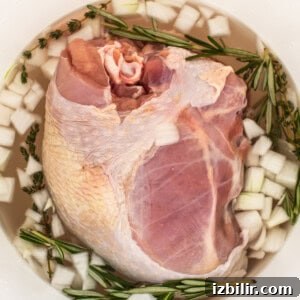
- Pour the dissolved salt mixture back into the large bucket and stir. Add thyme, rosemary, and half the chopped onion. Submerge the turkey breast in the brine, ensuring it’s completely covered. Refrigerate overnight.
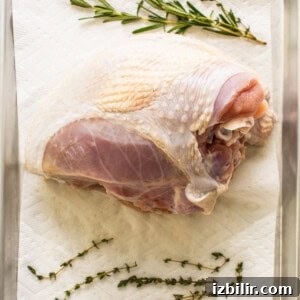
- The next morning, preheat your smoker to about 240ºF. Remove the turkey from the brine, rinse under cold water, and pat dry with paper towels.
- Season the turkey thoroughly with the turkey seasoning on all sides. Massage the rub into the skin and cavity. Place the remaining chopped onion inside the cavity.
- Combine the orange juice and apple cider vinegar in a spritz bottle and shake to mix. If you don’t have a spritz bottle, keep the mixture in a bowl and brush it on during cooking.
- Place the turkey breast on the smoker and smoke for about 2½–3 hours, spritzing every 30–45 minutes. Cooking time will vary by smoker and turkey size.
- Remove the turkey when the internal temperature reaches 165ºF in the thickest part of the breast. Let it rest 10–15 minutes before slicing to allow juices to redistribute.
Tips & Notes
- Turkey breast can be seasonal; check local butchers or the frozen section of specialty stores if it’s not on shelves.
- Prepare a batch of turkey seasoning to keep on hand in a cool, dark place for future use.
- Most smokers have slightly different temperature ranges; 230–250ºF works well. Adjust timing accordingly.
- You can use a boneless turkey breast, but watch internal temperature closely to avoid overcooking.
- If you don’t have a spritz bottle, a pastry brush and a small bowl with the orange juice and vinegar mixture will work fine.
- This method pairs well with smoked turkey legs so you can cook both on the smoker at once.
Nutrition
Approximate per serving: Calories: 431 kcal, Carbohydrates: 9 g, Protein: 65 g, Fat: 16 g, Fiber: 1 g, Sugar: 4 g. (Nutrition is an estimate.)
Photography: Photos in this post were taken by Ashley McGlaughlin from The Edible Perspective.
If you try this recipe, leave a comment to share how it turned out and what sides you paired it with. Tag your photos with your favorite meal hashtags to help others find inspiration.