
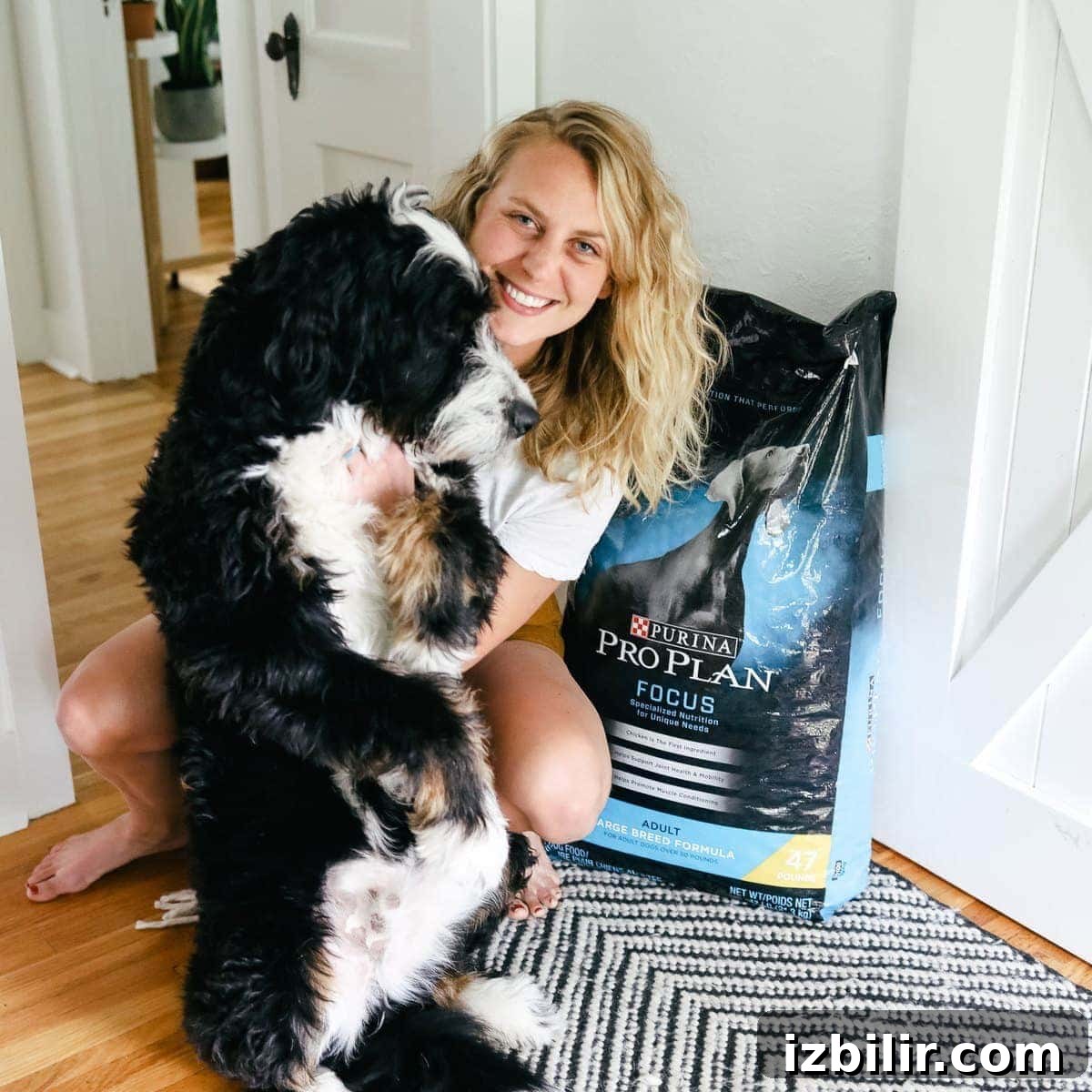
It’s a rare chance to speak directly with a veterinarian and ask everything you’ve wondered about your dog’s nutrition. Today, we talked with Purina’s Chief Veterinary Officer, Dr. Kurt Venator, about why selecting the right food for your dog matters and how to make good choices.
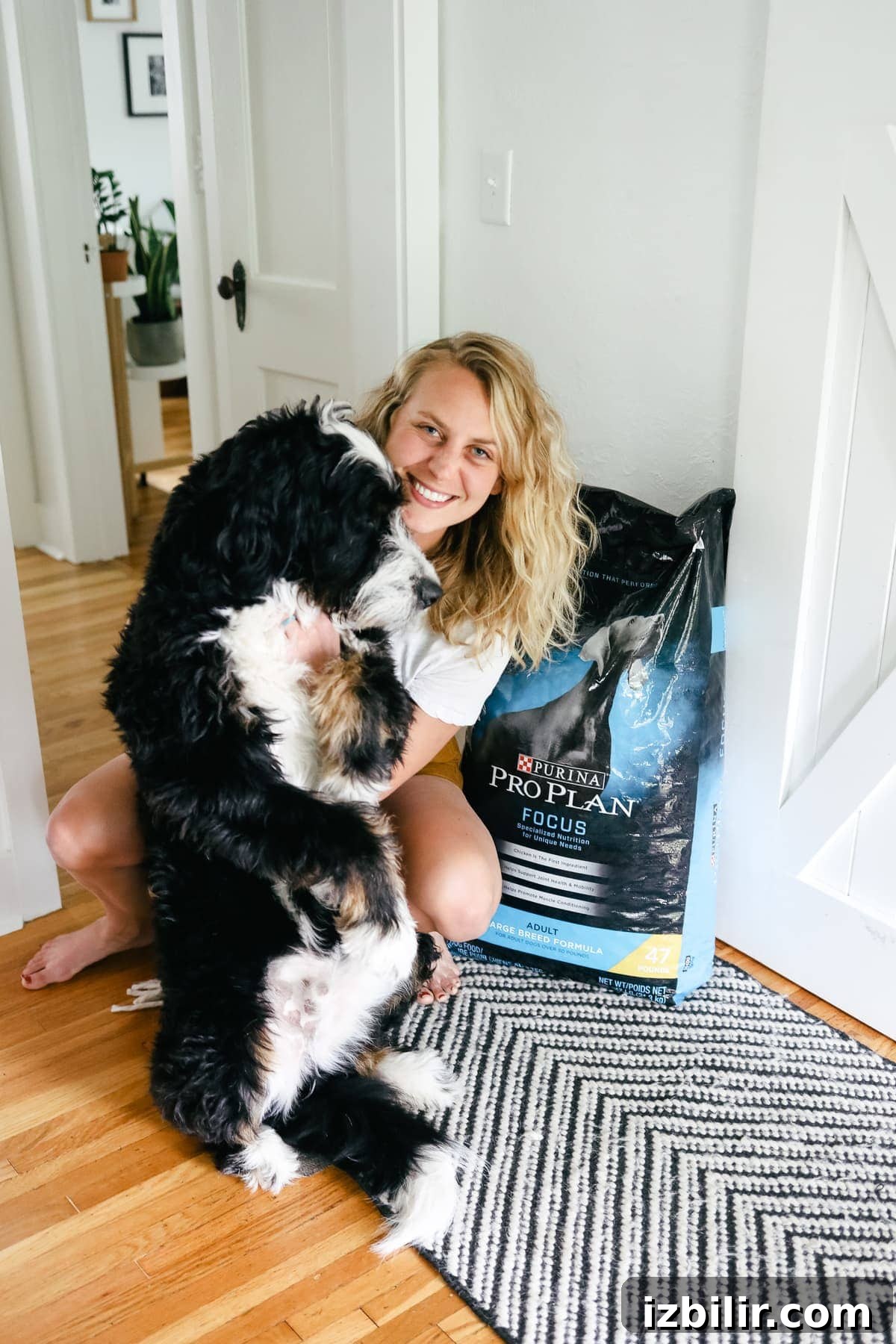
Meet Jasper!
Being a dog parent is one of the greatest joys in my life. Mark and I brought Jasper home in May 2019, and he quickly became part of the family. He’s an 80-pound bernedoodle with a calm temperament and a loving personality.
Jasper gets us outdoors no matter the weather—even in bitter cold—comforts us when we’re down, and makes us laugh when he sleeps on his back and twitches through puppy dreams. His health journey has been eventful during his first year, and we learned a lot along the way.
As adults, Jasper is our first dog, and we didn’t expect so many early visits to the veterinarian. I’m grateful we found Purina Pro Plan, which helped address Jasper’s very sensitive stomach and became a dependable part of his care.

Purina Pro Plan
Purina Pro Plan is our top choice for several reasons. Beyond Jasper loving the taste, the brand is backed by scientific research and veterinary expertise.
- More than 85 years of research
- Supported by a large team of Purina scientists
- Veterinarian-recommended options
- High-quality ingredients and complete nutrition
Pro Plan offers a broad range of formulas tailored to dogs of different ages, sizes, and health needs. Jasper has tried several Pro Plan products—from a prescription EN formula when he was ill, to probiotics and a large-breed adult formula. Our veterinarian recommended Pro Plan even before we had heard of it, which gave us confidence in the brand.
Transitioning Jasper from prescription food to a regular adult formula was easier than I expected. He now eats Purina Pro Plan Adult Large Breed Formula and is thriving.
Since I had the chance to ask a Purina veterinarian about choosing the right food, I’m sharing those insights to help other pet owners make informed choices.
Pro Plan’s myPlan tool
Use Pro Plan’s myPlan tool to take a short quiz that can help match your pet to the most suitable formula.

Q&A with Purina Vet, Dr. Kurt
When is it time to transition from puppy food to adult dog food?
Dogs’ nutritional needs change as they grow. Puppies need higher protein levels for growth and DHA for brain and vision development. Determine readiness based on both age and expected adult size. As a general guideline, feed puppy-specific food until about one year of age; for some large and giant breeds, continuing puppy food up to two years may be appropriate.
Pro tip
Follow breed-size recommendations and your veterinarian’s guidance when planning the switch.
Why is my dog picky about food?
There are several common reasons a dog may become selective:
- Too much variety: Offering many options can train a dog to hold out for something different. Some dogs eagerly eat a new food for a few days, then suddenly lose interest.
- Digestive discomfort: Overeating or digestive upset can cause a dog to reduce intake temporarily as a way to feel better.
- Medical issues: If a usually consistent eater becomes picky and you haven’t encouraged that behavior, consult your veterinarian. Changes in eating habits can signal an underlying health problem.
Why isn’t my dog motivated by food?
Like people, dogs have different motivators. Some respond strongly to treats, others to toys or play. If you’re teaching a new skill, identify what rewards motivate your dog—food, play, or praise—and use that consistently during training.
How different are ideal macronutrient balances for dogs versus humans?
The basic nutritional groups are similar: water, protein, fat, carbohydrate, minerals, and vitamins. Commercial diets labeled “complete and balanced” provide all essential nutrients for dogs when fed as directed. While humans obtain nutrients from diverse food sources across meals, the core principle—adequate proportions of essential nutrients—is comparable for both species.
Is dry or wet food better for pets?
Either form can be appropriate if the product is complete and balanced. Both dry and wet foods offer benefits: dry food can support dental texture and convenience, while wet food increases moisture intake and can add variety. For cats, variety can be especially important because many enjoy novelty. For dogs, choose a high-quality, complete formula and consult your veterinarian if you’re unsure which format best suits your pet’s needs.
How important is variety in a pet’s diet?
Feeding the same food daily is perfectly acceptable for many pets. However, some animals may become bored and picky over time. Offer variety without disrupting nutrition by occasionally adding wet food, rotating protein sources within the same formula family, or switching between flavors that meet the same nutritional profile. Pro Plan, for instance, provides formulas with beef, chicken, or salmon as the primary ingredient to offer such variety.
Disclaimer: This post is sponsored by Purina Pro Plan. We were compensated, and all opinions are our own. Thank you for supporting Fit Foodie Finds!