
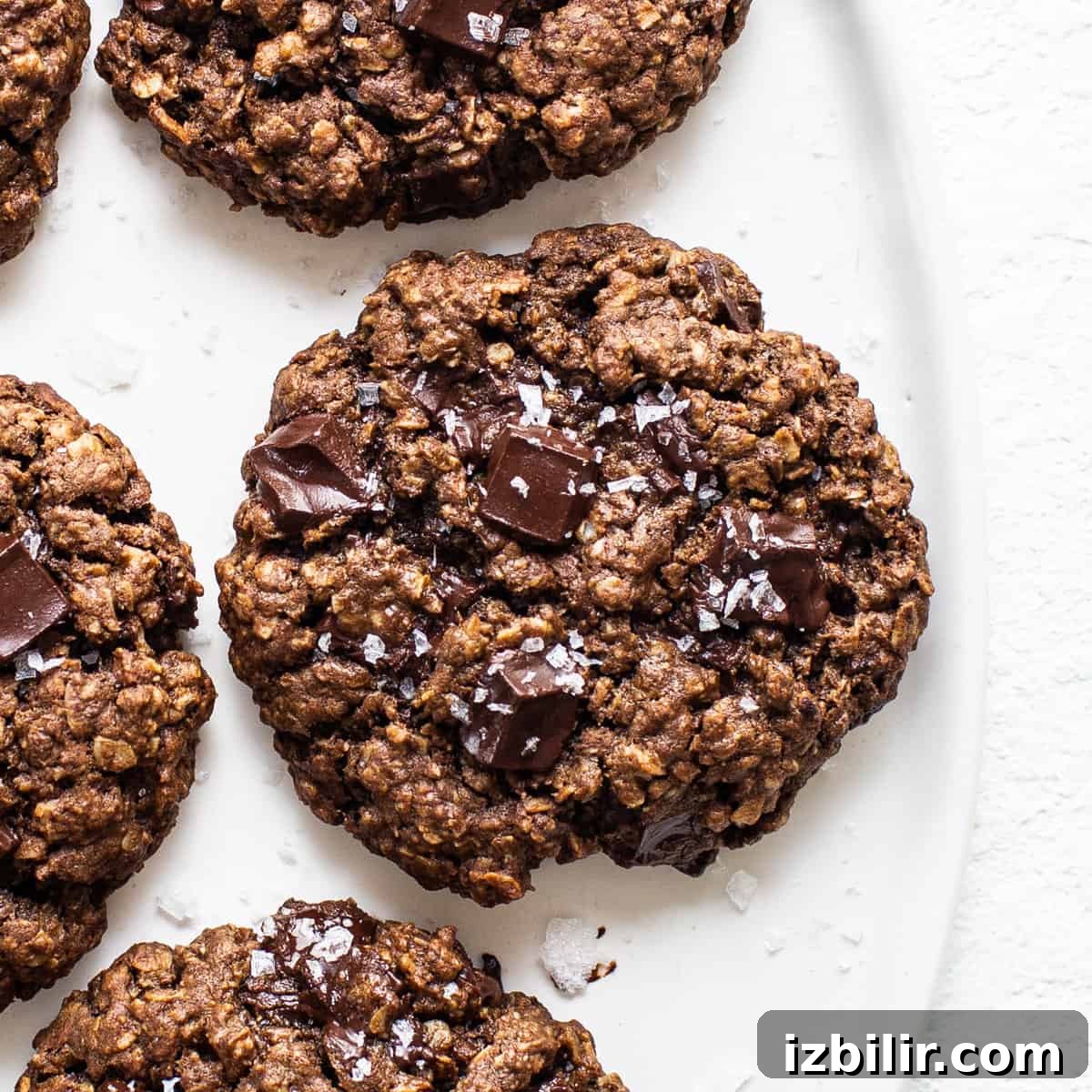
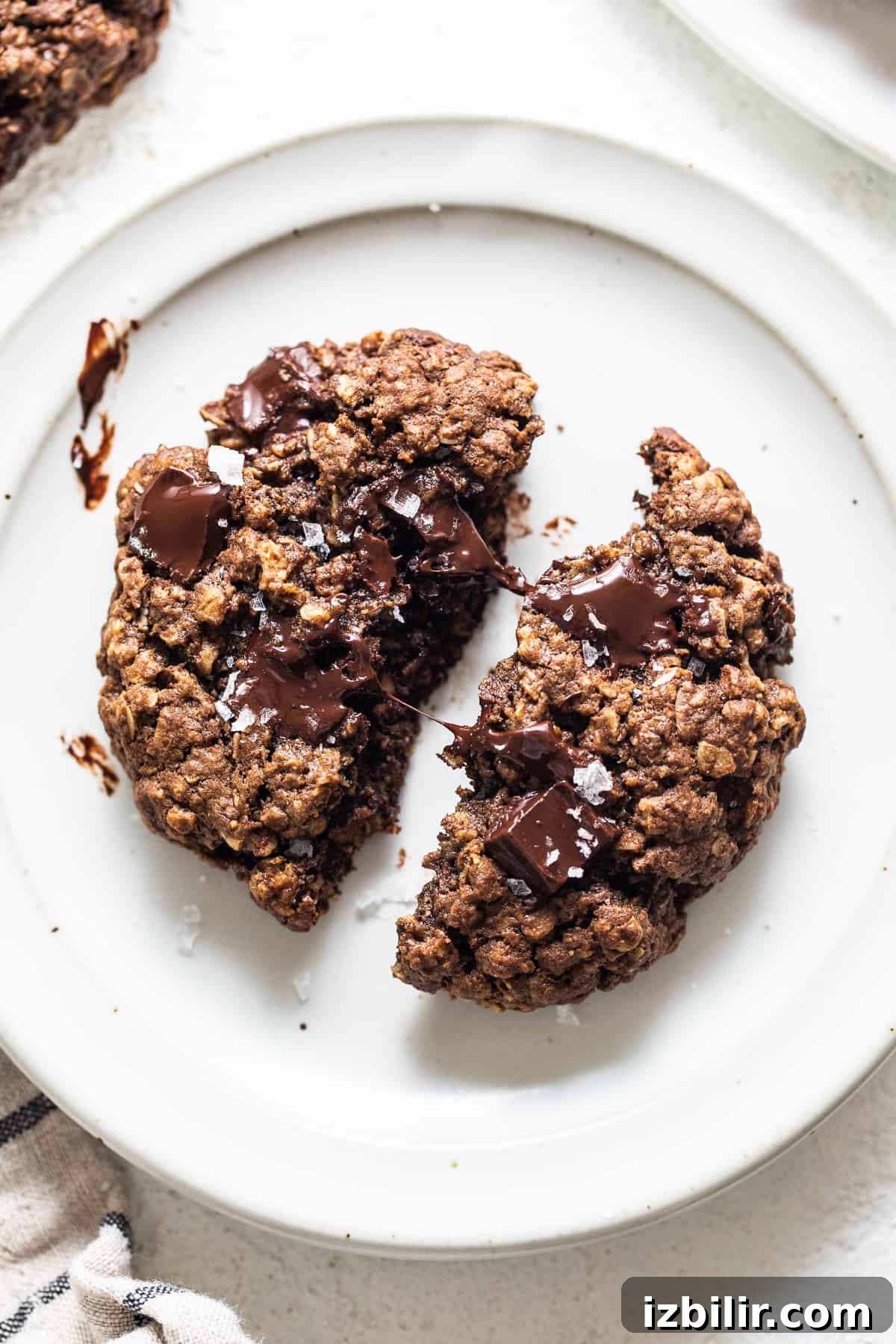
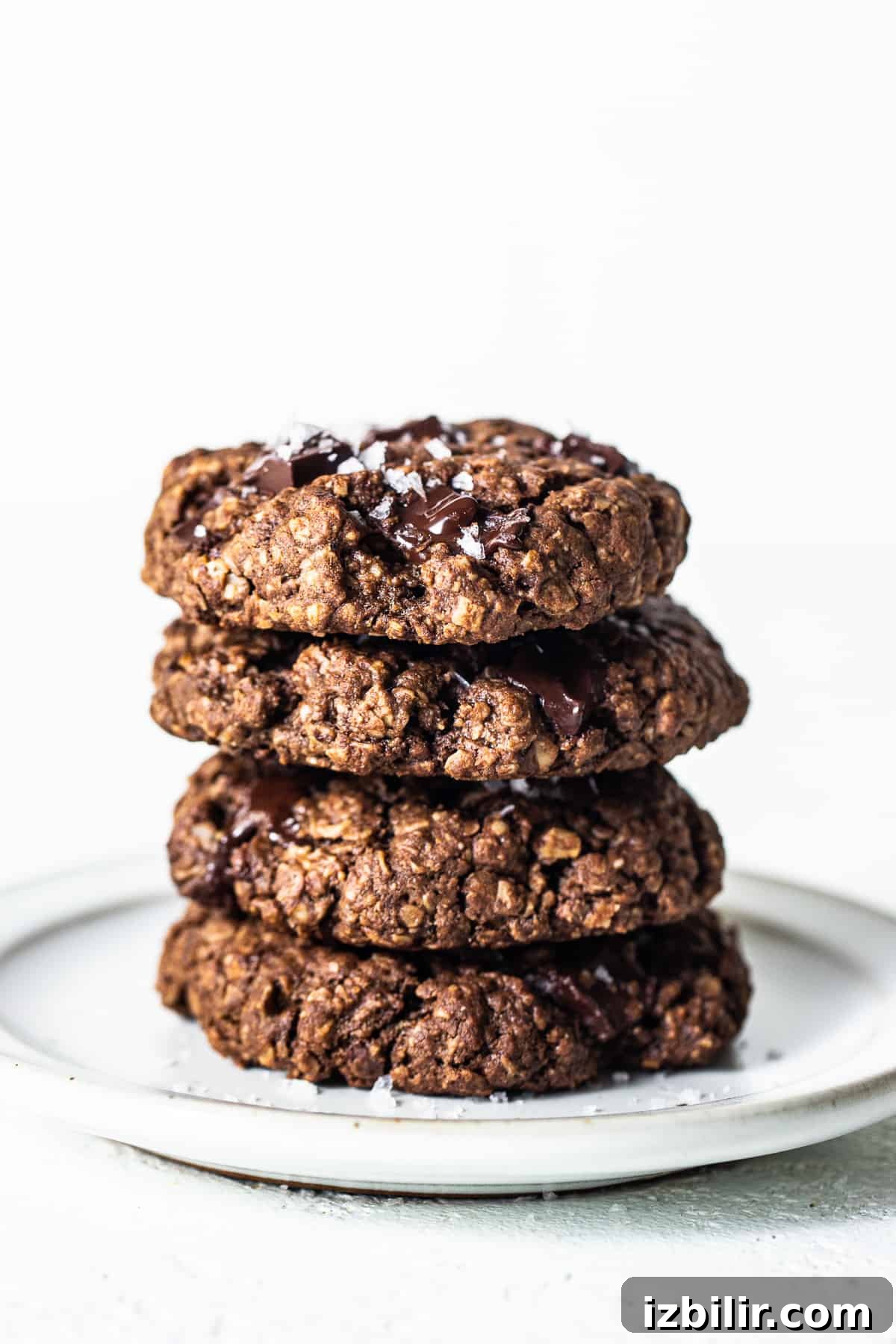
Indulge in the irresistible combination of rich cocoa, creamy peanut butter, and hearty oats with these Chocolate Peanut Butter Oatmeal Cookies. This naturally flourless recipe delivers chewy, chocolatey cookies with melty chocolate pockets and a satisfying texture. They come together quickly—ready in under 30 minutes—and can easily be adapted to be gluten-free or dairy-free.
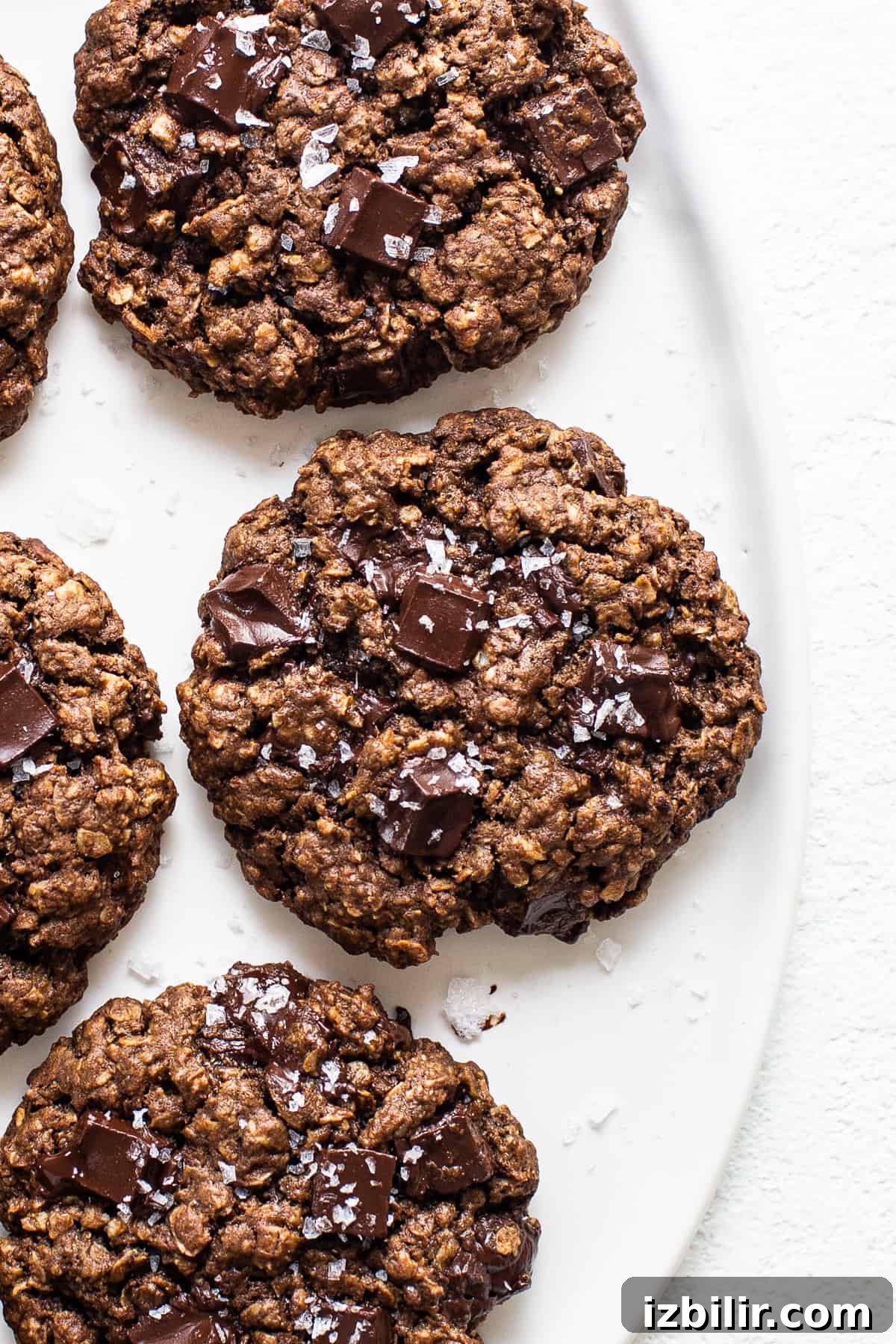
If you enjoy peanut butter oatmeal cookies or flourless monster cookies, you’ll love this variation. The base is an oatmeal and peanut butter dough that holds together without flour, producing soft, chewy cookies every time.
What’s in these Chocolate Peanut Butter Oatmeal Cookies?
- All-natural creamy peanut butter — Provides nutty richness and moisture. A stir-in-the-oil style peanut butter is recommended for texture.
- Cocoa powder — Adds deep chocolate flavor and balances the peanut butter.
- Quick-cooking oats — Give a tender, chewy texture. Quick oats are preferred so the dough binds better.
- Semi-sweet chocolate chunks — Create gooey chocolate pockets and texture contrast.
Easy Ingredient Swaps
- Butter: Use melted coconut oil or a plant-based spread to make the cookies dairy-free.
- Light brown sugar: Substitute coconut sugar or granulated sugar if preferred.
- Maple syrup: You can use honey or agave syrup instead.
- Oats: Use certified gluten-free quick-cooking oats if you need a gluten-free option. Regular quick oats work if gluten isn’t a concern.
- Peanut butter: Swap for sunflower seed butter or almond butter if there’s a peanut allergy.
Note on oats: We tested both rolled oats and quick-cooking oats and recommend quick oats for better cohesion in the dough.
Flavor Variations
- Add nuts: Fold in chopped walnuts, pecans, or almonds for crunch.
- Different chocolate: Try dark or milk chocolate chunks to vary the chocolate intensity.
- Warm spices: A pinch of cinnamon or nutmeg adds warmth and depth.
- Dried fruit: Mix in raisins, dried cranberries, or chopped dried apricots for chewiness and extra sweetness.
Reminder
Adjust baking time slightly when you make substitutions. Changes in moisture or fat content can affect how the cookies spread and how long they need to bake.
FAQs
Too much spreading can result from warm or soft dough, or excess fat or sugar. Chilling the dough before baking helps control spread. If the cookies don’t spread enough, the dough may be too cold or ingredients might have been over-measured.
Natural, stir-in-the-oil peanut butter is recommended for this recipe. Thick, non-drippy peanut butter styles can change the texture and may produce a denser cookie.
Lightly grease the baking sheet or use a silicone baking mat to prevent sticking.
Old-fashioned oats will work but will yield a chewier, more rustic cookie. Quick-cooking oats make a softer, more cohesive dough.
How to Store Chocolate Peanut Butter Cookies
Once completely cooled, store the cookies in an airtight container at room temperature for up to one week. For longer storage, freeze the dough or baked cookies.
Freezer Directions
- Freeze the dough: Portion dough into balls, freeze on a baking sheet until firm, then transfer to a freezer bag. Bake directly from frozen—add a couple minutes to the baking time.
- Freeze the baked cookies: Allow cookies to cool fully, then place in a freezer-safe bag, remove excess air, and freeze for up to three months. Thaw at room temperature when ready to eat.
Serving Suggestions
- Smoothies: Pair these cookies with a protein-packed smoothie for a satisfying snack.
- Frozen treats: Serve alongside frozen yogurt or a banana “nice cream” for a cool contrast.
- Fruit salad: A fresh fruit salad balances the richness of the cookies for a lighter dessert.
- Coffee or tea: Enjoy with a cup of coffee, espresso, or spiced chai for a classic pairing.
Recipe: Chocolate Peanut Butter Oatmeal Cookies
Yield: 12 cookies | Prep: 15 mins | Cook: 12 mins | Total: 27 mins
Ingredients
- 1/4 cup melted unsalted butter (sub coconut oil for dairy-free)
- 1/2 cup light brown sugar, packed
- 3 tablespoons maple syrup (or honey/agave)
- 1 large egg
- 1/2 cup all-natural creamy peanut butter (stir-in-the-oil style)
- 1 teaspoon vanilla extract
- Pinch of salt
- 2 cups quick-cooking oats (gluten-free if desired)
- 1/4 cup cocoa powder
- 1 teaspoon baking soda
- 1/2 cup semi-sweet chocolate chunks, plus extra for topping
- Flaky sea salt, for garnish
Instructions
- Preheat the oven to 350ºF (175ºC). Line a baking sheet with parchment paper.
- In a mixing bowl, combine melted butter and brown sugar until smooth. A hand whisk or electric mixer both work well.
- Stir in maple syrup, egg, peanut butter, and vanilla until fully combined.
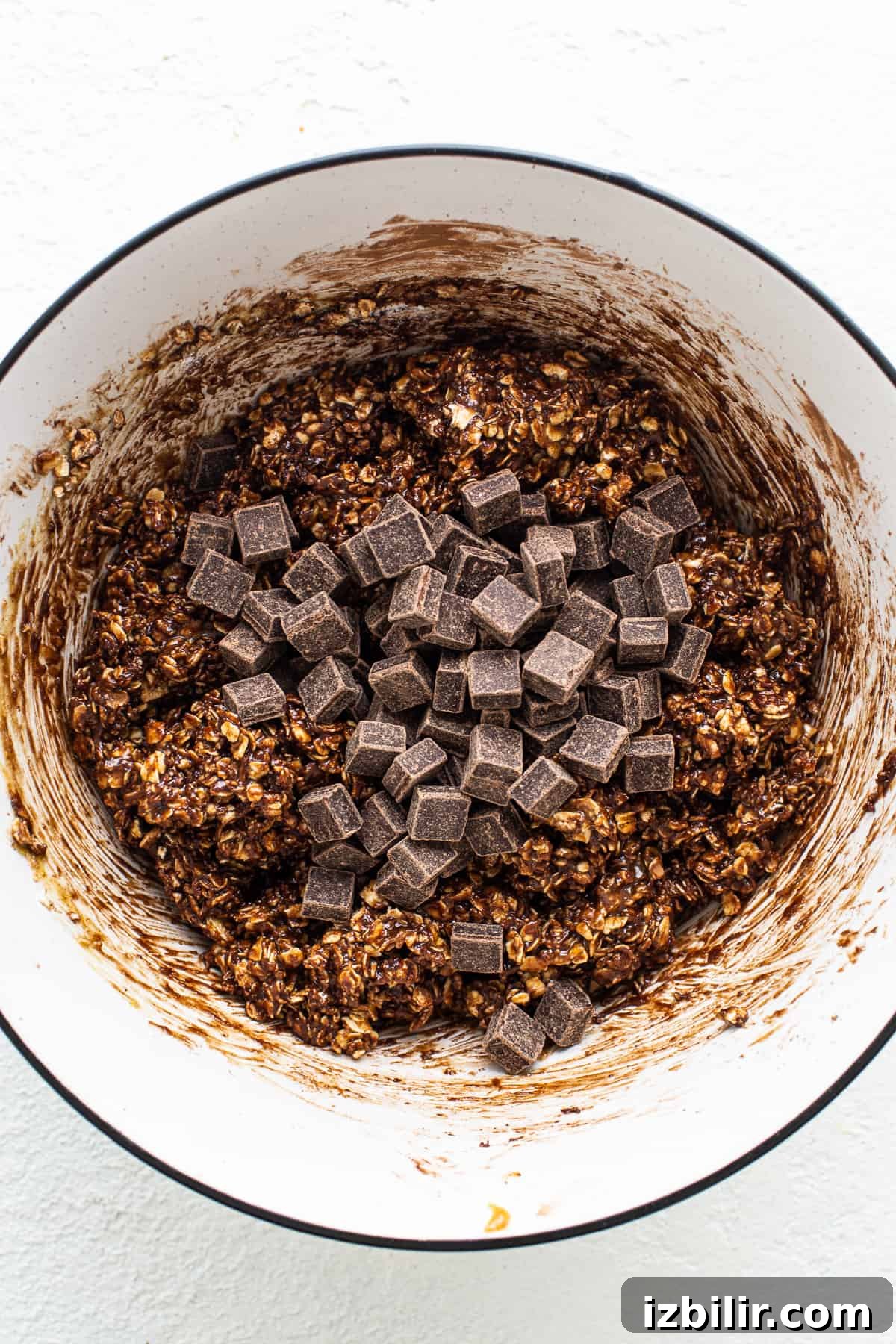
- Add a pinch of salt, quick-cooking oats, cocoa powder, and baking soda. Mix until the dough comes together, then fold in the chocolate chunks.
- Refrigerate the dough for 15 minutes to firm up slightly.
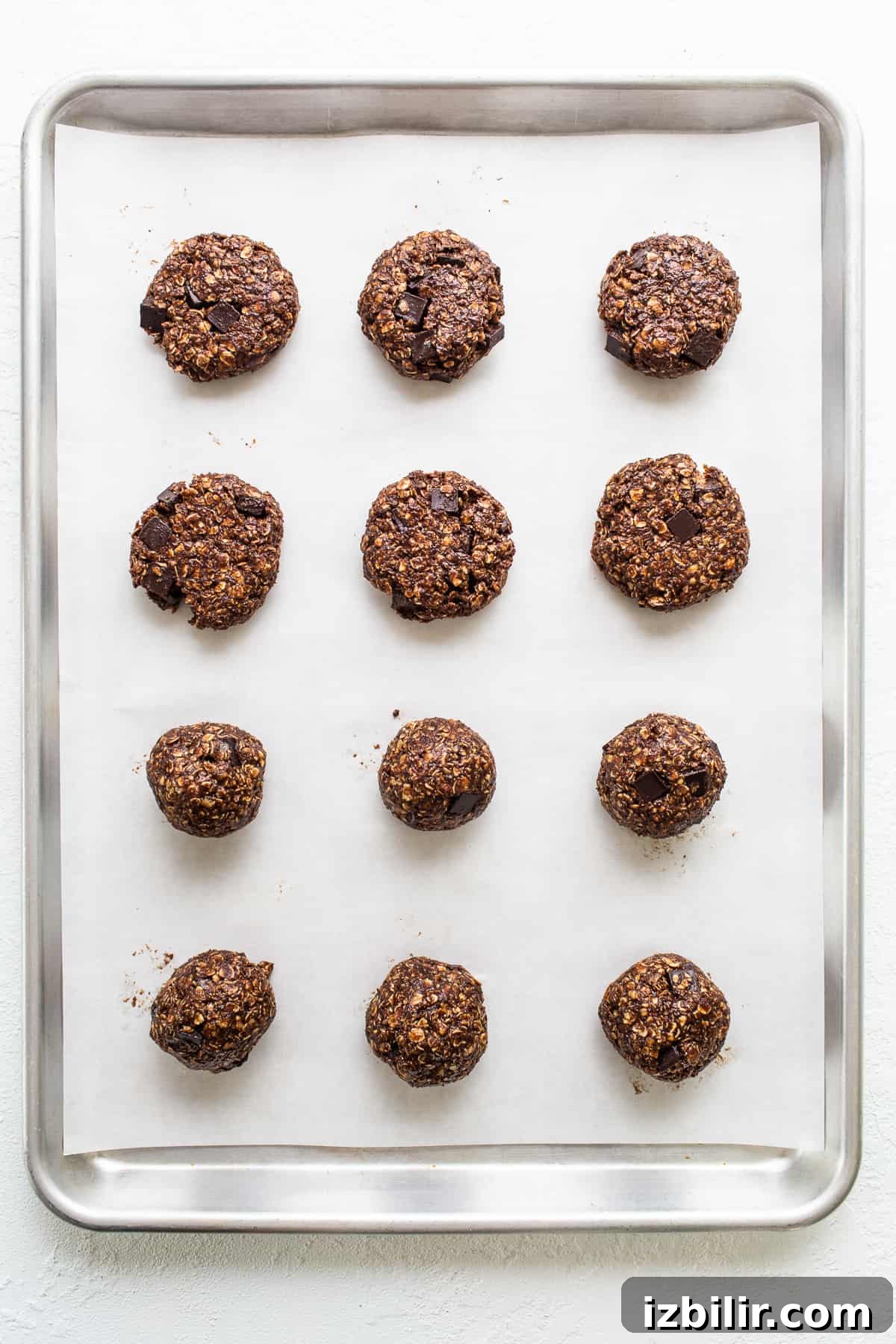
- Scoop about 2 heaping tablespoons of dough and roll into a ball. Place each ball on the prepared baking sheet and gently press down to form a cookie. The dough may feel tacky—this is normal.
- Top each cookie with extra chocolate chunks if desired and bake for 11–14 minutes, until the tops begin to crack.
- Remove from the oven and let cool on the baking sheet for a few minutes before transferring to a wire rack. Allow cookies to cool at least 20 minutes to set. Finish with a sprinkle of flaky sea salt.
Tips & Notes
- Use an all-natural peanut butter where the oil separates and must be stirred in; this yields a softer, more tender cookie. Thick, non-drippy brands may change texture.
- The cookies will spread slightly in the oven. If you don’t press them down, they’ll bake into a dome shape.
- If you make smaller cookies (less than 2 tablespoons), reduce the bake time by 1–2 minutes.
- Moistening your hands slightly can make rolling sticky dough easier.
Nutrition (approx. per cookie)
Calories: 227 kcal, Carbohydrates: 24 g, Protein: 5 g, Fat: 13 g, Fiber: 2 g, Sugar: 16 g
Nutrition information is automatically calculated and should be used as an approximation.
Photography: Photos for this post were taken by Ashley McGlaughlin from The Edible Perspective.