
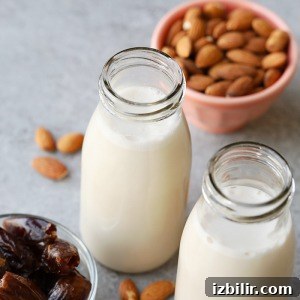
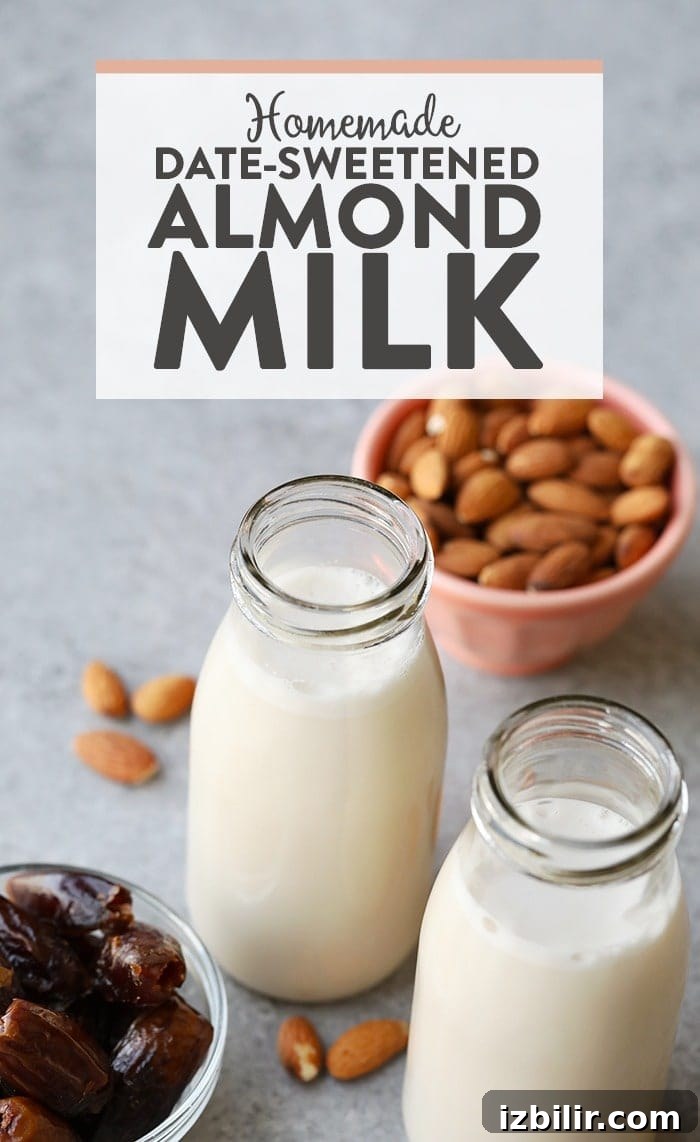
Making delicious homemade almond milk is easier than you might expect. With just raw almonds, water, a few Medjool dates and a touch of vanilla, you can create a silky, naturally sweet milk that’s vegan, gluten-free and paleo-friendly. A nut milk bag or thin kitchen towel makes separating the pulp simple and mess-free.
This version is inspired by a beloved local coffee shop recipe: a lightly sweetened vanilla almond milk that elevated lattes and morning coffees. We recreated that flavor profile at home and refined the method for the best texture and ease.
Featured Comment
“The single best recipe for almond milk I’ve ever tried. Bravo and thank you!” — Annie
Why did it take us so long to make our own almond milk? Once we tried a date-sweetened vanilla almond milk at a favorite café, we had to recreate it at home. The method is straightforward and yields a fresher, more flavorful milk than most store-bought versions.
A quick rundown: Soak raw almonds overnight to soften. Drain and rinse, then blend with fresh water, pitted dates, vanilla and a pinch of salt until fully smooth. Strain through a nut milk bag or a thin kitchen towel, squeezing out all the liquid. The typical almond-to-water ratio is 1:2 (for example, 3 cups almonds to 6 cups water) but you can adjust for creaminess.
Ingredients You Need to Make Almond Milk
- Raw almonds: we recommend raw for a mild, clean almond flavor.
- Medjool dates: use soft, pitted dates to naturally sweeten the milk.
- Vanilla bean or vanilla extract: adds warm flavor — the bean paste gives the most authentic result.
- A pinch of salt: enhances and rounds the flavors.
- Filtered water: for soaking and blending.
Kitchen tools you’ll need
A high-speed blender and a nut milk bag (or a clean, thin kitchen towel) are the only specialized items required. A large bowl for soaking and glass jars for storing are helpful as well.
How to Make Almond Milk
Step One: Soak the almonds
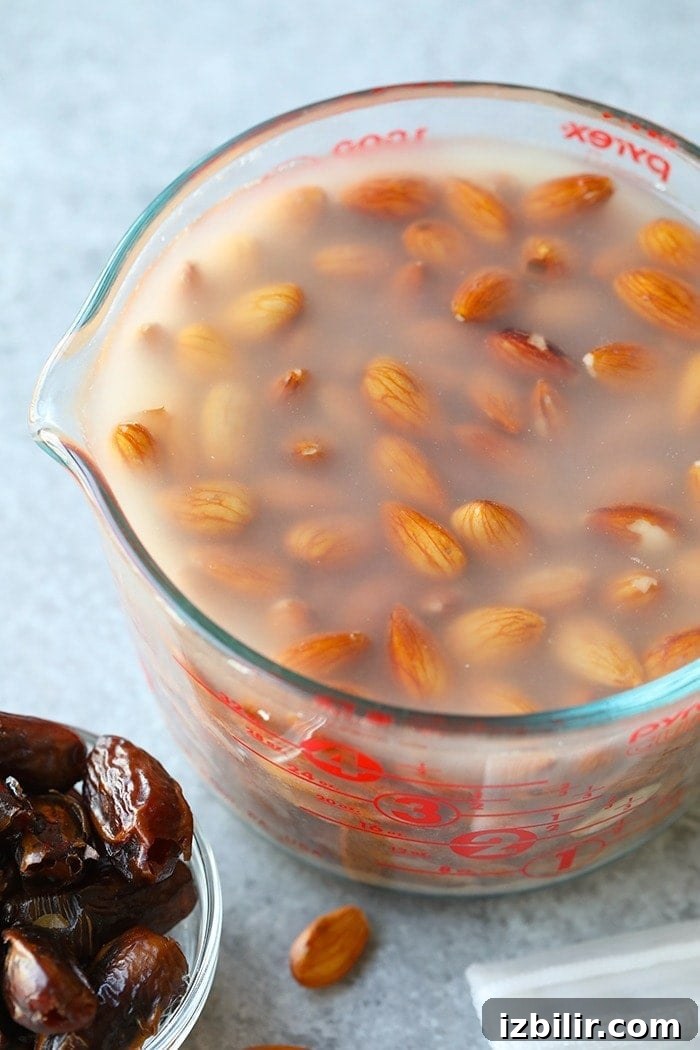
Place the almonds in a large bowl and fully cover them with water. Soak for at least 24 hours for the softest, creamiest results. If you’re in a hurry, pour boiling water over the almonds and let them soak 1–2 hours until softened.
Step Two: Blend
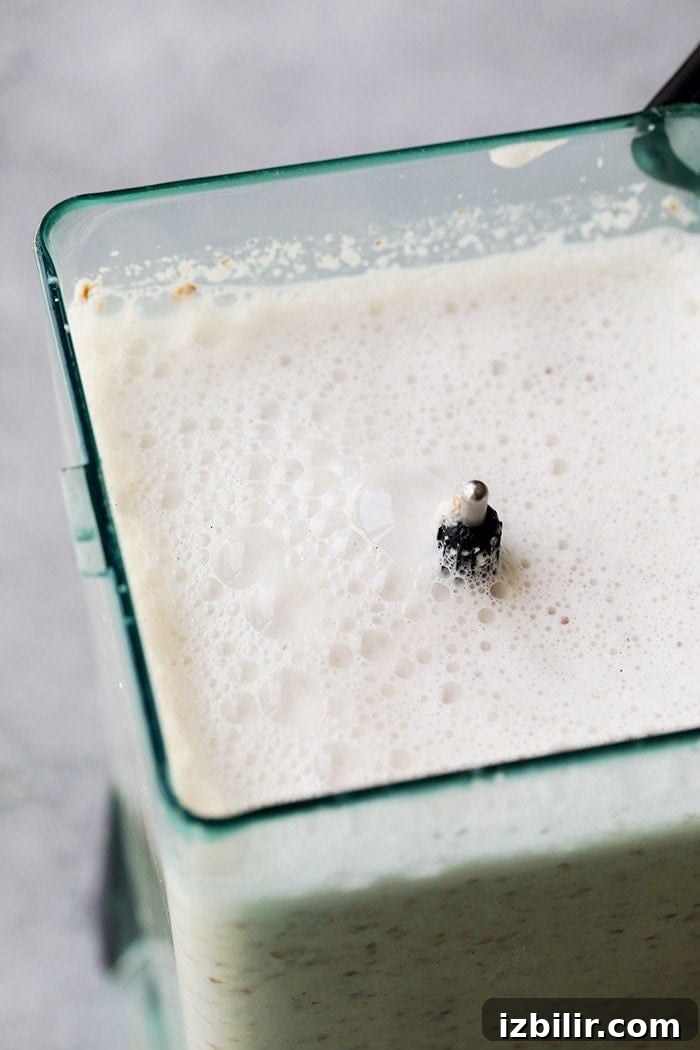
Drain and rinse the soaked almonds, then add them to your blender with fresh water (a 1:2 almond-to-water ratio is a great starting point), a pinch of salt, 6–15 pitted Medjool dates depending on your preferred sweetness, and the seeds or paste from a half vanilla bean (or 1/2 teaspoon vanilla extract). Blend on high for 1–2 minutes until the mixture is smooth and fully emulsified.
Step Three: Strain
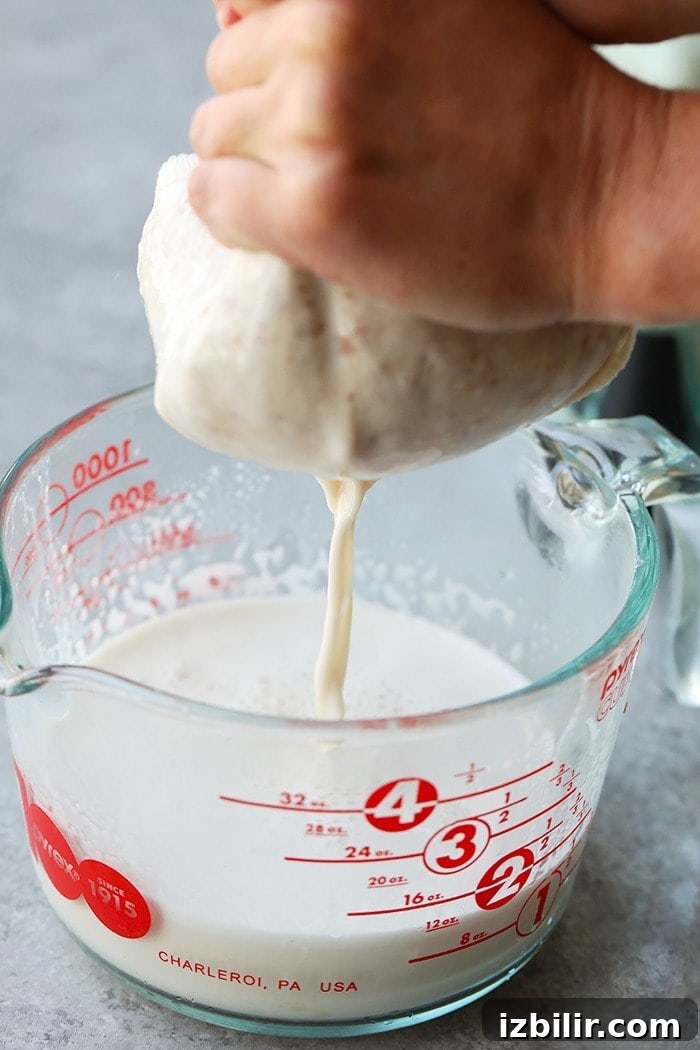
Pour the blended mixture through a nut milk bag or a thin kitchen towel over a large container. Work in batches if needed. Squeeze and press the bag or cloth to extract as much liquid as possible. The leftover almond pulp can be used in baking, smoothies, or dehydrated for almond flour.
Don’t have a nut milk bag?
A clean tea towel or thin kitchen towel works well — the goal is to separate pulp from liquid for smooth almond milk.
Step Four: Enjoy!
Use your almond milk in coffee (lattes or pour-over), cereal, overnight oats, smoothies or any recipe calling for milk. It’s fresh, naturally sweet and far more flavorful than most boxed options.
Other Ways to Flavor Almond Milk
If you prefer different sweeteners or flavorings, try one of these natural options or leave the milk unsweetened:
- Honey (for non-vegan use)
- Agave nectar
- Coconut sugar
- Raw cacao or matcha for a flavored milk
How to Store Homemade Almond Milk
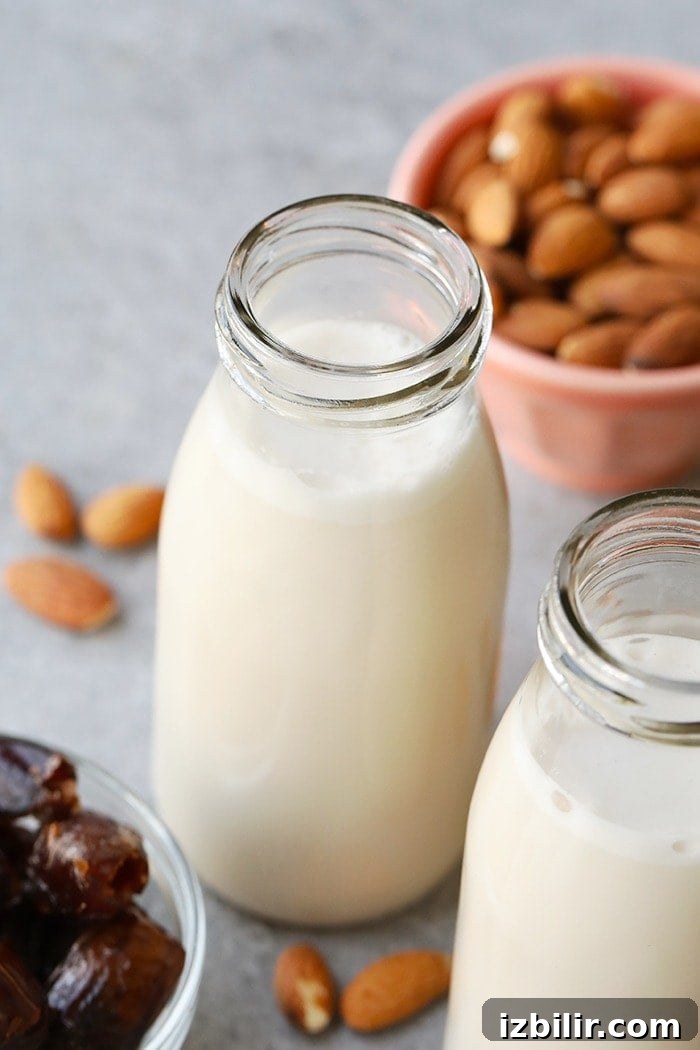
Transfer the milk to airtight glass jars and refrigerate. Use within 5–7 days for best flavor and freshness. Shake well before each use, as separation is natural.
How long will homemade almond milk last?
When stored in the refrigerator in a sealed container, homemade almond milk keeps for about 5–7 days. Because it lacks preservatives, it won’t be shelf stable like many commercial products.
Recipes with Almond Milk
- Almond Milk Chai Tea Latte
- Overnight oats with almond milk
- Blueberry banana smoothie
- Almond milk lattes and matcha drinks
Recipe: Homemade Almond Milk
Prep: 10 minutes active plus soaking time. Total: 10 minutes active. Servings: makes about 12 servings (varies with amount of water used).
Ingredients
- 3 cups raw almonds (about 1 lb.)
- 6 cups fresh water for blending (plus additional water for soaking)
- Pinch of salt
- 6–15 pitted Medjool dates (adjust to taste; optional)
- Paste from 1/2 vanilla bean or 1/2 teaspoon vanilla extract (optional)
Instructions
- Place almonds in a large bowl and cover completely with water. Soak 24 hours, or for a quicker method, pour boiling water over almonds and soak 1–2 hours.
- Drain and rinse the almonds, then add to a high-speed blender with 6 cups fresh water, a pinch of salt, pitted dates, and vanilla.
- Blend on high for 1–2 minutes until very smooth.
- Strain the mixture through a nut milk bag or clean kitchen towel, squeezing until all liquid is extracted.
- Transfer the milk to jars and refrigerate. Use within 5–7 days.
Tips & Notes
- Serving size: about 1/2 cup per serving when counted as part of the recipe yield.
- Start with fewer dates and add more to reach your preferred sweetness.
- Save the leftover almond pulp for baking, smoothies, or to dry into almond meal.
Nutrition (approximate per batch)
Calories: 282 kcal; Carbohydrates: 26 g; Protein: 8 g; Fat: 19 g; Fiber: 5 g; Sugar: 2 g. Nutrition values are estimates and will vary with exact ingredient amounts.
Enjoyed this recipe?
Leave a comment below and share how you use your homemade almond milk. Tag your photos with the hashtag #fitfoodiefinds if you’d like to share creations inspired by this recipe.