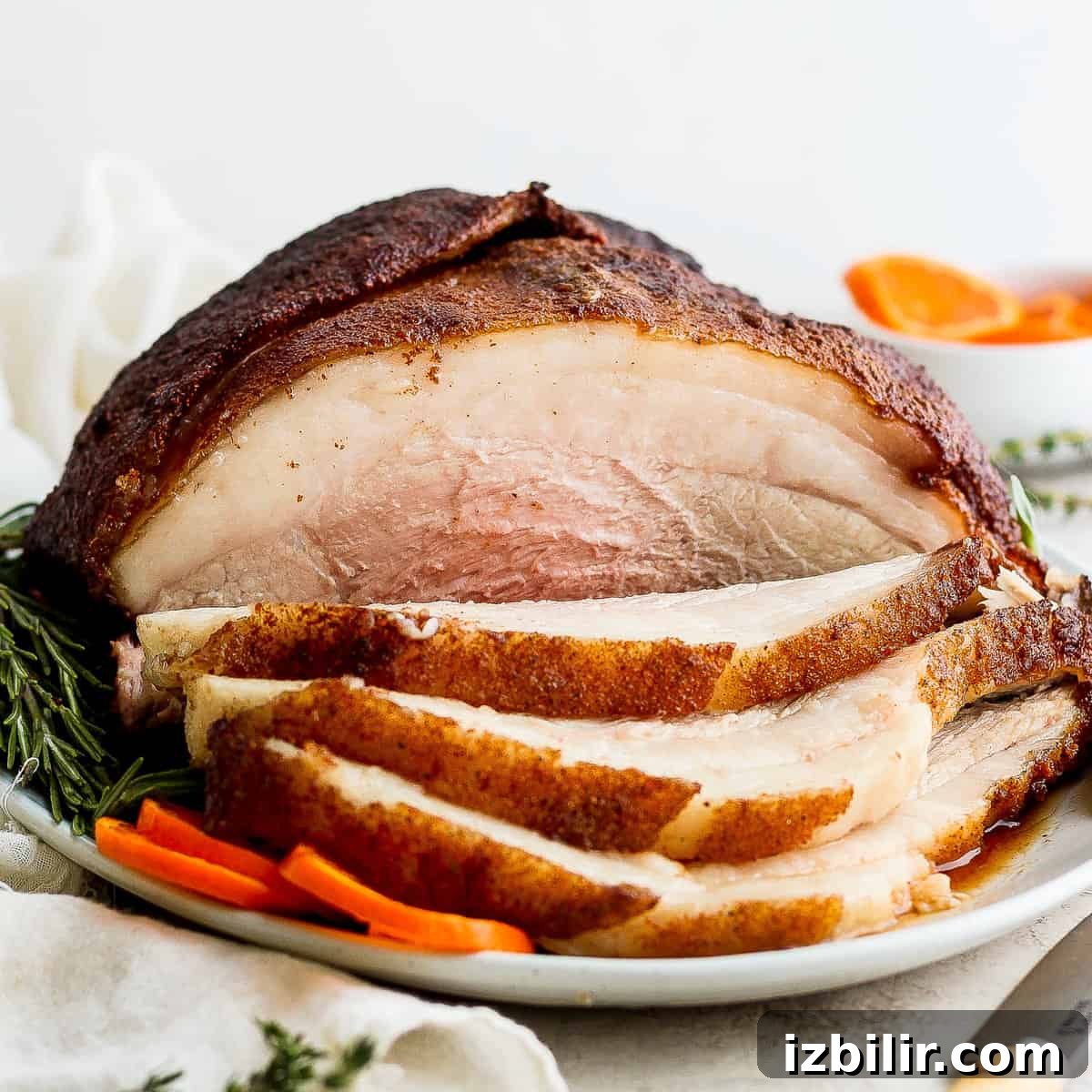
Smoked ham is a flavorful, versatile centerpiece for holidays and special dinners. This smoked ham recipe explains how to brine the ham overnight, apply a savory dry rub, prepare a basting liquid, and smoke the ham to juicy perfection.
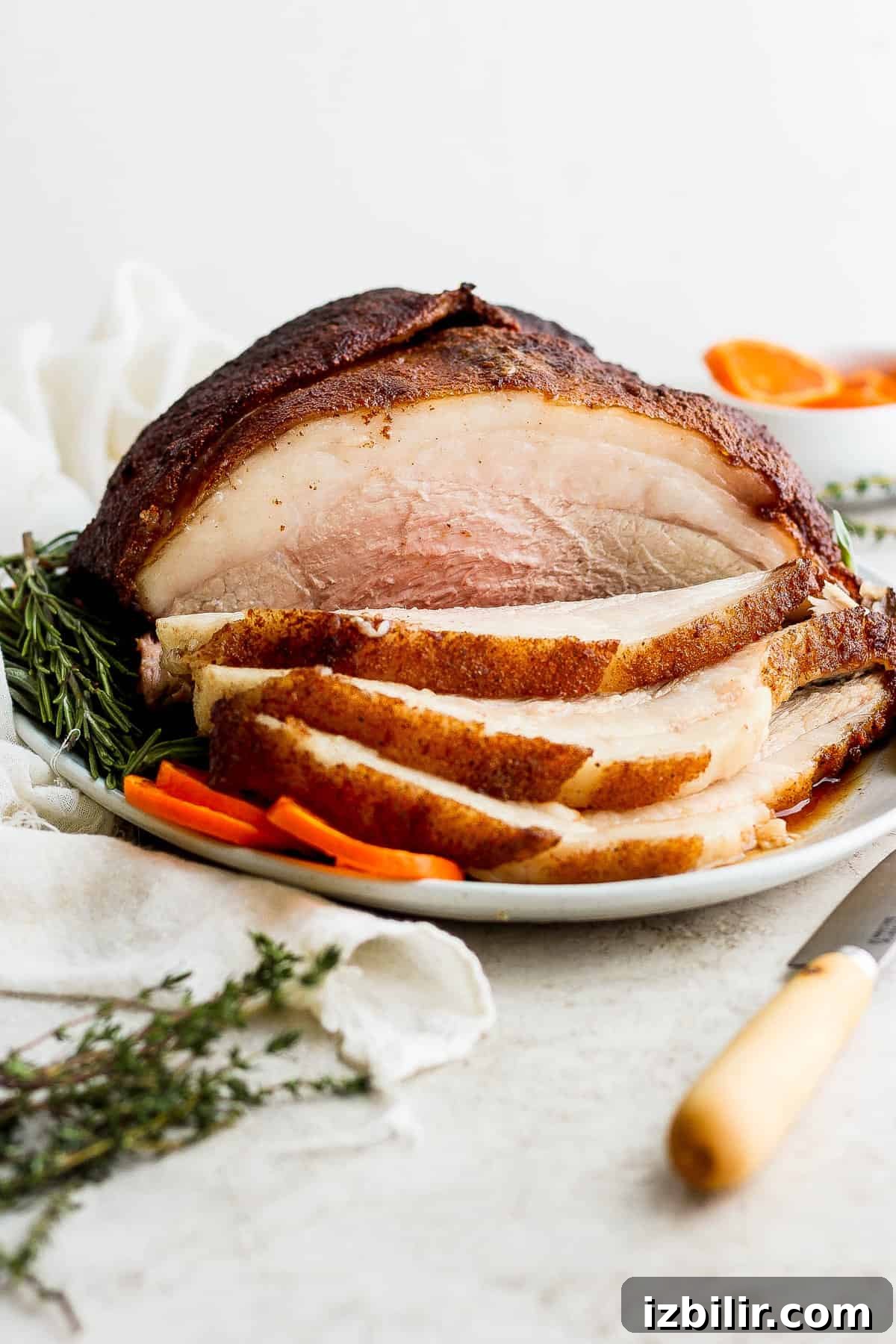
Smoked Ham — Best Holiday Meal
Homemade smoked ham delivers deep, smoky flavor and succulent texture that beats most store-bought options. Whether for Easter, Christmas, or a family gathering, smoking your own ham is surprisingly straightforward and incredibly rewarding.
This article covers the essential decisions and steps: which cut to use, how to brine, what goes into the dry rub and basting liquid, smoking time and temperature, and serving and storage tips.
Why you’ll love this ham
- Juicy and full of flavor from brining, dry rub, and smoke.
- Great served hot and delicious as leftovers.
- No unnecessary preservatives when you prepare it yourself.
- Perfect for feeding a crowd.
What is Smoked Ham?
Smoked ham is a cut of pork that has been cooked in a smoker so it absorbs a rich smoky flavor. Smoking enhances the taste of the ham and complements the seasonings in the dry rub and basting liquid. For this recipe, the ham is brined first to lock in moisture, then dry-rubbed and smoked at moderate heat for a tender, flavorful result.
What cut of meat should I use?
Traditional ham comes from the hind leg of the pig, commonly referred to simply as “the ham.” You can use either a bone-in or boneless ham for smoking. Boneless hams are easier to slice and tend to cook a bit faster, while bone-in hams are larger and can add flavor during cooking.
Boneless vs. bone-in ham
Both types work well. A typical boneless ham weighs about 7–9 pounds, while a bone-in ham is often 12–14 pounds or more. This recipe was tested with a boneless ham, which smokes more quickly and is convenient to handle.
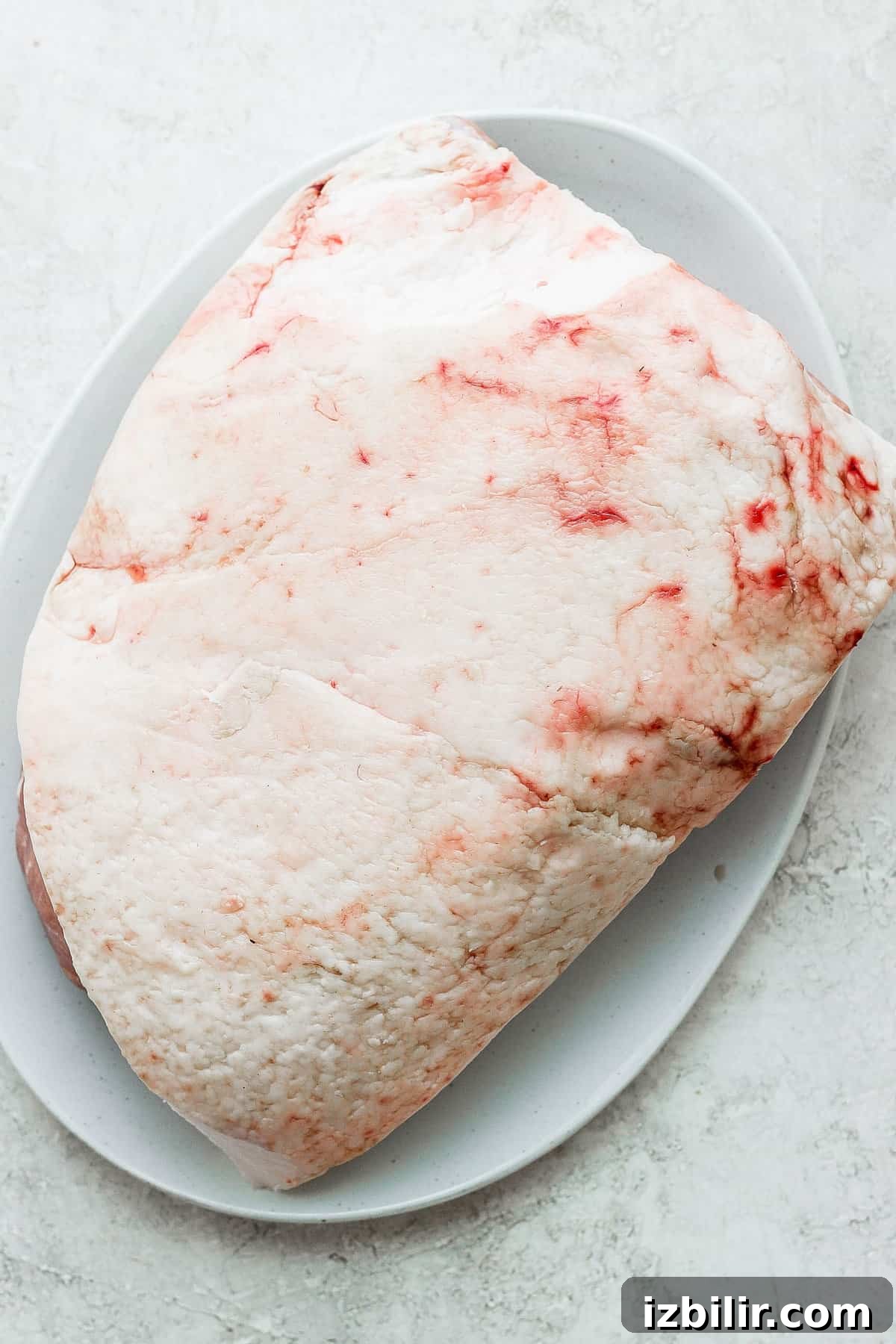
Where to buy raw ham
Raw or uncured ham can be harder to find outside holiday seasons. Check with your local butcher, who can often set aside a ham at the time they process a pig. Around holidays, many grocery stores also carry raw or fresh ham.
How to Smoke a Ham (at a glance)
Quick overview: brine, dry rub, baste, smoke, rest, then slice. See the full recipe below for precise ingredient amounts and step-by-step details.
- Brine the ham: Use a large food-safe container so the brine fully covers the ham. Refrigerate for at least 12 hours, or up to 24–72 hours if you prefer deeper seasoning.
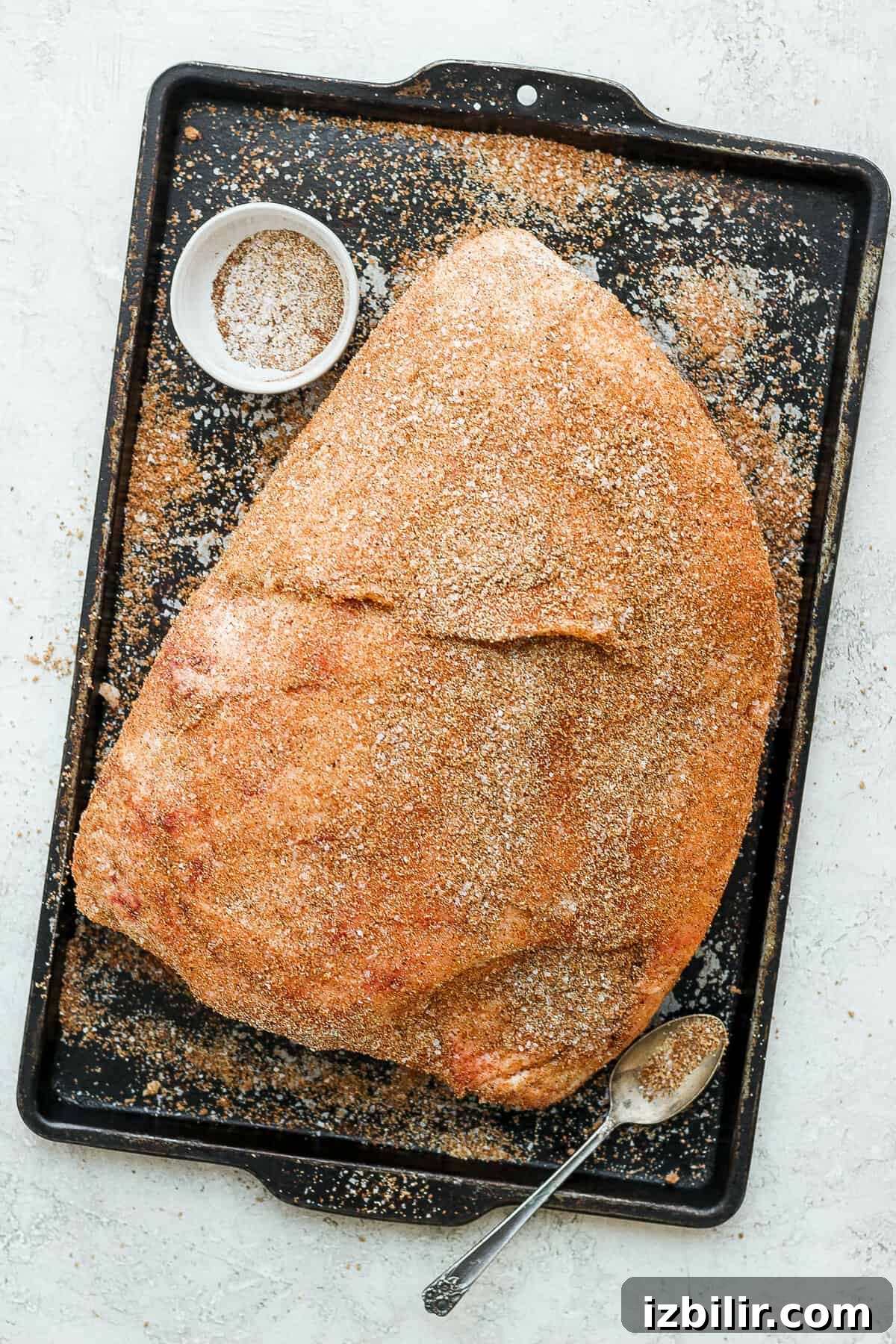
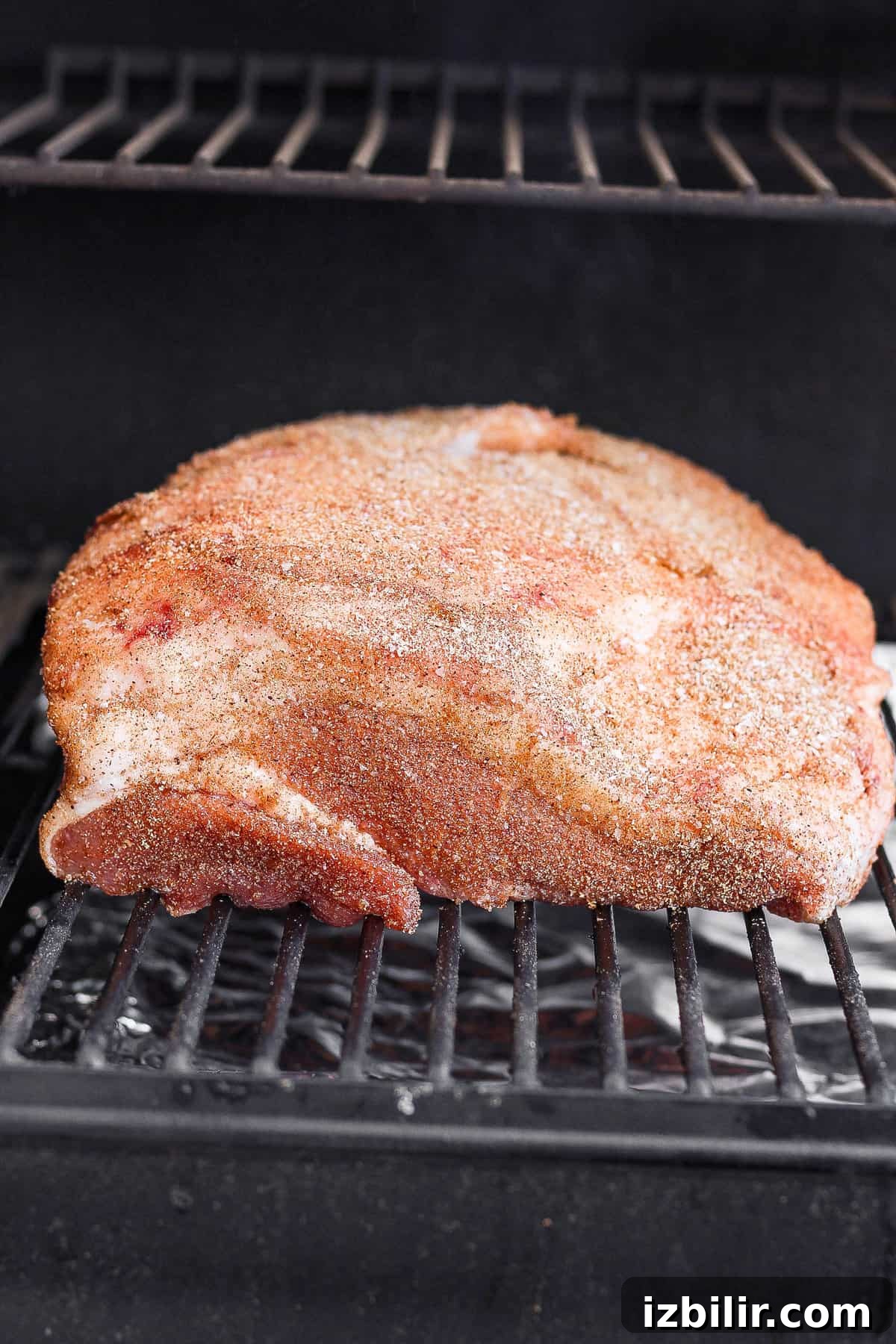
- Dry rub: Pat the ham dry after brining, then massage on the dry rub to form a flavorful crust.
- Make the basting liquid: Sauté onion in butter, add garlic and honey, then stir in broth and keep warm.
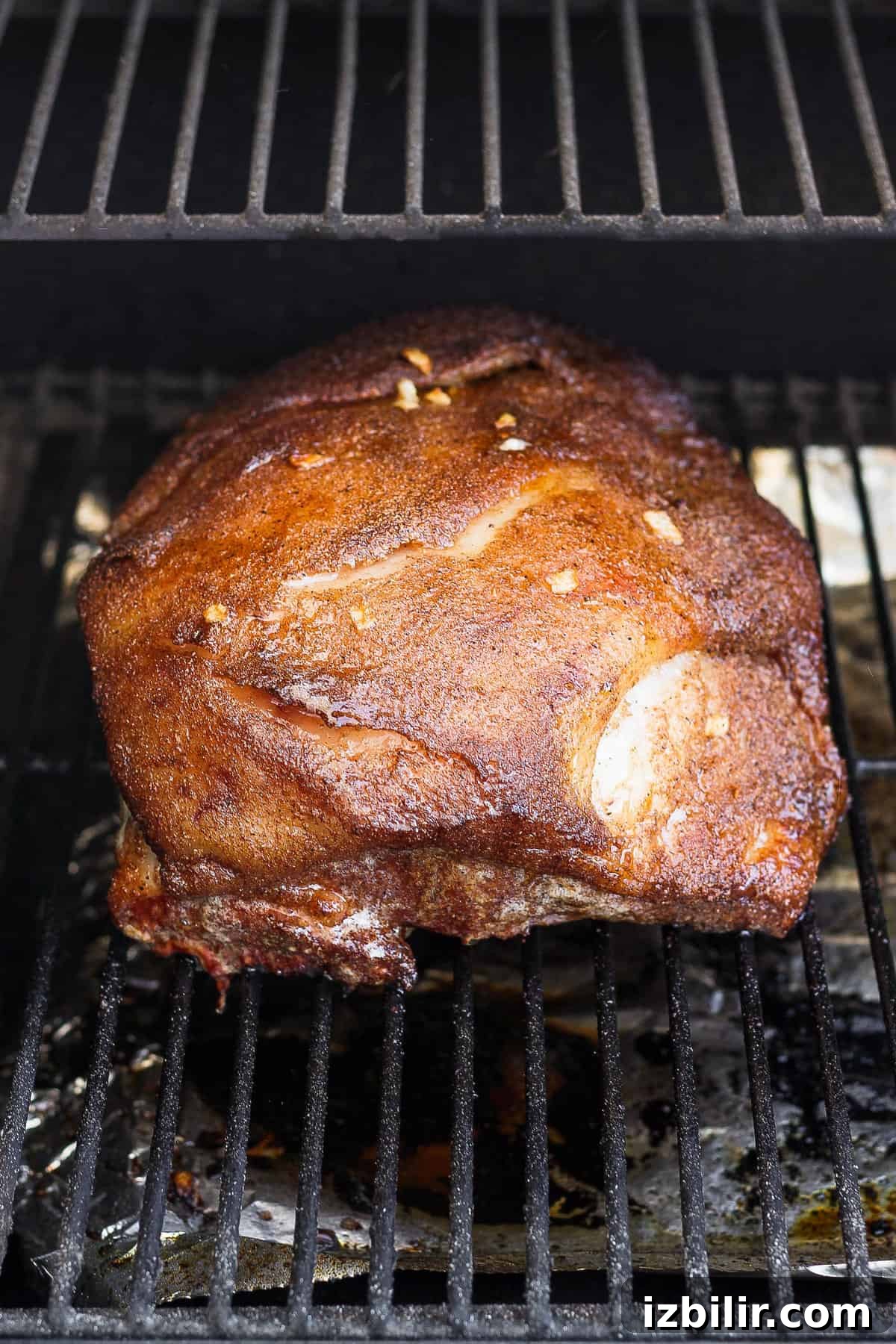
- Smoke the ham: Preheat the smoker to 300°F and smoke the ham for about 2–3 hours, basting every 30 minutes to maintain moisture.
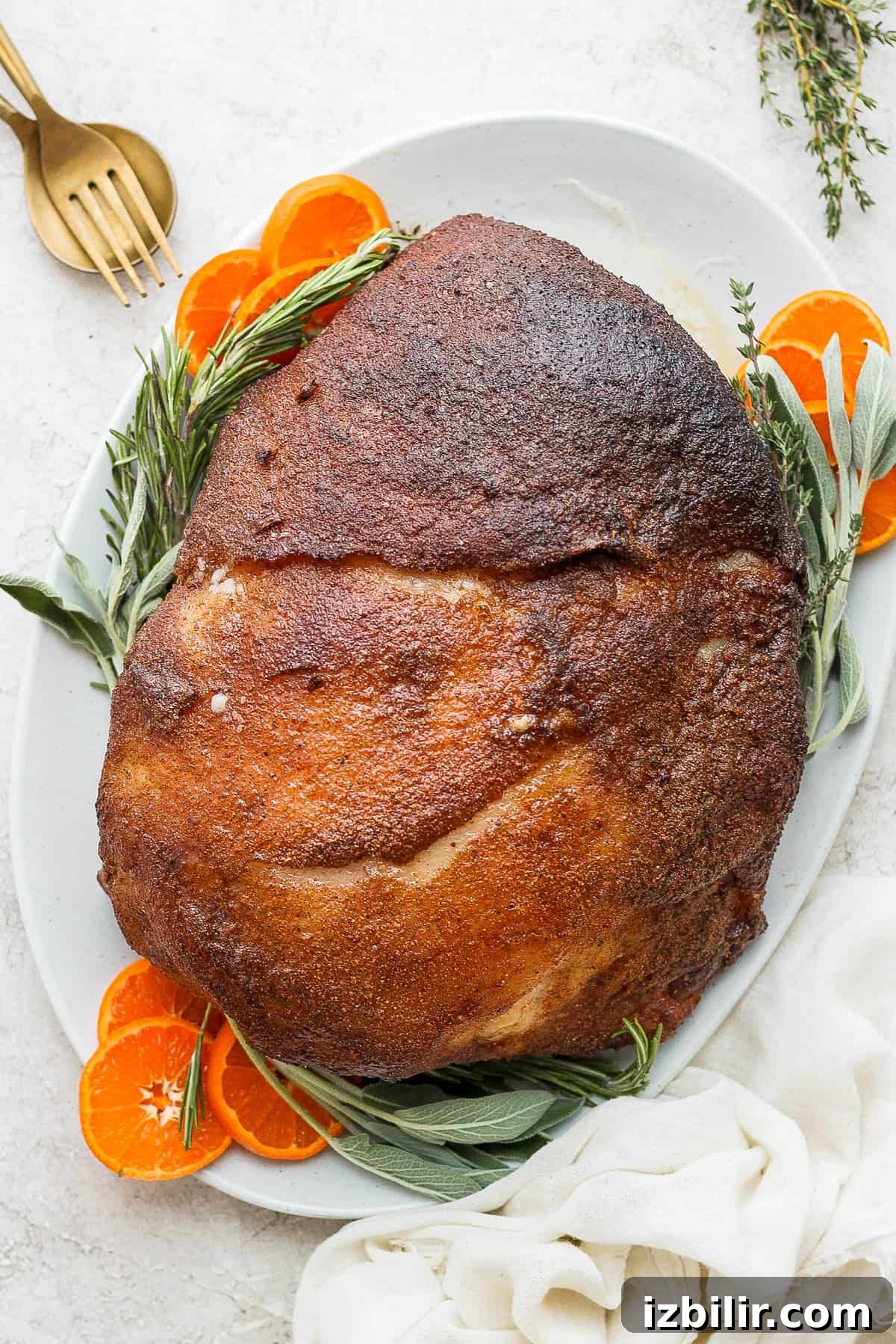
- Rest: Remove the ham when its internal temperature reaches about 140–145°F and let it rest 15–30 minutes before slicing.
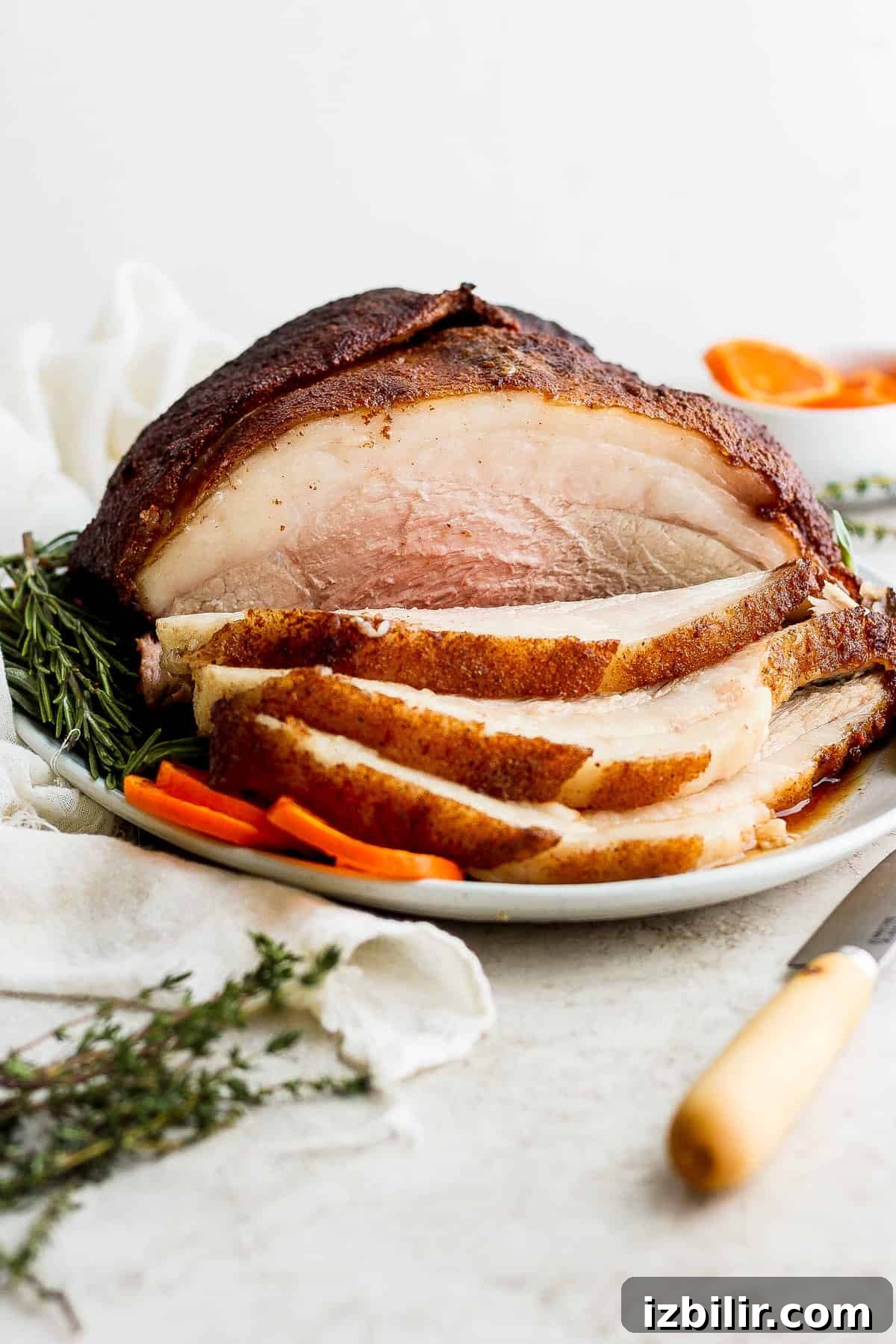
- Serve: Slice and serve hot, or refrigerate for leftovers.
How long to smoke a ham
A 7–8 lb ham typically takes around 2–3 hours at 300°F on the smoker. Cook time will vary with ham size and whether it is bone-in or boneless. The best indicator of doneness is internal temperature: aim for 140–145°F. Let the ham rest so it finishes cooking gently and the juices redistribute.
Difference between curing and brining
Both curing and brining help keep meat moist and flavorful, but they differ in method and purpose:
- Curing: Often a dry-salt process intended to preserve meat and develop flavor over time. It can be a long process and may use specialized curing salts.
- Brining: A wet method that soaks meat in a saltwater solution to infuse moisture and seasoning. Brining is typically faster; you can brine a ham for up to three days, though overnight is sufficient for most recipes.
For this recipe we brine overnight to ensure the ham stays moist while it smokes.
Common questions about smoking ham
Can I smoke a store-bought cooked ham?
Yes — if the store-bought ham is cured but not already smoked, you can smoke it for about 45 minutes to 1 hour to add smoky flavor.
How long will leftover ham keep?
Properly stored in an airtight container, cooked ham will stay fresh in the refrigerator up to 7 days.
Can I use another cut of pork?
This method works for other cuts, such as pork shoulder or picnic roast; smoke time will vary with size and cut. Monitor internal temperature for doneness.
What smoking fuel should I use?
Use the pellet, wood, or charcoal you prefer. Fruitwoods and hickory are common choices for ham, but the exact fuel is up to you and your smoker.
Serving suggestions
Serve your smoked ham with classic sides to complete the meal. Popular options include baked potatoes, roasted green beans, roasted red potatoes, or roasted broccoli. Leftover ham is excellent in sandwiches, quiches, or soups.
What to do with leftover ham
- Save the bone from a bone-in ham to make split pea soup or broth.
- Add diced ham to scalloped potatoes or casseroles for extra flavor.
- Use ham in quiches, breakfast scrambles, pasta dishes, and sandwiches.
Storage
Allow the ham to cool, then refrigerate in an airtight container for up to 7 days. For longer storage, freeze sliced or chopped ham for up to 3 months; frozen ham is handy for soups, burritos, and breakfast dishes.
Juicy Smoked Ham — Recipe
Below is a clear, easy-to-follow recipe for a brined, dry-rubbed smoked ham that serves about 10 people. Adjust quantities and times as needed for larger bone-in hams.
Ingredients
Brine
- 2 cups kosher salt
- 4 cups water (bring to a boil with the salt, then cool)
- 7–8 lb raw boneless ham (bone-in can be used; increase cook time)
Dry Rub
- 3 tablespoons brown sugar
- 2 tablespoons garlic powder
- 1 tablespoon kosher salt
- 1 teaspoon ground black pepper
- 3 teaspoons paprika
- 2 teaspoons chili powder
Basting Liquid
- 4 tablespoons salted butter
- ½ medium white onion, diced
- ½ teaspoon kosher salt
- 4 cloves garlic, minced
- 2 tablespoons honey
- 4 cups broth (any kind)
Instructions
- Prepare the brine: Bring 2 cups kosher salt and 4 cups water to a boil, stirring until salt dissolves. Cool the brine by adding cold water in a large food-safe container.
- Submerge the ham in the brine so it is fully covered. Refrigerate for at least 12 hours; for deeper seasoning, brine up to 24–72 hours.
- Mix the dry rub ingredients in a bowl and set aside.
- Remove the ham from the brine, pat dry with paper towels, and place on a baking sheet. Massage the dry rub over the entire ham, working it into crevices. Let rest 15 minutes.
- Preheat your smoker to 300°F. Prepare wood, pellets, or fuel of choice.
- Make the basting liquid: Melt butter in a small saucepan over medium heat. Add diced onion and ½ teaspoon salt and sauté about 10 minutes. Add minced garlic and honey and cook another minute. Pour in the broth, bring to a simmer, then reduce heat and keep warm.
- Place the ham in the smoker and smoke for approximately 2–3 hours, basting every 30 minutes with the warm basting liquid to keep the surface moist and flavorful.
- After about 2 hours, begin checking the internal temperature. Remove the ham when it reaches 140–145°F and allow it to rest 15–30 minutes before slicing; the residual heat will finish the cooking.
- Slice the ham and serve warm. Leftovers refrigerate well and can be used in many dishes.
Tips & Notes
- Boneless hams are typically 7–9 lb; bone-in hams are often 12–14 lb and will need longer smoking time.
- Target internal temperature is 140–145°F regardless of ham size.
- Brining time: minimum 12 hours; up to 3 days for extra seasoning.
- Use a trusted meat thermometer to ensure accurate internal temperature.
Nutrition (approximate)
Calories: 562 kcal • Carbohydrates: 11 g • Protein: 82 g • Fat: 19 g • Fiber: 0.5 g • Sugar: 8 g
Nutrition information is an estimate and should be used as a guideline only.
Photography by: The Wooden Skillet