
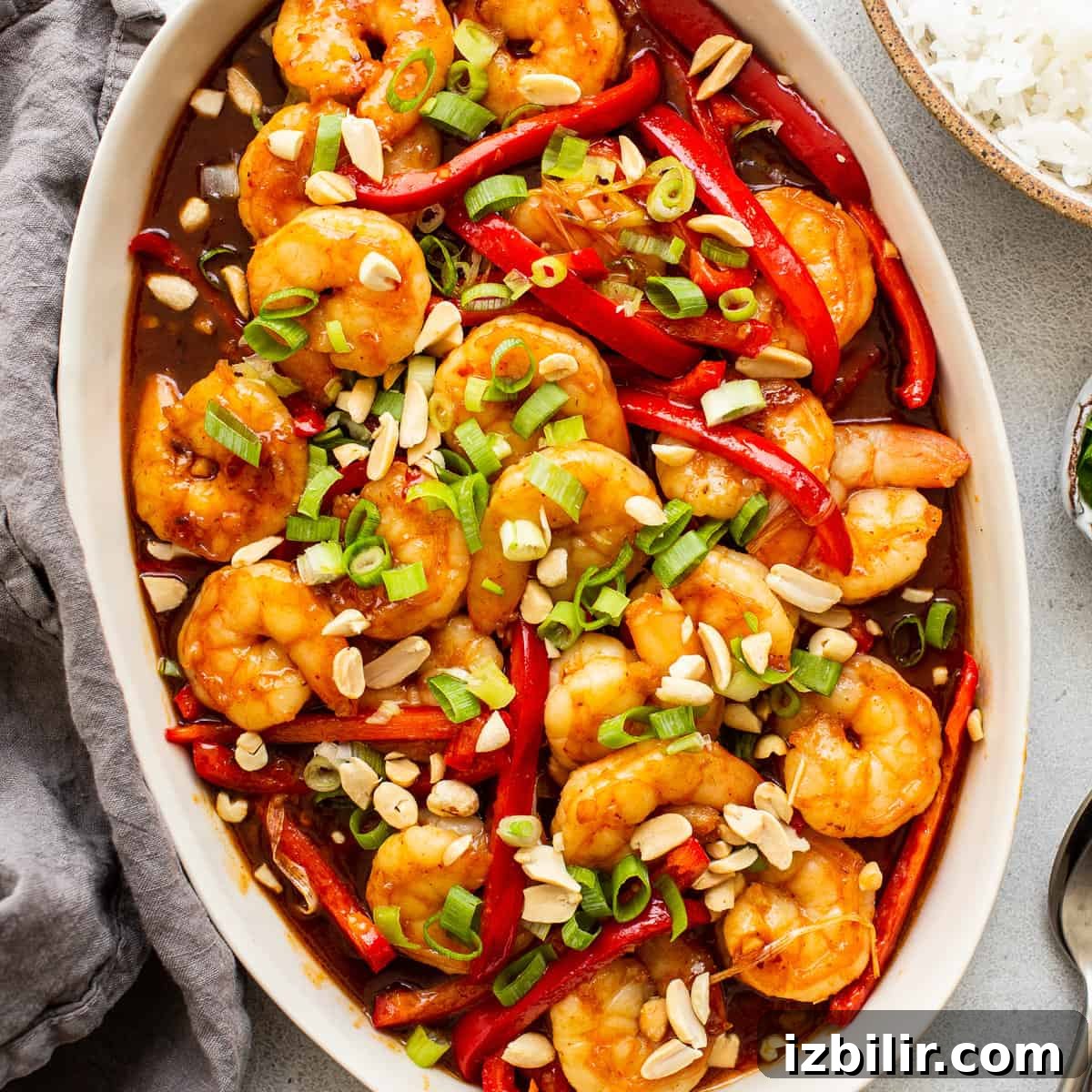
Kung Pao shrimp features a bright, sweet-and-spicy sauce paired with juicy shrimp and crisp bell peppers for a colorful, high-protein meal you can prepare in about 30 minutes. This homemade version keeps the bold flavors you love while using ingredients that are easy to find at most grocery stores.
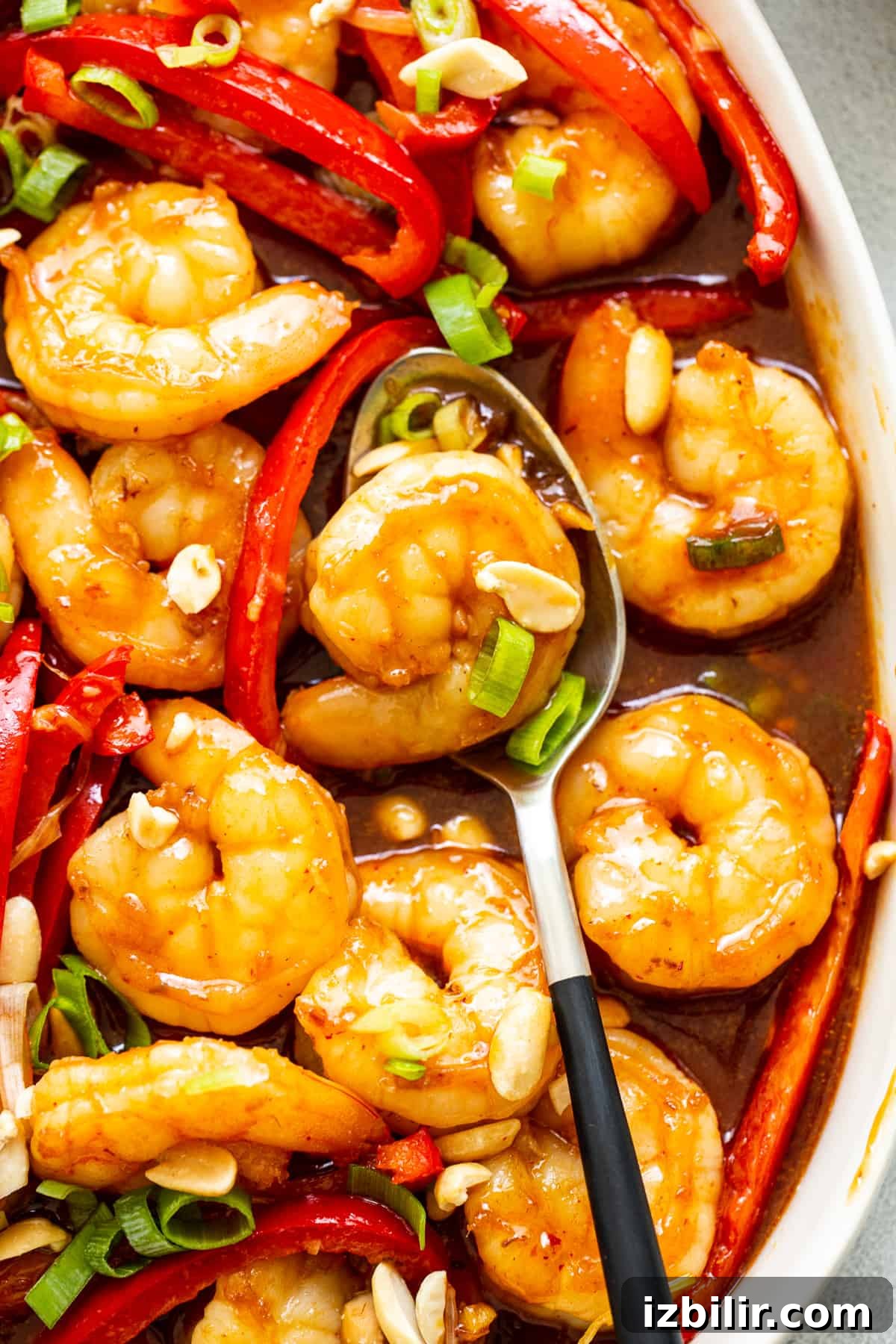
Easy Homemade Kung Pao Shrimp
Kung Pao Shrimp is a favorite stir-fry for its lively balance of heat, sweetness, and umami. It’s packed with protein and vegetables, and is simple to adapt: swap proteins, swap vegetables, or change the grain to make a new meal every time.
Why you’ll love it!
- Ready in under 30 minutes
- Restaurant-quality flavor at home
- Easy to customize
- Great for leftovers
- High in protein
What is Kung Pao Shrimp made of?
Traditionally, Kung Pao is a spicy Sichuan dish built around red chili peppers, soy sauce, and a savory-sweet sauce. This recipe adapts the classic flavor profile by using commonly available ingredients—sriracha and chili paste—to achieve the heat and complexity you expect while keeping preparation simple.
What kind of shrimp is best?
Any raw shrimp will work, but large, XL, or jumbo shrimp yield a meaty bite and stand up well to stir-frying. For convenience and to avoid overcooking, buy raw shrimp that are peeled and deveined. If you prefer extra flavor, marinate the shrimp longer.
What is in the sauce?
This version of Kung Pao sauce combines savory and spicy elements with a touch of sweetness. The sauce ingredients used here are:
- Soy sauce
- Sriracha
- Chili paste
- Honey
- Fresh ginger
- Cornstarch (to thicken)
How to make it less spicy
If you prefer milder flavors, reduce the sriracha or chili paste and increase the honey or another sweetener. Adjust in small increments, tasting as you go, until you reach a heat level that suits your palate.
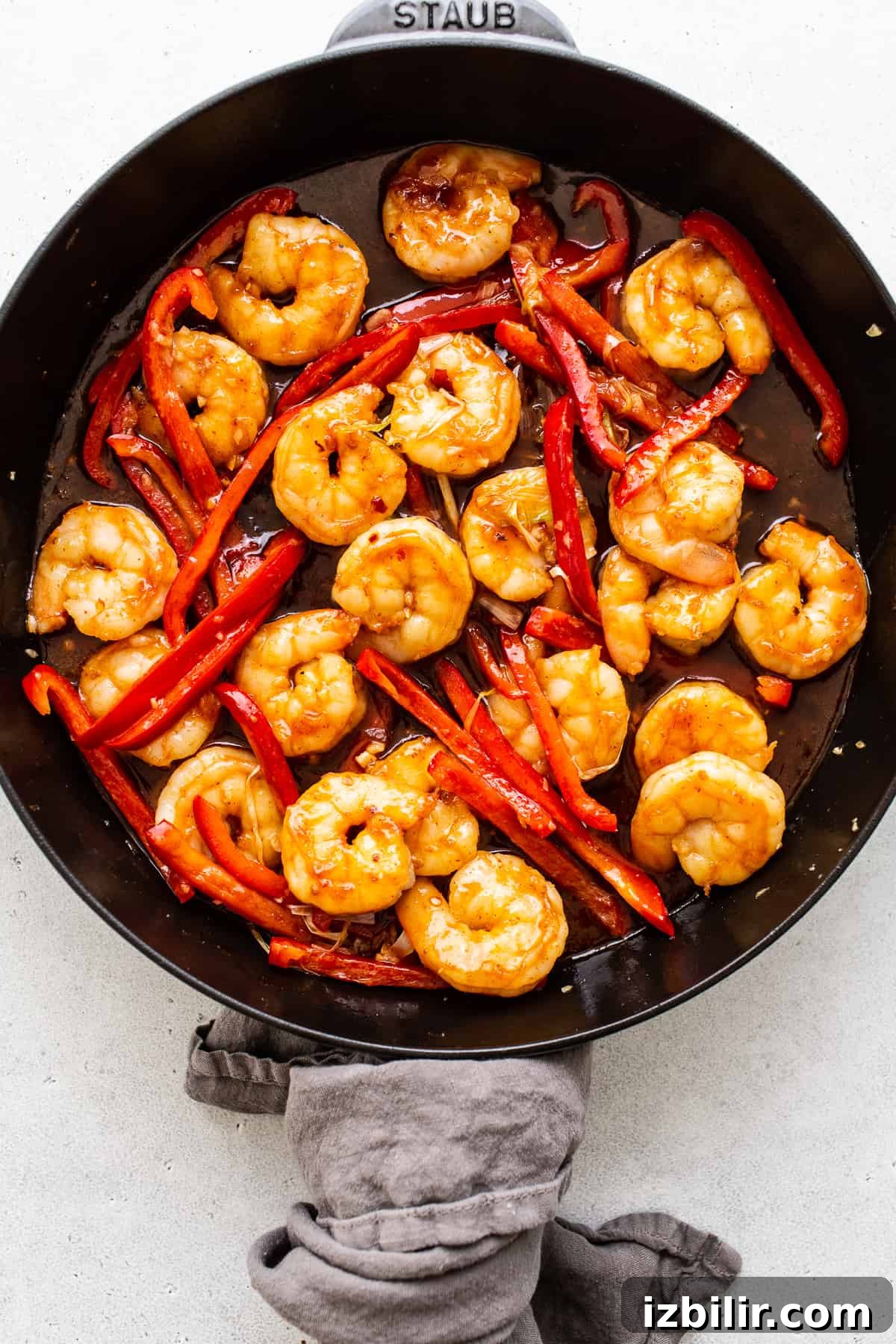
How to thicken the sauce
The simplest and most reliable thickener is cornstarch. There are two effective methods:
- Whisk cornstarch directly into the sauce before heating, making sure it dissolves thoroughly. Heat the sauce and it will thicken in minutes.
- If the sauce is already in the pan, mix cornstarch with 1–2 tablespoons of water to make a slurry, then stir that into the hot pan and cook until thickened.
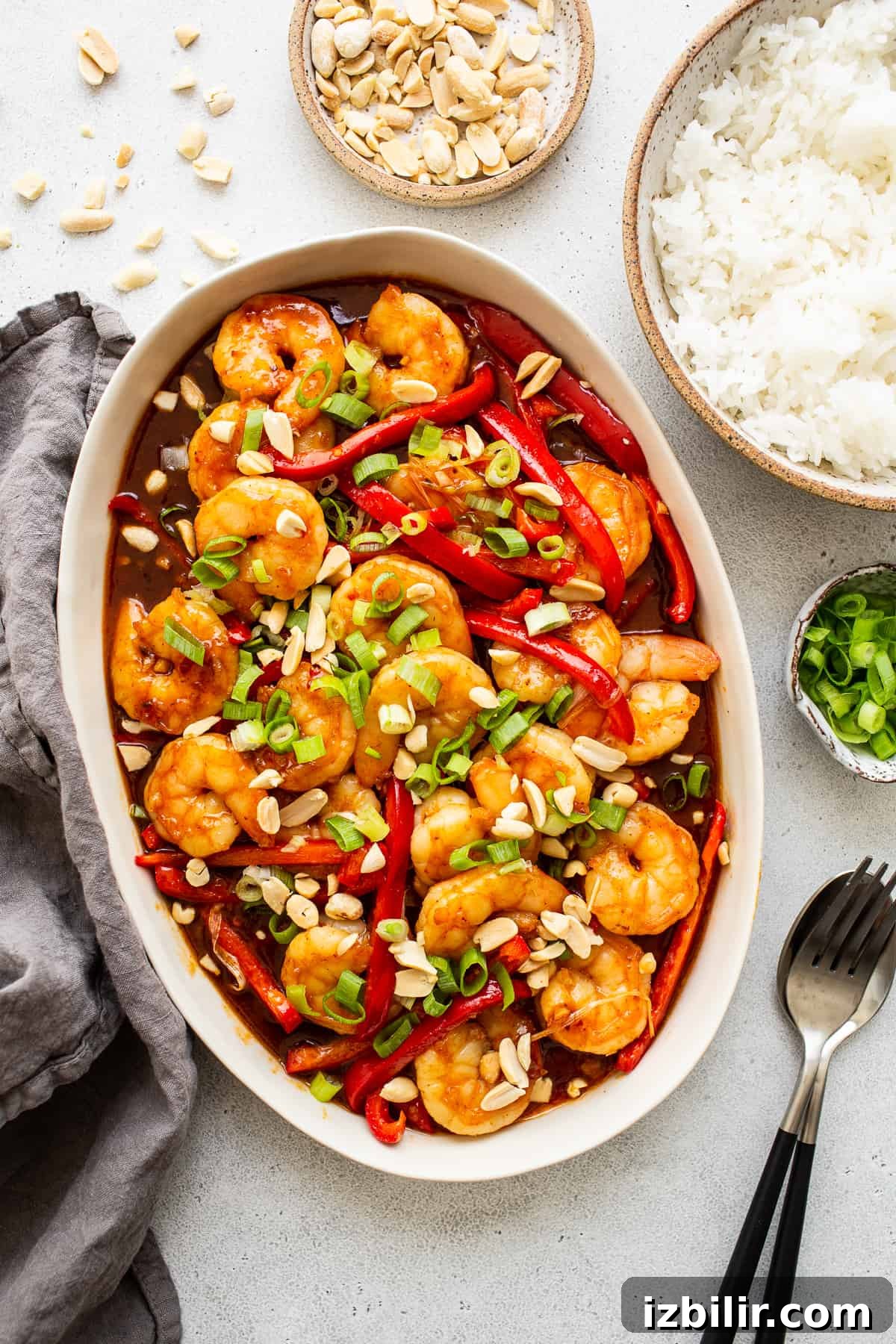
Serving suggestions and swaps
This dish is highly adaptable. Swap proteins or vegetables and serve it over your favorite grain for a new twist each time.
Protein swaps
- Chicken breast (sliced)
- Flank steak (thinly sliced)
- Chickpeas or garbanzo beans (for a vegetarian option)
Vegetable options
- Broccoli florets
- Water chestnuts
- Mushrooms
- Onion slices
Grain pairings
- White sticky rice
- Brown rice
- Quinoa
- Fried rice
Storage
Store leftover Kung Pao shrimp in an airtight container in the refrigerator for up to three days. Reheat gently on the stovetop or in the microwave until warmed through, taking care not to overcook the shrimp.
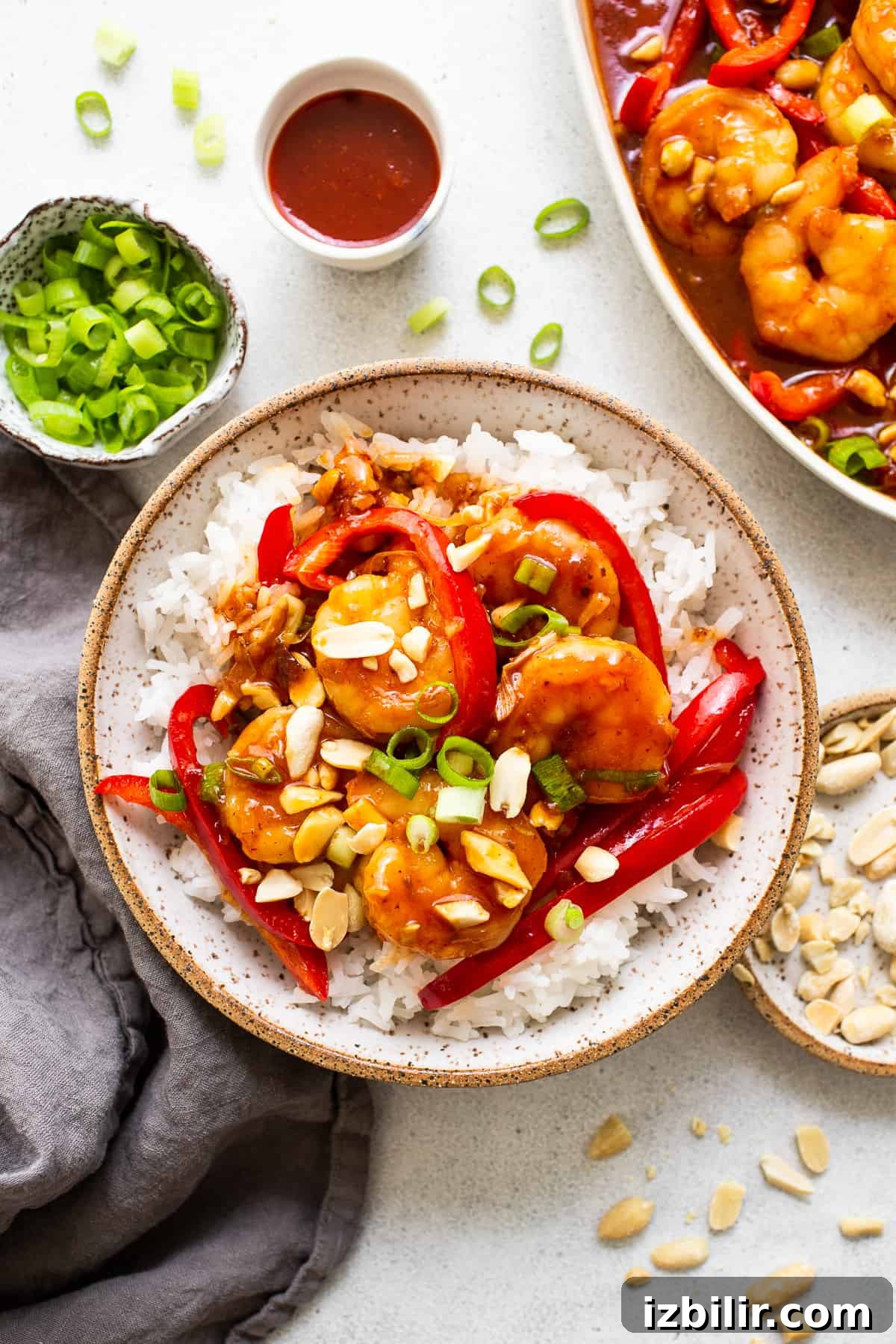
Recipe: Kung Pao Shrimp
This recipe serves 4 and takes about 20 minutes total (5 minutes prep, 15 minutes cook).
Ingredients
For the sauce
- 1/4 cup soy sauce
- 1/4 cup sriracha
- 2 tablespoons chili paste
- 1/3 cup honey
- 1 1/2 tablespoons fresh ginger, grated (split between steps)
- 2 teaspoons cornstarch
For the Kung Pao shrimp
- 1 lb large or XL raw shrimp, peeled and tail-off
- 3 green onions (separate white and green parts)
- 2 tablespoons avocado oil (or other neutral oil)
- 1/2 teaspoon salt
- 3 cloves garlic, minced
- 1 large red bell pepper, thinly sliced
- 1/4 cup roasted, salted peanuts, roughly chopped
- 1 tablespoon fresh lime juice
Instructions
- Combine the soy sauce, sriracha, chili paste, honey, and 1 tablespoon of grated ginger in a bowl and whisk until smooth.
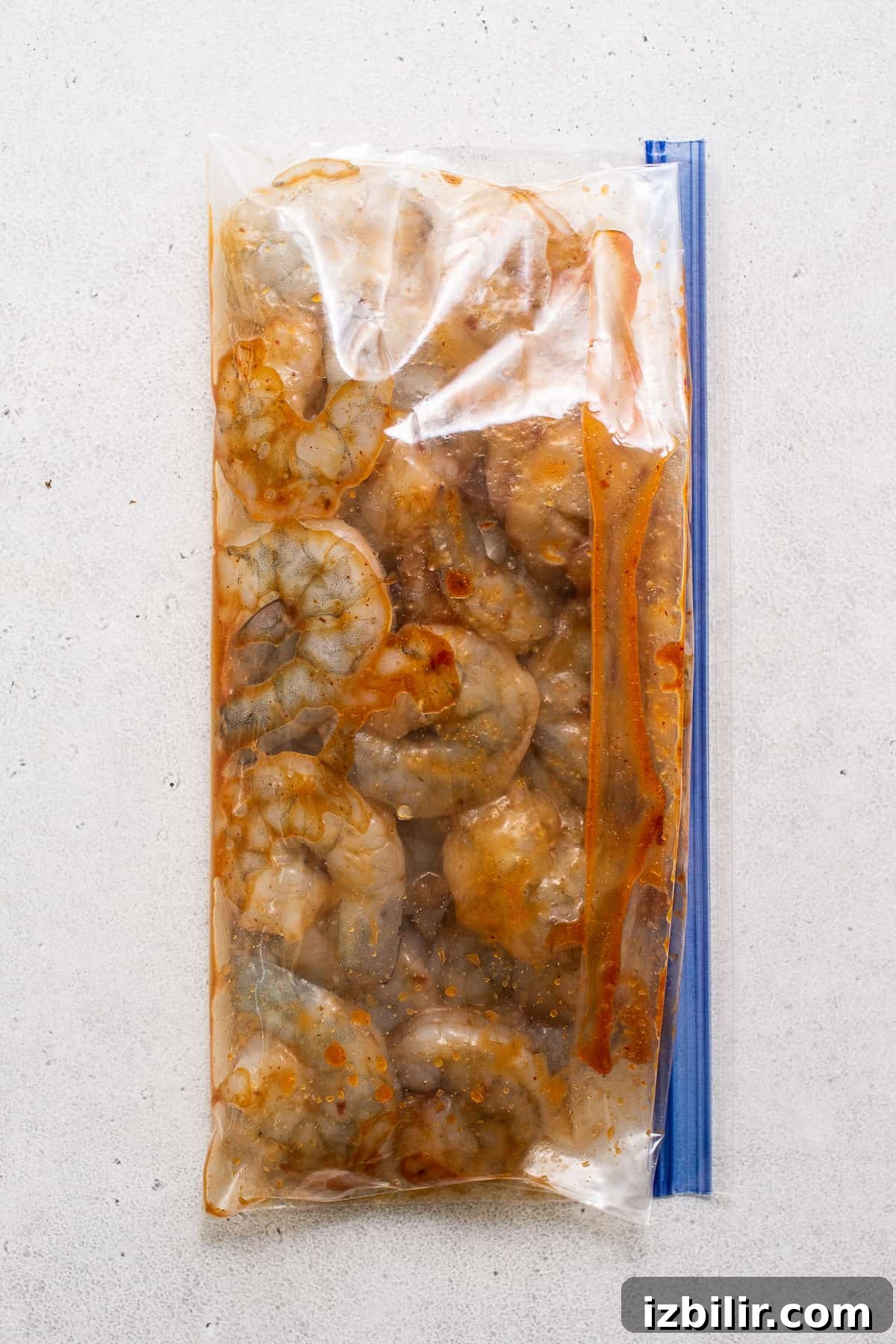
- Place the peeled shrimp in a large bowl or gallon-size bag and pour half of the sauce over them. Toss to coat, then refrigerate to marinate for 30 minutes to 1 hour for more flavor.
- To the remaining sauce, whisk in the cornstarch until fully dissolved and set aside.
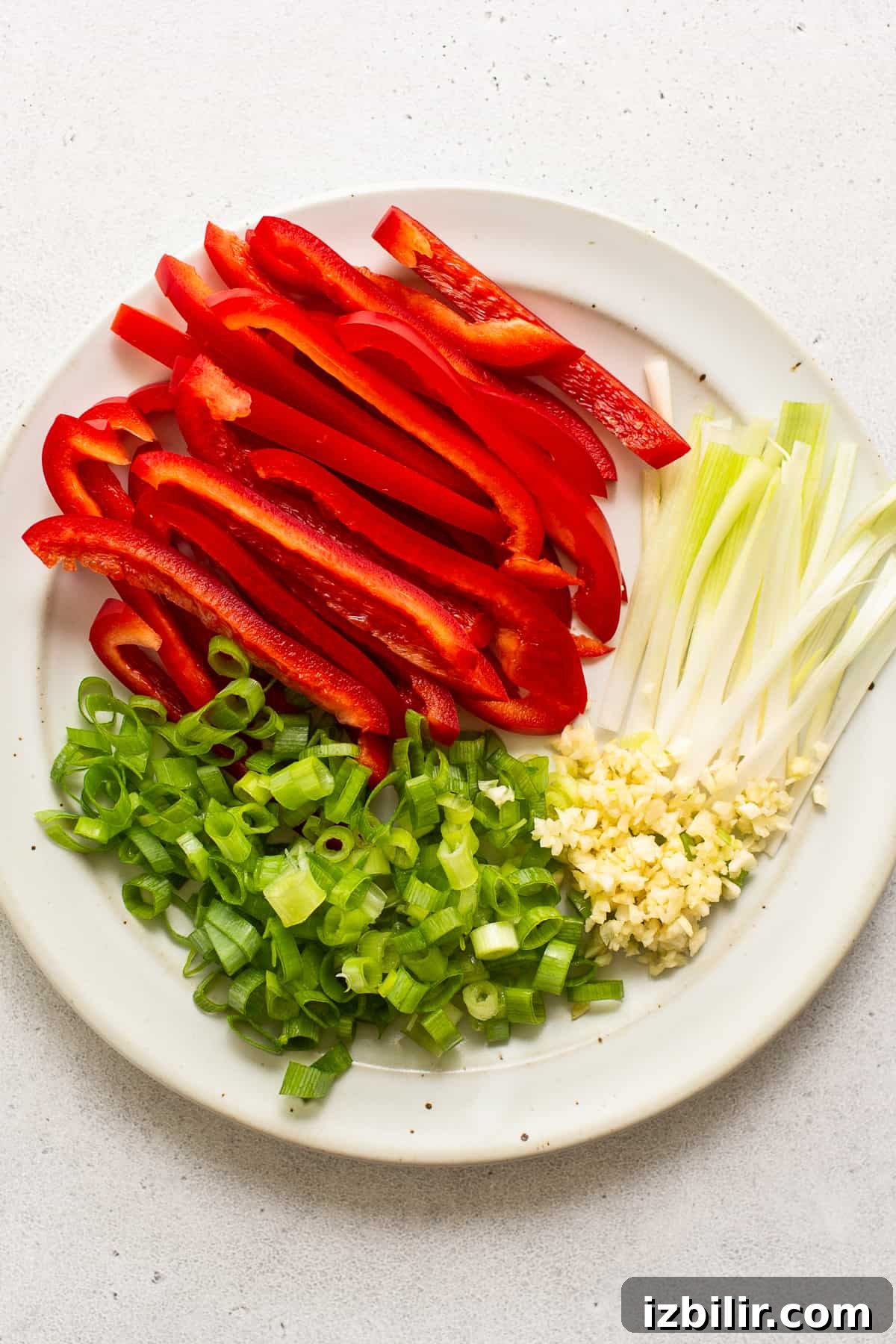
- Prepare the green onions: discard the root, cut the white parts into roughly 3-inch pieces and slice them lengthwise; finely mince the green parts and reserve for garnish.
- Heat a large skillet over medium-high heat with 1 tablespoon of avocado oil. Add the white parts of the green onions, season lightly with salt, and sauté for about 1 minute.
- Reduce heat to medium and add the garlic, sliced red pepper, and the remaining grated ginger. Sauté for 3–4 minutes until the pepper softens but remains crisp. Remove the vegetables from the pan and set aside.
- Drain the shrimp from the marinade using a colander and discard the used marinade.
- Return the skillet to medium heat with the last tablespoon of oil. Add the shrimp in a single layer and cook for about 1 minute, then flip. Pour the reserved sauce with cornstarch over the shrimp and cook for another 2 minutes, until the sauce thickens and the shrimp are cooked through.
- Remove from heat, add the cooked peppers and onions back to the pan, and toss everything together to combine.
- Transfer to a serving platter and finish with chopped peanuts, the minced green onion tops, and fresh lime juice. Serve immediately over your choice of rice or grains.
Tips & Notes
- Using larger shrimp helps prevent overcooking and gives a satisfying texture; cook times may vary slightly with size.
- Marinating longer intensifies the flavor. If short on time, even 15 minutes will impart some flavor.
- To reduce heat, cut back on sriracha and increase the honey or other sweetener to balance the flavors.
- Nutrition info provided with the recipe does not include any rice or grain served with the dish.
Nutrition (per serving)
Calories: 336 kcal, Carbohydrates: 33 g, Protein: 28 g, Fat: 12 g, Fiber: 2 g, Sugar: 26 g.
Nutrition information is automatically calculated and should be used as an approximation.
Photography: images in this post were taken by Ashley McGlaughlin.