
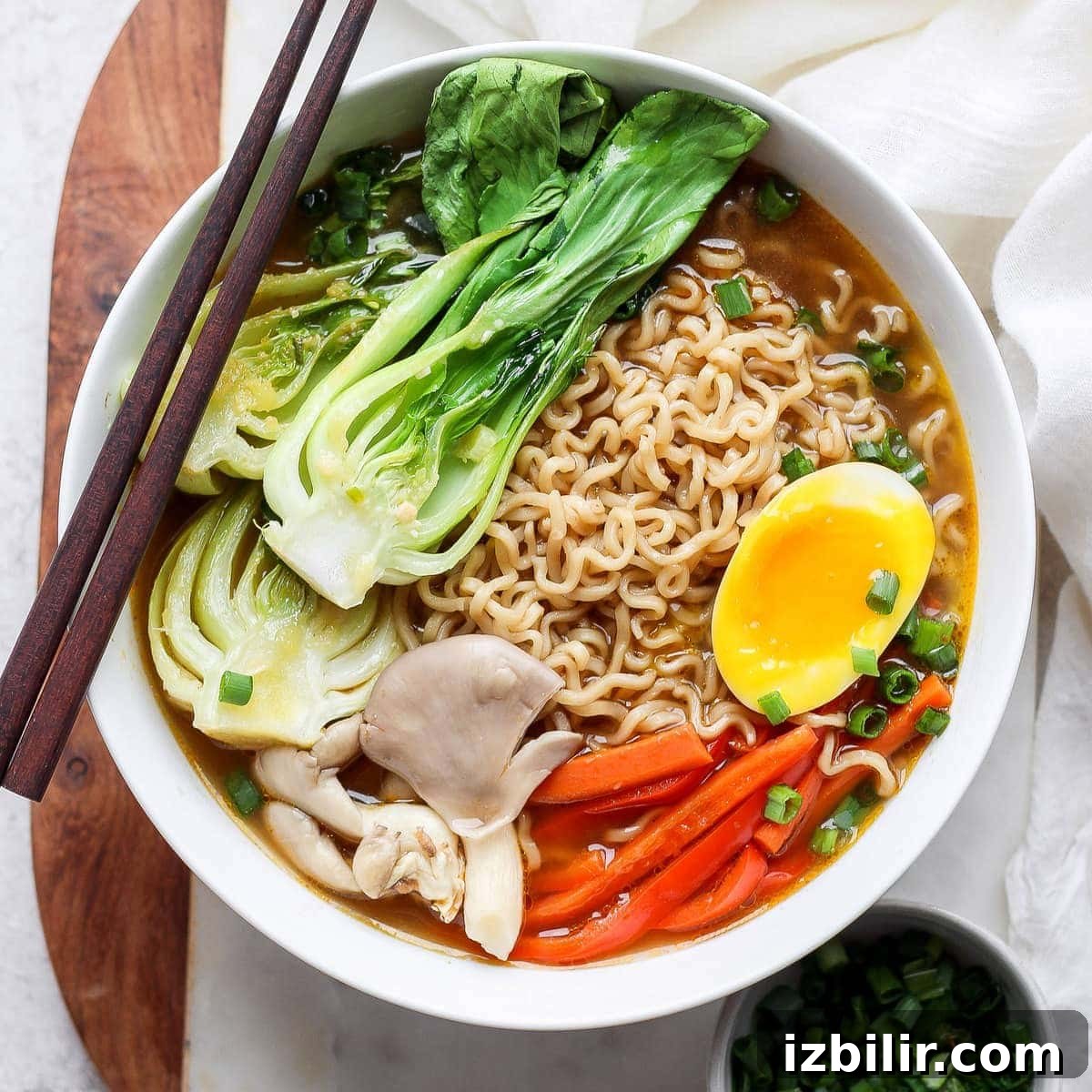
This vegetarian ramen is our take on an easy, flavorful bowl of ramen that’s packed with vegetables and ready in about an hour. It’s inspired by classic ramen but adapted to be approachable and loaded with bright toppings.
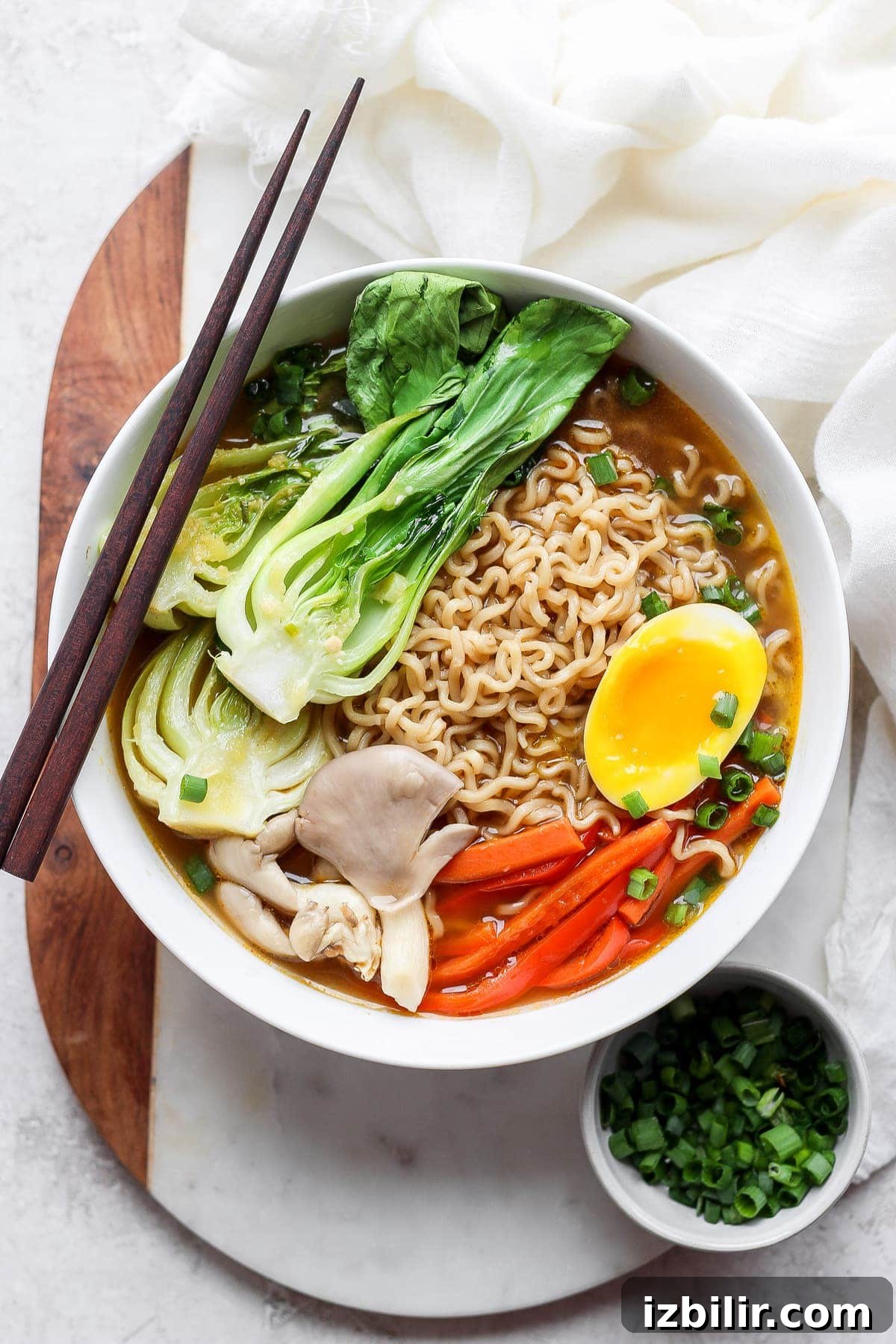
Our Take on Flavorful Ramen Soup
This is not a traditional ramen, but it honors the flavors we love from many ramen bowls: a rich, savory broth, silky ramen eggs, crisp vegetables, and bright toppings. Ramen in Japan often uses meat or fish broths and is seasoned with soy or miso; here we blend those influences into a vegetarian-friendly, vegetable-forward bowl that still packs umami.
How to Make this Ramen Recipe
The recipe takes a bit of time and a few steps, but it’s straightforward. Read through the entire recipe before you begin so you can work efficiently: some elements need to rest or be prepared ahead of the next step. With a little planning you’ll have a restaurant-style bowl at home.
Read the recipe before doing anything!
Please read the whole recipe before you start. Follow the steps in order for the best results — several components depend on timing and resting to build flavor.
Prepare the Ramen Eggs
One of the highlights of ramen is the soft-boiled egg. These eggs are soft boiled and then soaked in a flavorful tea-based marinade. The marinade later becomes part of the broth, so do not discard it.
To make the eggs: bring water and the marinade ingredients to a simmer, soft boil the eggs for five minutes, shock them in an ice bath, peel them, and place them into the tea marinade to soak. The longer they sit, the more color and flavor they’ll absorb. Keep the marinade — it’s liquid gold for the broth.

Quick-Pickle the Mushrooms
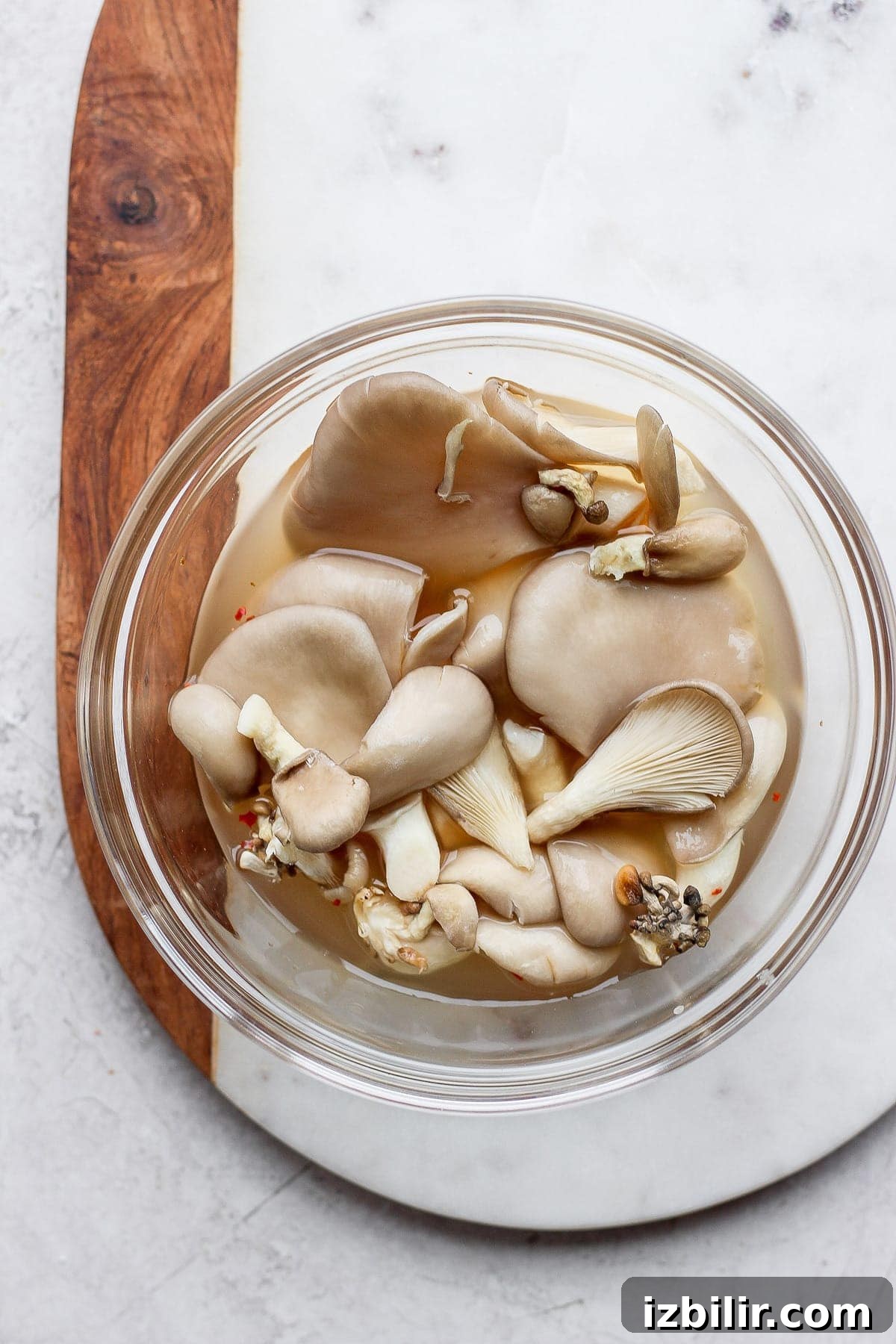
While the eggs are soaking, make quick-pickled mushrooms to serve cold on top of the ramen. They add bright acidity that cuts through the richness of the broth.
- Wipe beech or oyster mushrooms clean to remove any dirt.
- Whisk rice vinegar, apple cider vinegar, red pepper flakes, and salt until the salt dissolves.
- Toss the mushrooms in the vinegar mixture so they are evenly coated.
- Let them sit at room temperature while you finish the ramen; refrigerate if you prepare them much earlier.
Can I use different mushrooms?
Yes. Beech or oyster mushrooms are ideal for texture and flavor, but sliced button or cremini (bella) mushrooms will work—just slice them thinly so they pickle quickly.
Prepare the Bok Choy
Make the ginger-scented bok choy while the eggs and mushrooms rest. Baby bok choy works best; if you only find large bok choy, slice it into manageable pieces.
How to prepare the bok choy
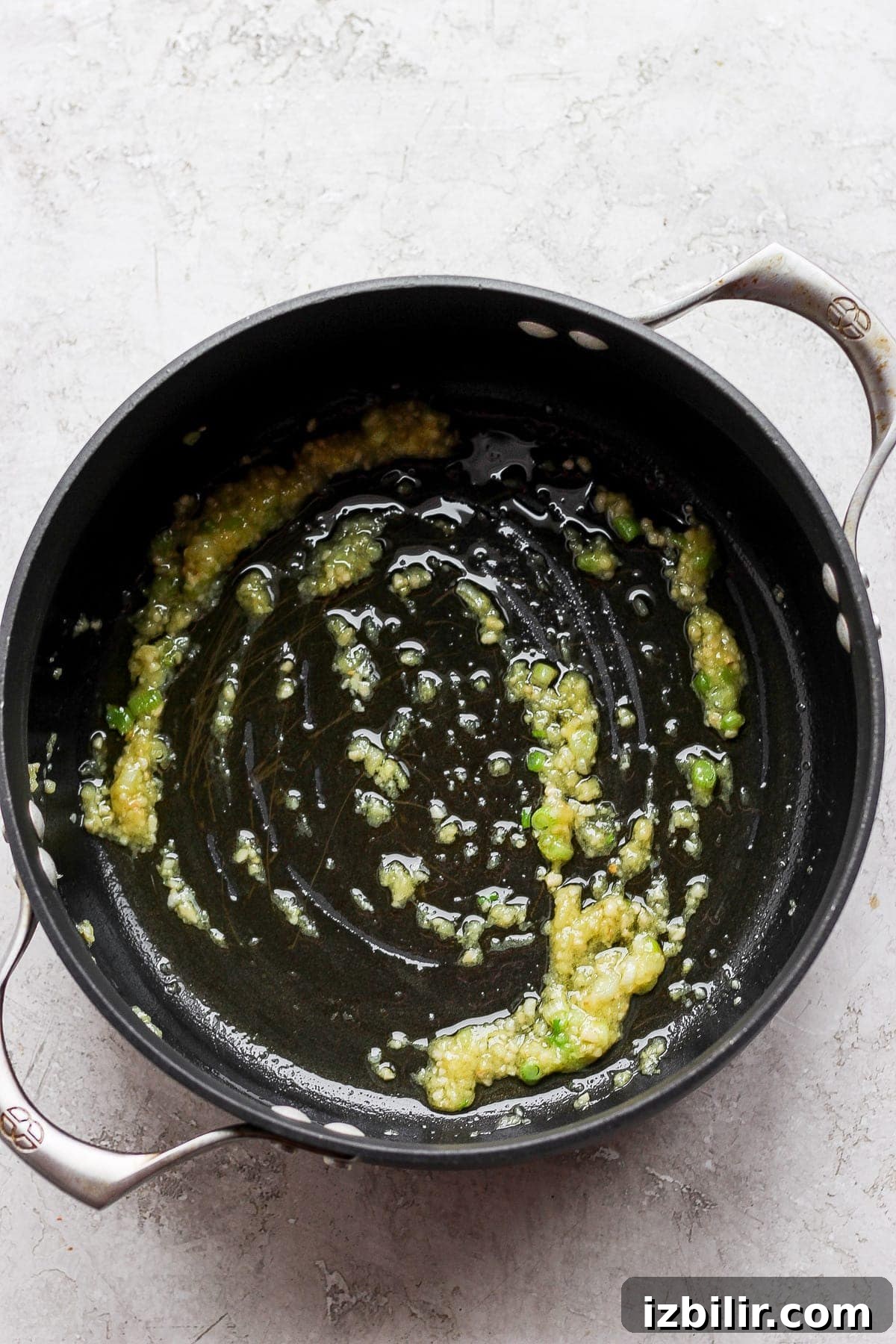
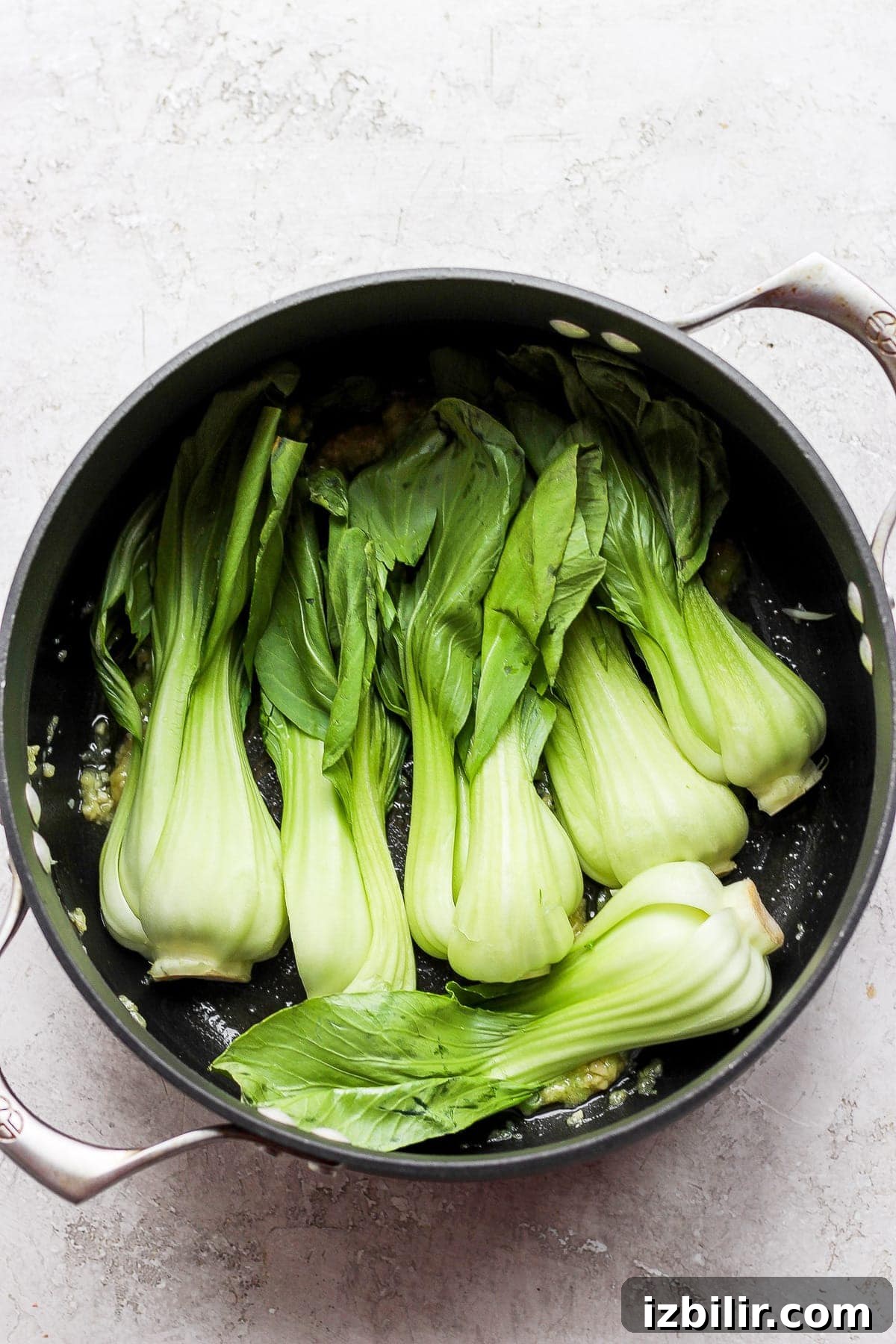
Sauté the white parts of green onions in a large pot with oil, add grated ginger and garlic until fragrant, then add the bok choy, cover, and steam for 3–4 minutes until tender but still bright. Remove and set aside to top the bowls later.
Sauté the Veggies
After steaming the bok choy and setting it aside, add sliced red pepper and matchstick carrots to the same pot. Sauté for 2–3 minutes to soften slightly and build flavor in the base of the soup.
Ramen Egg Broth
When the vegetables are nearly ready, remove the eggs from the marinade and set them aside. Discard the tea bags and strain the marinade through a fine sieve to remove any loose tea leaves or solids. Pour this flavorful liquid into the pot with the vegetables—this concentrated, savory liquid will deepen the broth.

Prepare the Broth and Add the Noodles
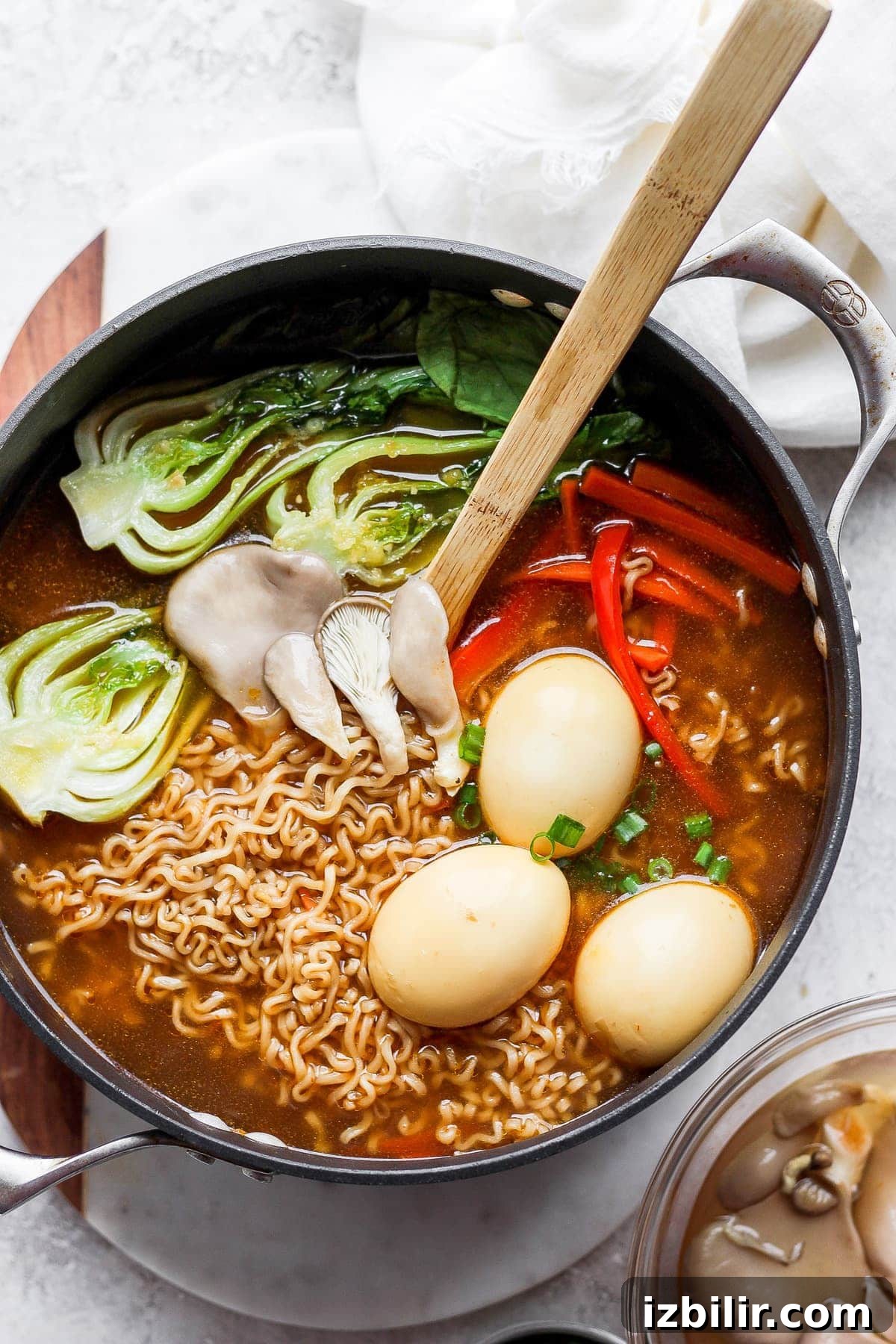
Add broth (vegetable or chicken for non-vegetarian), soy sauce, sriracha, and fish sauce to the pot and whisk to combine. Bring to a boil, then add ramen noodles and cook until al dente, about 5–7 minutes for dried ramen or 2–3 minutes for fresh noodles.
Meal prep tip
If you plan to meal prep, cook the noodles separately, rinse with cold water, and store them apart from the broth. Left in the broth, noodles will continue to absorb liquid and become mushy.
How to Serve Ramen
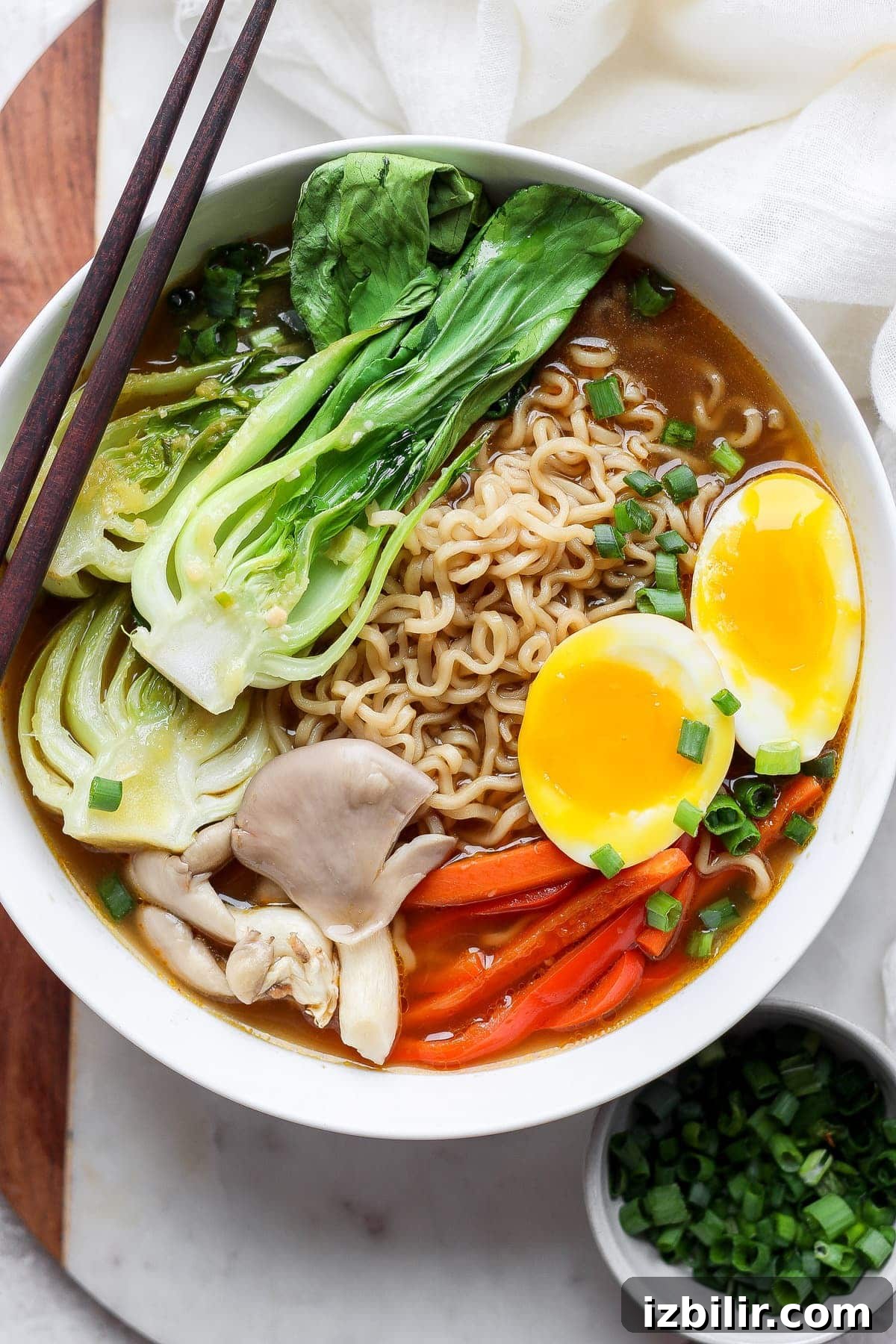
Turn the heat to low, return the bok choy to the pot to warm briefly, then divide noodles and broth among bowls. Halve a ramen egg and add it to each bowl along with pickled mushrooms, chopped green onion (the green parts), fresh Thai basil and cilantro if desired. Adjust with sriracha, soy, or chili flakes to taste.
Ramen Soup Questions
Where do I get ramen noodles?
Most grocery stores carry dried ramen noodles. Fresh ramen from an Asian market or a local ramen shop is even better and cooks in just a few minutes.
Can I add meat?
Yes. Add shredded chicken, grilled shrimp, pork, or your preferred protein if you want a non-vegetarian option.
How do I make it spicier?
Add extra sriracha, red pepper flakes, or a chili paste of your choice to increase heat.
What else can I add?
Top your ramen with fried tofu, bean sprouts, sautéed greens, kimchi, sesame seeds, or sugar snap peas—treat the toppings like your favorite takeout bowl and personalize freely.
Storage
Store the broth separately from the cooked noodles in airtight containers. Broth will keep 5–7 days in the refrigerator. Store noodles and toppings separately for best texture.
Ingredients
- Ramen eggs: 6 large eggs; 4 cups water; 2 tbsp soy sauce (or tamari); 2 tsp grated ginger; 2 tsp grated lemongrass; 2 tsp garlic chili sauce; 1 tsp fish sauce; 2 black tea bags; 2 ginger tea bags.
- Quick pickled mushrooms: 8 oz beech or oyster mushrooms (cleaned); 1/2 cup rice vinegar; 1/2 cup apple cider vinegar; 1/4 tsp red pepper flakes; 1/8 tsp salt.
- Ramen base and veggies: 3 tbsp olive oil; 4 green onions (white and green separated); 2 tbsp minced garlic; 1 tbsp grated ginger; 2 baby bok choy (quartered); 1 large red pepper, sliced; 2 medium carrots, cut into matchsticks; 1/4 tsp salt; 4 cups chicken or vegetable broth; 2 tbsp soy sauce; 2 tsp sriracha; 1 tsp fish sauce; 8 oz Japanese-style ramen noodles (4 servings).
- Optional toppings: Thai basil, cilantro, sesame seeds, fried tofu, bean sprouts, kimchi.
Instructions
- Make the egg marinade: Bring 4 cups water to a boil in a medium saucepan, then remove from heat. Whisk in soy sauce, ginger, lemongrass, garlic chili sauce, and fish sauce. Add tea bags and let steep. Set aside.
- Soft boil the eggs: In a separate saucepan, bring 5 cups water to a boil. Carefully add 6 eggs and boil for 5 minutes. Transfer to an ice bath for 5 minutes, peel, and place the eggs in the tea marinade. Let them sit while you prepare the rest of the meal; the longer, the better.
- Quick-pickle mushrooms: Whisk rice vinegar, apple cider vinegar, red pepper flakes, and salt in a bowl. Add mushrooms and toss to coat. Set aside.
- Sauté aromatics: Heat a large 5-qt Dutch oven over medium-high heat and add olive oil. Add the white parts of the green onions and sauté 1 minute. Add minced garlic and grated ginger and cook 2 minutes until fragrant.
- Steam bok choy: Add quartered bok choy, toss to coat with oil, cover, and reduce heat to medium. Steam 4–5 minutes until tender. Remove bok choy and set aside, leaving garlic and onions in the pot.
- Sauté vegetables: Add red pepper and matchstick carrots to the pot and sauté 2–3 minutes.
- Prepare the egg broth: Remove eggs from the marinade and set aside for serving. Discard tea bags and strain the marinade through a fine sieve to remove loose tea. Add the strained marinade to the pot with the vegetables and stir to combine.
- Finish the broth: Add chicken or vegetable broth, soy sauce, sriracha, and fish sauce. Whisk and bring to a boil.
- Cook noodles: Add ramen noodles and cook 5–7 minutes until al dente (fresh noodles cook in 2–3 minutes).
- Warm and serve: Return bok choy and ramen eggs to the pot to warm for 2–3 minutes. Divide noodles and broth into bowls and top with halved eggs, pickled mushrooms, chopped green onion greens, Thai basil, cilantro, and any optional toppings.
Tips & Notes
- Follow the recipe order: some steps rely on the timing of others, especially the egg soak and the strained tea marinade for the broth.
- For meal prep, store broth and noodles separately to keep noodle texture.
- Adjust spiciness and seasoning to taste at the end of cooking.
Nutrition
Approximate per serving: Calories: 304 kcal; Carbohydrates: 18 g; Protein: 18 g; Fat: 19 g; Fiber: 5 g; Sugar: 7 g. Nutrition is an estimate and should be used as a guideline only.