

Baked sweet potatoes are a versatile, comforting side or main dish. In this article you’ll learn how to bake sweet potatoes in three straightforward steps, plus how to season them, repurpose leftovers, and store or freeze them for later.

Confession: when I was in college and short on time and money, I would bake a batch of sweet potatoes at the start of the week and top them with cottage cheese for lunches. Hot sweet potato and cold cottage cheese might sound simple, but it’s surprisingly satisfying and filling.
Best Baked Sweet Potato Recipe
This method reliably produces tender, evenly cooked sweet potatoes with a deliciously crisp skin when you want it. The approach is intentionally basic—olive oil, salt, and pepper—so you can adapt the flavors however you like. The short version: poke a few holes in each potato, rub with oil, season, and roast at a high temperature until fork tender.
What kind of sweet potato should I use?
Sweet potatoes come in several varieties—orange-fleshed, red, purple, and white. Any of them will work for this recipe. To ensure even cooking, choose potatoes that are similar in size and thickness. If the potatoes vary a lot, smaller ones will finish sooner than larger ones.
Sweet Potatoes vs. Yams
Sweet potatoes and yams are often confused. Yams generally have tougher, thicker skin and drier, starchier flesh, more like a white potato. Sweet potatoes tend to be sweeter and moister. Both can be baked, but their texture and flavor differ.
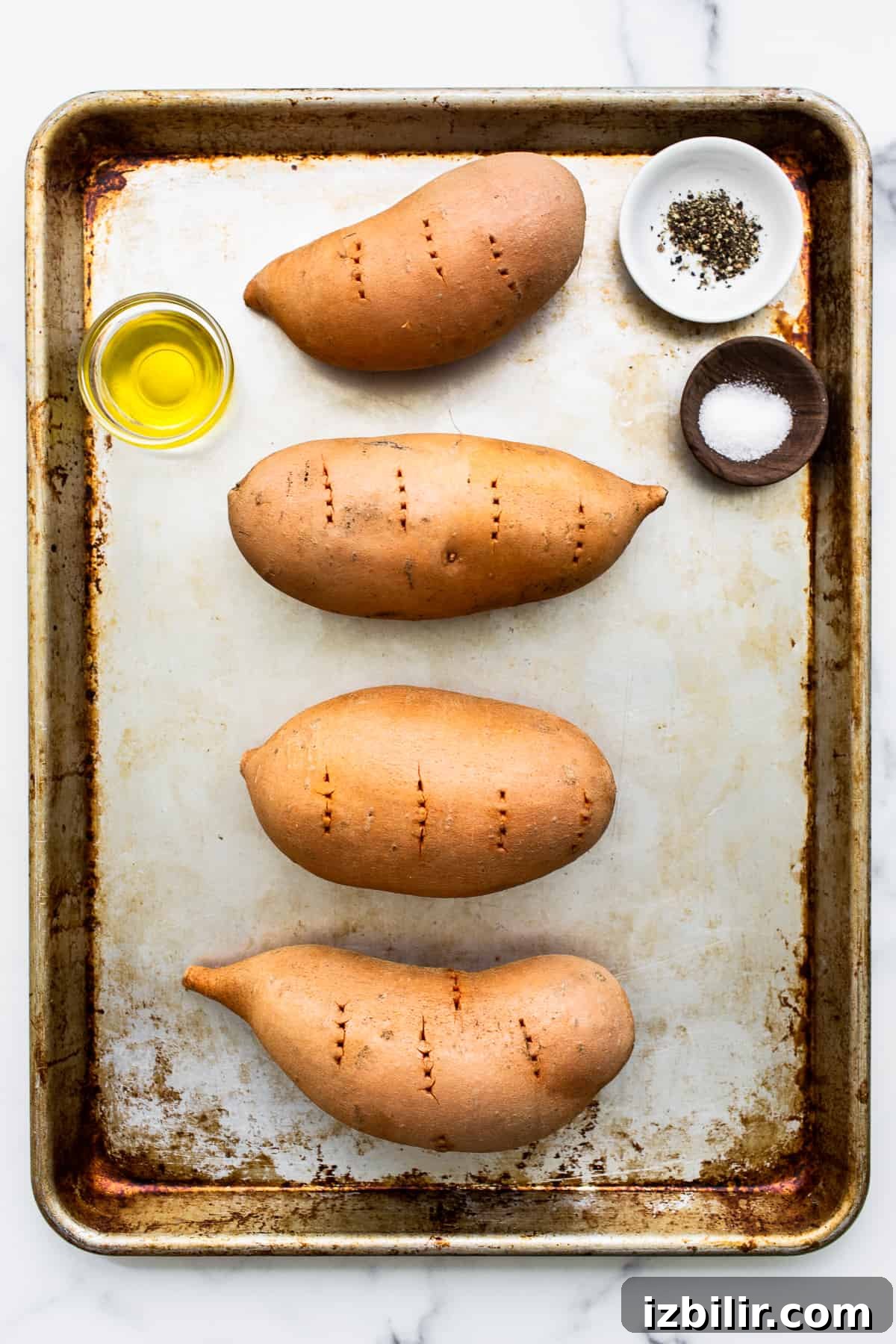
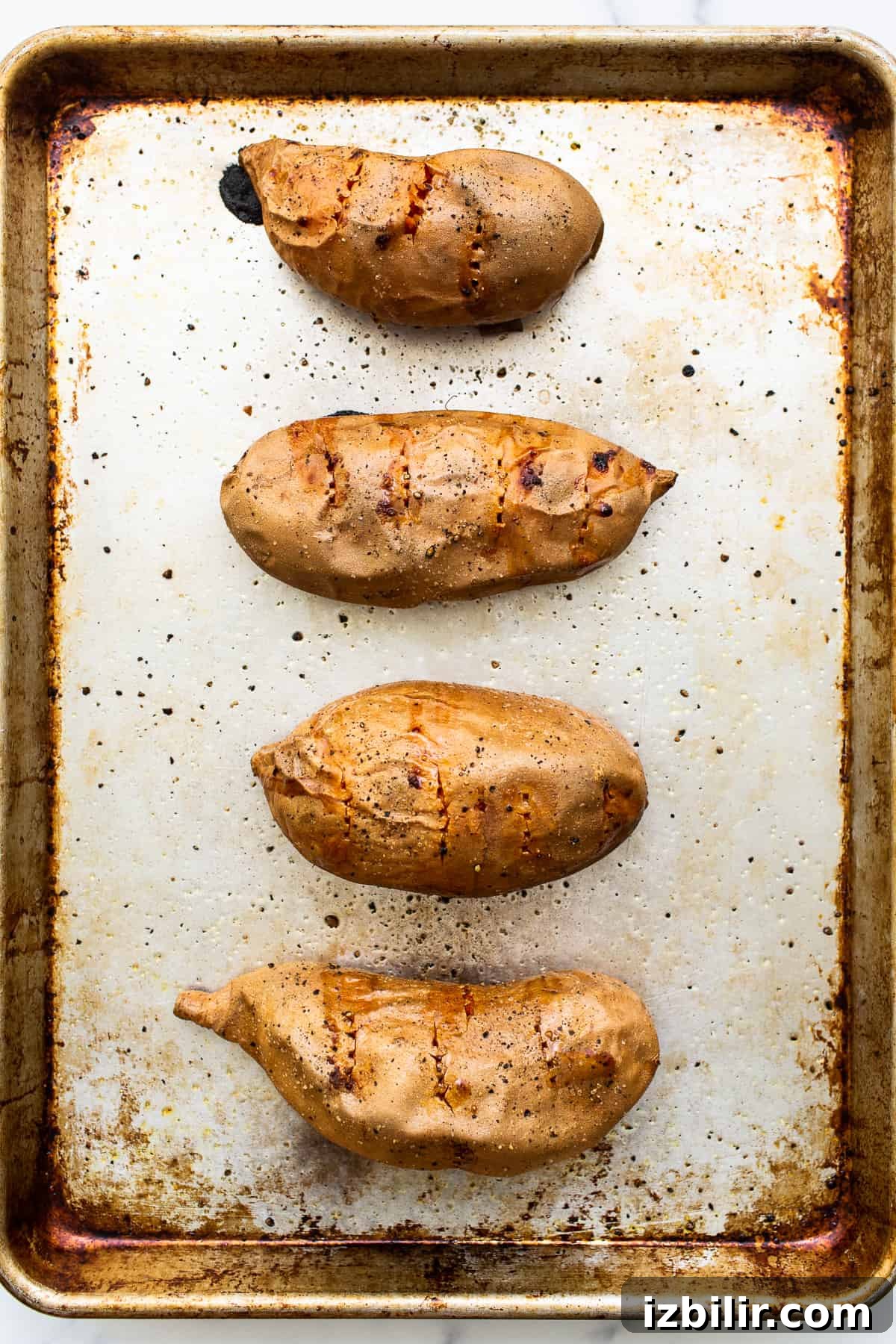
How to Bake Sweet Potatoes (Step by Step)
Even though this recipe is simple, these steps will help you get consistent, delicious results every time.
Step 1: Wash & Poke Sweet Potatoes
Rinse each sweet potato under warm water and scrub to remove any dirt. Pat dry with a towel. Use a fork to poke 6–8 holes around each potato—this helps oil and seasonings get to the skin and allows steam to escape during cooking. While poking holes is a common recommendation to prevent explosions, we’ve rarely experienced problems in a conventional oven; it is essential, however, if you plan to cook them in a microwave.
Do you have to poke holes?
Poking holes is optional for oven baking but recommended for microwave cooking. The holes encourage even cooking and let steam escape.
Tip
Use sweet potatoes that are similar in size so they roast evenly and finish at the same time.

Step 2: Season Sweet Potatoes
After drying the potatoes, rub each one with about 1/2 teaspoon of olive oil (or a light coating of your preferred oil). Generously sprinkle salt and freshly ground black pepper over the skins. The oil helps crisp the skin while keeping the interior moist.
Note: If you plan to mash or puree the potatoes after roasting, you can skip salting beforehand and season the puree to taste.
Flavor Variations
Want different flavor profiles? Try any of these seasonings on the skin before roasting:
- Garlic powder
- Paprika (smoked or sweet)
- Ground cinnamon for a sweeter option
Do I need aluminum foil?
Wrapping potatoes in foil steams them and can shorten cook time—useful when you want very soft flesh for mashing. For crispier skin, bake unwrapped on a baking sheet.
Step 3: Roast Potatoes in the Oven
Arrange potatoes on a baking sheet spaced apart so air circulates. Roast at 425ºF (218ºC) for 45–60 minutes, depending on size. Test doneness by inserting a fork into the thickest part—when it slides in easily, the potatoes are ready. Larger potatoes may take closer to the 60-minute mark.
How long to bake sweet potatoes?
At 425ºF, most large sweet potatoes take about 45–60 minutes. Smaller potatoes will finish sooner.
Follow this simple method and you’ll have reliably tender baked sweet potatoes with minimal effort.
Size Matters
Cooking time scales with potato size. If you use very large potatoes, expect the upper end of the time range; small ones may need less time.

Topping Ideas
Once your sweet potatoes are roasted, you can enjoy them plain or dress them up. Here are a variety of sweet and savory topping ideas:
- Cottage cheese
- Butter with a sprinkle of salt and pepper
- Almond butter, a drizzle of maple syrup, and a dash of cinnamon
- Hearty chili with shredded cheese
- Greek yogurt with chopped chives
- Taco-style seasoned ground beef with salsa
- Brown sugar and pecans for a sweet crunch
- Mini marshmallows toasted briefly under a broiler for a dessert-style topping
Make Stuffed Sweet Potatoes
You can turn roasted sweet potatoes into a complete meal by stuffing them with beans, grains, roasted vegetables, cheese, or seasoned meats. Use your favorite combinations and get creative.

How to Make Sweet Potato Puree from Roasted Potatoes
If you have leftover roasted sweet potato flesh, it makes an excellent puree. Here’s a simple method:
- Allow roasted sweet potatoes to cool for 20–30 minutes until easily handled.
- Slice in half and scoop out the flesh into a bowl or directly into a food processor.
- Process on high until smooth, adding a tablespoon or two of water (or milk) as needed to reach your desired consistency. Season to taste.
Storage
Allow baked sweet potatoes to cool completely, then transfer to an airtight container and refrigerate for 3–5 days. Reheat gently in the oven or microwave until warmed through.
Freezer Instructions
To freeze baked sweet potatoes, cool them fully, wrap tightly in foil, and place in a freezer-safe bag. They keep well for up to three months. Thaw in the refrigerator before reheating.

More Ways to Cook Sweet Potatoes
Sweet potatoes are versatile: roast them in cubes, turn them into fries, mash or puree them, or make hash browns and tater tots. Each method highlights different textures and flavors.
- Roasting in cubes or wedges for salads and bowls
- Making a smooth sweet potato puree for pies or side dishes
- Preparing crispy baked sweet potato fries
- Grating and forming hash browns or tater tots
More of our favorite…
Sweet Potato Recipes
Explore ways to transform roasted sweet potatoes into new meals, from fries and casseroles to mashed dishes and baked snacks.
- Crispy baked sweet potato fries
- Mashed sweet potatoes
- Sweet potato tater tots
- Healthy sweet potato casserole
How to Bake Sweet Potatoes (Baked Sweet Potato Recipe)
Baked sweet potatoes are a simple, nutritious addition to any meal. This straightforward recipe walks you through washing, seasoning, and roasting for perfect results.
Ingredients
- 4 large sweet potatoes*
- 2 teaspoons olive oil (about)
- Salt, to taste
- Pepper, to taste
*Use similarly sized sweet potatoes for even cooking.
Instructions
- Preheat the oven to 425ºF (218ºC). Line a baking sheet or lightly oil it.
- Thoroughly wash and dry the sweet potatoes. Puncture each potato 6–8 times with a fork.
- Rub each potato with olive oil and season the skins generously with salt and pepper (and any other spices you prefer).
- Arrange the potatoes on the baking sheet so they are not touching. Roast at 425ºF for 45–60 minutes, depending on size, until a fork easily pierces the thickest part.
- Remove from oven, let cool slightly, slice open, add toppings, and serve.
Tips & Notes
- Potato size: Large sweet potatoes typically take closer to 60 minutes. Adjust time for smaller or larger tubers.
- Foil: Wrapping in foil steams the potatoes for softer flesh; baking unwrapped produces crisper skins.
Nutrition (per serving, approximate)
Calories: 183 kcal, Carbohydrates: 37 g, Protein: 4 g, Fat: 3 g, Fiber: 6 g, Sugar: 12 g
Nutrition information is an estimate and should be treated as approximate.
Photography: photos used in this post were provided by the photographer credited in the original source.