
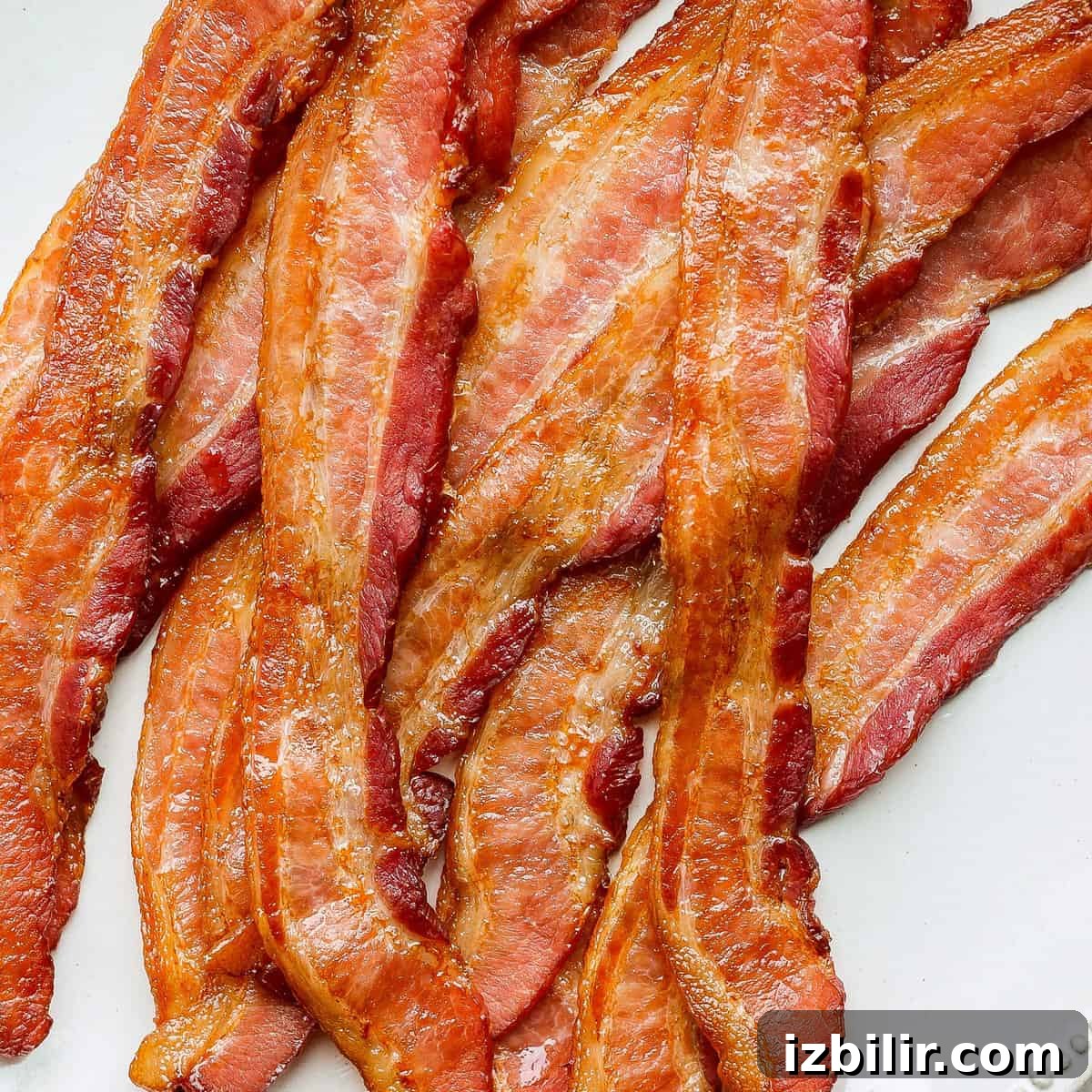
Have you ever wondered how to cook bacon in the oven? It’s simpler than you think. With just bacon, a metal baking rack, and a foil-lined baking sheet you can make perfectly cooked oven-baked bacon every time.
Whether you prefer paper-thin, extra-crispy bacon or thick-cut, chewy slices, the oven delivers consistent results with almost no fuss and much less cleanup than the stovetop.
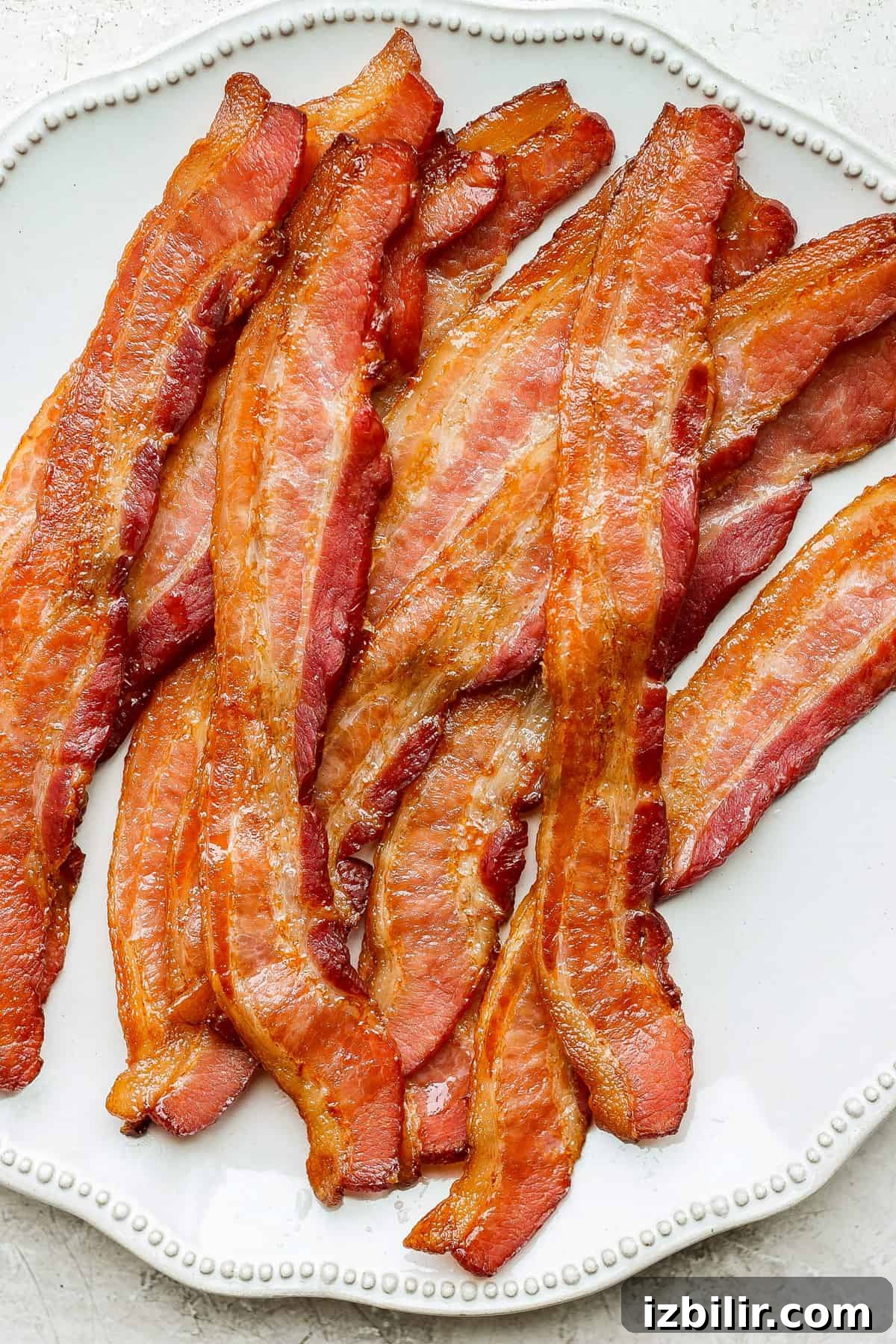
Stovetop bacon was my first introduction to cooking bacon. It’s fast and familiar, but it can splatter grease and only handles a few strips at a time. For larger breakfasts or easy cleanup, oven bacon is the superior method. When cooking for a crowd—at a cabin or for a weekend brunch—I line a couple of baking sheets and let the oven handle the work while I prepare pancakes or scrambled eggs.
The DL on Cooking Bacon in the Oven
There are many ways to cook bacon—pan-frying, air frying, grilling, or even microwaving—but baking it in the oven is my top recommendation. Here’s why:
- Hands-off: No flipping or constant attention. Arrange the strips on a rack and bake.
- Less mess: Grease drips onto the foil-lined sheet, so clean-up is quick and tidy.
- Make a lot: You can cook several pounds at once depending on oven size—perfect for feeding a group.
- Consistent results: Oven heat cooks bacon evenly for predictable texture every time.
What You Need for Bacon in the Oven
Before you begin, gather a few simple items. Aside from the bacon itself, two tools make the process effortless: a metal baking rack and a rimmed baking sheet lined with aluminum foil.
Bacon
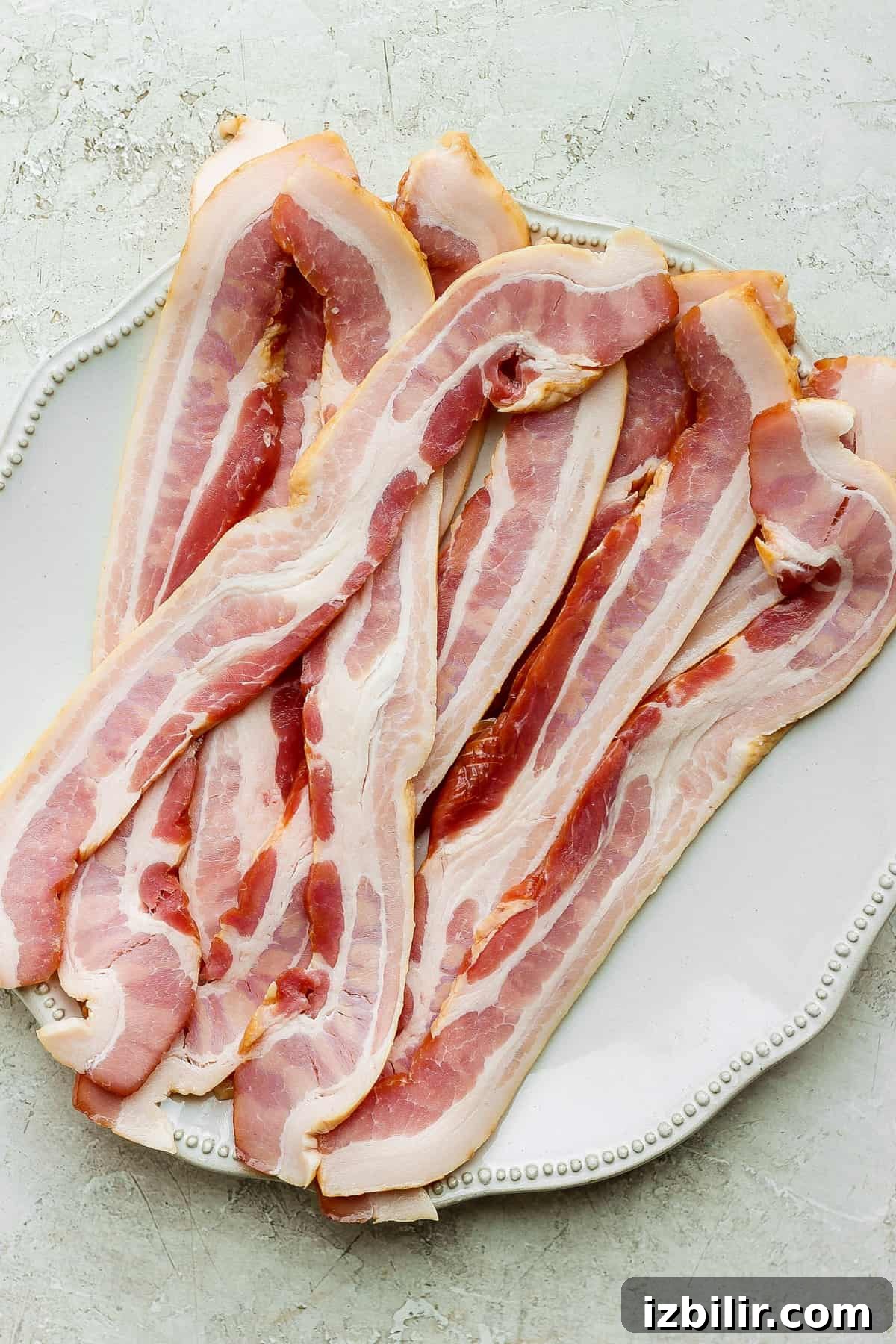
Bacon is the only ingredient you really need. Choose the cut that matches your preferred texture:
Different kinds of bacon you can use
- Thin: Cooks quickest and yields extra-crispy slices.
- Medium: A balanced, all-purpose option.
- Thick: Chewier in the center with crisp edges—great for hearty breakfasts.
When possible, opt for higher quality bacon without nitrates or unnecessary additives for the best flavor.
Metal Baking Rack
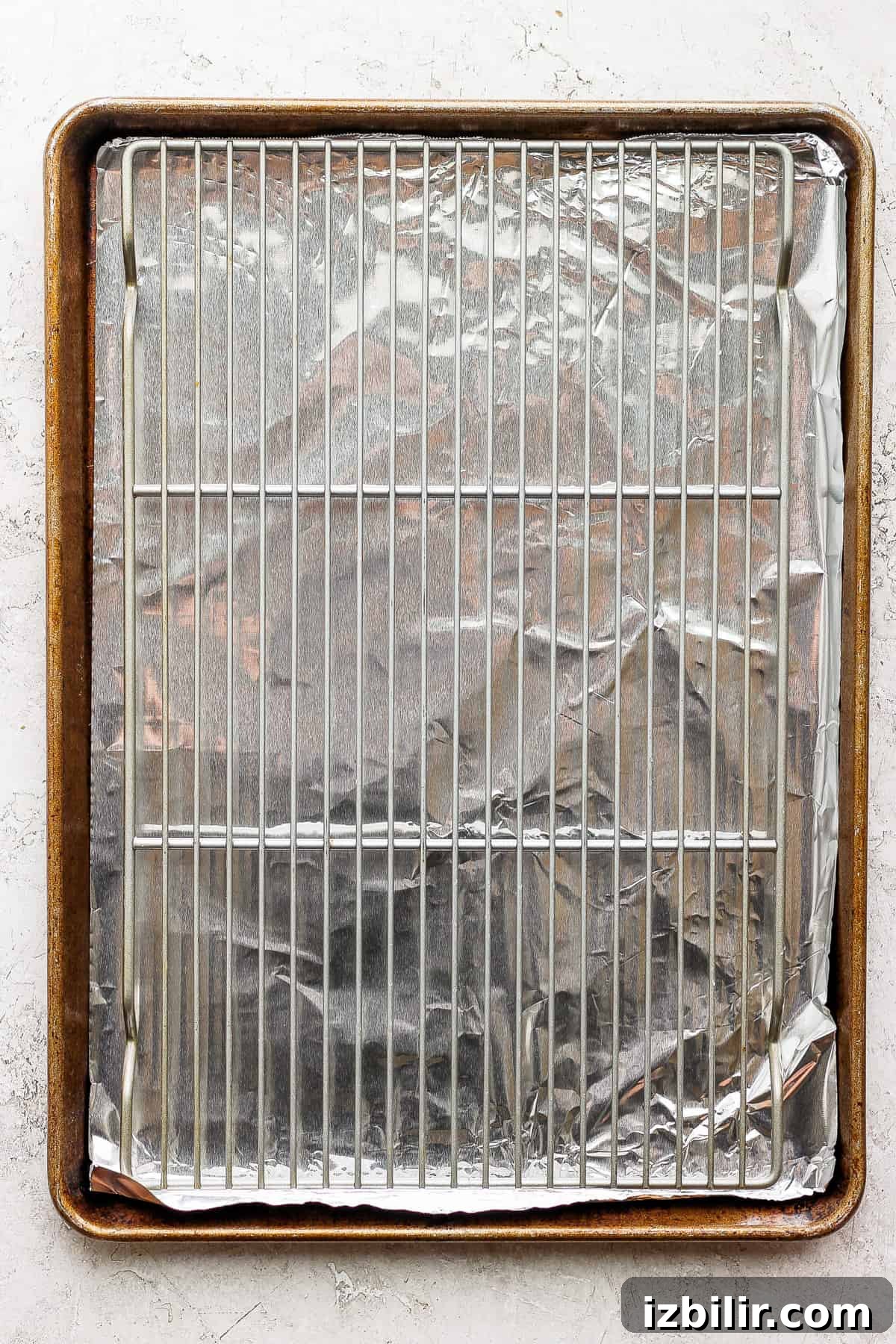
A metal baking rack lets fat drip away from the bacon so it crisps evenly instead of frying in its own grease. If you skip the rack, the bacon will still cook, but it may be less even and leave you with more cleanup because the strips sit in rendered fat.
Baking Sheet (with Aluminum Foil)
Use a rimmed baking sheet lined with foil to catch the bacon grease. Once cooled, the foil can be discarded for a quick cleanup instead of scrubbing the pan.
Pro Tip
Line the cookie sheet with foil so you can remove and discard the grease easily once it has cooled and solidified.
How to Bake Bacon
Follow these straightforward steps for consistent, delicious oven-baked bacon. Total time is usually under 30 minutes, depending on thickness and desired crispiness.
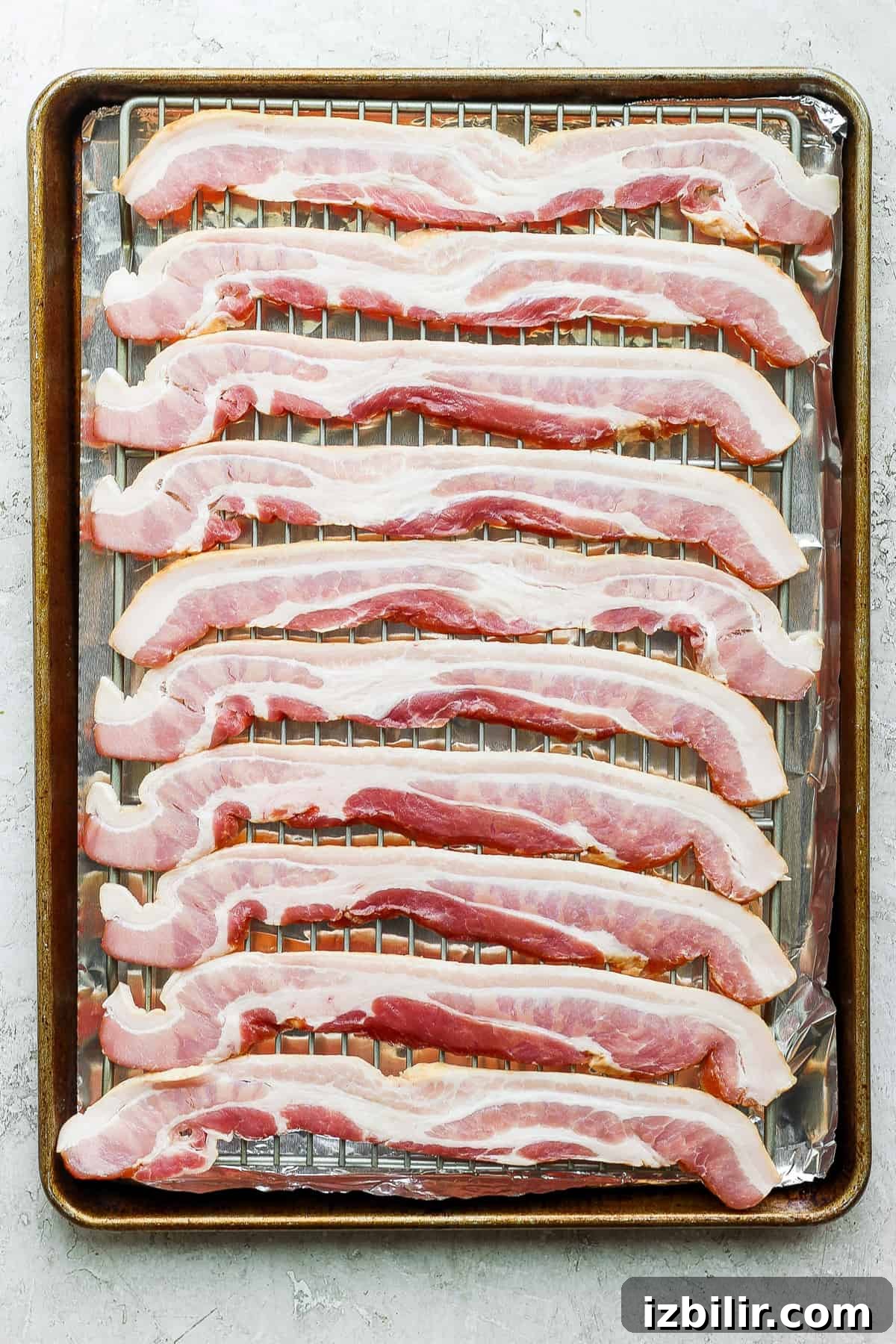
- Preheat the oven to 400°F (204°C). Line a rimmed baking sheet with aluminum foil.
- Place a metal baking rack on top of the foil-lined sheet.
- Arrange bacon strips side-by-side on the rack without overlapping. They may touch slightly since they will shrink as they cook.
- Bake using these time guidelines based on thickness:
- Thin: 10–15 minutes
- Medium: 15–20 minutes
- Thick: 20–25 minutes
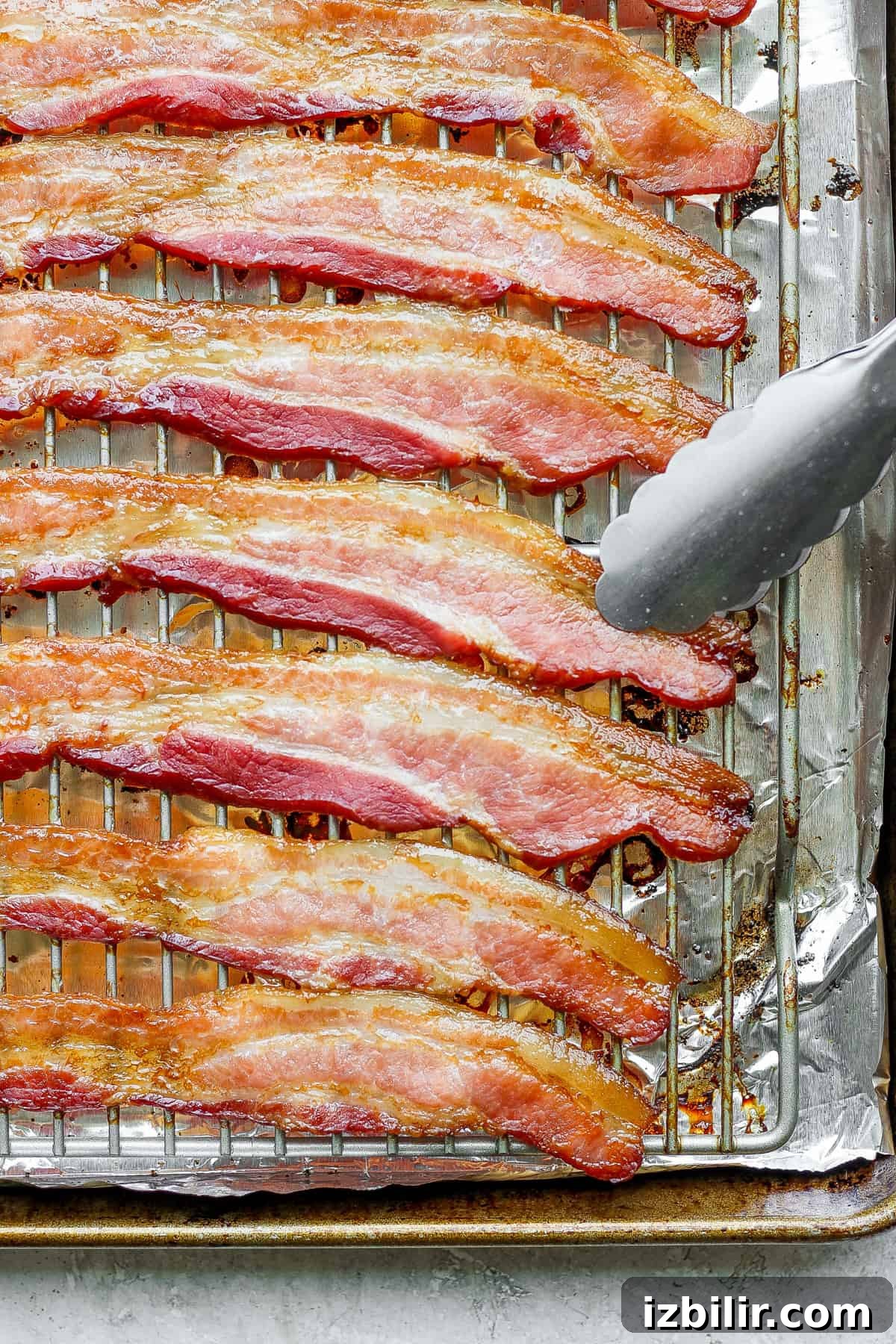
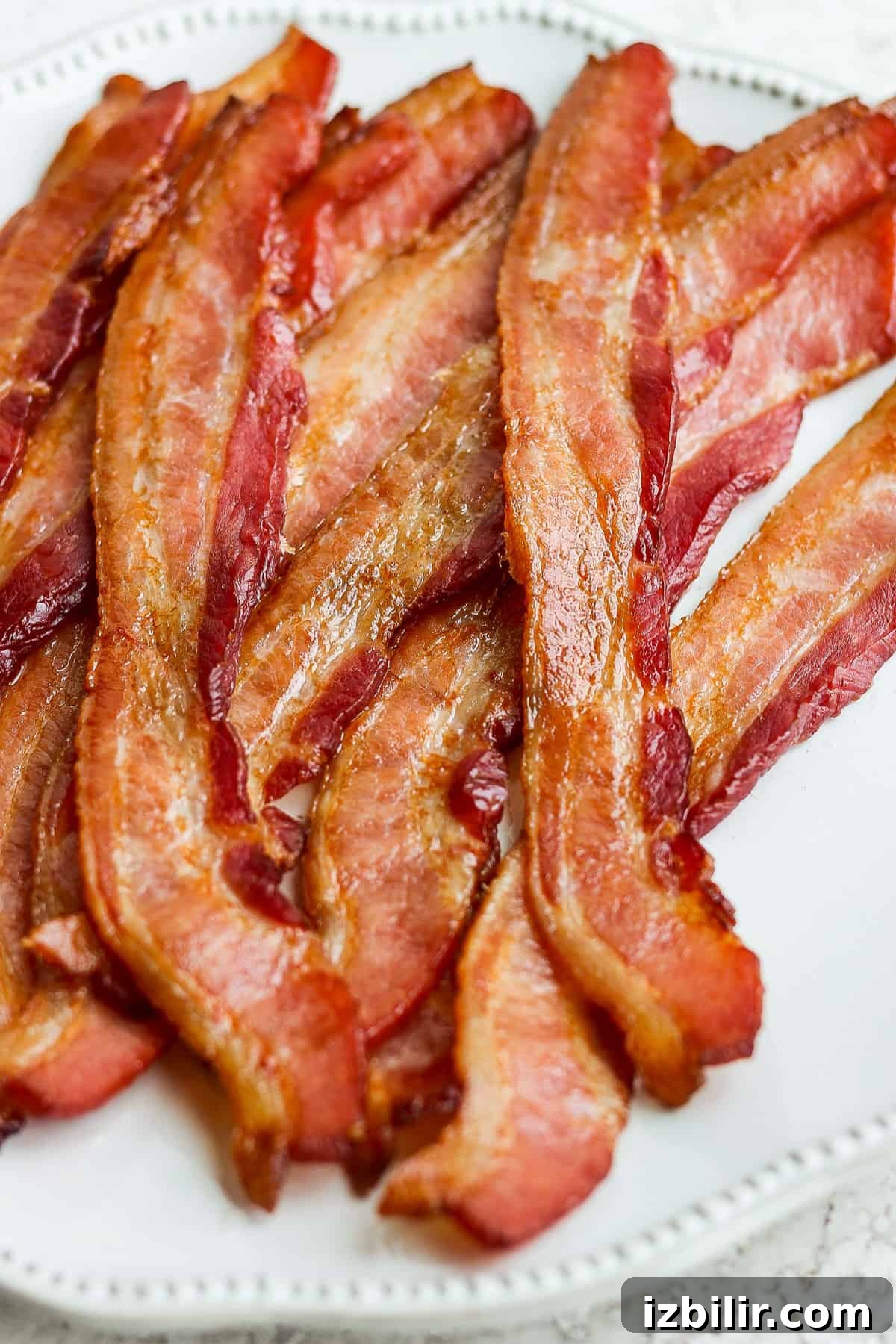
Remove the bacon when it reaches your preferred texture. Let it rest on the rack for a few minutes, then transfer to a paper towel–lined plate to blot excess grease.
Keep your eye on the prize
Oven temperatures and bacon brands vary, so check the bacon toward the end of the cooking window to prevent burning. It can go from perfect to overdone quickly.
Baking Bacon FAQ
For medium-cut bacon, bake at 400°F for about 15–20 minutes. Adjust up or down depending on thickness and crispness preference.
Bacon is done when it has deepened in color and feels firm to the touch. It will crisp more as it cools slightly.
No need to flip when using a wire rack—heat circulates evenly above and below the strips.
Yes, but cleanup will be more work. Foil protects the pan and makes disposal of grease much easier.
5 Tips for Cooking Bacon in the Oven PERFECTLY Every Time
- Oven Temp: 400°F is ideal for even browning and crisping.
- Wire Rack: Use a rack for even cooking and easier cleanup.
- Watch Closely: Check toward the end of the cook time to avoid burning.
- Choose Quality: Nitrate-free, locally sourced bacon often tastes better.
- Pick Thickness Wisely: Thick-cut yields a chewier center; thin or medium produces crispier strips.
Healthy Breakfast Pairings
Bacon pairs well with many breakfast favorites. Try serving it alongside whole-grain pancakes, sweet potato hash, quiche, or scrambled eggs for a balanced plate.
- Protein waffles or whole-grain pancakes
- Sweet potato hash browns or sheet-pan sweet potato hash
- Quiche (sweet potato crust or classic) and hard-boiled or baked eggs
- Breakfast sandwiches with whole-grain bread
How to Store Cooked Bacon
Allow bacon to cool completely, then place it in an airtight container in the refrigerator for 3–5 days.
How to Reheat Cooked Bacon
The quickest method is the microwave. Arrange bacon on a microwave-safe plate, cover with a paper towel, and heat on high for 60–90 seconds or until warm. You can also reheat in a skillet over medium heat or in a 350°F oven for a few minutes to restore crispness.
What to Do with Leftover Bacon
- Chop into bits for salads and baked potatoes.
- Add to breakfast sandwiches or omelets.
- Toss with roasted Brussels sprouts or vegetables for savory flavor.
- Mix into pasta dishes like a BLT-style pasta or carbonara-inspired recipes.
Can you freeze cooked bacon?
Yes. Cool completely, place in a freezer-safe bag, remove excess air, and seal. Properly stored, cooked bacon keeps for up to 3 months in the freezer.
More of our Favorite…
Ways to Cook Bacon
- Microwave method for quick strips
- Air fryer for fast, crispy results
- Stovetop for traditional pan-fried bacon
Recipe: How to Cook Bacon in the Oven
Servings: 4 • Prep: 5 mins • Cook: 15 mins (varies by thickness)
Ingredients
- 1 lb. bacon (nitrate-free if possible; any thickness)
Instructions
- Preheat the oven to 400°F. Line a rimmed baking sheet with aluminum foil.
- Place a metal baking rack on the foil-lined sheet.
- Arrange bacon strips in a single layer on the rack without overlapping.
- Bake according to thickness: thin 10–15 minutes, medium 15–20 minutes, thick 20–25 minutes.
- Remove from oven when desired crispness is reached. Let rest 3–5 minutes, then blot on paper towels to remove excess grease.
Tips & Notes
- Storage: Cool completely and store in an airtight container in the fridge for 3–5 days.
- Thickness: Thick-cut bacon yields a chewier interior with crisp edges; thin cuts crisp up faster.
Nutrition (approx.)
Per serving: Calories: 93 kcal, Carbohydrates: 0 g, Protein: 7 g, Fat: 7 g, Fiber: 0 g, Sugar: 0 g. Nutrition is an estimate and should be used as a guideline.
Photography by: The Wooden Skillet