
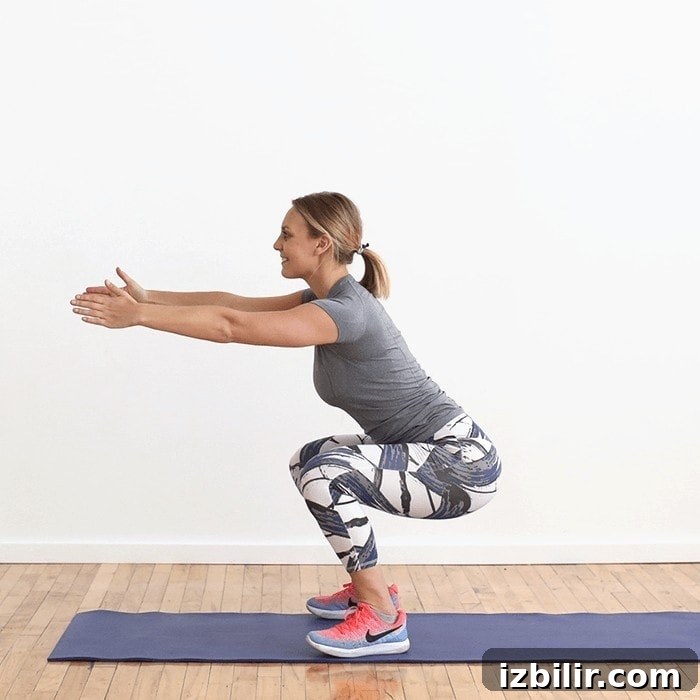
What do you do when a neck and upper-back injury keeps you from your usual workouts? Rest, recover, and then return with low-impact, controlled movement. After a recent neck sprain, I took four days off and eased back into exercise with a gentle strength routine. Today I’m sharing that workout and why I paired it with my favorite high-protein snack, Lorissa’s Kitchen, to help recovery and muscle repair.
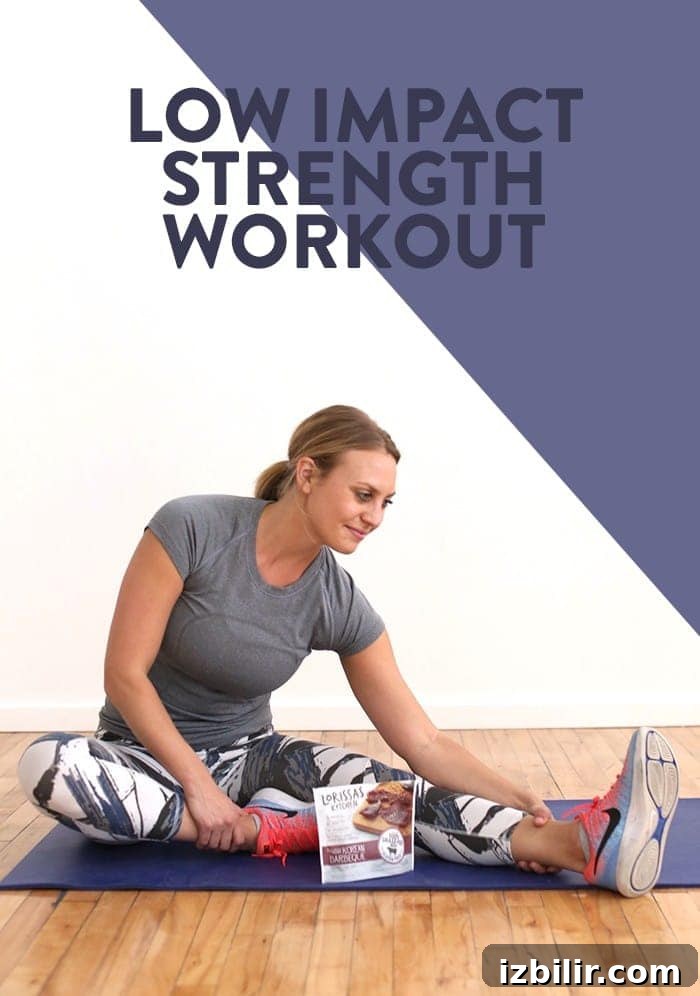
A few weeks ago I strained a neck muscle while cracking my neck and back the way I usually do. I overextended my neck, which pulled the muscle and slightly misaligned two vertebrae. For several days my neck, shoulders, and upper back were locked up and holding my head upright hurt. After multiple sessions with a chiropractor and an acupuncturist, plus rest, I finally felt well enough to start moving again—carefully.
I’m a strength-training person at heart and prefer resistance work over long cardio sessions. But after an injury, rushing back into heavy or explosive movements isn’t wise. This routine focuses on slow, deliberate contractions and is barre-inspired. It targets the lower body with low-impact moves that still challenge the muscles. When you work slowly and with control, you can get a deep burn without jarring your neck or spine.
Low Impact Strength Workout
Try this 32-minute, low-impact strength workout to fatigue the muscles and build endurance without high-impact strain. It’s suitable for injury recovery, pregnant individuals looking for gentle strength work, and anyone who wants a controlled, effective burn.
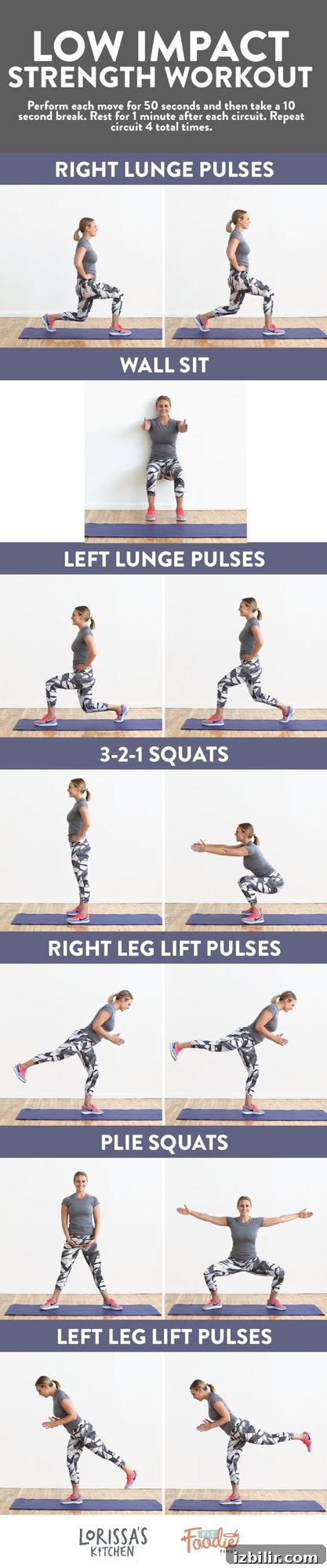
How it works: Perform each exercise for 50 seconds, then rest for 10 seconds. Complete the full circuit four times.
- Right Lunge Pulses — small, controlled pulses to work the quads and glutes while maintaining spinal alignment.
- Wall Sit — hold a strong, neutral spine and steady breath to challenge endurance in the legs.
- Left Lunge Pulses — mirror the right side to keep muscular balance.
- 3-2-1 Squats — descend for three seconds, hold for two, rise for one; slow tempo builds strength and control.
- Right Leg Lift Pulses — target the glute medius and hip stabilizers with small, focused pulses.
- Plie Squats — wide-stance squats that emphasize inner thigh strength and hip mobility.
- Left Leg Lift Pulses — repeat the single-leg pulsing on the opposite side for symmetry.
- REST — take the full rest interval before starting the next round.
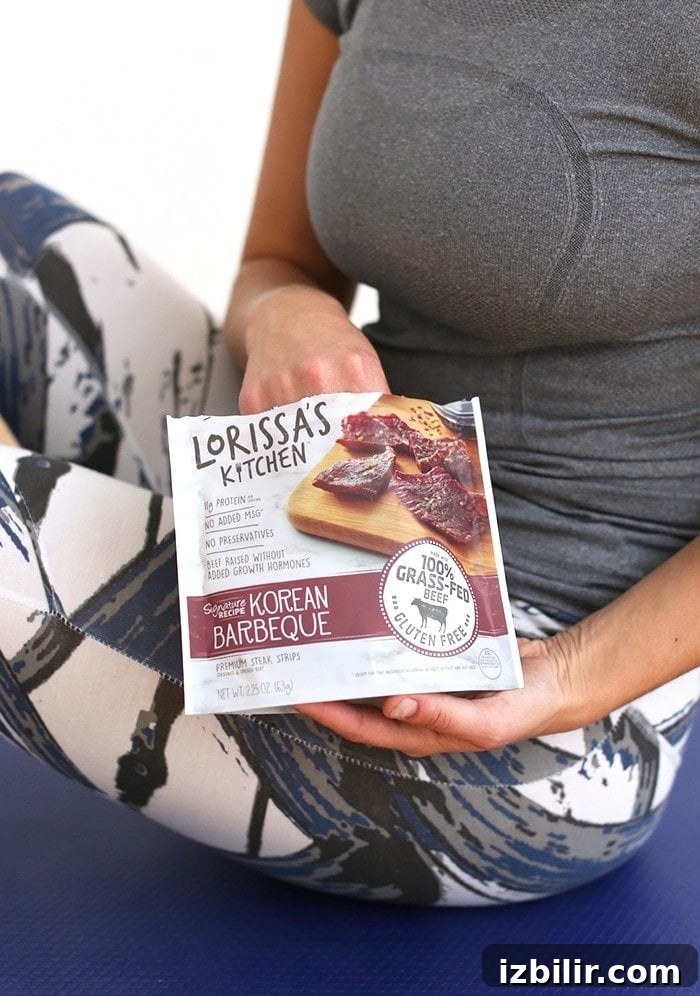
After the session I rehydrated and refueled with plenty of water and Lorissa’s Kitchen. A post-workout protein boost helps muscles repair and recover, so I reach for a high-protein snack whenever I’m on the go. My top picks are their beef flavors — Korean BBQ and Szechuan Peppercorn — for a bold sweet-and-savory profile that satisfies hunger between meals. Lorissa’s Kitchen has become a staple in my bag; it’s one of our go-to snacks on hikes and travels and a reliable option to prevent getting hangry during the day.
Here are some reasons I prefer Lorissa’s Kitchen over other jerky brands:
- Minnesota-based company — I try to support local brands when I can.
- No preservatives — simpler ingredient lists are important to me.
- No nitrates — fewer artificial additives.
- No growth hormones — conscious sourcing for protein.
- Gluten-free — suitable for many dietary needs.
- No MSG — flavor without that additive.
- High protein — up to about 11 grams per serving to help muscle recovery.
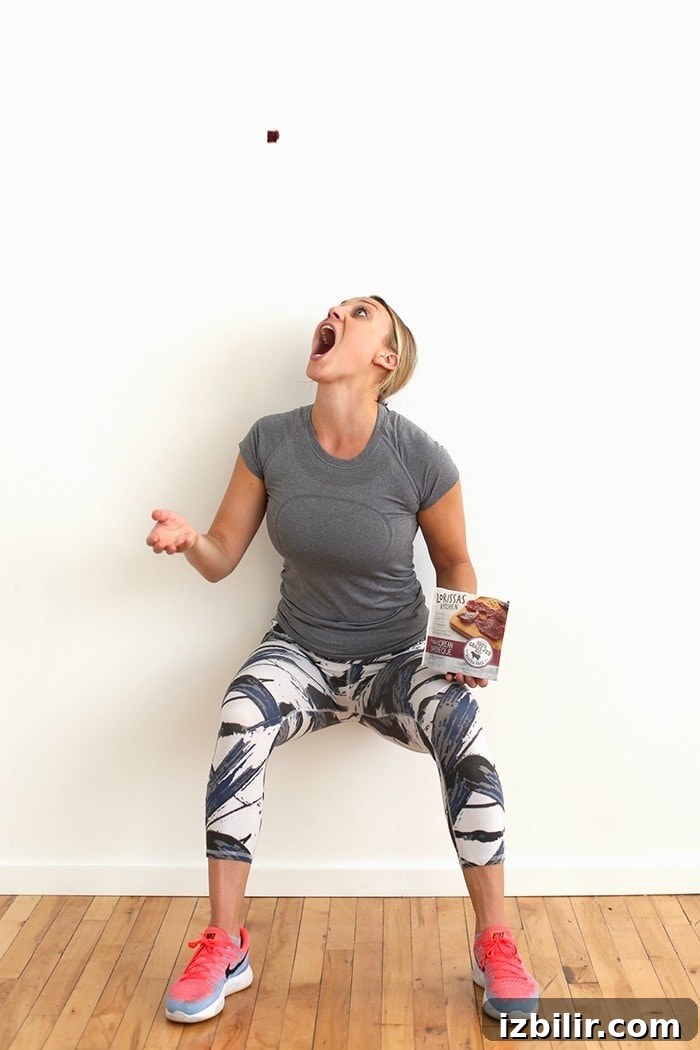
Ingredient transparency matters. Clean labels make it easier to choose snacks that support recovery and general health. I usually pick up Lorissa’s Kitchen at Target or Lunds & Byerlys, and you can also find their products through major retailers. I recommend buying a couple of bags so you have one to enjoy and another to share with a friend.
This post is sponsored by Lorissa’s Kitchen. I was compensated and all opinions are my own. Thanks for supporting Fit Foodie Finds and my enthusiasm for convenient, high-protein snacks.