
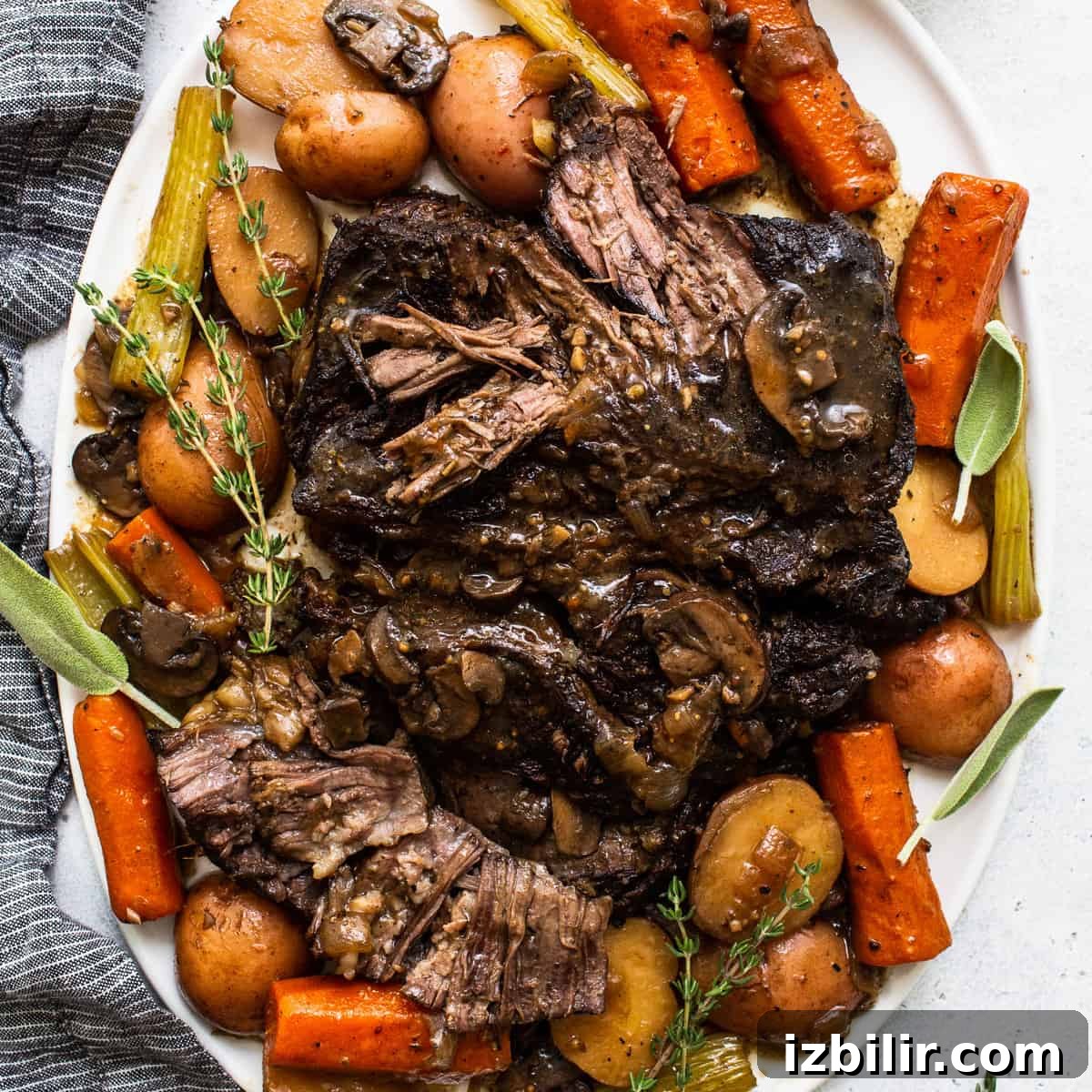
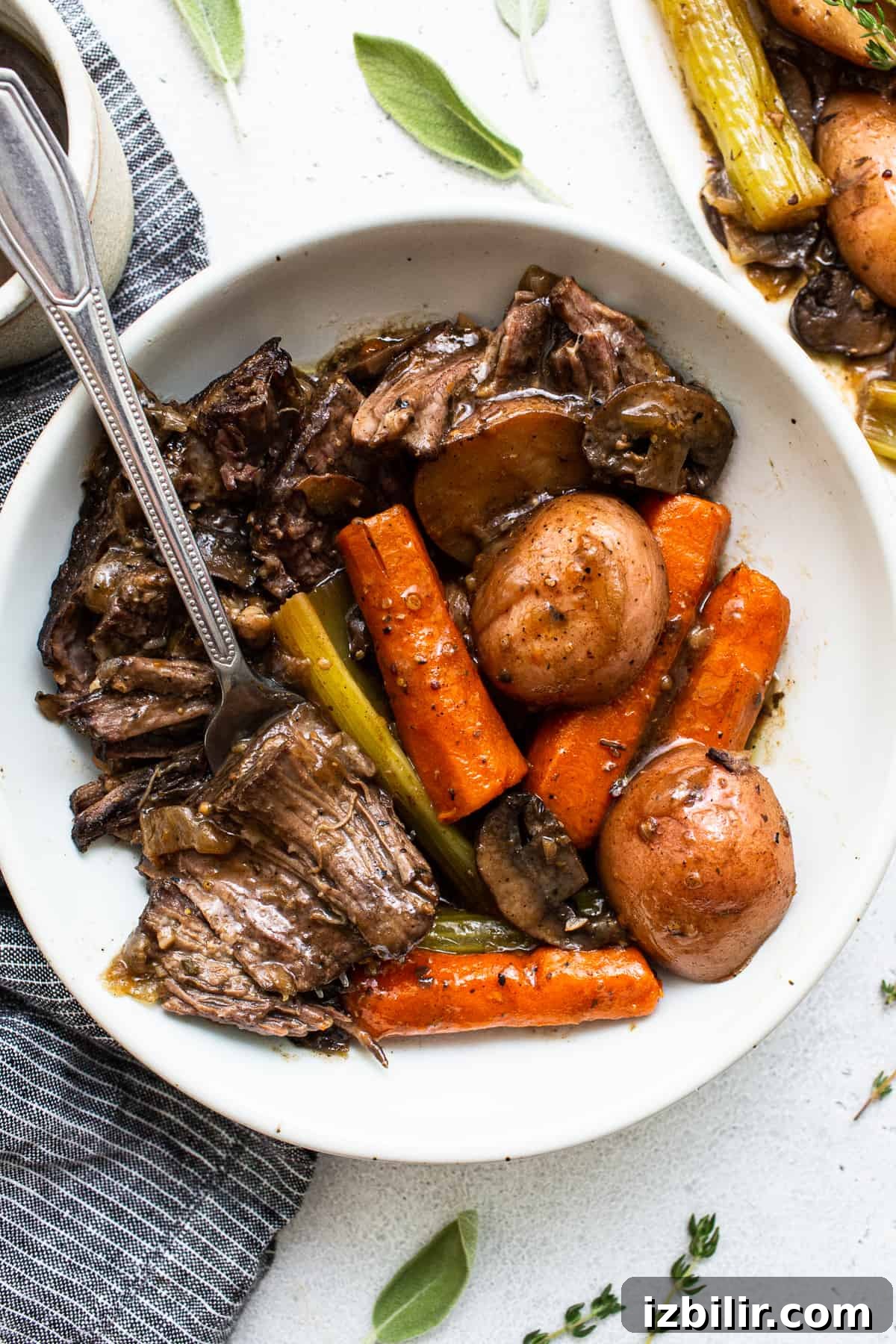
This braised pot roast is a comforting, reliable weeknight or Sunday-dinner staple. It starts with a well-marbled chunk of boneless chuck roast, is seasoned with a savory rub, browned to develop flavor, and slow-braised with root vegetables in a Dutch oven until the meat becomes tender enough to fall apart. The end result is a glossy gravy, fork-tender beef, and deeply flavored vegetables—simple to prepare and endlessly satisfying.
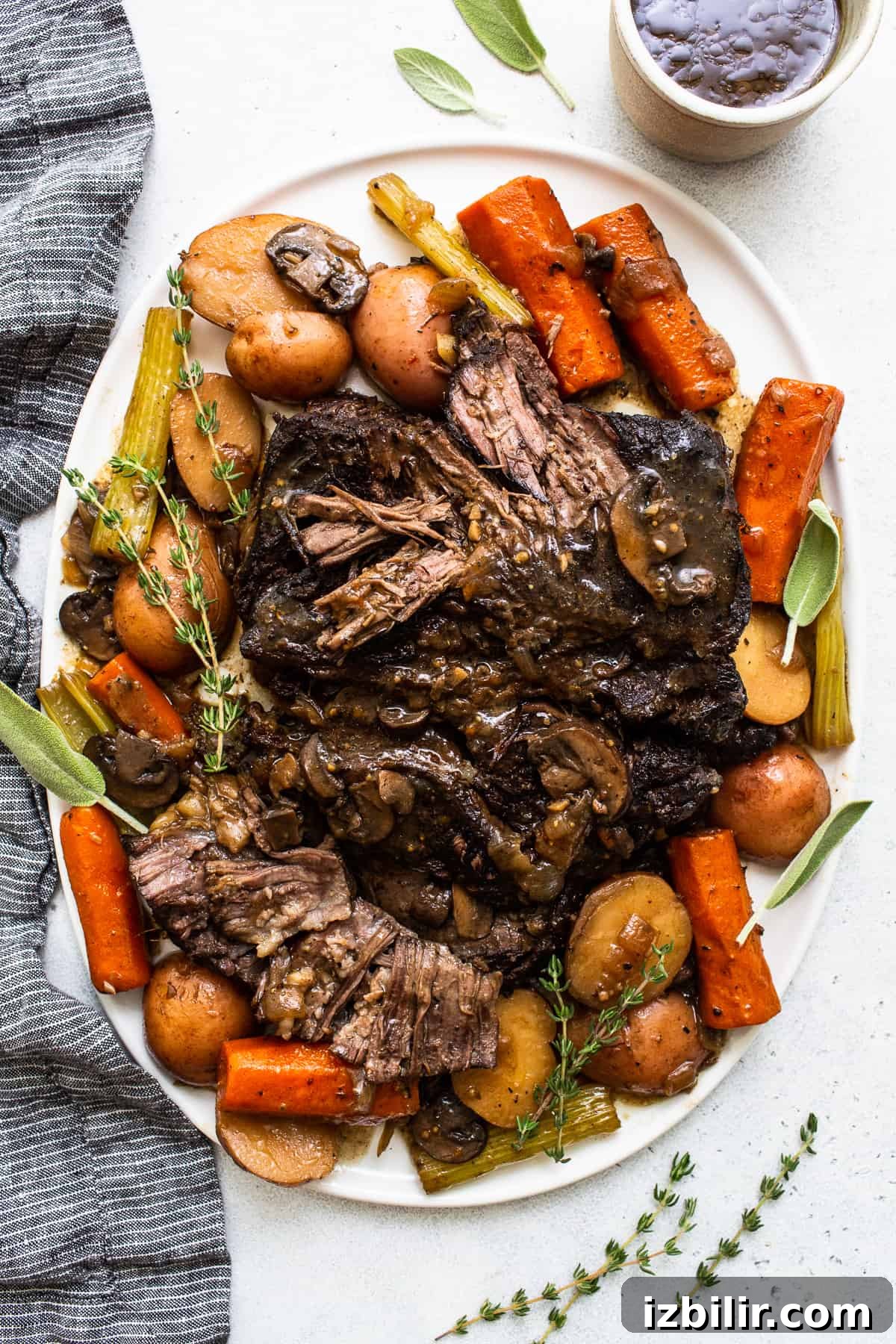
team fit foodie’s take on the Midwestern classic – pot roast!
We love pot roast for its straightforward technique and deeply satisfying results. This version leans into a garlic- and onion-forward seasoning balanced by a touch of brown sugar and a blend of dried herbs. A proper sear followed by slow oven braising in a flavorful liquid is what creates that tender, shreddable texture and rich gravy.
What makes this pot roast stand out is twofold: the seasoning blend that forms a tasty crust when seared, and the slow braise in a covered Dutch oven, which gently breaks down connective tissue while cooking the vegetables in the same pot.
- The seasoning: a blend of garlic and onion powders, brown sugar, dried herbs, salt, and pepper creates a savory-slightly-sweet coating that caramelizes while searing.
- Braising: slow-roasting the seared beef in a combination of broth and wine yields tender meat and a concentrated braising liquid that becomes the base for the gravy. Searing first locks in flavor and produces fond, which adds depth when deglazed.
Pot Roast vs. Chuck Roast?
“Chuck roast” refers to a cut of beef from the shoulder (the chuck). It has good marbling and connective tissue, which makes it ideal for slow cooking. “Pot roast” is not a cut but a cooking method: a piece of beef is browned, then slowly braised in liquid until tender. Boneless chuck roast is a popular choice for pot roast because it becomes juicy and shreddable after a long, slow cook.
Pot roasts adapt well to different equipment—Dutch oven, slow cooker, or electric pressure cooker—though the oven-braised Dutch oven method gives excellent caramelization, even cooking, and a flavorful pan gravy.
How to Make Dutch Oven Pot Roast
Season Chuck Roast
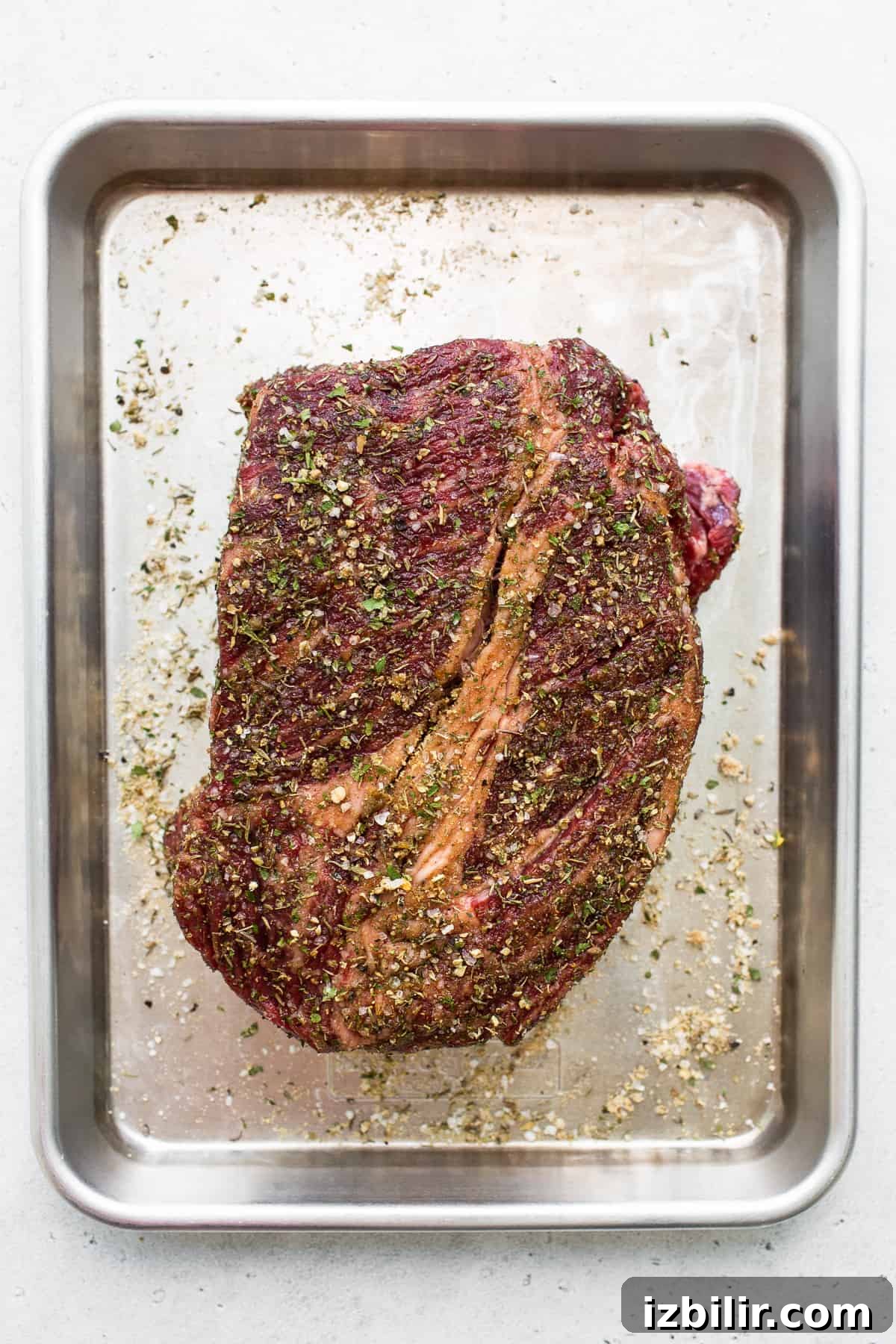
Combine the seasoning ingredients for the pot roast rub in a small bowl. Pat the chuck roast dry, then sprinkle the rub evenly over the entire surface, pressing it gently so it adheres. Let the seasoned roast rest for at least 30 minutes to allow the flavors to penetrate the meat.
Preheat Oven and Sear Meat
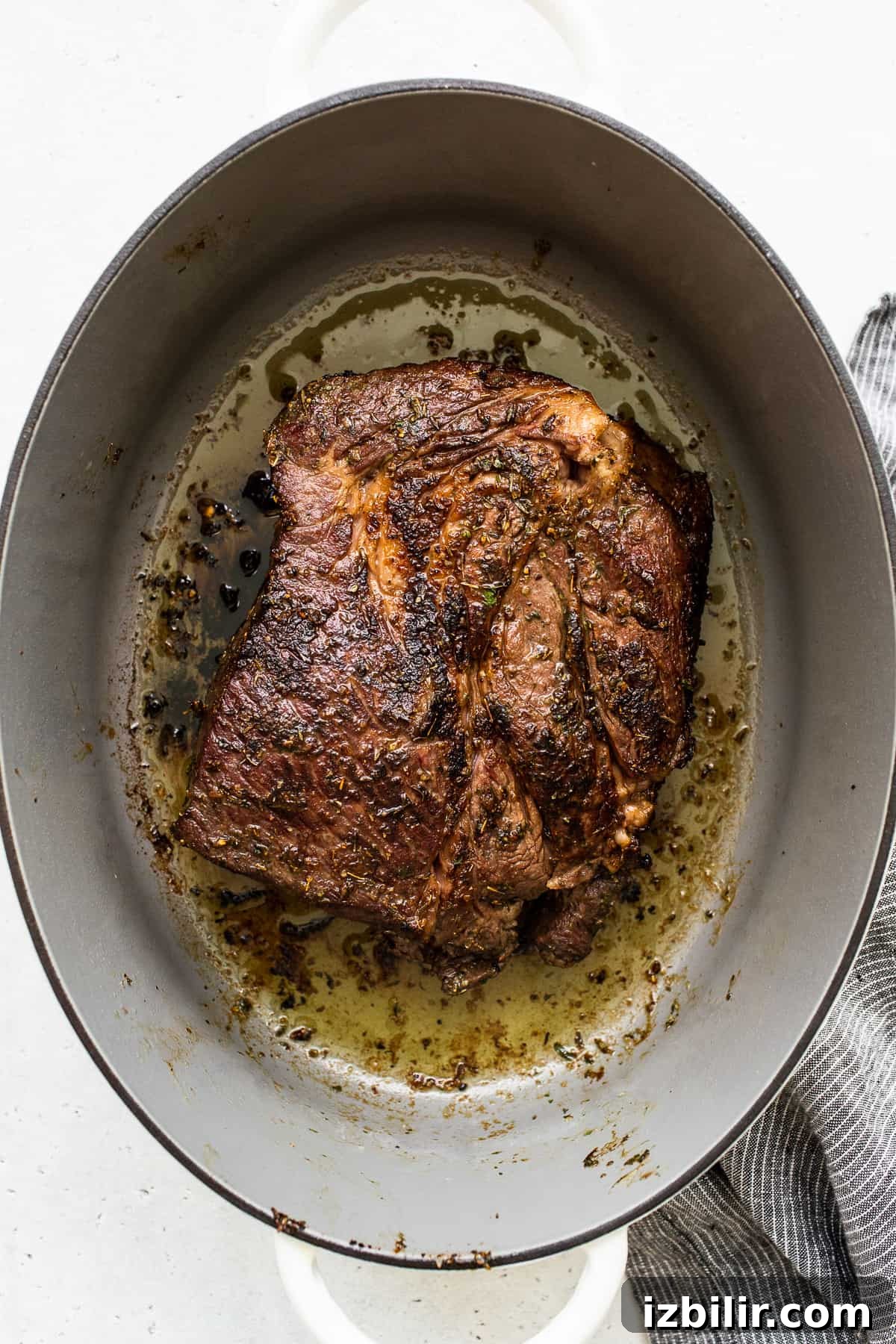
Preheat your oven to 300°F (150°C). Heat a large Dutch oven over medium-high heat and add olive oil. When the oil shimmers, add the roast and sear until a deep golden-brown crust forms, about 3–4 minutes per side. Remove the roast and set it aside while you prepare the aromatics.
Deglaze Pot
Pour red wine into the Dutch oven to deglaze, using a spatula to scrape up the brown bits (fond) from the bottom. These browned bits hold concentrated flavor and are the foundation of the braising liquid. If you prefer not to use wine, a splash of extra beef broth works as well.
What is deglazing? Deglazing uses liquid to loosen browned bits stuck to the pan after searing. This step captures flavorful compounds that otherwise would be discarded and prevents burning while enriching the final sauce.
Sauté Veggies
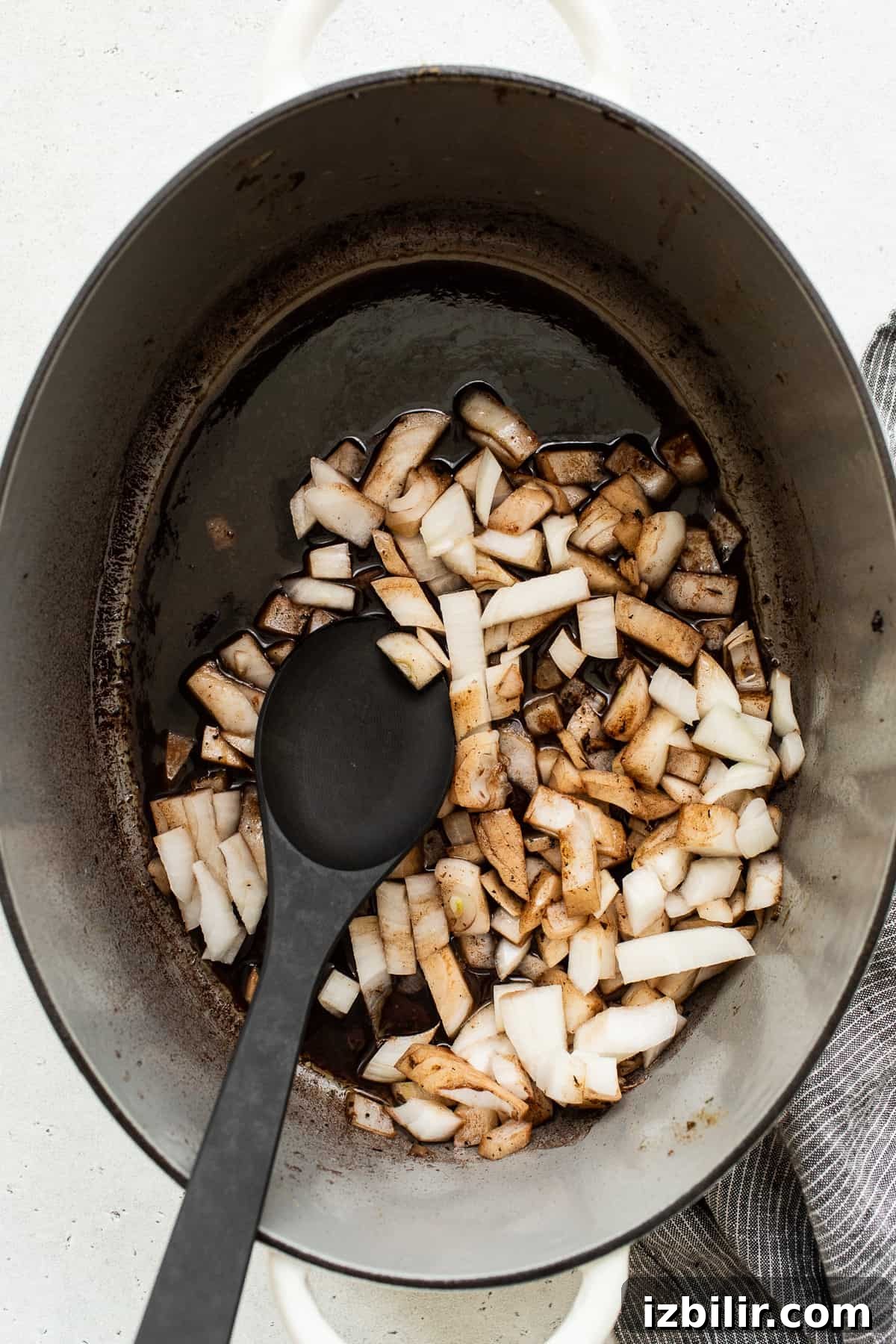
Add diced onion to the deglazing liquid, season lightly with salt, and sauté for 2–3 minutes until it softens. Stir in minced garlic and cook another minute until fragrant. Then add carrots, celery, and potatoes and cook for 4–5 minutes to begin softening and to wick up flavor from the pan.
Pro tip: Cut all vegetables to similar sizes so they cook evenly during the braise.
Create Broth and Roast
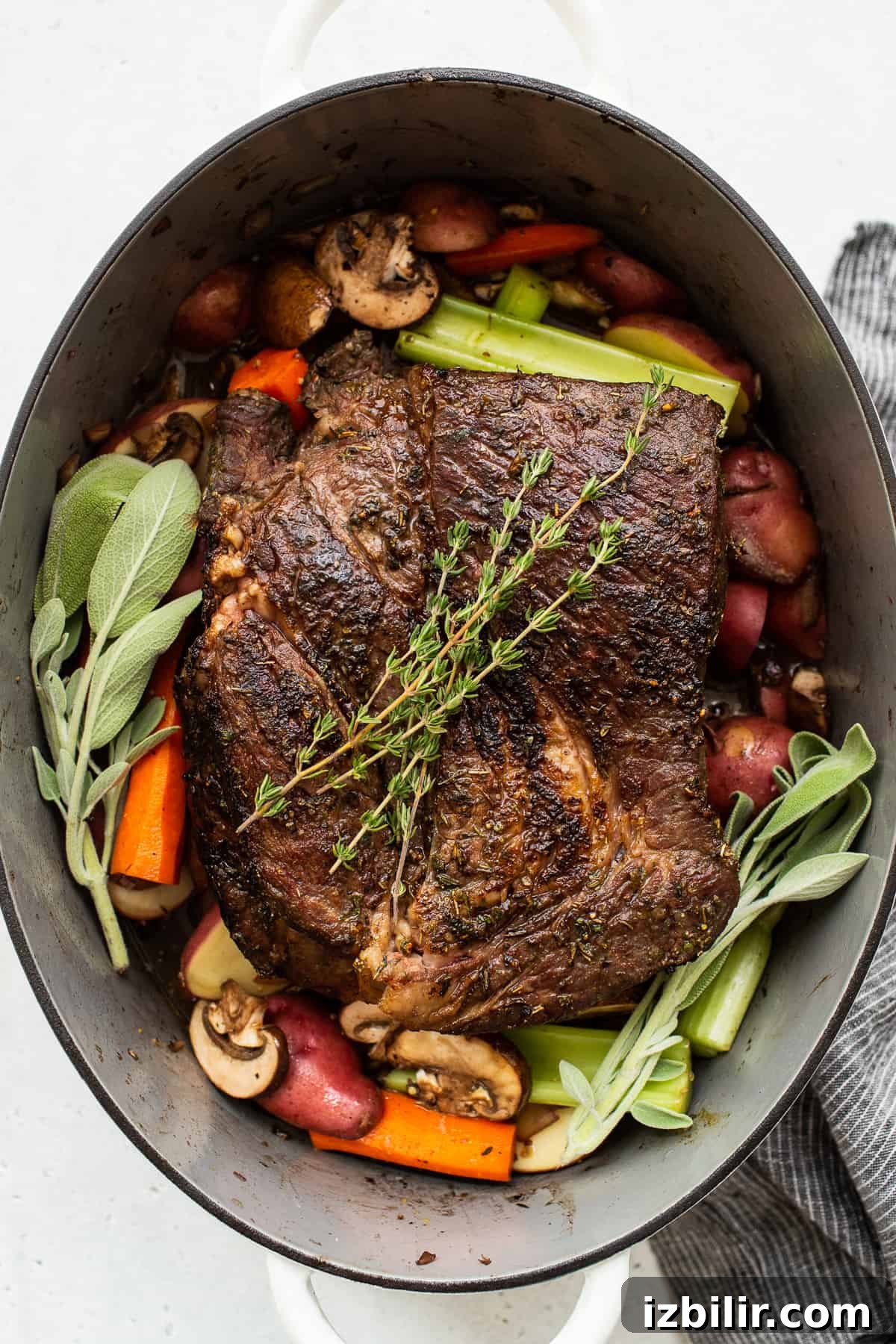
Whisk together beef broth, mustard, and Worcestershire sauce in a separate bowl and pour this mixture over the vegetables. Nestle the seared roast on top of the vegetables and add a few sprigs of fresh thyme and sage for aroma.
Cover the Dutch oven and bake at 300°F for 3–4 hours, or until the roast easily pulls apart with a fork. After about two hours, flip the roast so all sides have a chance to braise evenly. Cooking time will vary with roast size and oven—smaller roasts may finish sooner.
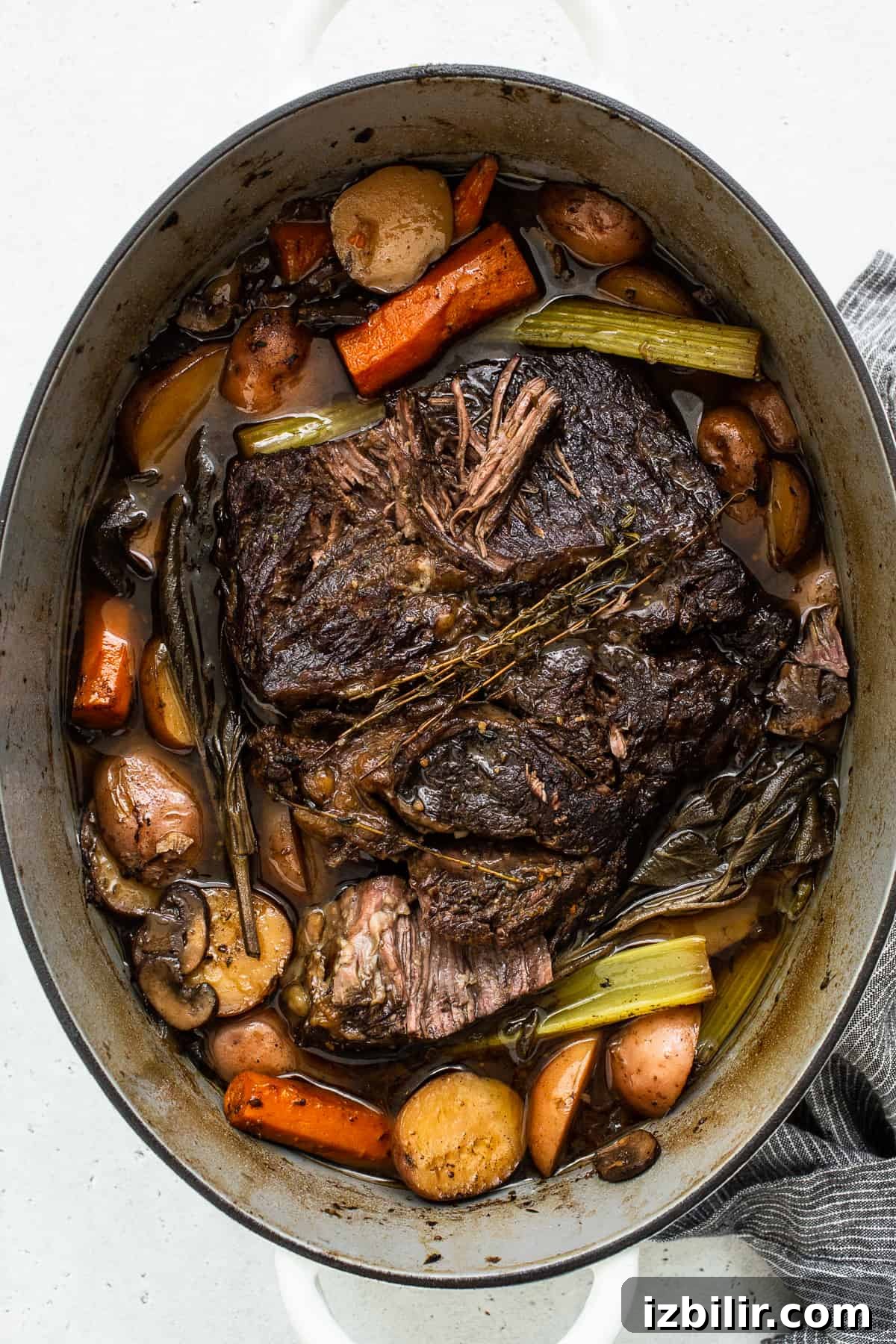
How do you know pot roast is done? The roast is ready when it is extremely tender and pulls apart with little effort—usually when internal temperature reaches the range where connective tissue breaks down (around 190–195°F) and the meat feels soft and shreddable.
Size & Cook Time: A 2.5–3 lb roast typically braises in about 3 hours at this temperature; adjust time for larger or smaller cuts.
Make the Gravy
When the meat is done, transfer the roast and vegetables to a platter and discard herb stems. To thicken the braising liquid, whisk 2–3 teaspoons cornstarch into a small amount of cold water to form a slurry, then whisk it into the hot liquid in the Dutch oven. If the liquid has cooled, bring it to a simmer before adding the slurry so it thickens properly. Once the gravy has reached your preferred consistency, return the meat and vegetables to the pot to coat them in sauce.
Pro tip: Always mix cornstarch with cold water before adding it to hot liquid to avoid lumps. Add the slurry gradually until you reach the desired thickness.
Shred Pot Roast and Enjoy!
Use two forks to shred the roast into large, juicy pieces. Spoon warm gravy over the shredded beef and vegetables to keep them moist. Trim any large pieces of fat before serving.
Serve with mashed potatoes, buttered noodles, crusty bread, or simply on its own for a classic, hearty meal.
Storing Your Beef Pot Roast
Refrigerate leftovers in an airtight container for up to five days. For longer storage, freeze in an airtight container for up to three months. Cool the roast to room temperature before refrigerating, but do not leave it at room temperature for more than two hours.
To Reheat Pot Roast
Oven method: place leftover roast and vegetables in an oven-safe dish, cover tightly with foil, and reheat at 325°F until warmed through, about 10–20 minutes depending on amount. Stovetop method: gently warm pieces and sauce in a skillet over medium heat, stirring occasionally until evenly heated. Avoid high heat to prevent drying out the meat.
Dutch Oven Pot Roast FAQs
Pot roast typically becomes fall-apart tender in the 190–195°F internal temperature range. At this point, collagen and connective tissue have converted into gelatin, producing tender, juicy meat.
Boneless chuck roast is a top choice because it has good marbling and connective tissue that breaks down with slow cooking. Other suitable cuts include brisket, chuck shoulder, and blade roast.
Searing is optional, but skipping it can reduce the depth of flavor. Searing creates a flavorful crust and fond, which enriches the braising liquid when deglazed. Without searing, the finished dish may taste less complex.
Yes—overcooking can dry out the meat if there isn’t enough braising liquid or if cooking goes far beyond the point when collagen has broken down. Monitor tenderness rather than strict timing; stop cooking once the roast is easily shredded and moist.
Pot Roast Recipe
A classic braised pot roast made with boneless chuck roast, a simple homemade seasoning, and root vegetables, slow-braised in the oven until falling-apart tender.
By: Lee Funke
Prep: 1 hr Cook: 3 hrs Total: 4 hrs Servings: 8
Ingredients
Pot Roast Seasoning
- 1/4 cup brown sugar
- 2 tablespoons garlic powder
- 1.5 tablespoons onion powder
- 2 teaspoons dried oregano
- 2 teaspoons dried thyme
- 2 teaspoons dried parsley
- 1.5 tablespoons coarse salt
- 2 teaspoons black pepper
Other Ingredients
- 2.5–4 lbs boneless chuck roast (not chuck steak)
- ⅓–½ cup pot roast seasoning, depending on roast size
- 3 tablespoons olive oil
- ½ cup red wine (optional)
- 1 large white onion, diced
- 5 cloves garlic, minced
- ½ teaspoon salt
- 5 large carrots, peeled and cut into thirds
- 3 celery stalks, cut into thirds
- 2 lbs baby potatoes, halved
- 8 oz cremini or button mushrooms, sliced (optional)
- 2 cups beef broth
- 1 tablespoon stone-ground mustard
- 1 tablespoon Worcestershire sauce
- 5 sprigs fresh thyme
- 2 sprigs fresh sage
Instructions
- Mix the seasoning ingredients in a bowl. Pat the roast dry and rub the seasoning all over the meat. Let the roast rest for at least 30 minutes.
- Preheat the oven to 300°F (150°C).
- Heat a large Dutch oven over medium-high heat and add olive oil. When the oil is hot, sear the roast 3–4 minutes per side until deeply browned. Remove and set aside.
- Deglaze the pot with red wine, scraping up brown bits from the bottom. Add diced onion, season lightly with salt, and sauté 2–3 minutes. Stir in garlic and cook 1 minute more.
- Add carrots, celery, potatoes, and mushrooms. Stir and cook 4–5 minutes, then pour the beef broth mixed with mustard and Worcestershire sauce over the vegetables.
- Place fresh herb sprigs and the seared roast on top of the vegetables. Cover and bake 3–4 hours, or until the roast falls apart with a fork. Flip the roast after about 2 hours for even braising.
- When done, remove the roast and vegetables and let the meat rest 10 minutes. Discard herb stems.
- To make gravy, whisk 2–3 teaspoons cornstarch with cold water to make a slurry and stir into the hot braising liquid until thickened, or bring the liquid to a boil first if it has cooled. Return meat and vegetables to the pot and coat with gravy.
- Shred the roast with two forks into large pieces, trim any excess fat, spoon gravy over the meat and vegetables, and serve warm.
Tips & Notes
- Use enough seasoning to coat the entire roast; store any leftover seasoning in an airtight jar for future use.
- Braising time will vary with roast size and oven—check for tenderness rather than strictly relying on the clock.
- If you don’t have wine, substitute additional beef broth and a splash of balsamic vinegar for acidity.
Nutrition
Calories: 488 kcal, Carbohydrates: 39 g, Protein: 32 g, Fat: 22 g, Fiber: 5 g, Sugar: 11 g
Nutrition information is an estimate and should be used as a guide only.
If you try this recipe, leave a comment below to share how it turned out. Tag your photos with the hashtag #fitfoodiefinds so we can see your results and variations.