
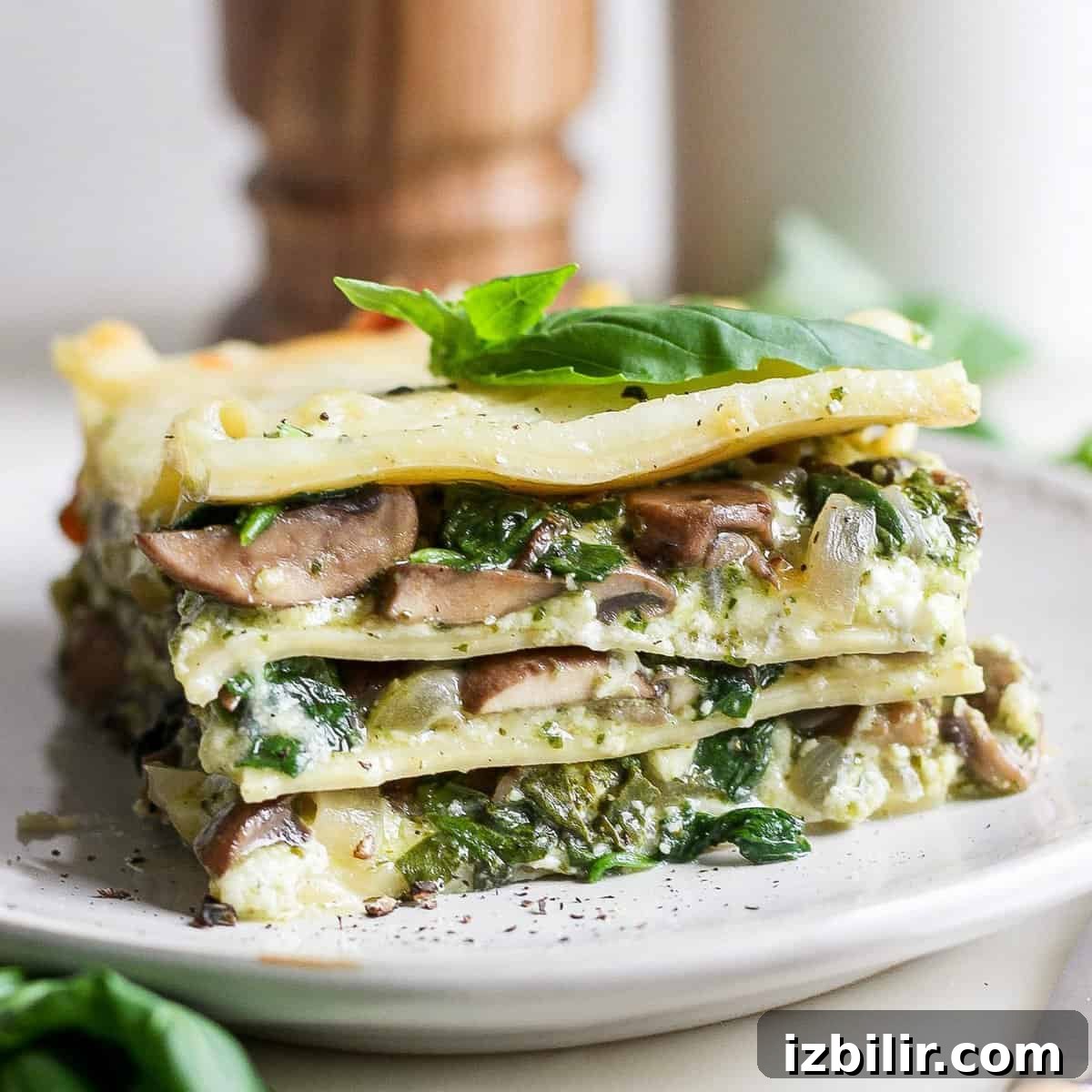
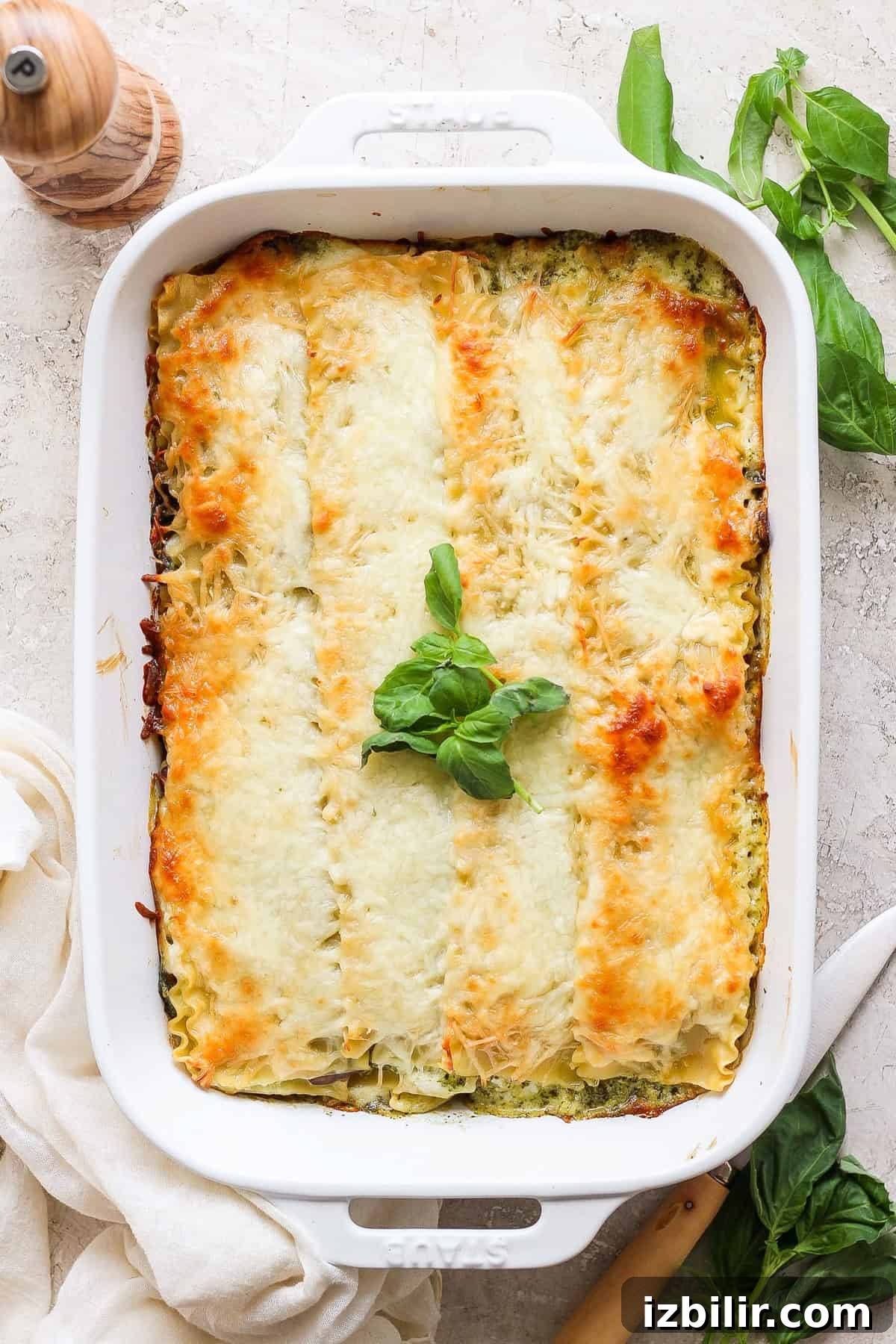
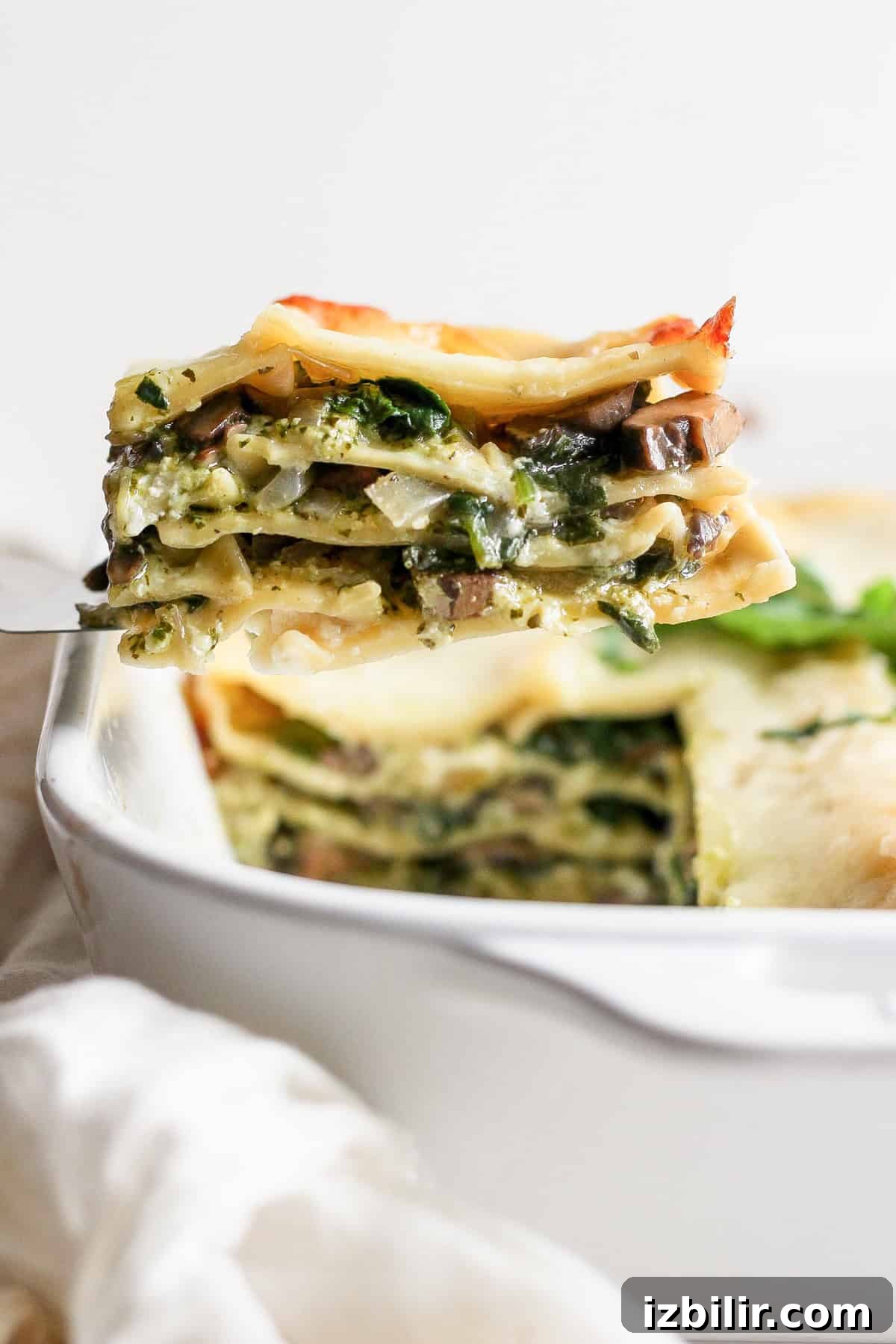
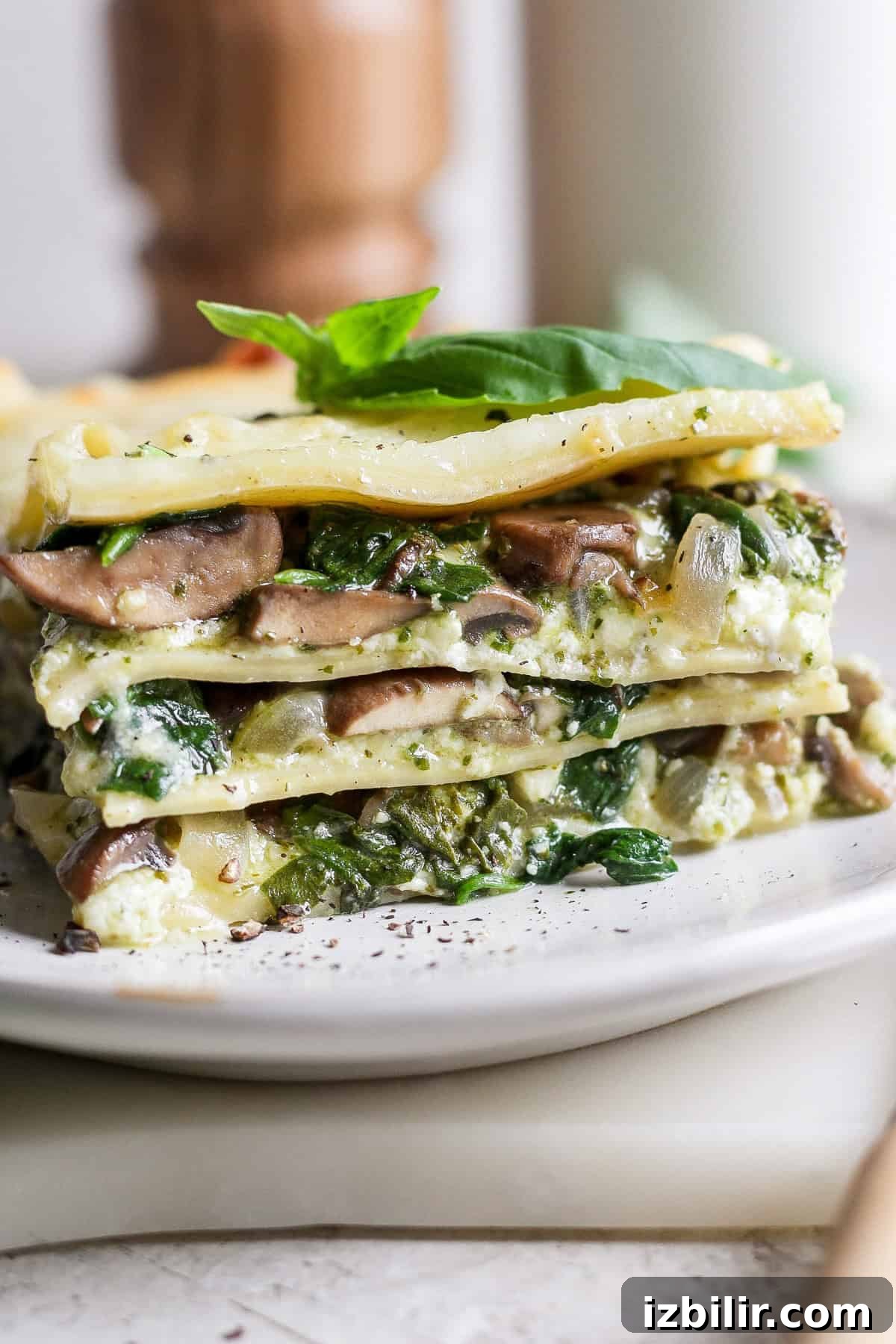
This Pesto Lasagna is a vegetarian-friendly, flavor-packed lasagna made with bright homemade pesto, sautéed mushrooms and spinach, and a trio of cheeses. For a lighter twist on the traditional ricotta filling, this version uses blended cottage cheese to create a smooth, creamy layer that’s high in protein without being heavy. The pesto brings fresh basil and a nutty finish that lifts the whole dish.
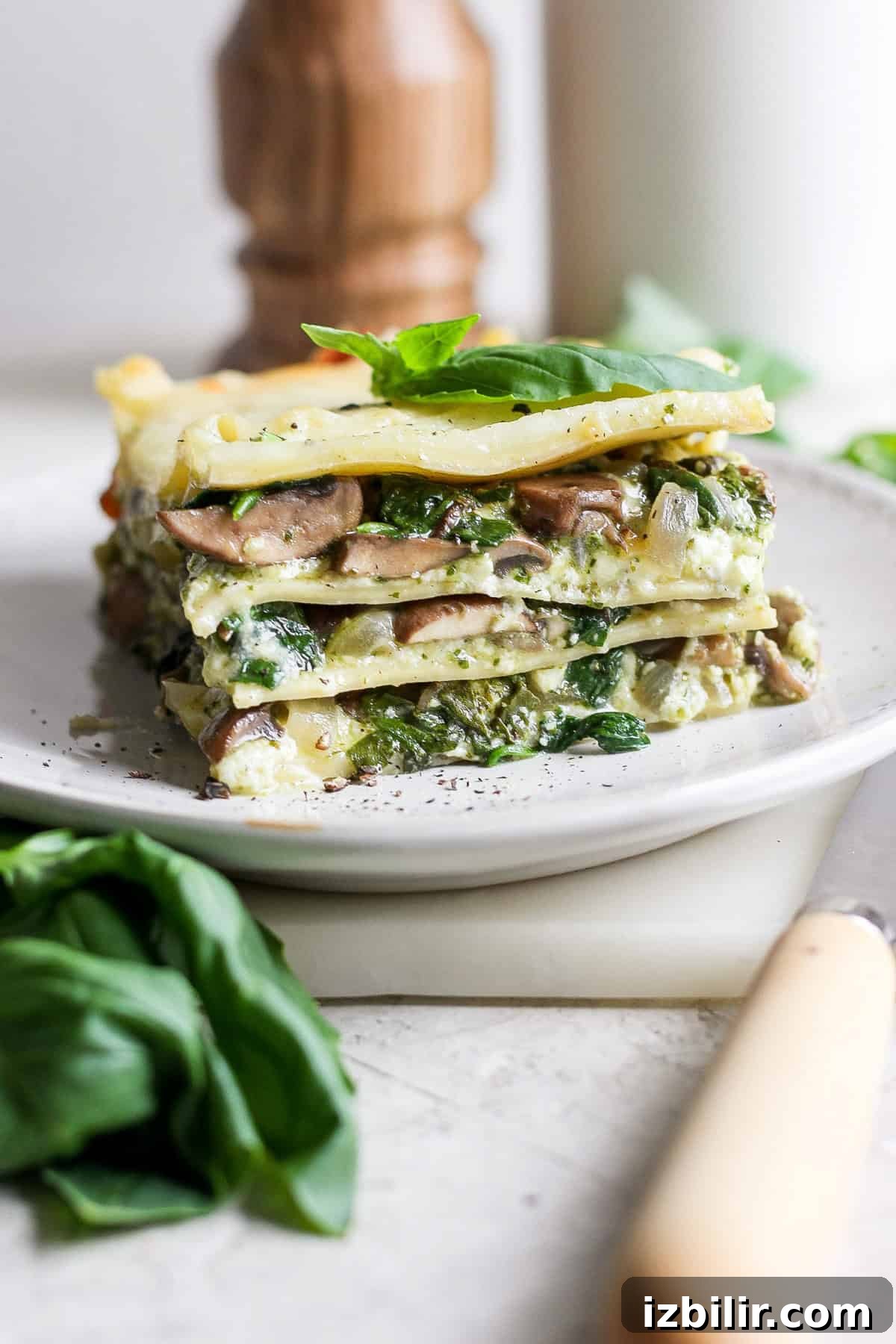
We love experimenting with lasagna, and this pesto version takes the classic layered casserole in a green, herb-forward direction. The process is straightforward: make your pesto, cook the noodles, sauté the vegetables, blend the cottage cheese until smooth, and assemble in layers. The result is comforting, colorful, and perfect for family dinners or make-ahead meals.
Check List for Pesto Lasagna Recipe
- Basil leaves: Fresh basil is essential for a vibrant homemade pesto.
- Parmesan: Freshly grated parmesan adds a savory, nutty depth to the pesto and the topping.
- Pine nuts: Pine nuts bring a subtle sweetness and texture to the pesto.
- Olive oil: Use a good-quality extra-virgin olive oil to emulsify the pesto.
- Lasagna noodles: Regular lasagna noodles work well; cook them until just al dente.
- Bella mushrooms: Their meaty texture pairs well with the creamy cheese layers.
- Fresh spinach: Adds color, nutrients, and a pleasant vegetal balance.
- Tuscan seasoning: Chosen here for its bold flavor; Italian seasoning is an acceptable alternative.
- Cheeses: 2% cottage cheese (blended), mozzarella, and parmesan form the cheese layers.
- High-speed food processor or blender: Needed to make smooth pesto and to blend the cottage cheese.
FAQ
Blending cottage cheese transforms its texture into a smooth, creamy filling similar to ricotta. If you prefer, you can substitute ricotta for a traditional flavor and texture.
Tuscan seasoning typically includes red pepper flakes, dried bell pepper, and minced garlic in addition to classic herbs, giving it a bolder, slightly spicier profile than a basic Italian blend.
Store-bought pesto can be convenient, but some commercial versions are oil-heavy which may make the lasagna greasy. Homemade pesto offers better control over texture and flavor.
How to Make Pesto Lasagna
- Prepare the pesto: Combine fresh basil, grated parmesan, lemon juice, garlic, pine nuts, and olive oil in a high-speed food processor. Process for 1–2 minutes, scraping the sides as needed. Stop before it becomes completely smooth; a little texture is desirable. If the pesto is too thick, add olive oil by the teaspoon and pulse until it reaches the desired consistency.
- Cook the pasta: Bring a large pot of salted water to a boil and cook lasagna noodles until al dente (about 7 minutes). Drain and lay noodles flat to prevent sticking while you prepare the filling.
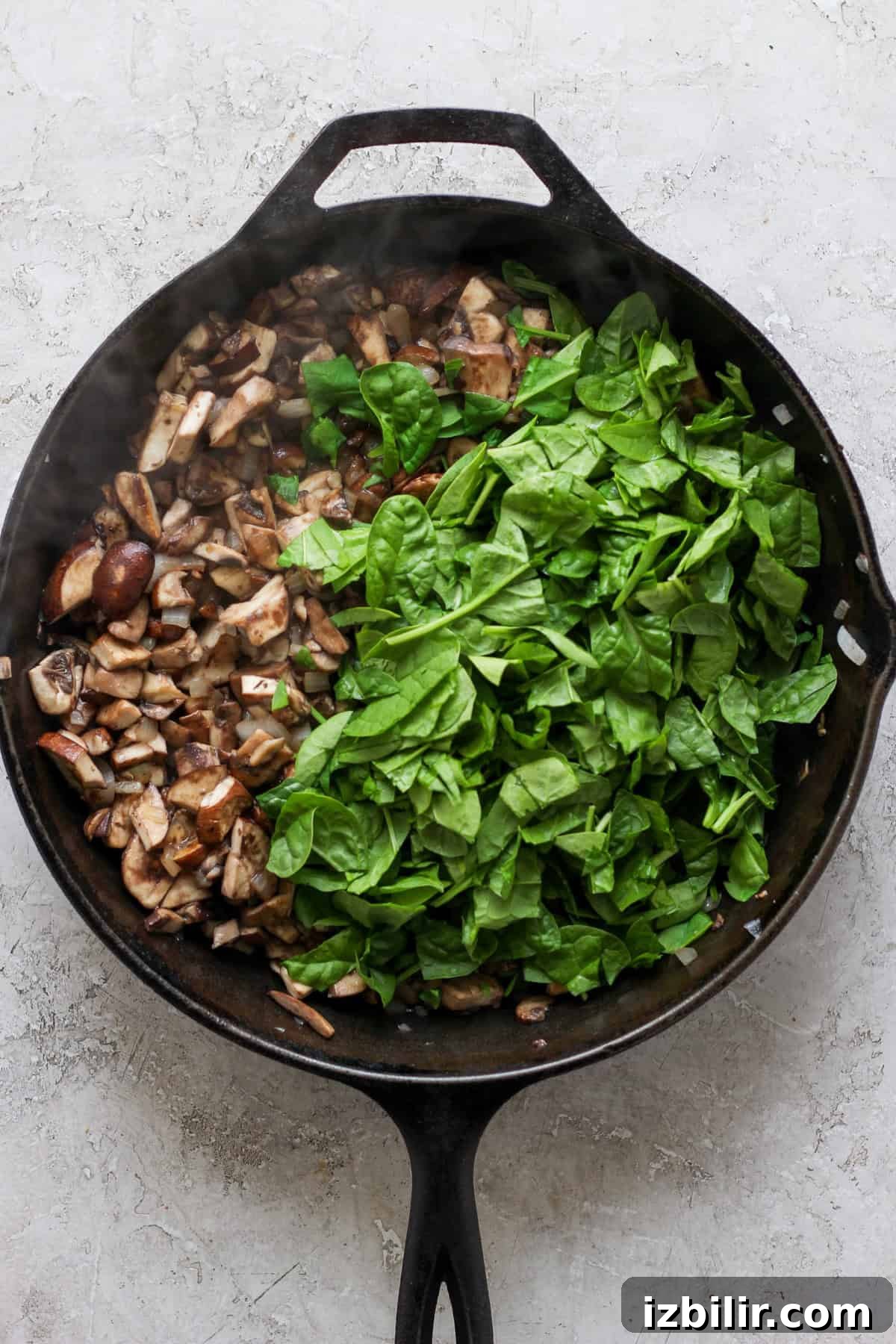
- Sauté the vegetables: Heat olive oil over medium-high heat. Sauté chopped onion with 1/4 teaspoon salt for 3–4 minutes. Add chopped bella mushrooms, season with another 1/4 teaspoon salt, and cook for 7–9 minutes until browned. Stir in chopped spinach and cook until wilted. Toss vegetables with Tuscan seasoning and remove from heat.
- Blend the cottage cheese: Blend 2% cottage cheese in a high-speed blender until smooth. Transfer to a bowl and mix in 1 cup shredded mozzarella, 1 cup grated parmesan, and the remaining salt until combined.
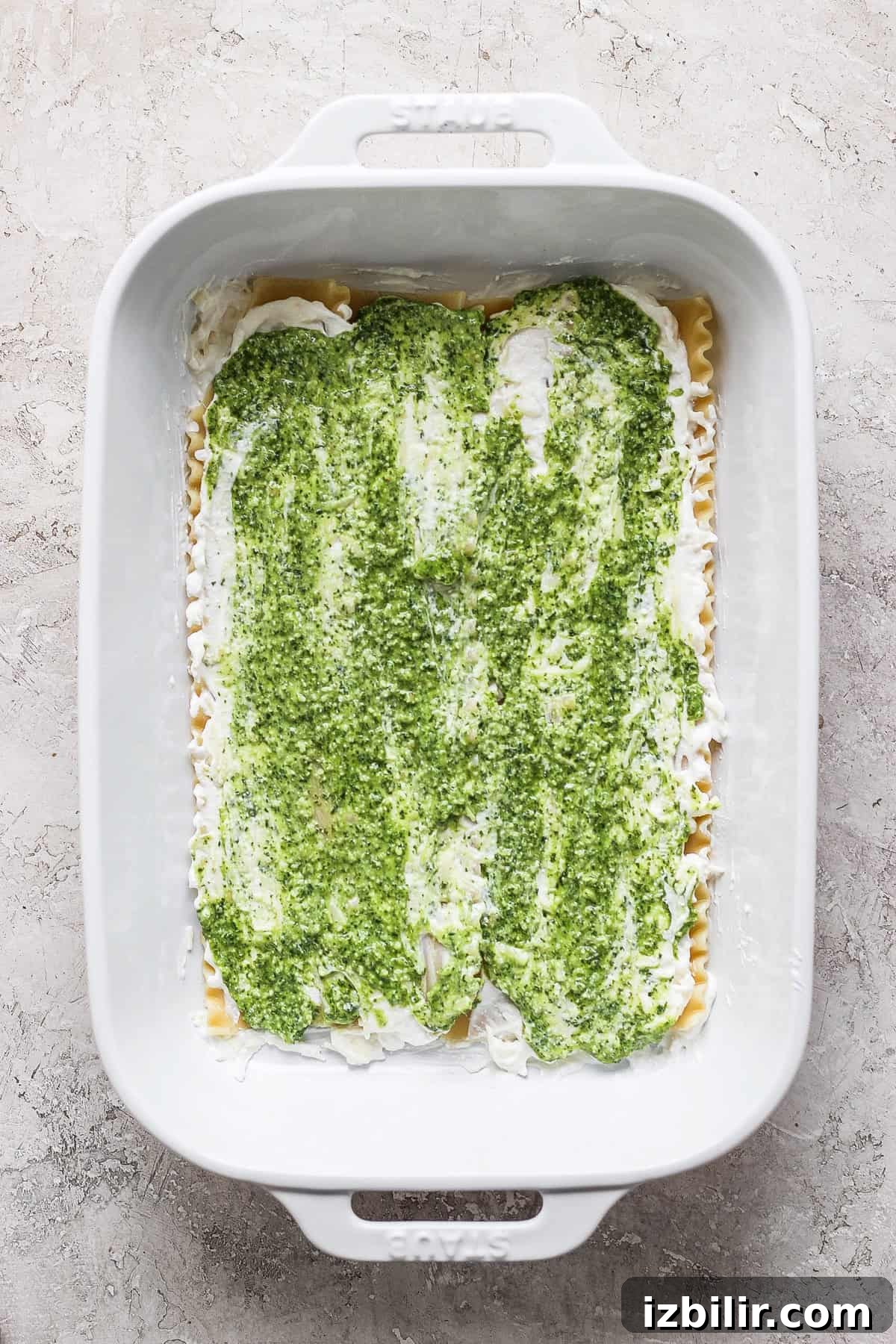
- Assemble the lasagna: Preheat the oven to 350ºF and grease a 9×13-inch pan. Spread about 1/3 cup of the cottage cheese mixture over the bottom of the pan. Lay 4 lasagna noodles on top, slightly overlapping. Spread another 1/3 cup of the cottage cheese mixture over the noodles, then add about 1/2 cup of the mushroom-spinach mixture. Repeat to build layers, finishing with the remaining mozzarella and parmesan on top. Cover the dish for the first part of baking.
- Bake: Bake covered at 350ºF for 20 minutes, then uncover and bake an additional 20–30 minutes until the top is golden and bubbly.
- Rest and serve: Let the lasagna rest for 15 minutes before slicing. Garnish with fresh julienned basil and serve warm.
Here’s a tip!
Don’t over-process the pesto—some grittiness adds texture and brightness. Adjust olive oil as needed by adding it gradually until the pesto reaches a spreadable consistency.
Try it!
Homemade Pesto
For best results, make fresh pesto rather than using a jarred version. A quick homemade batch elevates the lasagna’s flavor and prevents excess oiliness.
Storage Directions
Store leftover lasagna in an airtight container in the refrigerator for up to 3–4 days. Reheat individual slices in the microwave or warm them in a 350ºF oven until heated through.
To freeze, wrap portions tightly in plastic wrap and then aluminum foil. Frozen lasagna will keep well for 2–3 months. Thaw overnight in the refrigerator before reheating.
More of our favorite lasagna variations
Lasagna Recipes
- Lasagna Roll Ups
- Amazing Crockpot Lasagna
- Vegetarian Sweet Potato Lasagna
- One-Pot Lasagna Pasta
Pesto Lasagna Recipe
This pesto lasagna layers homemade basil pesto, a blended cottage cheese filling, sautéed mushrooms and spinach, and plenty of mozzarella and parmesan. It serves as a satisfying vegetarian main course and reheats beautifully for lunches and weeknight dinners.
Author: Emily Richter
Prep: 40 mins • Cook: 1 hr • Total: 1 hr 40 mins • Servings: 12
Ingredients
Pesto
- 2 cups packed fresh basil leaves (about 40–42 leaves)
- 1/2 cup grated parmesan
- 2 tablespoons fresh lemon juice
- 2 medium garlic cloves
- 1/4 cup pine nuts
- 1/4 cup olive oil (add more if needed)
Other Ingredients
- 16 oz lasagna noodles
- 1.5 tablespoons olive oil
- 1 small white onion, chopped
- 3/4 teaspoon sea salt, divided
- 20 oz bella mushrooms, chopped
- 5 oz fresh spinach, chopped
- 1.5 teaspoons Tuscan or Italian seasoning
- 22 oz 2% cottage cheese (to be blended)
- 2 cups shredded mozzarella, divided
- 2 cups grated parmesan, divided
- 1/3 cup fresh basil, julienned for garnish
Instructions (summary)
- Make pesto in a high-speed food processor; adjust olive oil for texture.
- Cook lasagna noodles until al dente, then drain and set aside.
- Sauté onion and mushrooms with salt until golden; add spinach and seasoning and remove from heat.
- Blend cottage cheese until smooth and combine with 1 cup mozzarella and 1 cup parmesan.
- Layer cottage cheese mixture, noodles, vegetable mixture, and pesto in a greased 9×13 pan; finish with remaining cheeses.
- Bake covered at 350ºF for 20 minutes, uncover and bake 20–30 minutes until golden.
- Let rest 15 minutes, garnish with fresh basil, and serve.
Tips & Notes
- Homemade pesto provides the best flavor and texture; commercial pesto can be oil-heavy.
- You may substitute ricotta for the blended cottage cheese if preferred.
- Tuscan seasoning often includes red pepper flakes, dried bell pepper, and minced garlic, which gives a slightly different flavor than standard Italian seasoning.
Nutrition (approx.)
Per serving: Calories: 424 kcal • Carbohydrates: 36 g • Protein: 24 g • Fat: 21 g • Fiber: 2 g • Sugar: 4 g
Nutrition information is automatically calculated and should be used as an approximation.
Photography by: The Wooden Skillet