
The 20’s Cardio Warmup
This warm-up is designed for anyone who dislikes treadmills, doesn’t have time to go to the gym, lacks cardio machines at home, or often travels and needs a hotel-friendly routine. It’s simple, portable, and effective—no equipment required.
What it is
The 20’s Cardio Warmup is a circuit-based, bodyweight warm-up that keeps things interesting while raising your heart rate and preparing your muscles for the workout ahead. Each round lasts one minute and includes five short exercises. Move through the five exercises within that minute, then repeat as many rounds as needed until you feel ready to start your main session.
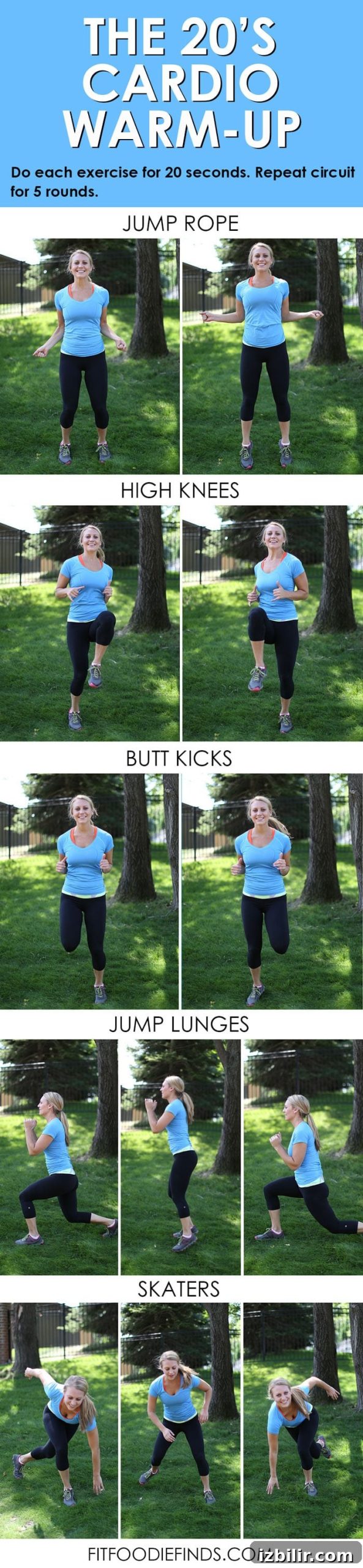
Photo Credits: Brooke Alexandra Photography
Why this warm-up works
It combines short bursts of movement with varied patterns to mobilize joints, activate major muscle groups, and increase circulation—without the monotony of a treadmill or the need for machines. Because it’s interval-based and portable, it’s ideal for quick pre-workout activation or for warming up before a travel or hotel workout.
Structure and timing
Each round is one minute long and contains five exercises. That typically translates to about 10–12 seconds per exercise, depending on how you arrange transitions. Use a stopwatch or an interval-timer app on your smartphone to keep each round exactly one minute. There are many free interval timer apps in app stores; search “interval timer” to find one you like.
Example exercises
Below are sample movements commonly used in this warm-up. Substitute any exercise if you have knee pain or prefer a different movement. The goal is to raise your heart rate and prepare your body, not to cause discomfort.
- High knees — drive knees up and pump the arms, focusing on quick turnover.
- Jumping jacks — a classic full-body cardio move that opens the chest and wakes up the lower body.
- Butt kicks — heel-to-glute action to activate the hamstrings and increase heart rate.
- Squat to calf raise or squat pulses — useful for lower-body activation; replace jump squats with calf raises if you need a lower-impact option.
- Mountain climbers — core and hip-drive movement that also elevates the pulse.
Knee-friendly and low-impact substitutions
If you have knee issues or want lower-impact alternatives, swap any jumping move with one of these:
- Marching in place with exaggerated knee lift instead of high knees.
- Step jacks (stepping side to side while raising arms) instead of jumping jacks.
- Standing hamstring curls or glute squeezes instead of butt kicks.
- Sit-to-stand or slow bodyweight squats without jump for lower-impact squats.
- Plank knee drives (slow) instead of fast mountain climbers if you need to reduce impact on knees.
How many rounds should you do?
Do as many rounds as you need to feel warm and ready. For many people, 2–4 rounds are sufficient; if you’re doing a high-intensity session, you might do a bit more to ensure your joints and muscles are fully activated. Listen to your body and use the warm-up to prime the breathing, heart rate, and movement patterns required for the main workout.
Tips for success
- Use an interval timer so you can focus on movement rather than watching a clock.
- Keep transitions fluid—this is a warm-up, not a test of perfect form under fatigue.
- Customize the exercises to fit your fitness level and any existing limitations.
- Remember the purpose: increase blood flow, mobilize joints, and prepare the nervous system for more intense work.
Quick questions to reflect on
1. Do you usually warm up before strength training sessions?
2. Are you a fan of treadmills, or do you prefer machine-free warm-ups like this one?
If you dislike treadmills, travel often, or need a quick activation routine at home, The 20’s Cardio Warmup is a flexible option you can adapt to any situation.