
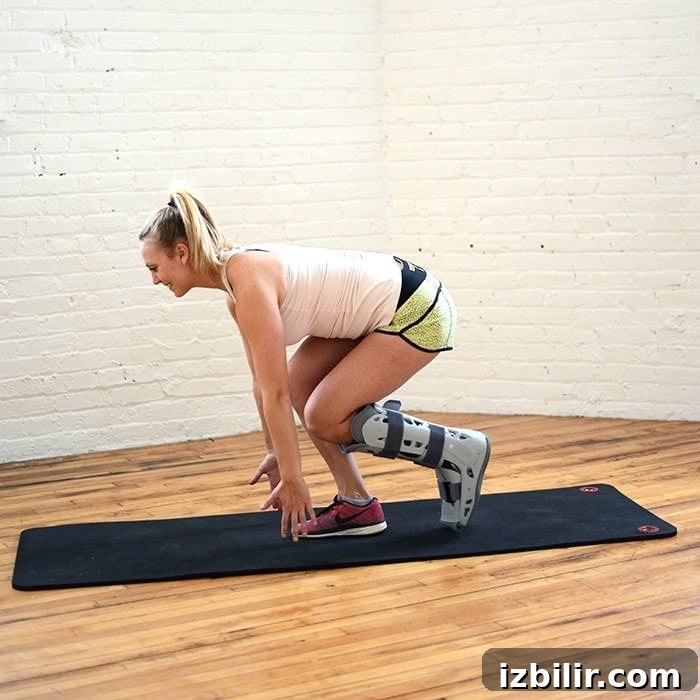
If you have a broken foot but still want to work your lower body and core, this single-leg workout is designed for you. It’s also perfect for anyone with two healthy feet who wants to challenge balance, unilateral strength, and cardiovascular fitness. The routine blends strength moves and plyometrics so you can build muscle, fire up your core, and raise your heart rate — all while minimizing stress on an injured limb.
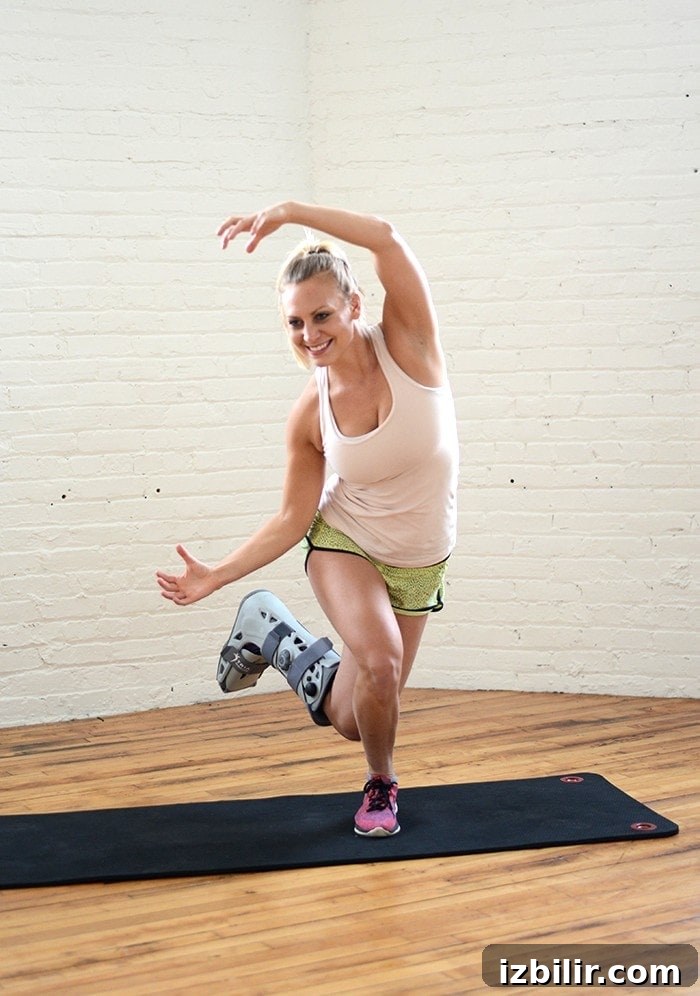
Wearing a walking boot or having limited weight-bearing on one leg makes training more creative, not impossible. Over the past several weeks I adapted workouts with the help of knowledgeable trainers Lindsey and Drew, who helped modify exercises and keep sessions effective. I’ve increased upper-body work to compensate, but I’ve also discovered how much you can do for the lower body and core with just one functioning leg. If you can place some weight through your heel, you can progress many bodyweight movements; if you can’t, there are gentle alternatives described below.
Below is a focused single-leg lower-body and core routine. It’s written so you can perform it on the side that’s available — and if you have two healthy legs, repeat the sequence on the opposite side. The workout alternates strength-focused moves with higher-intensity intervals to target muscle growth and cardiovascular conditioning simultaneously.

Single Leg Workout for Lower Body and Core
Instructions: Perform 15 repetitions for each strength exercise and 10 repetitions for each HIIT/plyometric exercise. Repeat each circuit for 4 rounds total, structuring the rounds as two sets per leg when possible. Move through the circuits with controlled tempo on strength moves and controlled yet energetic effort on the plyometrics.
Equipment: Bodyweight. Optional: a chair or bench for balance, a mat for comfort. If weight-bearing is restricted, use seated or supine modifications described in the safety and modifications section.
WORKOUT
Interval One
- 15 Reps Single-Leg Plank + Leg Lift — hold a strong single-leg plank and lift the non-supporting leg with control to engage glutes and core.
- 10 Reps Single-Leg Burpee — a modified burpee on one leg; remove the jump if impact is not recommended.
Interval Two
- 15 Reps Warrior 3 + Standing Crunch — balance in a controlled Warrior III, then bring the torso forward to tap elbow to knee for an oblique/hip-focused crunch.
- 10 Reps Single-Leg Deadlift Hops — hinge through the standing hip, then add a small, controlled hop to build power. Reduce range if balance is limited.
Interval Three
- 15 Reps Speed Skater + Oblique Crunch — perform a skating-style lateral reach with a finishing oblique crunch to hit lateral glutes and core.
- 10 Reps Single-Leg Plank Hops — from a single-leg plank, perform short, low-impact hops with the supporting leg (omit if not safe).
Interval Four
- 15 Reps Single-Leg Crunch + Donkey Kick — combine a single-leg abdominal crunch with a focused donkey-kick to target glutes and abs.
- 10 Reps Single-Leg Speed Lunges — dynamic, driving lunges on one leg. Reduce depth or perform stationary variations to control impact.
Interval Five
- 15 Reps Single-Leg Glute Bridge + Toe Touch — perform a single-leg bridge, then reach for the toes on the floor with the free leg extended or bent.
- 10 Reps Single-Leg Jump Ropes — mimic jump rope motion on one leg; substitute low-impact toe taps if jumping is contraindicated.
Safety, Modifications, and Tips
Before starting, consult your healthcare provider if you’re recovering from a fracture or surgery. Use these general guidelines to make the session safe and productive:
- Start slow and prioritize control over speed. Focus on alignment and breathing to protect joints and the injured limb.
- If you cannot put any weight through the injured foot, adapt movements to seated or supine alternatives: seated leg lifts, isometric glute squeezes, and core-focused exercises like dead bugs and modified planks from your knees are effective options.
- Remove the plyometric or high-impact elements if your provider advises against jumping. Many exercises have lower-impact versions listed above; choose the option that feels safe.
- Use a stable surface or chair for balance when attempting single-leg balance moves. Progress by reducing hand support as balance improves.
- Listen to pain signals. Mild muscle discomfort is normal; sharp or increasing pain, especially around the injury, is a sign to stop and reassess.
Why Single-Leg Training Helps
Focusing on one leg at a time improves balance, corrects muscular imbalances, and challenges core stability more than bilateral exercises. For someone with limited weight-bearing on one foot, single-leg training allows the unaffected side to stay strong while you maintain core activation and cardiovascular fitness. When you’re cleared to return to full weight-bearing, the unilateral strength and stability you build now will help the transition.
Follow the prescribed reps and rounds, progress gradually, and modify when necessary. With consistent practice and attention to form, this single-leg routine will help you preserve strength, maintain conditioning, and support a safe recovery.