
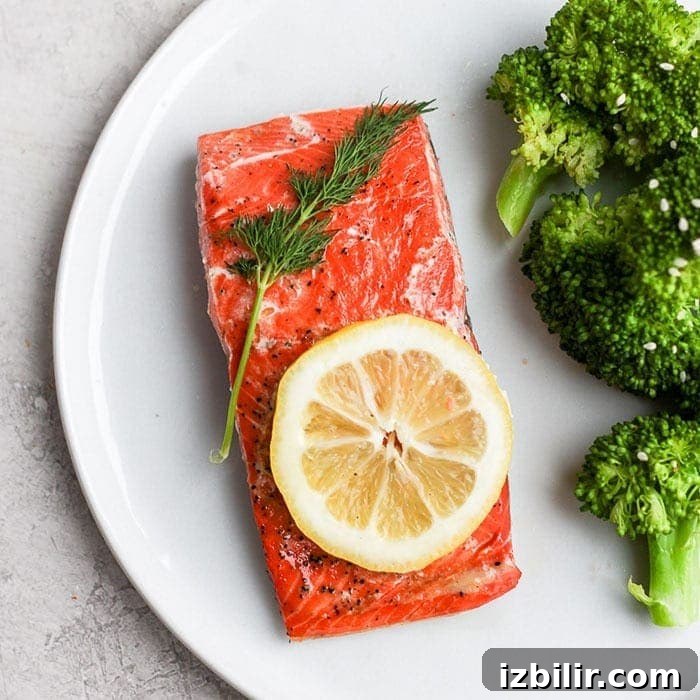
Sous Vide Salmon is a foolproof way to cook salmon to the exact doneness you prefer. Using a precise water bath, this method guarantees even, tender, flaky salmon every time. Follow these clear step-by-step instructions and you’ll have a restaurant-quality dinner on the table with minimal fuss.
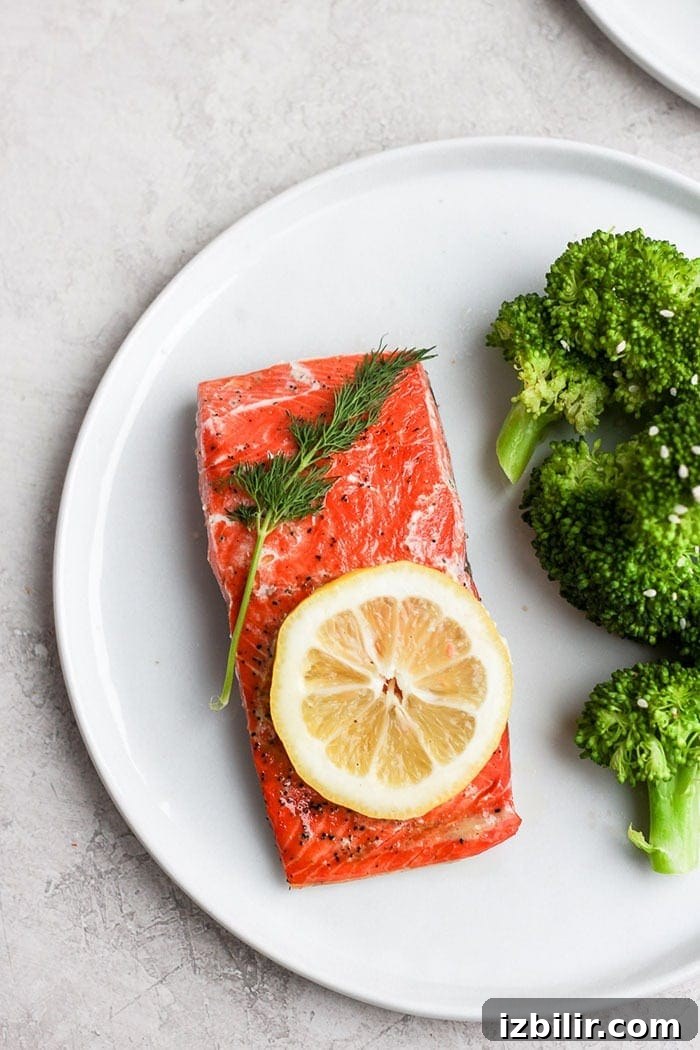
We Love Salmon!
Salmon is one of the most versatile and nutritious proteins you can cook. Rich in omega-3 fatty acids, high in protein and relatively low in saturated fat, salmon works equally well for quick weeknight meals and special-occasion dinners. Over the years we’ve developed many salmon recipes — from baked and grilled preparations to breakfasts and salads — and this sous vide version is our latest favorite for consistent, tender results.
- Maple Ginger Baked Salmon
- Smoked Salmon Breakfast Frittata
- Lemon Butter Seared Salmon
- Foil Packed Salmon with Grilled Pineapple Salsa
- Honey Sriracha Salmon
What is Sous Vide Cooking?
Sous vide (French for “under vacuum”) is a cooking technique that uses a temperature-controlled water bath to cook food slowly and precisely. Because the water stays at a set temperature, the food never exceeds that temperature, so the final doneness is exact edge-to-edge. This is especially useful for delicate proteins like salmon or for thicker cuts of meat where you want an even result.
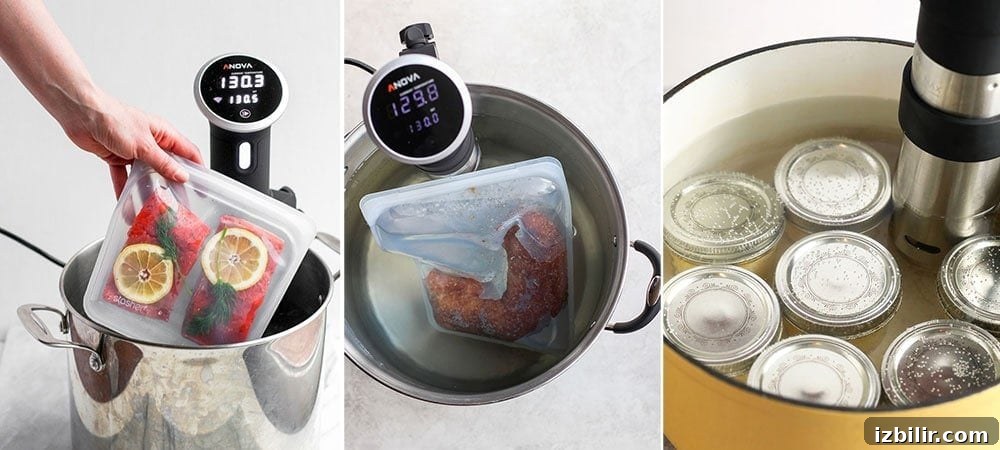
Typically, food is sealed in a vacuum bag or a reusable thermal bag with the air removed, then submerged in the water bath. The bag prevents direct contact with water while allowing heat to transfer evenly. In this recipe we use reusable Stasher bags, which work well for home sous vide cooking when sealed properly.
Sous vide also helps retain moisture and flavor, and it minimizes overcooking. For home use, a reliable immersion circulator such as the Anova Culinary 800W is a common choice for consistent results.
How to Make Sous Vide Salmon
Step 1: Prepare the Sous Vide Bath
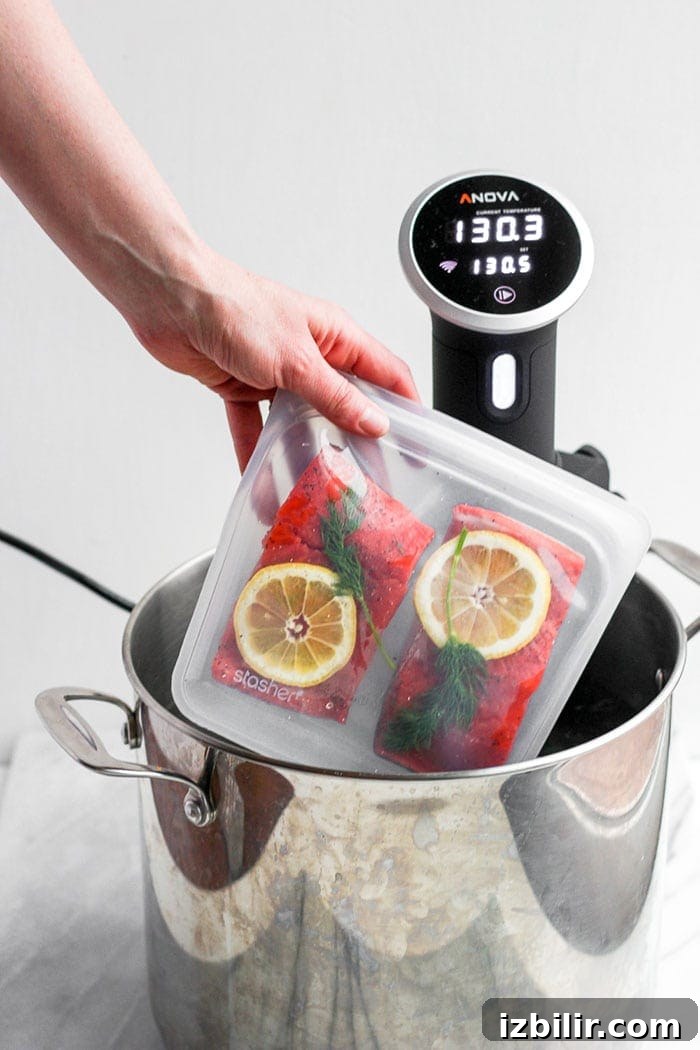
Fill a large pot or container with water deep enough to reach the water line on your sous vide circulator. Attach the circulator and set the temperature to 130°F (54.4°C) for medium-cooked salmon. If you prefer a different texture, lower temperatures (for example 120–125°F) yield a softer, sashimi-like texture, while slightly higher temps produce a firmer finish.
Step 2: Prepare the Salmon
Pat salmon filets dry with paper towels to remove excess moisture. Season the flesh side generously with salt and freshly ground black pepper. Top each filet with a sprig of fresh dill for a bright, herb-forward note.
Step 3: Bag the Salmon
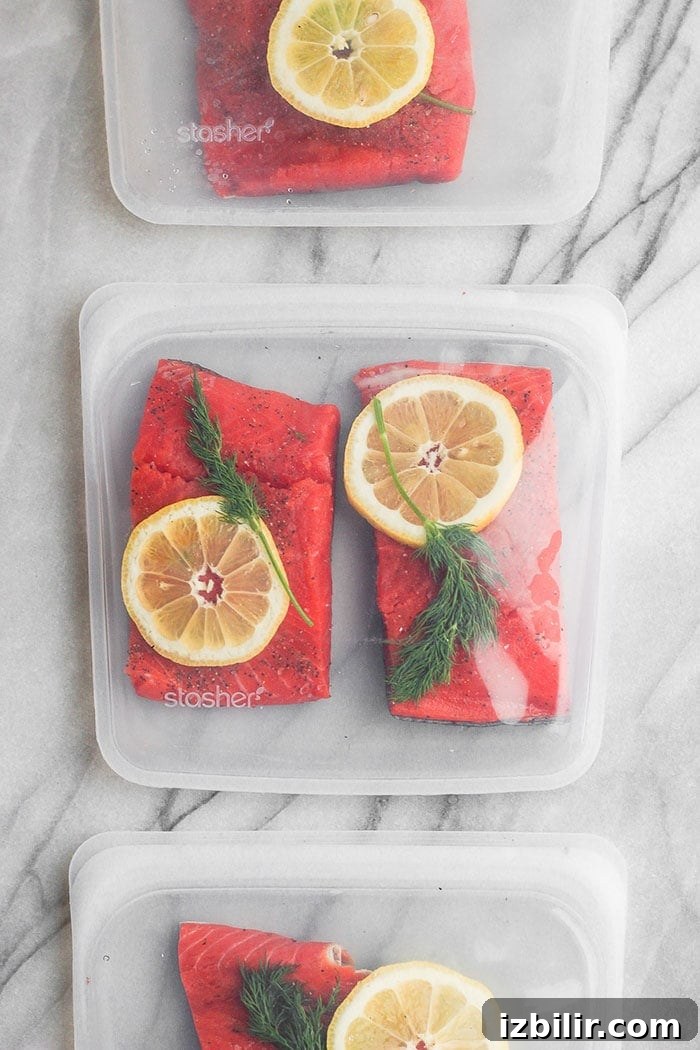
Place each 5-ounce filet into its own bag or place all filets into one larger bag. Add a squeeze of lemon juice to each portion, or tuck in a thin lemon slice. Remove as much air as possible and seal the bags securely. If using reusables like Stasher bags, press out the air carefully or use a water displacement method to minimize trapped air before sealing.
Step 4: Sous Vide
Submerge the sealed bags in the preheated water bath, ensuring each bag stays fully underwater and heat circulates around the fish. Cook for 45 minutes. Because sous vide is forgiving, short variations of a few minutes won’t dramatically affect texture, but try to stay close to the recommended time for best results.
Step 5: Finish for Color and Texture
When the timer ends, remove the bags from the bath and take the filets out carefully. Discard the dill sprigs. To add color and a slight crust, broil the salmon on high for 1–3 minutes until the top achieves a light golden color. Alternatively, heat a skillet over medium-high with 2 tablespoons of oil and sear the tops (skin-side up) for 1–2 minutes. If you have a culinary torch, a quick pass will also give attractive browning without overcooking the interior.
Step 6: Serve and Enjoy
Season lightly with additional salt and pepper after finishing. The salmon should flake easily with a fork and remain moist and tender inside. Serve immediately with your preferred sides.
What to Serve with Salmon
This sous vide salmon pairs well with a wide range of sides. Here are a few favorites that balance flavor and texture:
- Foil Pack Grilled Red Potatoes
- Superfood Detox Salad
- Rainbow Asian Noodle Salad
- Simple Asian Salad
- Steamed broccoli, roasted asparagus, or sautéed green beans
Light grains such as quinoa, farro, or a citrusy rice pilaf also complement the fish nicely.
More Sous Vide Recipes
- Cheesy Sous Vide Egg Bites
- 18 Sous Vide Chicken Breast Recipes
- Sous Vide Healthy Mongolian Beef
Want to learn more about precision cooking? A basic guide to sous vide covers temperature targets, safety tips, recommended equipment, and sealing methods so you can cook confidently.
Sous Vide Salmon
Grab your sous vide and make this salmon recipe ASAP. With these simple steps, your salmon will be perfectly cooked and ready to enjoy in under an hour.
By: Emily Richter
Prep: 5 mins • Cook: 45 mins • Total: 50 mins • Servings: 4

Ingredients
- 20 oz. salmon (four 5-oz. filets)
- 4 sprigs fresh dill
- Salt and pepper, to taste
- 1 medium lemon, juiced
Instructions
- Prepare a water bath large enough for your bags and set the sous vide to 130°F for medium-cooked salmon.
- Pat salmon filets dry with paper towels to remove excess moisture.
- Season the flesh side with salt and pepper and place a sprig of dill on each filet.
- Place each filet in its own bag or together in one bag. Squeeze lemon juice over each piece, remove air, and seal.
- Submerge the sealed bags and cook for 45 minutes, ensuring the fish stays underwater.
- Remove filets from the bags, discard dill, and finish under a high broiler for 1–3 minutes until the top browns. Alternatively, sear in a hot skillet or use a torch for browning.
- Season lightly to taste and serve immediately. Salmon should flake easily with a fork.
Tips & Notes
- To sear on the stovetop, heat a large skillet over medium-high and add 2 tablespoons olive oil. Sear skin-side up for 1–2 minutes until golden.
- If using a blow torch, brown quickly and evenly to avoid overheating the interior.
- When sealing reusable bags, use the water displacement method to remove air if you don’t have a vacuum sealer.
- Store cooked salmon refrigerated in an airtight container for up to 2 days. Reheat gently to preserve texture.
Nutrition
Nutrition information is an approximation.
- Calories: 258 kcal
- Carbohydrates: 1 g
- Protein: 36 g
- Fat: 11 g
- Fiber: 0 g
- Sugar: 0 g