
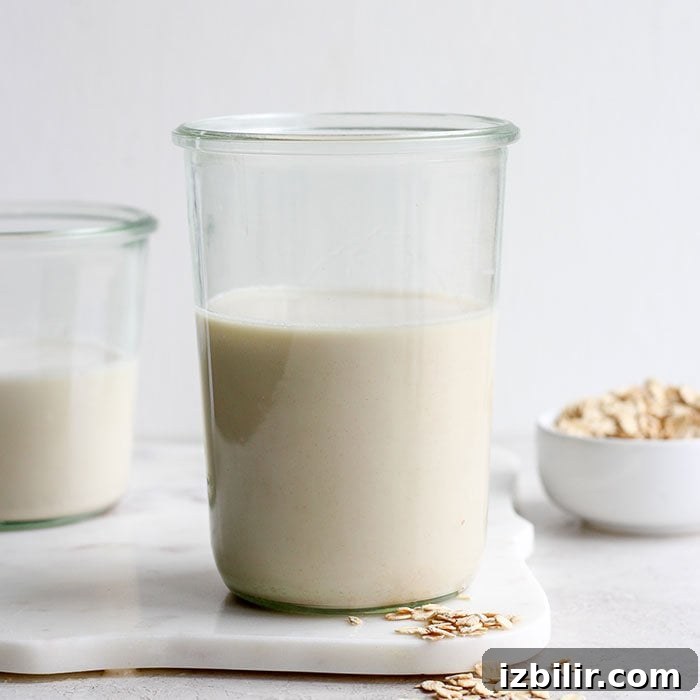
We’re sharing a simple, customizable recipe for homemade oat milk that delivers a creamy, wholesome non-dairy milk without added sugars or preservatives. Making oat milk at home is cost-effective, nutrient-friendly, and lets you control every ingredient so you get exactly the flavor and texture you prefer.
Read on for everything you need to know: ingredients, step-by-step instructions, useful tips to avoid sliminess, ideas for using oat milk, storage guidance, and nutrition information.
Best Nondairy Milk = Oat Milk!
Oat milk has become a favorite dairy-free alternative thanks to its naturally mild, slightly sweet, and slightly nutty flavor. It works well 1:1 in recipes that call for cow’s milk and performs exceptionally in coffee, smoothies, baking, and cereal. While store-bought oat milk can be convenient, making it at home is often quicker, cheaper, and avoids unnecessary additives.
Why use oat milk?
Oat milk is vegan, dairy-free, and a great option for those avoiding soy or nuts. It creates a rich, creamy texture that’s ideal for coffee drinks, oatmeal, smoothie bowls, and many baking recipes. Because it’s mild in flavor, oat milk blends well with both sweet and savory dishes.
Oat Milk Nutrition
Oat milk is naturally free from dairy, soy, and nuts. It tends to be lower in fat than some alternatives and can be a source of calcium and B vitamins when fortified. Typical values per 1 cup serving (homemade versions will vary):
- About 100–130 calories
- Approximately 1–2.5 g fat
- 2–3 g fiber
- 3–5 g protein
What You Need to Get Started
The core oat milk recipe requires just two ingredients: rolled oats and water. From there you can add a pinch of salt, a natural sweetener, or vanilla to taste. Below is a simple list of ingredients and tools that make the process easy.
- Old fashioned rolled oats (quick oats work in a pinch, but avoid instant flavored varieties)
- Water — filtered if possible for the cleanest taste
- Salt — just a pinch to balance flavors
- Medjool dates (optional) — natural, additive-free sweetness
- High-powered blender — a powerful blender helps break the oats up without over-processing
- Tea towel, nut milk bag, or cheesecloth — to strain the milk from oat pulp
- Mason jar or airtight container — for storing your oat milk in the fridge
Other Sweetener Options
If you prefer not to use dates, you can sweeten oat milk with a small amount of maple syrup or honey. Alternatively, omit any sweetener for an unsweetened oat milk that works well in savory dishes and coffee.
Tips and Tricks on How to Make Oat Milk
- Use a high-speed blender: a strong blender helps break the oats up quickly without grinding them into a paste.
- Do not soak the oats: soaking can create a slimy texture. Use dry oats straight from the container.
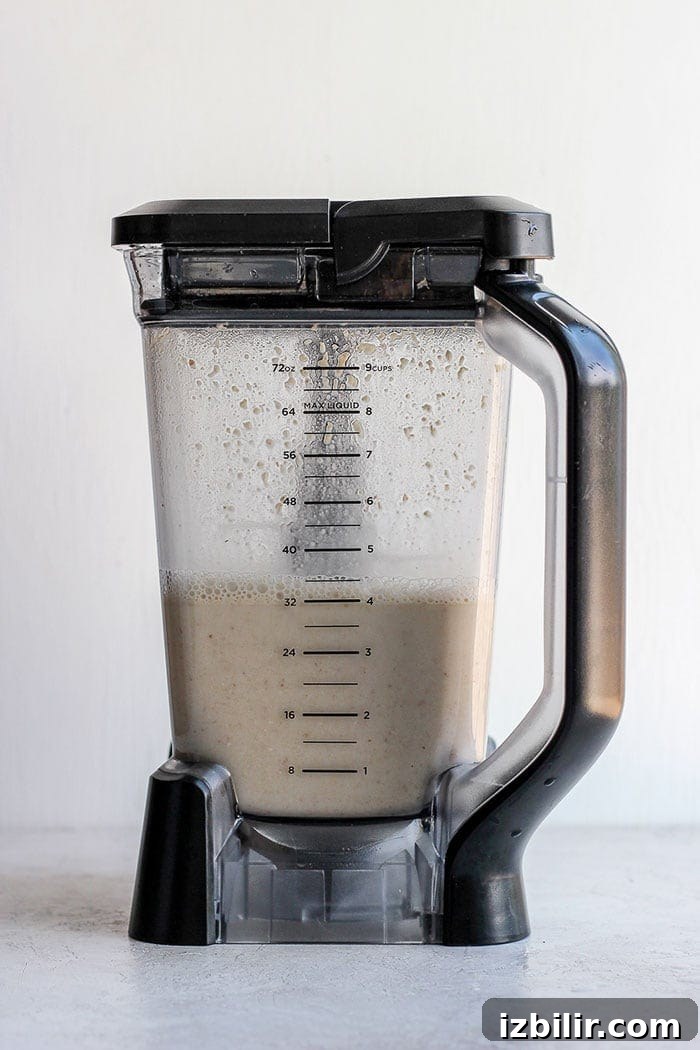
- Avoid over-blending: blend until the oats are broken up but not completely pulverized. Over-processing can produce a slimy or pulpy consistency.
- Blend sweetener with water first: if using dates or another sweetener, blend them with the water before adding oats so the sweetness disperses evenly.
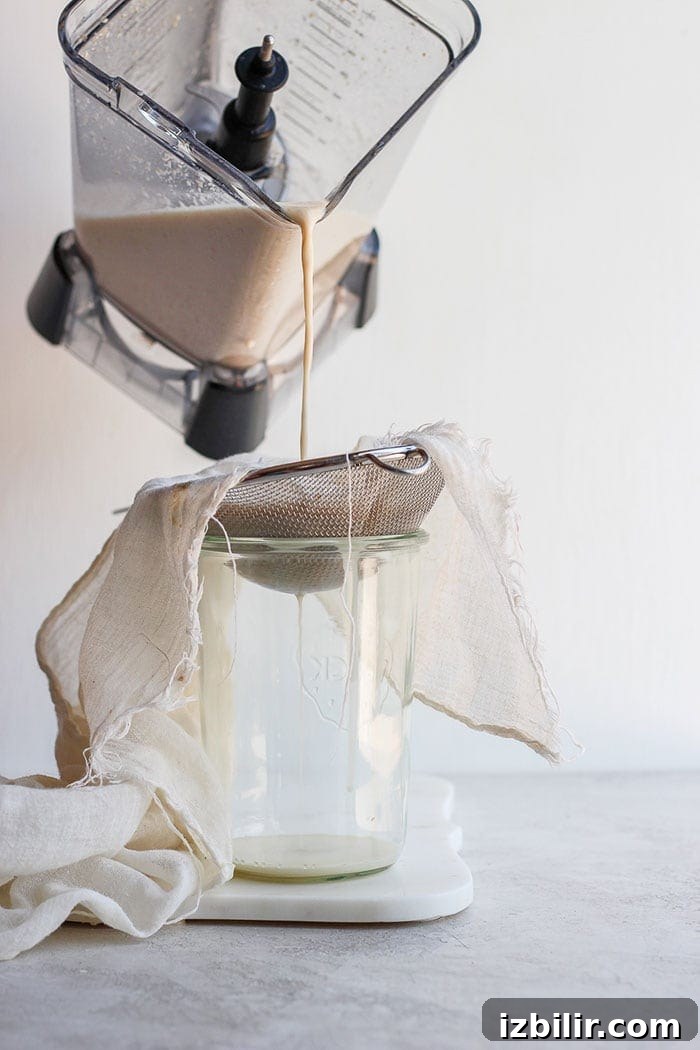
- Strain with a tea towel or nut milk bag: these tools are effective at separating the liquid from remaining oat fragments and give the smoothest result.
How to Use Oat Milk
Homemade oat milk is versatile. Here are a few favorite uses:
- Smoothies: blends smoothly into fruit and protein smoothies for added creaminess.
- Baking: substitute oat milk 1:1 for dairy milk in muffins, pancakes, and quick breads.
- Oatmeal and hot cereal: use oat milk to cook or finish oats for an extra creamy bowl.
- Coffee and lattes: froths reasonably well and adds body to coffee drinks.
Storage
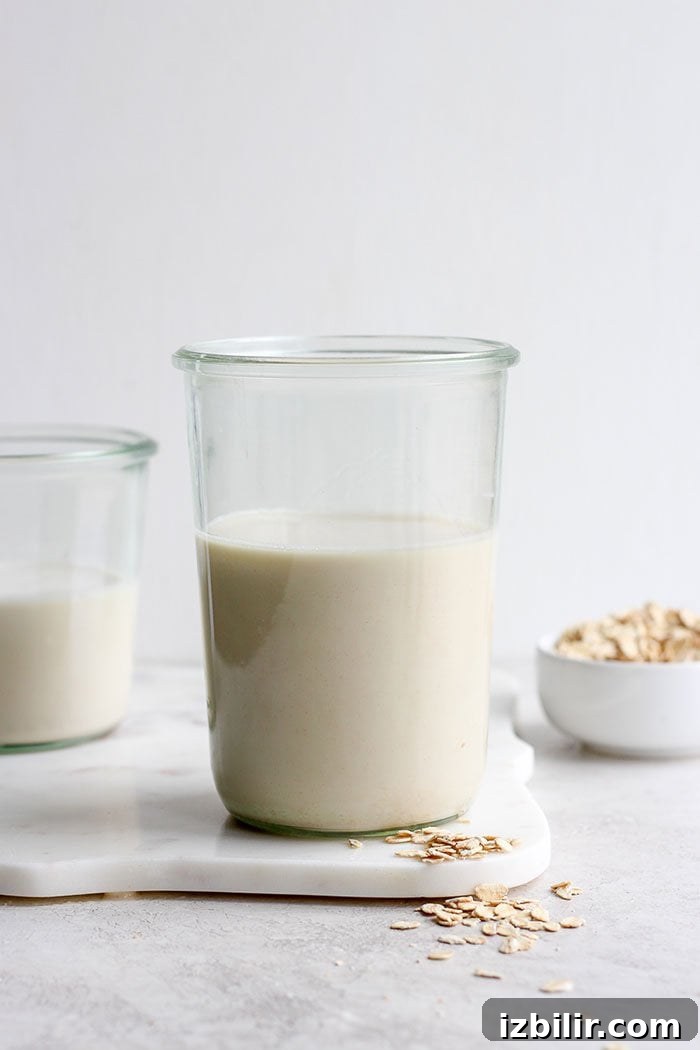
Transfer your freshly made oat milk into a clean mason jar or airtight container and refrigerate. Label with the date and use within 5–7 days for best flavor and freshness. Shake well before each use, as separation is natural.
More ways to enjoy oat milk
Ways to Use Oat Milk
- Oatmeal
- Overnight oats
- Post-workout smoothies
- Banana oat pancakes
How to Make Oat Milk (Simple Recipe)
This recipe makes about 4 servings and takes roughly 30 minutes including straining time. It produces smooth, never-slimy oat milk when you follow the method below.
Ingredients
- 4 cups water
- 2 Medjool dates, pitted (optional, for sweetness)
- 1/8 teaspoon salt
- 1 cup old fashioned rolled oats
Instructions
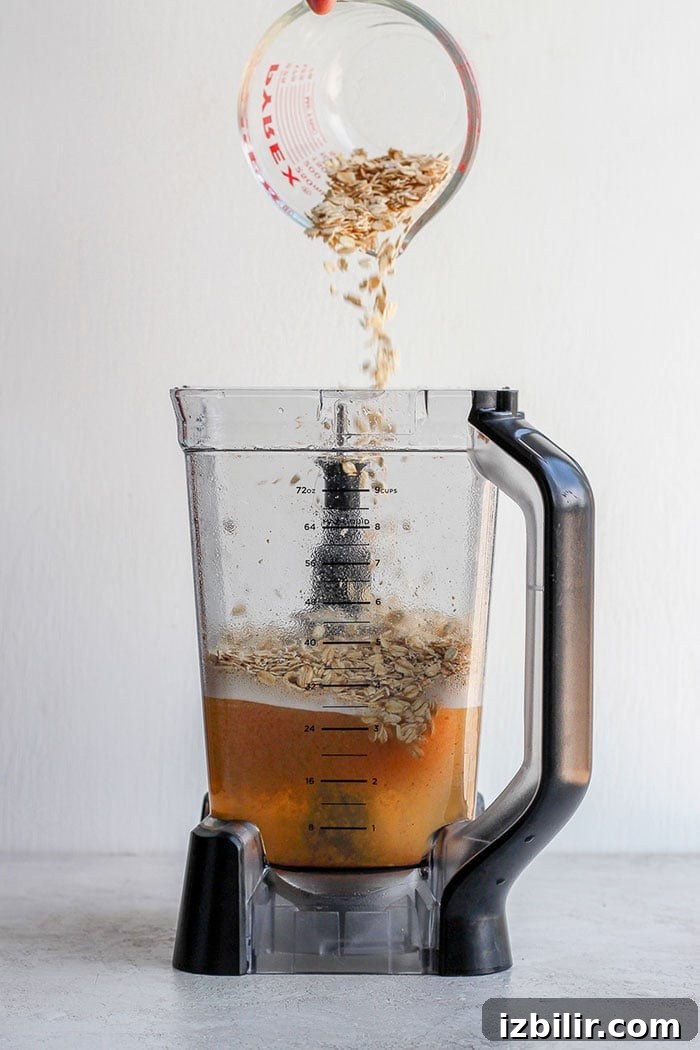
- Place the dates, water, and salt into a high-speed blender. Blend until the dates are fully broken up and the water is evenly sweetened.
- Add the rolled oats to the sweetened water and blend on high for about 45–60 seconds — just long enough to break the oats into small pieces but not so long that they become pulverized.
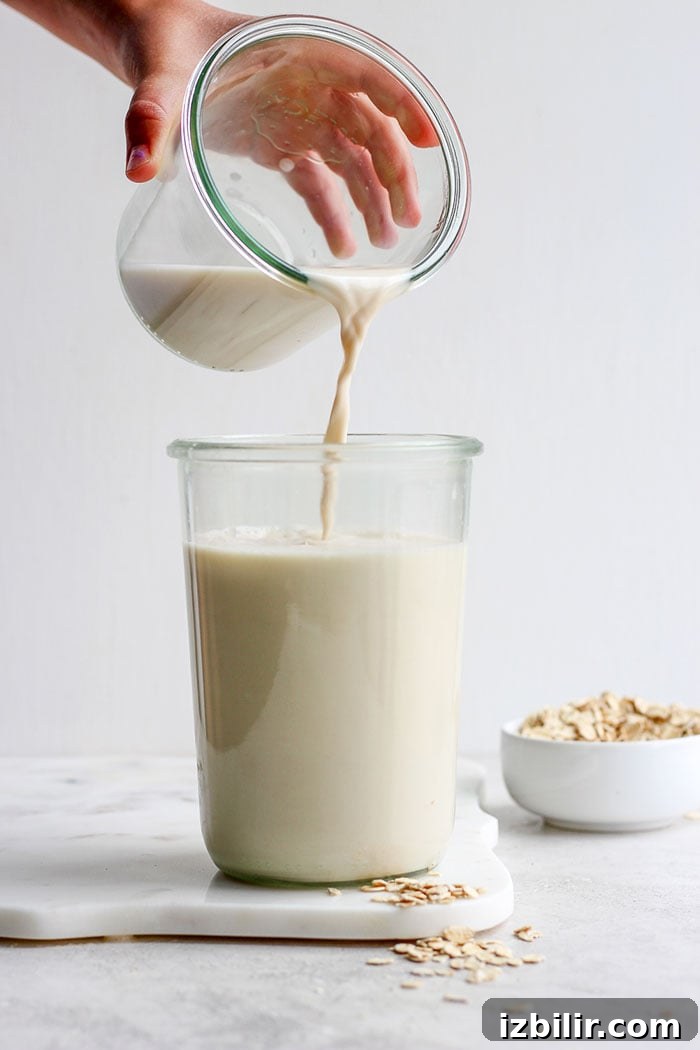
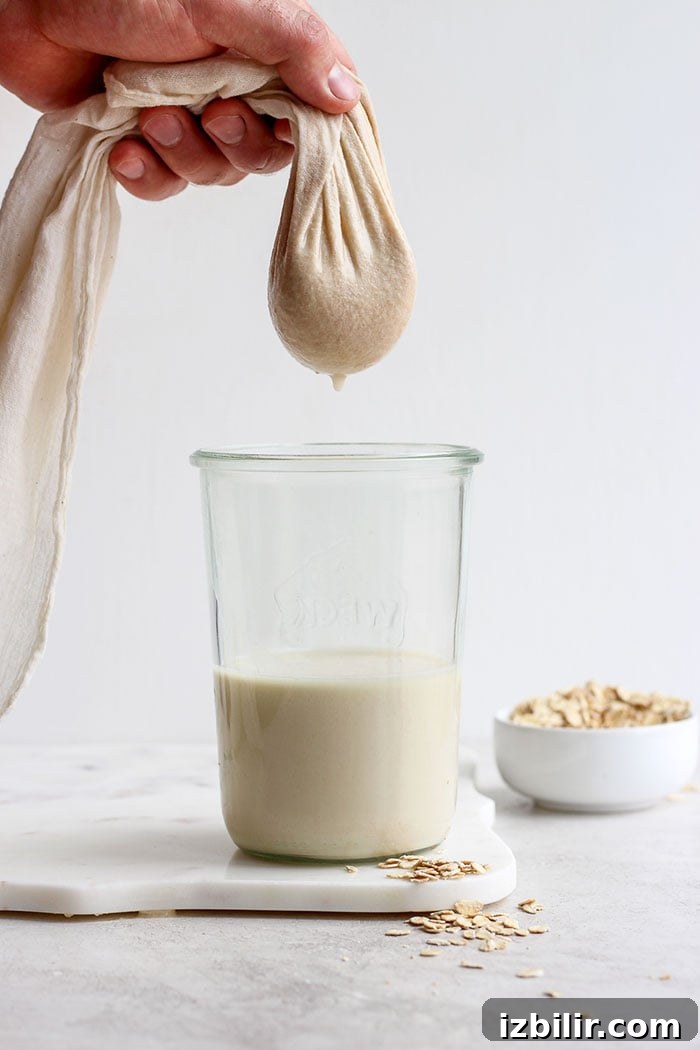
- Place a tea towel, nut milk bag, or very thin cheesecloth over the top of a tall jar or pitcher. Slowly pour the blended mixture through the cloth to strain out oat fragments. Gently squeeze the cloth to extract the liquid; be patient as this can take a few minutes.
- Transfer the strained oat milk to a sealed jar and refrigerate. Shake well before using. Use within 5–7 days.
Tips & Notes
- Sweetener: Omit the dates for unsweetened oat milk, or substitute maple syrup or honey to taste.
- Do not soak oats: soaking can create an undesirable slimy texture.
- Avoid over-blending: too much blending can make the milk thin and slimy rather than creamy.
Nutrition (approximate per serving)
These values are estimates and depend on exact ingredient choices:
- Calories: 108 kcal
- Carbohydrates: 23 g
- Protein: 3 g
- Fat: 1 g
- Fiber: 3 g
- Sugar: 8 g
Nutrition information is an approximation and will vary based on brands and portion sizes.
Photography by: The Wooden Skillet