

Be the star of your holiday table with these Lightened-Up Broccoli Cheddar Twice Baked Potatoes. They pair a creamy broccoli-cheddar filling with healthier swaps—Greek yogurt and milk instead of heavy cream and sour cream—so you get all the comfort with fewer indulgences. These twice-baked potatoes are simple to prepare, crowd-pleasing, and make a beautiful addition to any festive menu.

Delicious Family Holidays
I grew up in Milwaukee, just an hour and a half north of Chicago, and Thanksgiving was the family holiday—everyone piled into our house by Lake Michigan. Before cousins grew up and moved away, we’d host thirty people and several dogs. Those big gatherings and the favorite foods that came with them are why Thanksgiving is my favorite holiday. It’s a time when family comes together, no religious requirements needed—just good food and even better company.
These potatoes were born from that holiday spirit: comforting, shareable, and made to impress without being fussy. Even if your guest list has gotten smaller over the years, a dish like this feels festive and generous. Serve them alongside roasted meats, a hearty salad, or as part of a full holiday spread.
How to Make Twice Baked Potatoes
Traditional twice-baked potatoes rely heavily on cream, butter, and sour cream, but this lighter version swaps in almond milk (or your preferred milk), plain Greek yogurt for tang, and plenty of flavor from garlic powder, cheddar, and broccoli. A food processor makes the filling silky, but you can mash by hand if needed. The payoff is creamy, cheesy potato filling studded with tender broccoli florets and bacon for crunch and savoriness.
Step One: Preheat and Prep
Preheat the oven to 400°F. Lightly coat a baking sheet with nonstick spray or a thin layer of oil. Rub the russet potatoes with olive oil to coat evenly and season generously with salt and pepper. Roast the potatoes at 400°F for about 60 minutes, or until a fork slides through easily. Remove from the oven and let them cool for at least 30 minutes so they’re easier to handle.
Step Two: Cut and Hollow
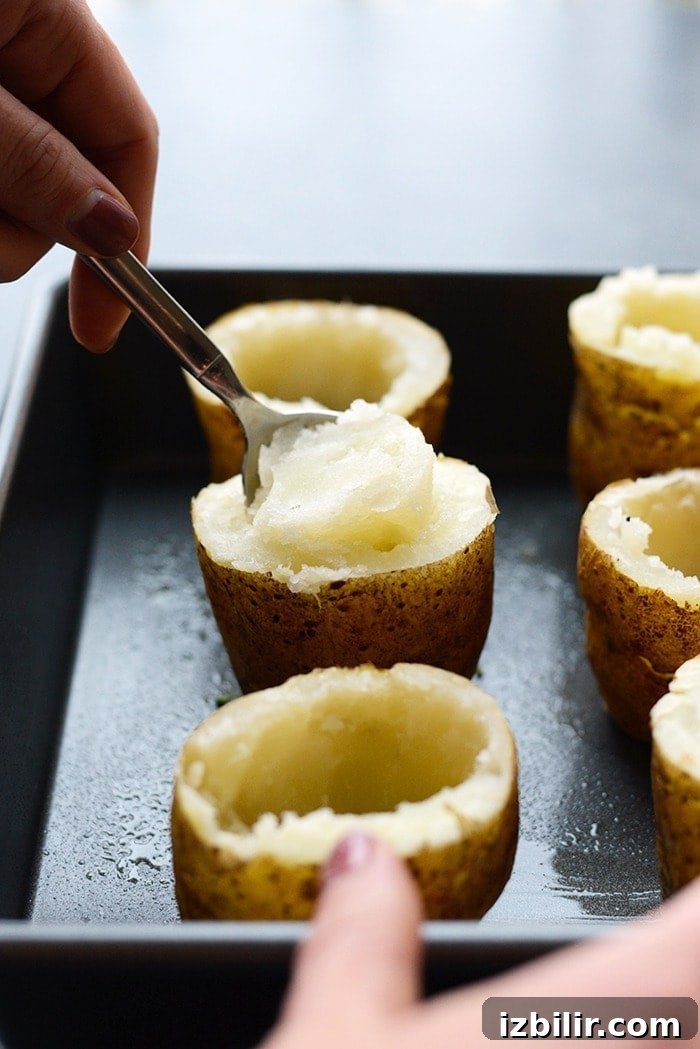
When the potatoes are cool, slice each one in half crosswise, then trim the bottoms slightly so each half stands upright on the baking sheet. Use a spoon to scoop out the flesh, leaving a sturdy wall of potato so the skins hold their shape. Set the scooped potato flesh aside for the filling.
Step Three: Make the Filling
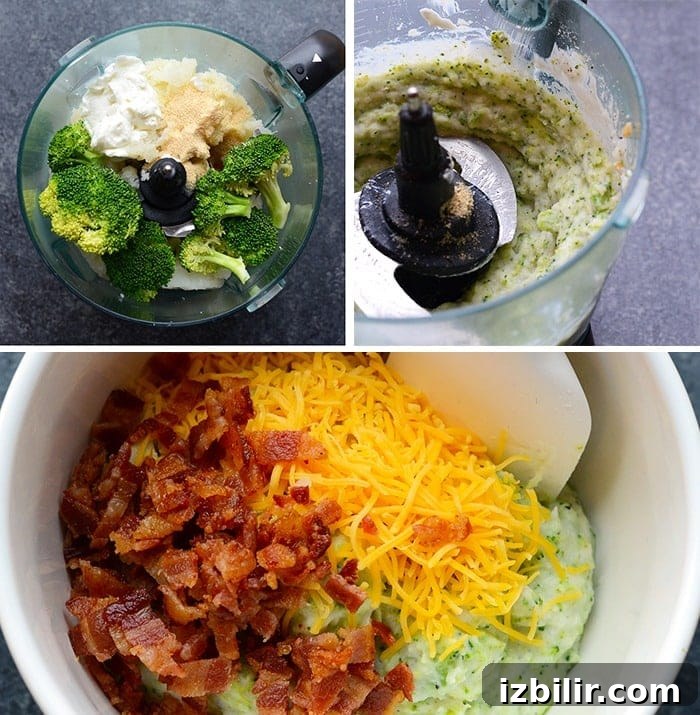
Steam about 2 cups of broccoli until tender—if using a microwave steam bag, two minutes is usually enough. Combine the steamed broccoli with the reserved potato flesh in a food processor. Add 1/2 cup plain Greek yogurt, about 2 tablespoons milk (dairy or plant-based), and 2 teaspoons garlic powder. Process until the mixture is smooth and the broccoli is finely chopped. Stir in shredded cheddar, bacon pieces, salt, and pepper to taste. The filling should be creamy, slightly chunky, and full of flavor.
Step Four: Stuff and Bake
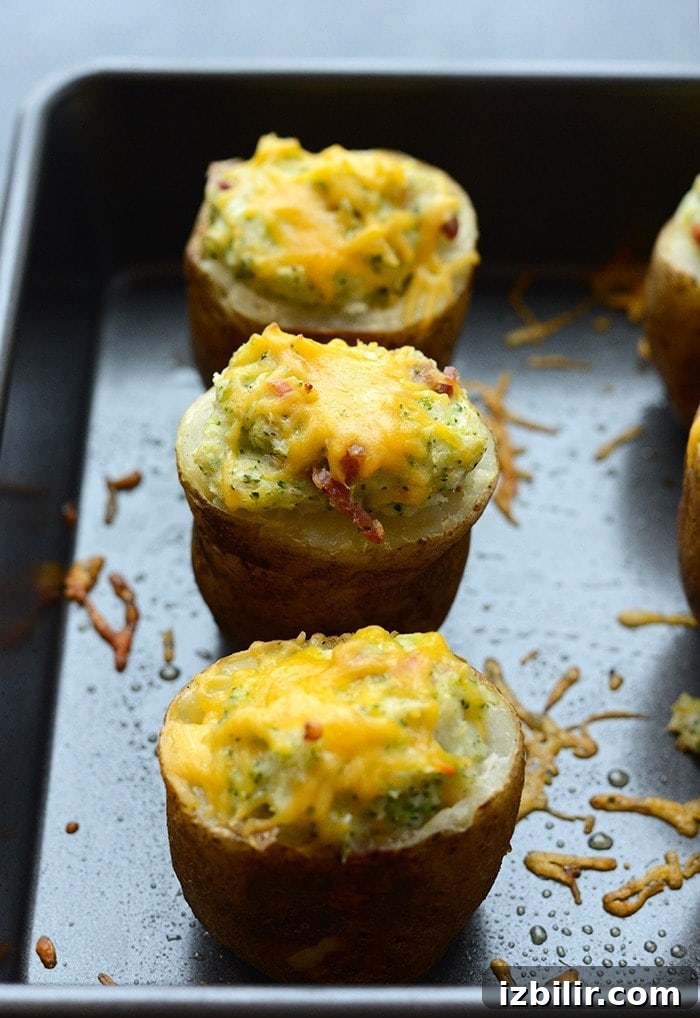
Generously fill each potato shell with the broccoli-cheddar mixture. You’ll likely have extra filling—save it for another use or enjoy it as mashed potatoes. Arrange the filled potatoes on a baking sheet and bake at 350°F for 15 minutes. Sprinkle with additional cheddar and bake 5 more minutes until the cheese melts and the tops are warm and golden.
Step Five: Serve and Enjoy
Serve these twice-baked potatoes hot, topped with extra bacon bits, a dollop of plain Greek yogurt, and a sprinkle of chives if desired. They make a hearty side, a vegetarian option if you omit the bacon, or a satisfying main for a lighter meal.
Storage and Freezing
Store leftover twice-baked potatoes in an airtight container in the refrigerator for up to 3 days. For longer storage, freeze them in an airtight container for up to 3 months. If you plan to freeze, bake them without the final layer of shredded cheese; add fresh cheese when reheating for the best texture. If you freeze with the cheese on, the texture may change slightly but tastes fine after reheating.
How to Reheat
If frozen, thaw completely in the refrigerator before reheating. Reheat refrigerated or thawed potatoes on a baking sheet at 350°F for 5–10 minutes, or until warmed through. Add a little extra shredded cheddar on top before reheating for an extra-melty finish.
What to Serve With These Potatoes
These twice-baked potatoes are an excellent holiday side. They pair well with roasted or sous-vide turkey, steaks, pork chops, or a vegetarian main. For lighter complements, serve with a bright salad—brussels sprout slaw, kale salad with seasonal fruit, or roasted carrots with a honey-balsamic glaze—to balance the richness of the potatoes.
Ingredients
For the Potatoes
- 3 large russet potatoes
- 2 tablespoons olive oil
- Salt and pepper, to taste
For the Filling
- 2 cups broccoli florets, steamed
- 1/2 cup plain Greek yogurt
- 2 tablespoons milk (any kind)
- 2 teaspoons garlic powder
- 4 pieces bacon, cooked and crumbled (optional)
- 1/3 cup shredded cheddar cheese, plus extra for topping
- 1/4 teaspoon salt, plus pepper to taste
Toppings
- Bacon bits
- Plain Greek yogurt or sour cream
- Chives or green onions
Instructions
For the Potatoes
- Preheat the oven to 400°F. Coat a baking sheet and rub each potato with olive oil; season with salt and pepper. Roast for about 60 minutes, until tender. Cool 30 minutes.
For the Filling
- Slice cooled potatoes in half and trim bottoms so they stand. Scoop out the flesh, leaving a sturdy shell.
- Steam broccoli until soft. Combine broccoli and potato flesh in a food processor with Greek yogurt, milk, and garlic powder; process until smooth.
- Stir in cheddar, bacon pieces, salt, and pepper.
- Fill the potato shells generously, place on a baking sheet, and bake at 350°F for 15 minutes. Top with extra cheddar and bake 5 more minutes.
Tips & Notes
- Nutrition facts exclude optional toppings.
- If you don’t have a food processor, mash the filling by hand and finely chop the broccoli before folding it in.
- Leftover filling is perfect for quick mashed potatoes or savory potato pancakes the next morning.
Nutrition (per serving)
Calories: 267 kcal, Carbohydrates: 36 g, Protein: 11 g, Fat: 10 g, Fiber: 4 g, Sugar: 4 g. Nutrition information is an estimate and should be used as a guideline.