
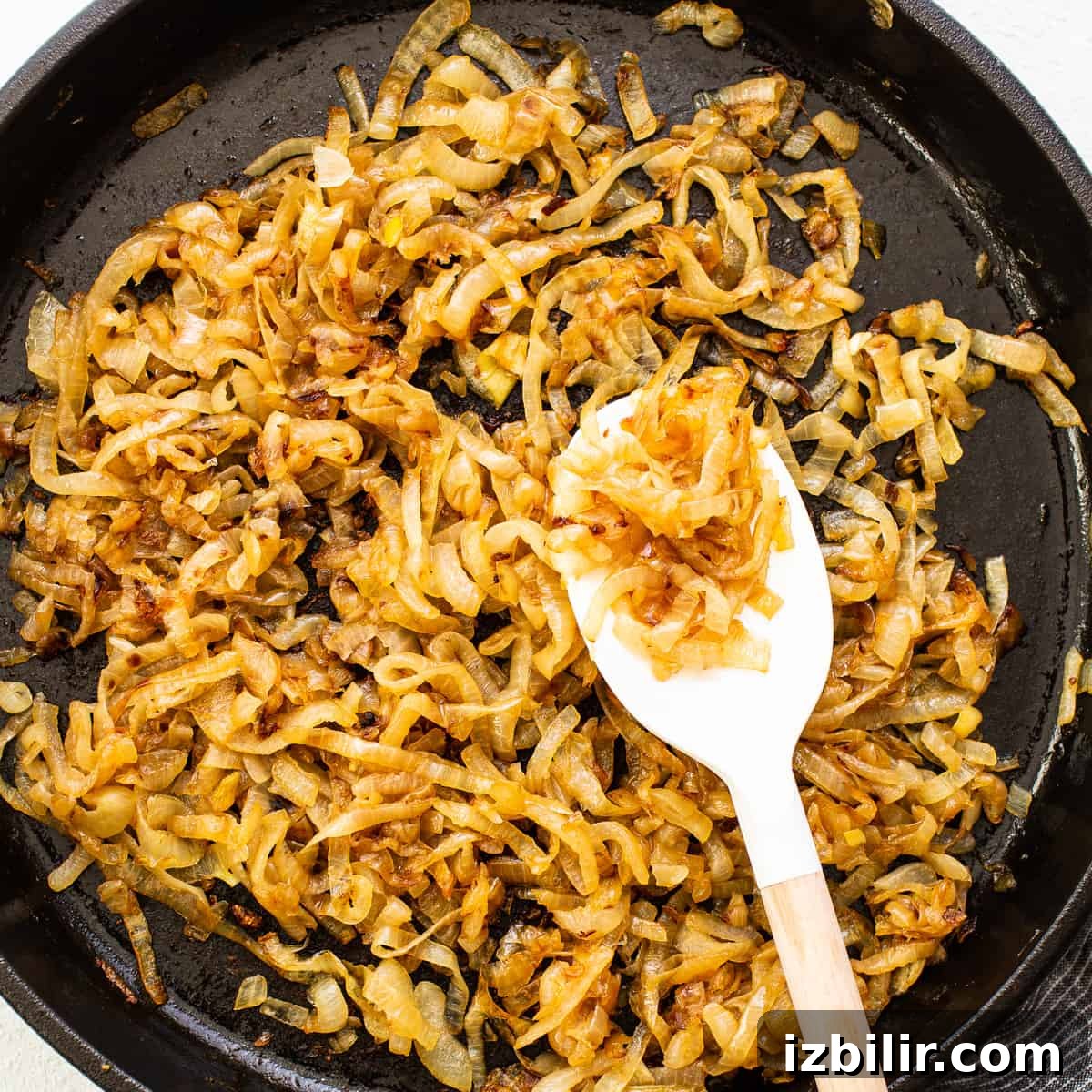
Caramelized onions are onions cooked slowly over low heat until they turn soft, deeply golden, and naturally sweet. Although they require patience and a low-and-slow approach, well-made caramelized onions elevate burgers, sandwiches, salads, pastas and grain bowls with rich, savory-sweet depth.
This guide explains how to caramelize onions on the stovetop, including slicing techniques, timing, expert tips, serving suggestions and storage methods. I often make a large batch to keep in the fridge for easy weeknight meals.
Why You’ll Love Them
Here are a few reasons to make a batch of caramelized onions:
- Meal-prep friendly: Make a large batch and use them throughout the week on a variety of dishes.
- Minimal ingredients: Onions, oil (or butter) and salt are all you need to achieve deep flavor.
- Naturally sweet: Slow cooking draws out the onions’ sugars, producing a jammy, sweet-savory result without added sweeteners.
Choosing the Best Onions
You can use any onion variety; each offers a slightly different result:
- Yellow onions: My go-to choice. They offer a balanced savory-sweet flavor and become richer as they cook.
- Sweet onions: Varieties like Vidalia have more natural sugars and caramelize into an even sweeter finish—great for burgers and sandwiches.
- White onions: Sharper raw, they mellow during cooking and break down a bit faster than yellow onions.
- Red onions: They develop a mild sweetness as they cook but lose much of their vibrant color. They work well when color is not a priority.
Pro tip: Shallots can also be caramelized; they’re naturally sweeter and will caramelize faster, so watch them closely.
How to Slice Onions
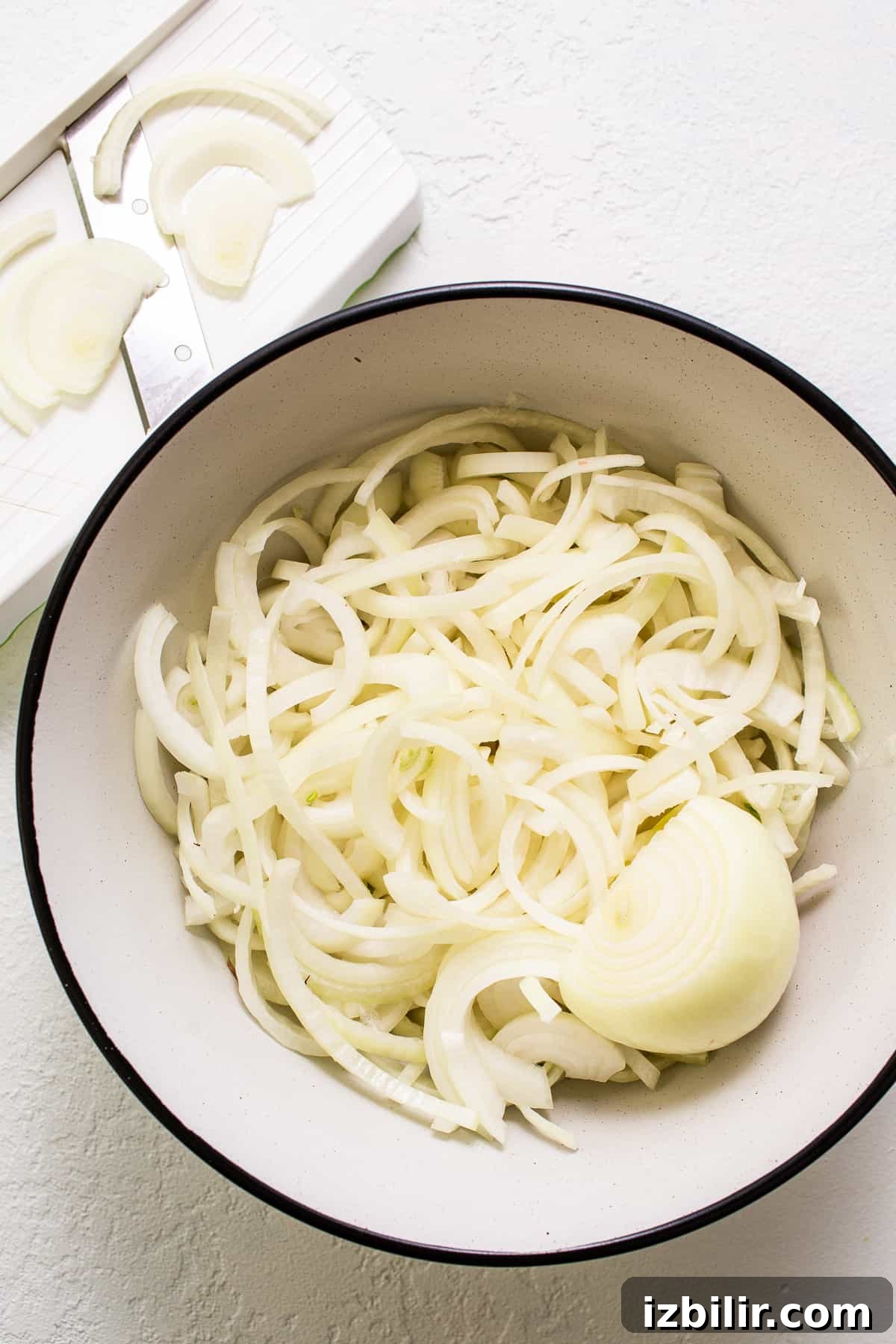
Slice onions into strips about ¼ to ½ inch thick. Slices that are too thin can break down and become mushy during the long cook; slightly thicker slices retain texture better. Aim for uniform slices so they cook evenly. For best texture, slice from root to tip to keep the onion fibers intact.
How to Make Caramelized Onions
Caramelized onions require patience. Cook them low and slow so they release moisture, soften, shrink and eventually turn a rich golden brown without burning.
Step 1: Cook the onions low and slow
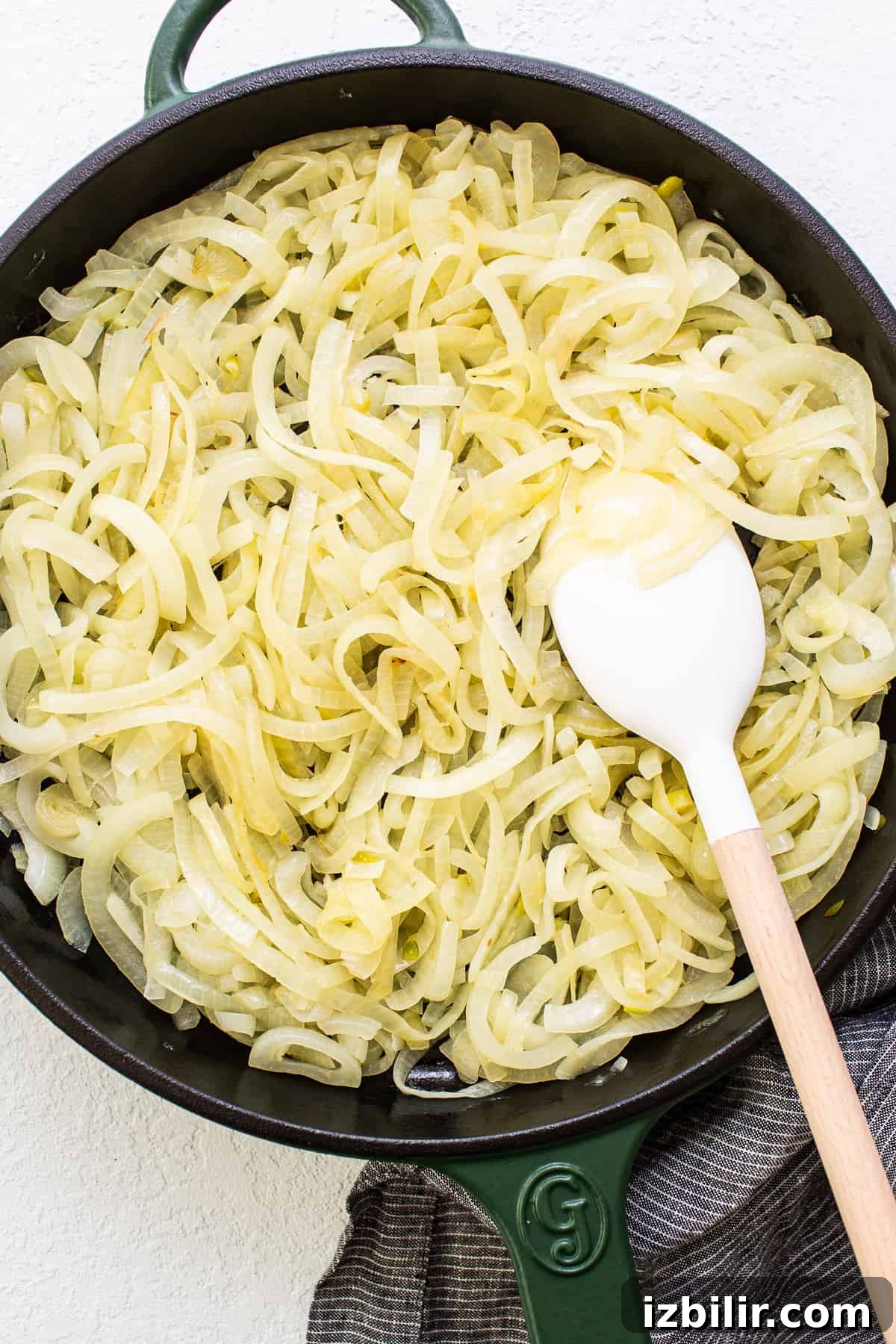
Heat oil in a large skillet over low heat and add the sliced onions. Toss to coat with oil and cook gently, stirring occasionally. The onions will release moisture and begin to soften. Don’t increase the heat to hurry the process—high heat will brown or burn the outside before the inside softens.
Step 2: Add salt later
After about 30 minutes, stir in salt. Delaying the salt helps control moisture release early on, allowing the onions to soften before they begin browning and developing deeper flavor.
Step 3: Let them caramelize
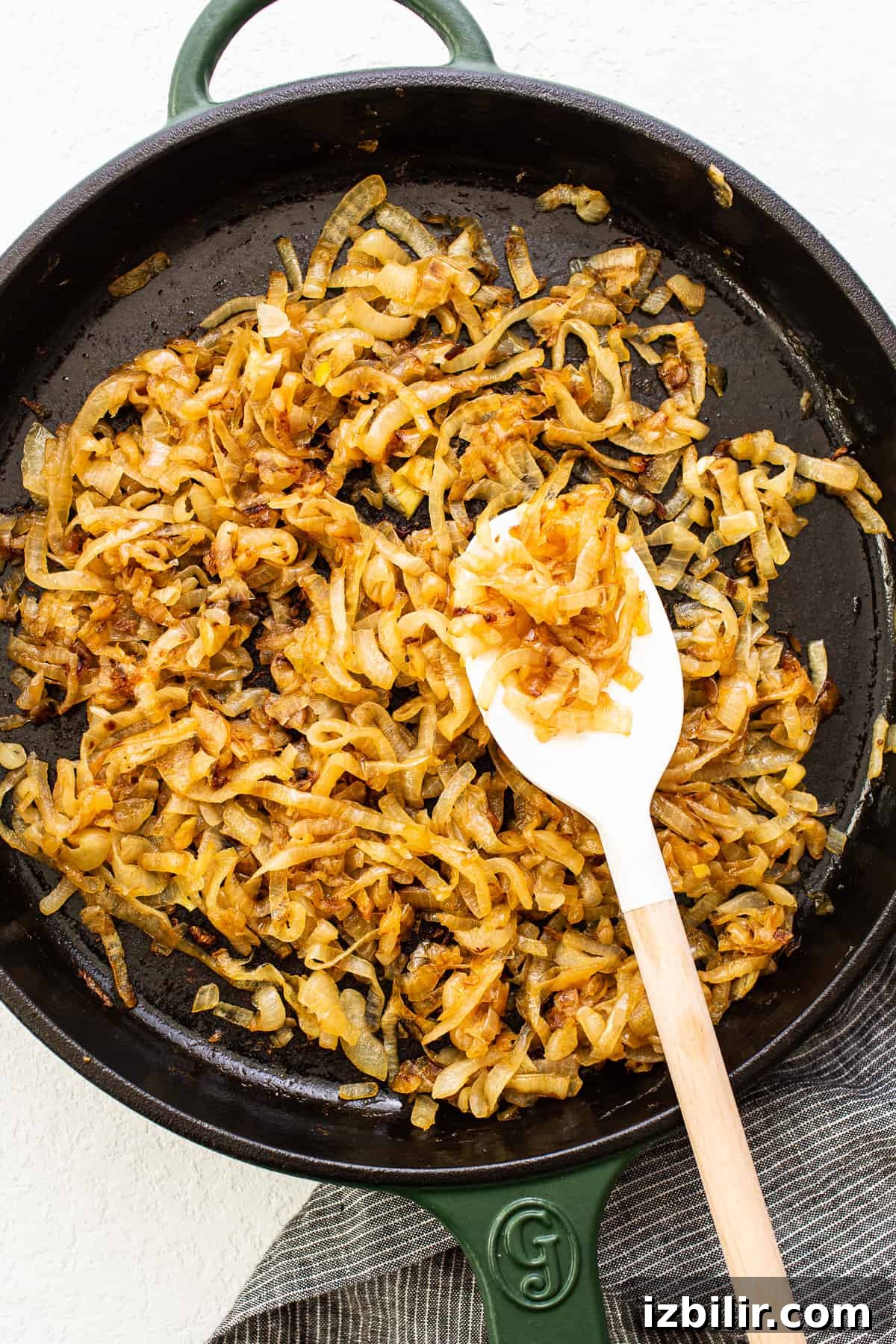
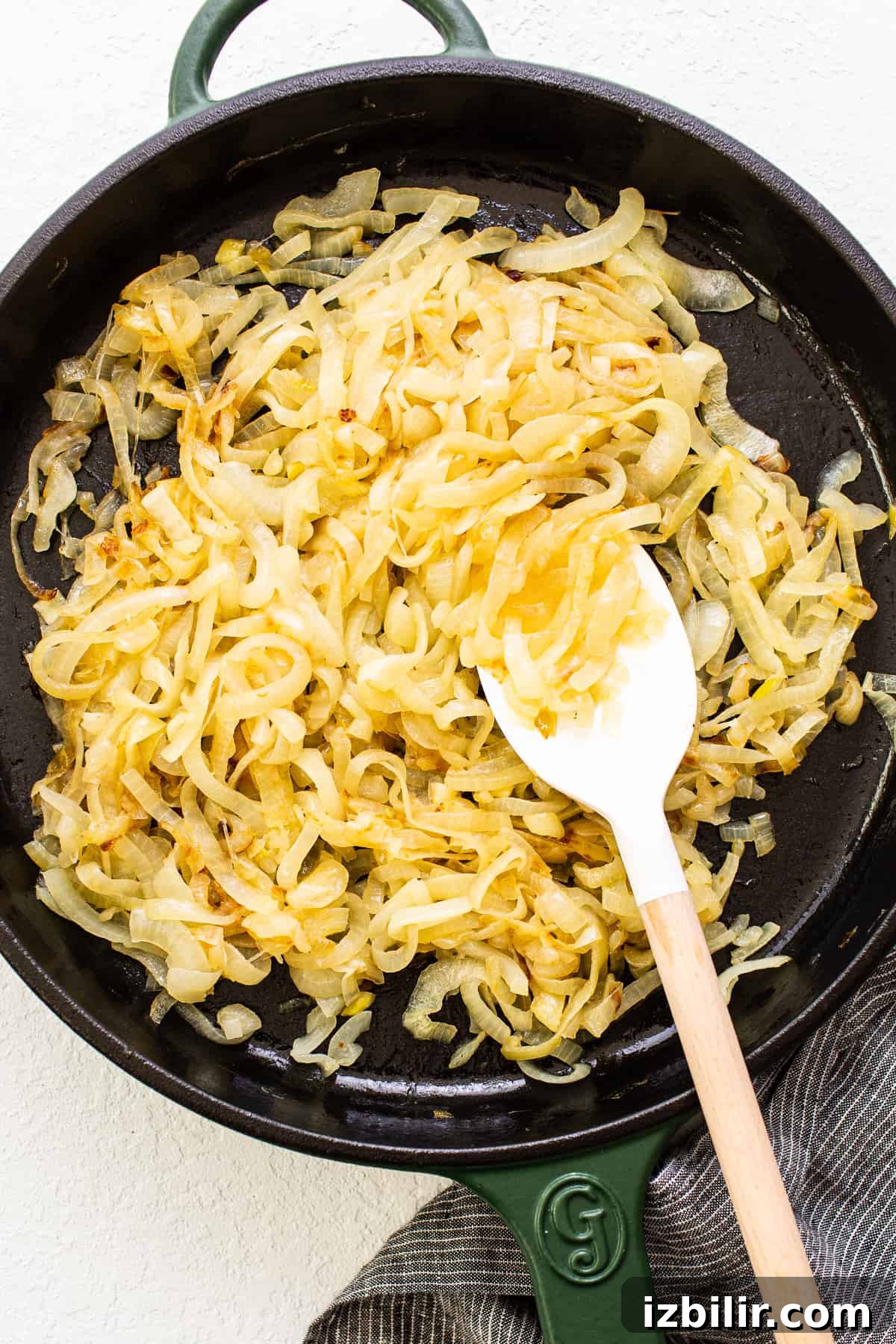
Continue cooking another 20–30 minutes, stirring occasionally. As excess moisture evaporates, the onions will gradually take on a golden brown color and a jammy texture with a rich, sweet aroma.
Step 4: Finish and serve
When deeply golden, very soft, and reduced in volume, the onions are done. They should be silky and jam-like with no sharp raw bite. Remove from heat and serve immediately or let cool for storage.
Expert Tips
- Don’t slice too thin: Very thin slices can disintegrate during the long cook.
- Salt timing: Add salt after initial softening to better control moisture and texture.
- Lower heat if early browning appears: Dark spots early on usually mean the heat is too high.
- Dealing with sticking: If onions stick, add a small splash of water to loosen them. A drizzle of oil can help if they appear dry.
- Pan choice: Cast iron holds steady heat, while nonstick pans behave differently—monitor closely regardless of cookware.
- Trust the timeline: Expect about 50–60 minutes total; color changes can occur later than you expect.
Serving Ideas
Caramelized onions add instant depth to many dishes. Keep a jar in the fridge for quick upgrades.
- Burgers & sandwiches: Spoon jammy onions over beef or veggie burgers, grilled cheese, or wraps.
- Breakfast: Fold them into omelets, frittatas or breakfast sandwiches.
- Pasta & grains: Stir into creamy sauces, toss with risotto, or add to noodle dishes for savory richness.
- Bowls & sides: Mix them into grain bowls, roasted vegetable sides, or spoon over baked potatoes and mashed potatoes.
- Dips & appetizers: Combine with cream cheese, goat cheese or roasted garlic for flavorful dips or crostini toppings.
How to Store & Freeze
Let caramelized onions cool completely, then transfer to an airtight container. Refrigerate up to 7 days. Reheat gently in a skillet over low heat for best texture; the microwave works in a pinch.
To freeze, place cooled onions in a freezer-safe container or bag for up to 3 months. For easy portions, freeze in an ice cube tray or silicone mold, then transfer the frozen portions to a bag. Thaw overnight in the refrigerator or add frozen portions directly to hot soups, sauces or skillets.
More Ways to Use Caramelized Onions
- BBQ chicken or pizza toppings
- Mushroom and Swiss-style burgers
- Stuffed chicken or roasted chicken accompaniments
- Brats and other savory sausages
FAQs
Do you caramelize onions in butter or oil?
Either works. Olive oil has a higher smoke point and is a reliable choice; butter adds a richer flavor. A combination of both is also common.
Can you caramelize onions faster?
True caramelized onions need low, slow cooking to develop deep flavor. High heat risks burning the outside before the onions fully soften.
Can I use white onions instead of yellow?
Yes. White onions mellow as they cook and will break down a bit faster than yellow onions, so monitor them closely.
Can I caramelize onions in the oven?
Oven methods can work well for larger batches and offer hands-off cooking. Roast on a baking sheet at a moderate temperature while stirring occasionally until deeply browned.
Recipe: Caramelized Onions
Servings: 6 · Prep: 10 mins · Cook: 1 hr · Total: 1 hr 10 mins
Ingredients
- 4 large yellow onions
- 3 tablespoons olive oil (or oil/butter combination)
- 1 ½ teaspoons salt
Instructions
- Slice all onions evenly into ¼–½ inch strips using a sharp knife or mandoline.
- Heat a large skillet over low heat and add the oil. When warmed, add the sliced onions and toss to coat.
- Cook on low for 30 minutes, stirring periodically so they soften evenly.
- After 30 minutes, add salt, stir, and continue cooking another 20–30 minutes over low heat, stirring occasionally, until deeply golden and jammy.
- Remove from heat when they reach a silky, reduced consistency and serve or cool for storage.
Tips & Notes
- Onions will reduce significantly in volume as they caramelize.
- Season simply with salt for classic caramelized onions. Near the end of cooking you can add a splash of balsamic vinegar, black pepper, or fresh herbs if desired.
- Some recipes call for a pinch of brown sugar to speed browning; allowing the onions’ natural sugars to develop will yield a more authentic flavor.
Nutrition (approx.)
Per serving: Calories: 91 kcal · Carbohydrates: 7 g · Protein: 1 g · Fat: 7 g · Fiber: 1 g · Sugar: 3 g
Nutrition information is an approximation and should be used as a guide only.
Photography: photos in this post were taken by Ashley McGlaughlin.