
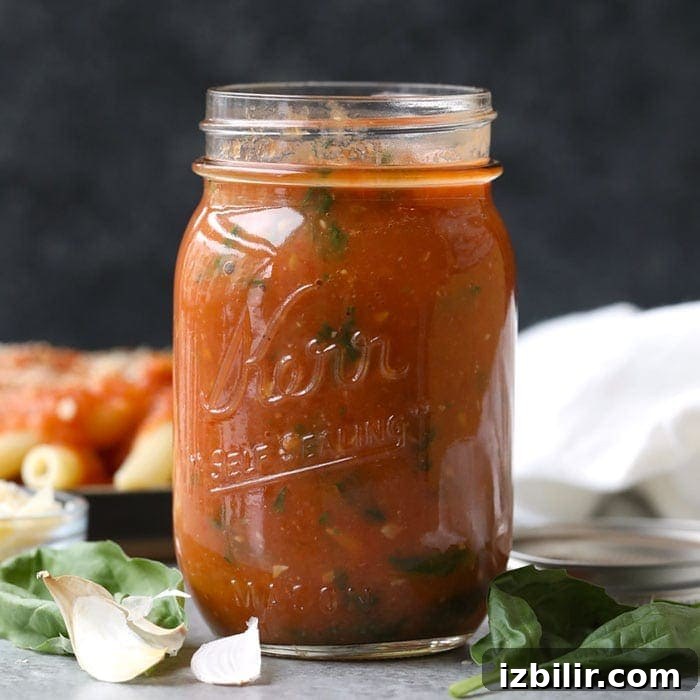
Make your own homemade roasted tomato sauce using fresh, juicy tomatoes from the garden or the market. Roast the tomatoes until they caramelize, then puree them with garlic, olive oil, and fresh basil for a rich, vibrant sauce perfect for pasta, chicken parmesan, pizza, and more.
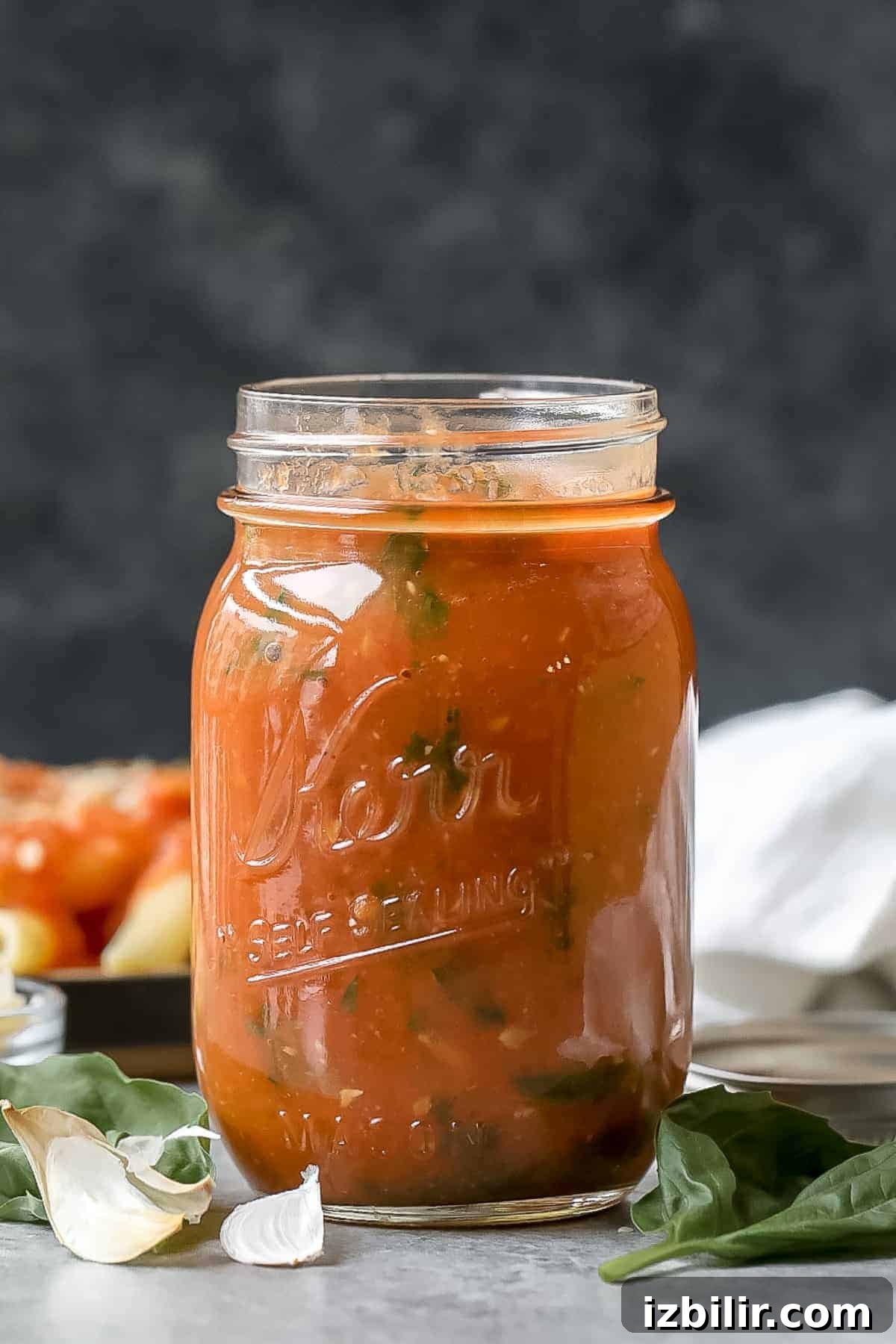
Make Your Own Roasted Tomato Sauce!
This roasted tomato sauce is simple, fresh, and full of bright, layered flavor. By roasting the tomatoes and garlic you concentrate their sweetness and add a subtle caramelized note. The final puree, finished with fresh basil and a splash of apple cider vinegar, is versatile enough to use on pasta, baked dishes, pizzas, or as a dipping sauce.
This recipe uses fresh tomatoes rather than canned, giving you a cleaner, more vibrant tomato flavor. It’s an easy method that yields about 3 cups of sauce — enough for a family meal or for preserving in the fridge or freezer for later.
Homemade
Marinara Sauce
The most delicious marinara can be made quickly with chunky roasted tomatoes, onion, and garlic. This roasted tomato sauce is a fresh take on classic marinara.
What is tomato sauce?
Tomato sauce is a cooked tomato preparation made by reducing tomatoes with salt and other aromatics until a flavorful, cohesive sauce forms. It’s a foundation for many Italian and global dishes and can be adapted to be chunky or smooth, simple or complex.
What kind of tomatoes do you need for homemade tomato sauce?
Any tomato will work, but medium to large tomatoes (plum or beefsteak varieties) are recommended because they’re easier to halve and peel after roasting. If you use small tomatoes, reduce the roasting time and monitor them closely.
What You Need for Oven Roasted Tomato Sauce
Seven simple ingredients give this sauce its depth and balance. All are easy to find and work together to highlight the natural flavor of the tomatoes.
- Tomatoes: 8 medium to large tomatoes are ideal; they’re easiest to peel after roasting.
- Olive oil: A couple of tablespoons help roast and tenderize the tomatoes while adding richness.
- Garlic cloves: Roasted garlic becomes sweet and mellow—don’t skip it.
- Salt and pepper: Season to taste. Add gradually and taste as you blend.
- Fresh basil: Adds brightness and herbal aroma; leave in larger leaves for texture or blend finer if preferred.
- Apple cider vinegar: A teaspoon balances and brightens the sauce, helping flavors pop.
Quick tip!
If you use smaller tomatoes, reduce the roasting time so they don’t dry out or burn.
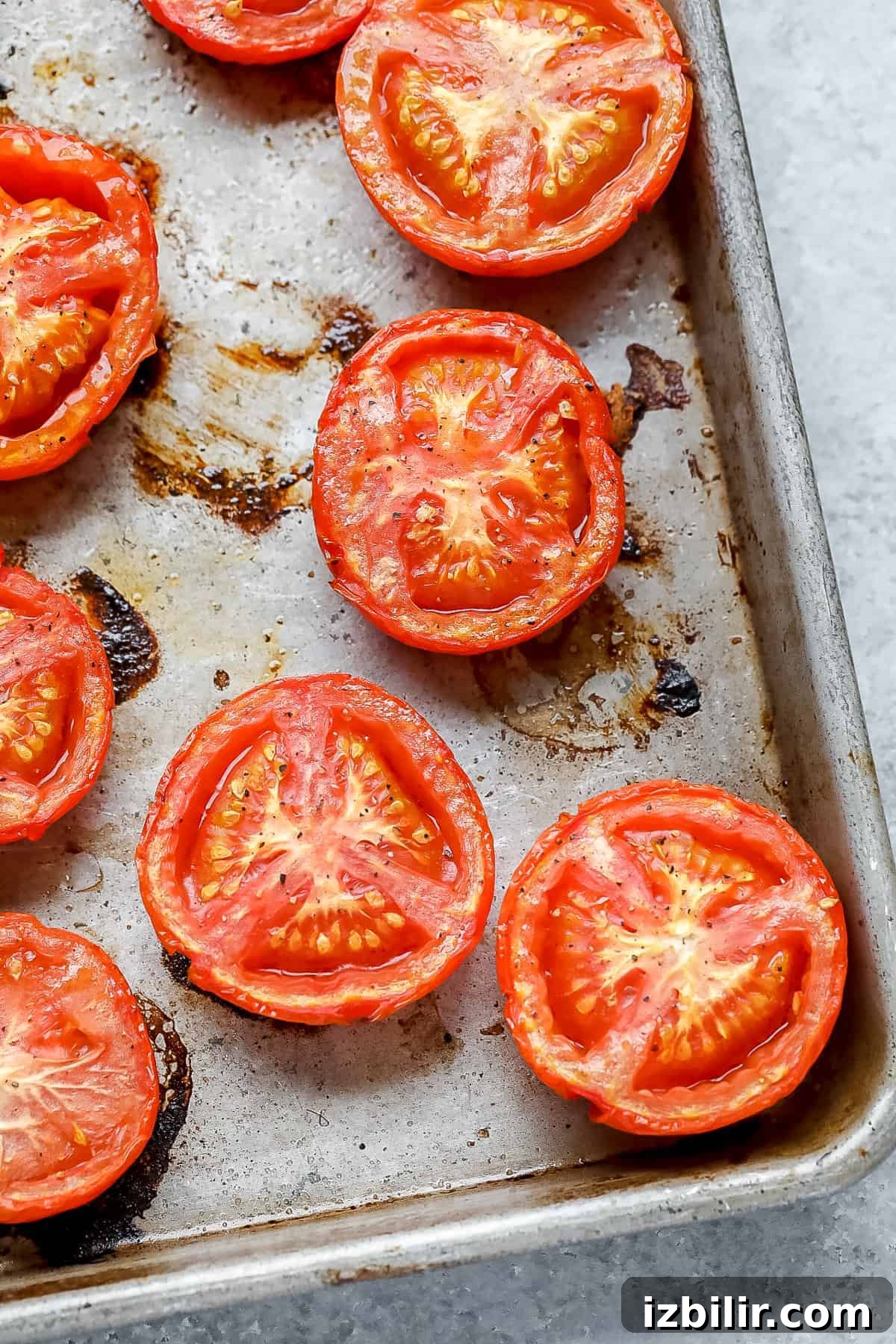
Roasting Tomatoes for Sauce
Step 1: Oil & Roast Tomatoes
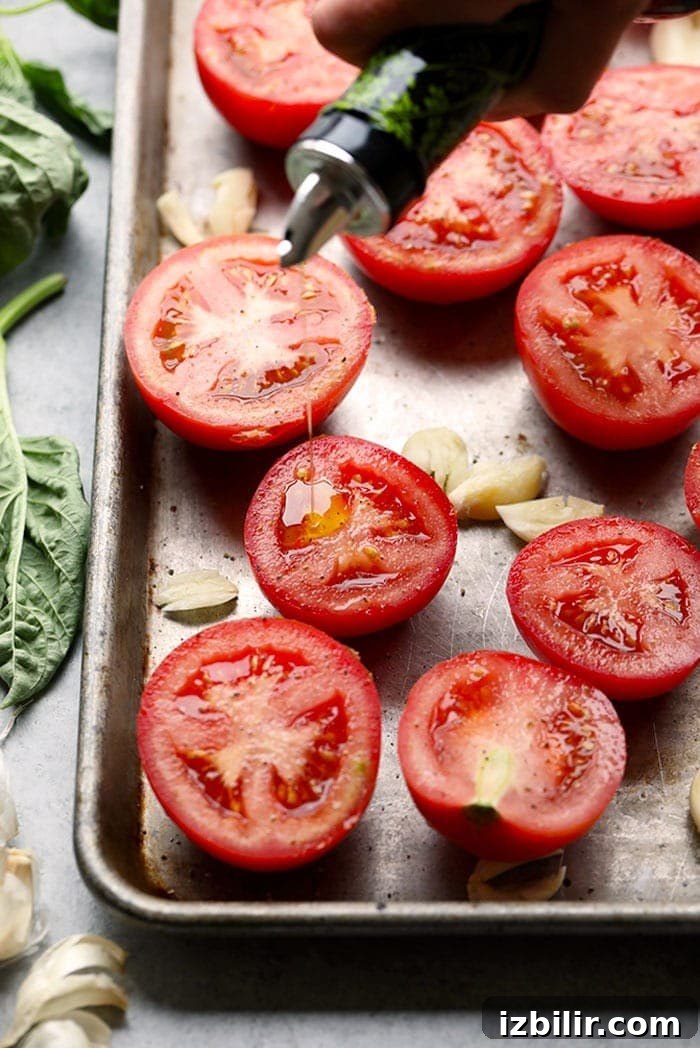
Preheat the oven to 400ºF (200ºC). Wash and halve the tomatoes, then place them cut-side up on a baking sheet. Drizzle generously with olive oil and season with salt and a little pepper. Roast for about 30 minutes, then add the garlic cloves to the pan and roast an additional 20–30 minutes until the tomatoes begin to collapse and brown at the edges. Keep an eye on the garlic to prevent burning.
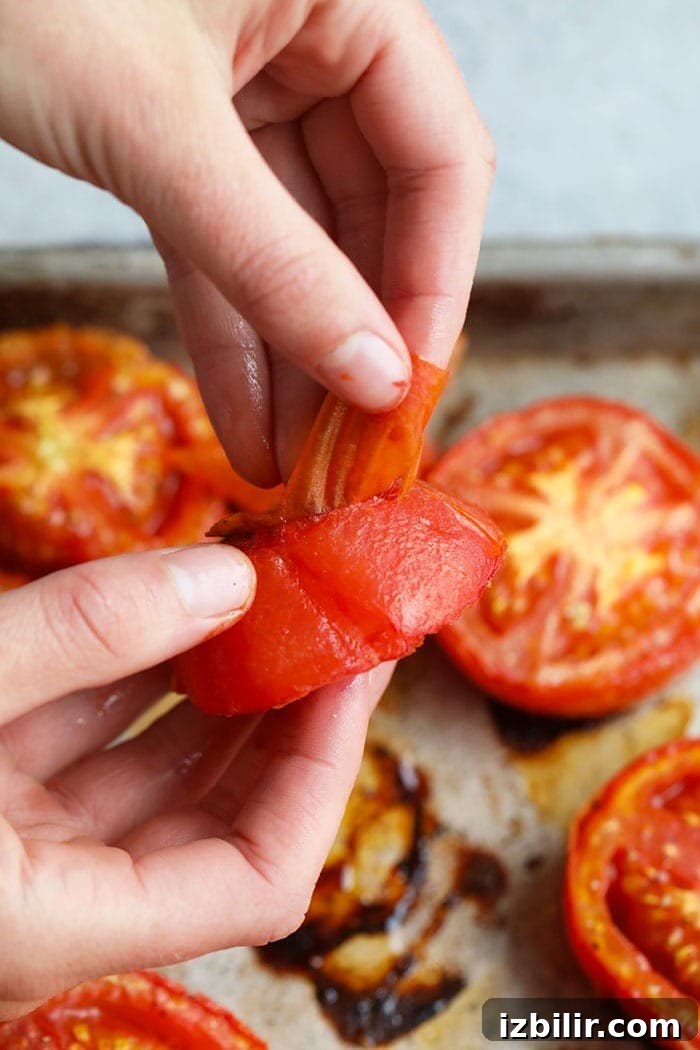
Step 2: Peel Tomatoes
Allow the roasted tomatoes to cool for a few minutes so they are safe to handle. The skins should slip off easily—discard the skins. Peeling ensures a smooth, silky texture; roasted skins can become tough if left in.
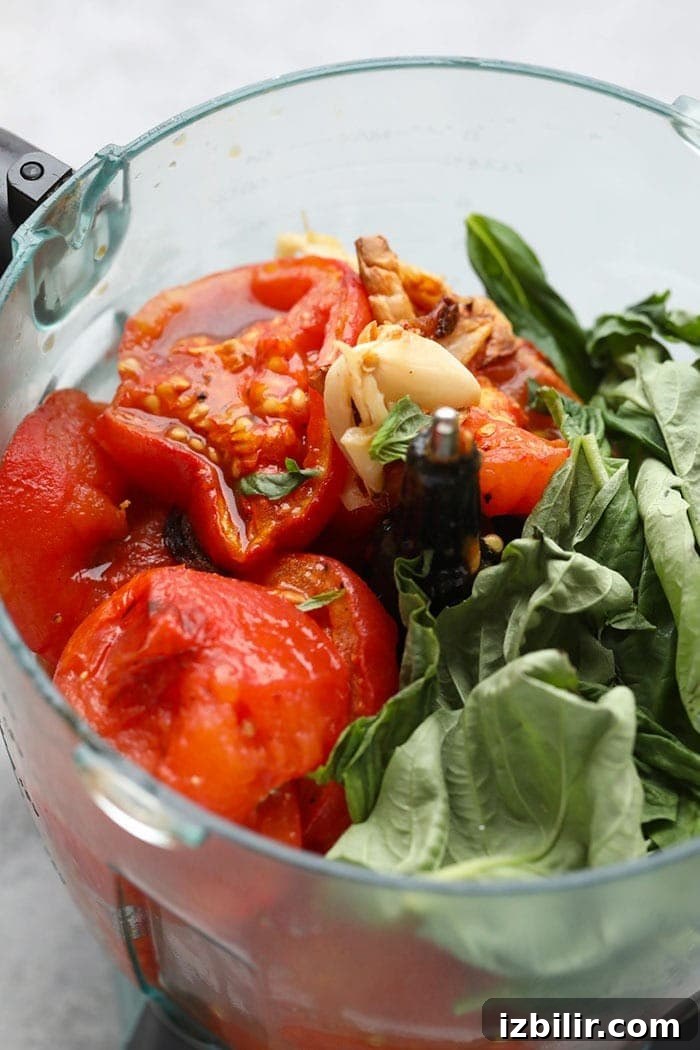
Step 3: Blend
Transfer the roasted tomatoes, roasted garlic, basil, and apple cider vinegar to a high-speed blender or food processor. Blend until smooth or to your desired texture. Taste and adjust salt and pepper. For a touch of sweetness, optionally add a teaspoon or two of maple syrup, but this recipe is designed to avoid added sugar.
Step 4: Serve or Store
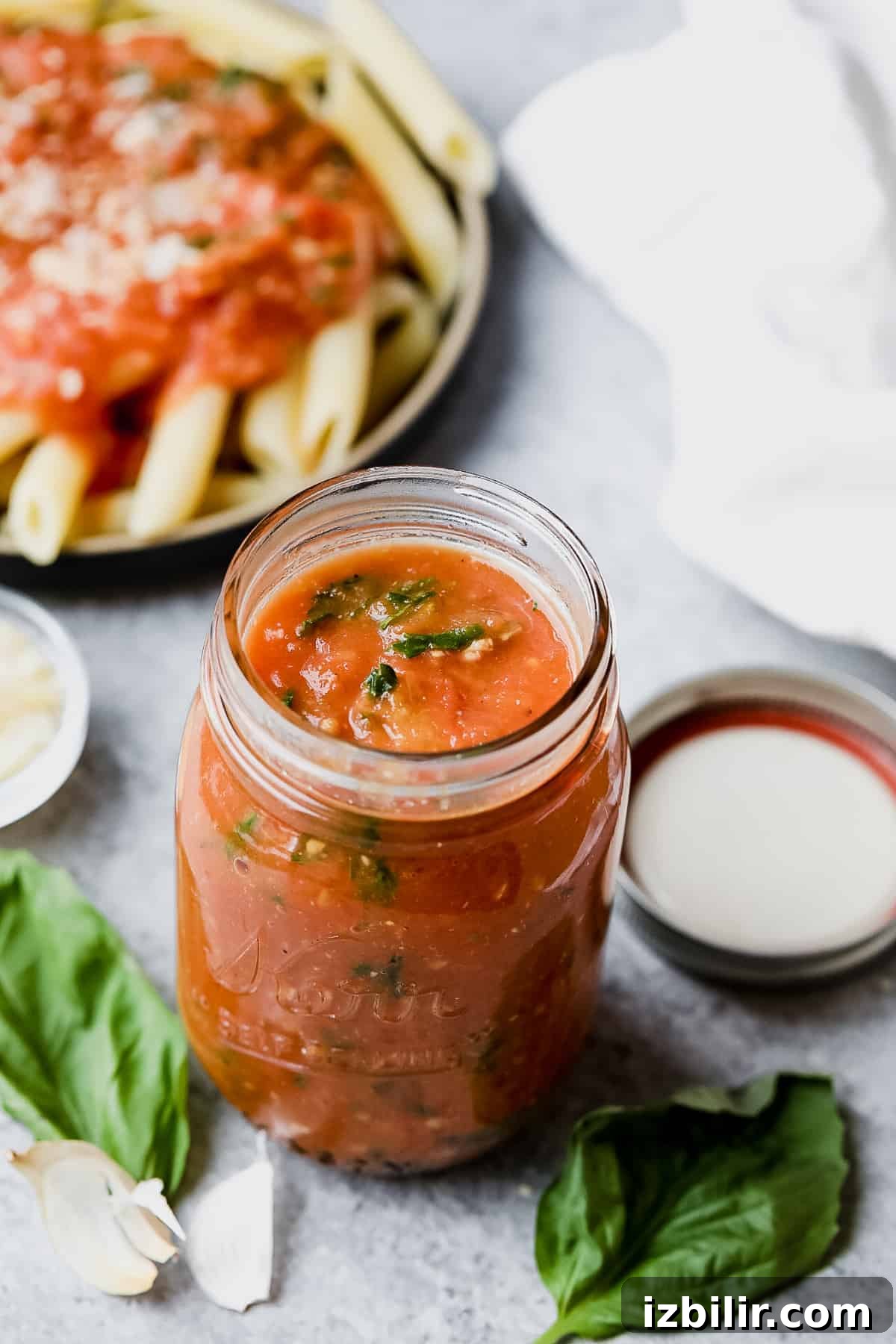
Serve the sauce immediately over pasta, chicken, or vegetables. Alternatively, let it cool and store in a mason jar or airtight container in the refrigerator. This recipe yields approximately 3 cups of sauce.
Recipes to Use this Tomato Sauce In
This sauce is highly versatile. Use it as a base or finishing sauce for many dishes:
- Air Fryer Chicken Parmesan
- Chicken Parmesan Quinoa Bake
- Crock Pot Lasagna
- Grilled Sweet Potato Pizzas
- Sausage Pizza Pasta
- Eggplant Parmesan
- Italian-style meatballs
- Sweet Potato Pizza Bites
- Spinach Quinoa Lasagna Casserole
Storage
Because this sauce is fresh and preservative-free, store it in the refrigerator for up to 3–4 days. Use clean utensils to avoid contamination and always smell and taste before reheating.
Freezer Directions
- Let the sauce cool completely to room temperature.
- Transfer to an airtight container or freezer-safe bag, leaving a little headspace for expansion.
- Seal and freeze for up to 3 months. Thaw overnight in the refrigerator before reheating.
More of our Favorite…
Sauce Recipes
- Homemade BBQ Sauce
- Teriyaki Sauce
- Chimichurri Sauce
- Vegan Cheese Sauce
Roasted Tomato Sauce
This easy roasted tomato sauce uses oven-roasted tomatoes, garlic, olive oil, fresh basil, and a touch of apple cider vinegar to create a bright, flavorful sauce without added sugar.
By: Lee Funke
Prep: 10 mins • Cook: 1 hr • Total: 1 hr 10 mins • Servings: 4
Ingredients
- 8 medium/large tomatoes, halved
- 2 tablespoons olive oil
- 8–10 garlic cloves
- Salt, to taste
- Pepper, to taste
- 20 fresh basil leaves
- 1 teaspoon apple cider vinegar
Instructions
- Preheat oven to 400ºF and lightly oil a baking sheet or casserole dish.
- Wash and halve the tomatoes. Place them cut-side up on the baking sheet, drizzle with olive oil, and season with salt and pepper.
- Roast for about 30 minutes. Add the garlic cloves to the pan and roast 20–30 minutes more, until tomatoes brown and soften. Watch the garlic to prevent burning.
- Let the tomatoes cool for 5 minutes. Peel and discard the skins.
- Place roasted tomatoes, garlic, basil, and apple cider vinegar in a blender or food processor and blend until smooth. Adjust salt and pepper to taste.
- Store in a mason jar or airtight container in the fridge for up to 3–4 days, or serve immediately.
Tips & Notes
- Omit basil if you prefer a more basic sauce.
- Keeping larger basil pieces gives bursts of fresh flavor; blend finer if desired.
- Yields roughly 3 cups of sauce.
Nutrition (approx.)
Calories: 182 kcal • Carbohydrates: 10 g • Protein: 1 g • Fat: 14 g • Fiber: 0 g • Sugar: 0 g
Nutrition information is an approximation.