
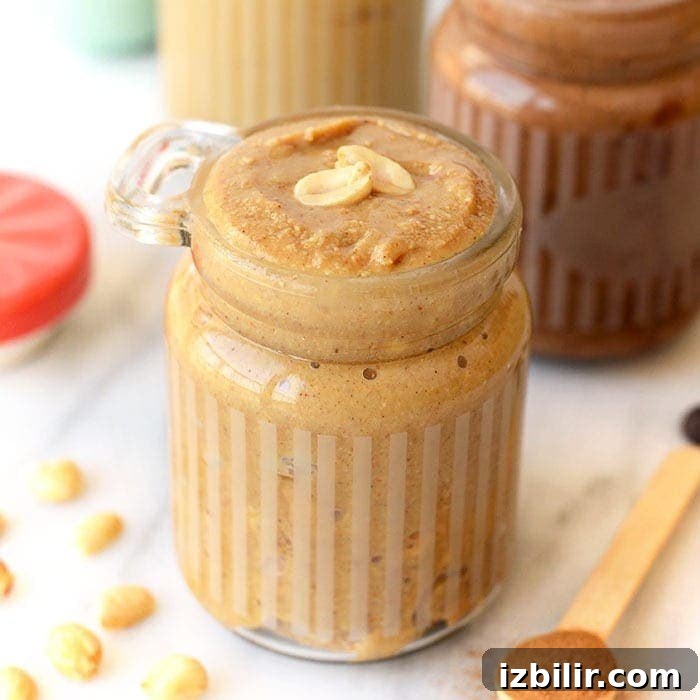
Have you ever wondered how simple it is to make your own peanut butter at home? This healthy peanut butter recipe is fast, reliable, and free from the additives and sugars found in many commercial brands. With just roasted peanuts and a high-speed food processor, you can make creamy or crunchy peanut butter tailored to your taste. Below you’ll find a straightforward method, three easy flavor variations, storage advice, and nutrition information.
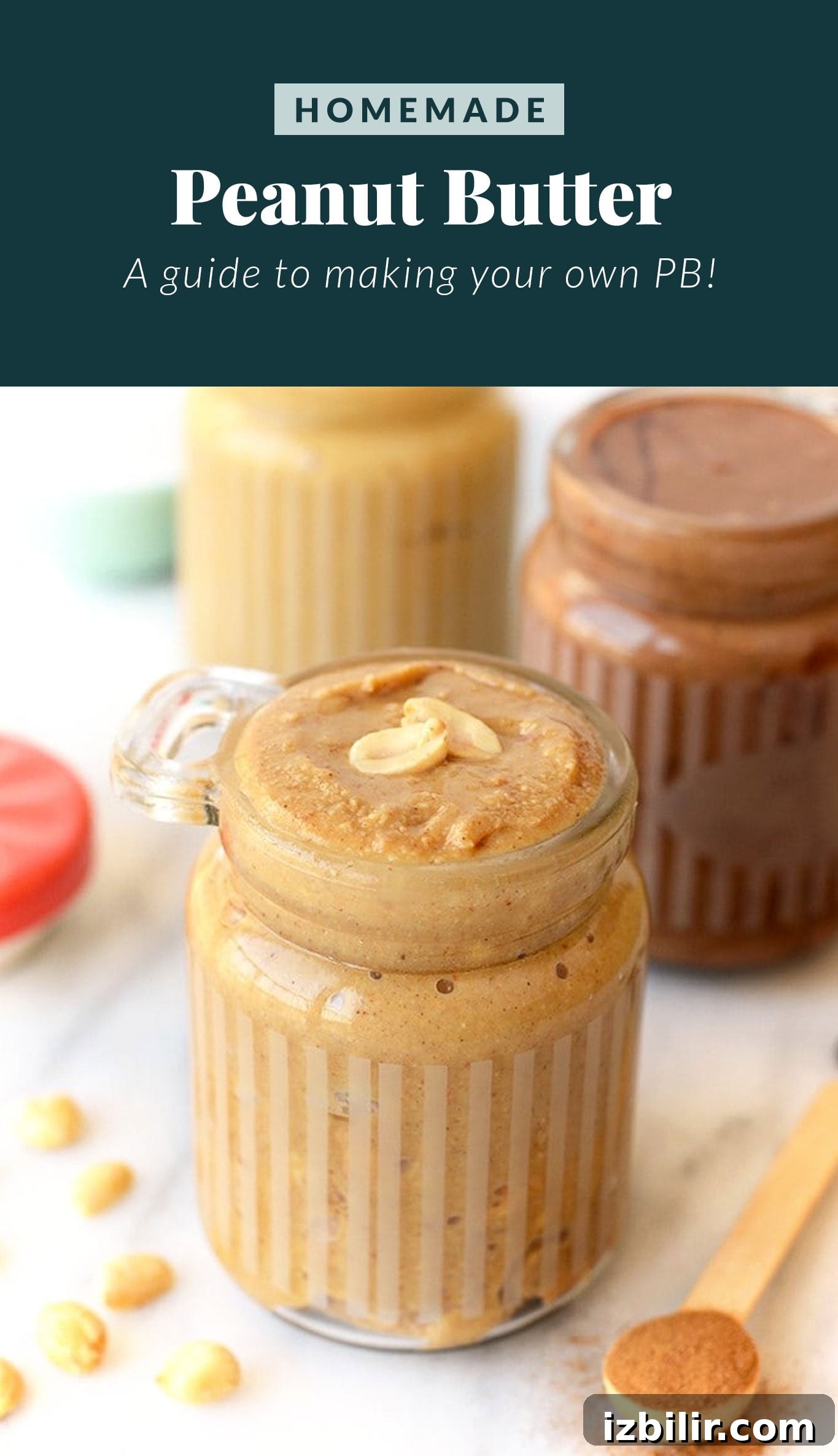
Easy Homemade Peanut Butter
Making peanut butter at home takes only a few minutes and gives you full control over ingredients and texture. The basic recipe uses a single ingredient—peanuts—and you can add optional sweeteners, spices, or mix-ins for more flavor. Using roasted peanuts produces a richer taste, but raw peanuts also work and can be roasted at home first if desired.
Peanut Butter Nutrition Facts
Below are nutrition highlights for all‑natural peanut butter made from peanuts only (no added oils, sugars, or fillers). Exact values vary by brand and batch, but these figures are a useful reference per 2 tablespoon serving:
- About 8 g of protein
- Source of several essential nutrients
- Primarily heart-healthy unsaturated fats
- Generally low in sodium when unsalted peanuts are used
- Lower in carbohydrates compared to many spreads
- Suitable for many diets: vegan, keto, and paleo-friendly when no sweeteners are added
- Per 2-tablespoon serving (approx): 190 calories, 7 g carbs, 3 g fiber, 2 g sugar, 16 g fat, 8 g protein
How to Make Peanut Butter in 2 Steps
All you need is dry roasted peanuts and a high-speed food processor or a powerful blender. The stronger the motor, the faster and smoother your peanut butter will become.
- Step 1: Place the peanuts in the food processor.
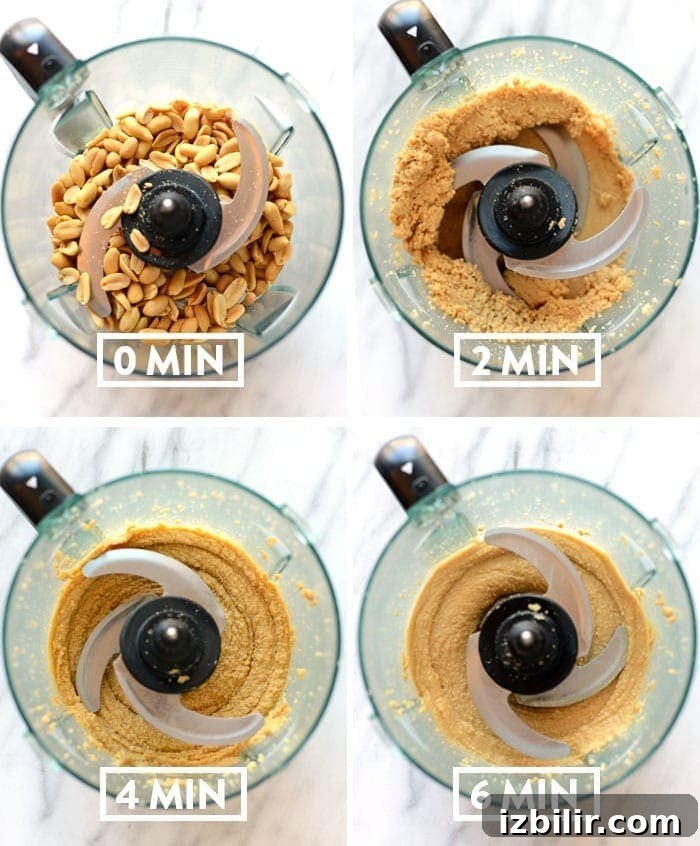
- Step 2: Cover and run on high for 5–8 minutes, stopping occasionally to scrape down the sides. Continue processing until the mixture becomes drippy and smooth. If the paste seems dry or grainy after several minutes, add 1–2 teaspoons of coconut oil and process until silky.
Things to Consider with Homemade Peanut Butter
The Peanuts: Roasted peanuts deliver the best flavor and oil content for smooth peanut butter. If your peanuts are older or unusually dry, their oil content may be lower; in that case, a small amount of neutral oil (coconut oil is commonly used) will help achieve a creamier texture.
The Equipment: A powerful food processor or high-speed blender is essential. We recommend using a robust machine; weaker blenders may take much longer and can strain the motor. If your processor struggles, work in smaller batches and pause often to avoid overheating.
3 Healthy Peanut Butter Variations
Once you have a basic jar of peanut butter, try these simple flavor ideas to change things up. Each variation builds on the classic recipe—process the peanuts first, then add the mix-ins and blend until combined.
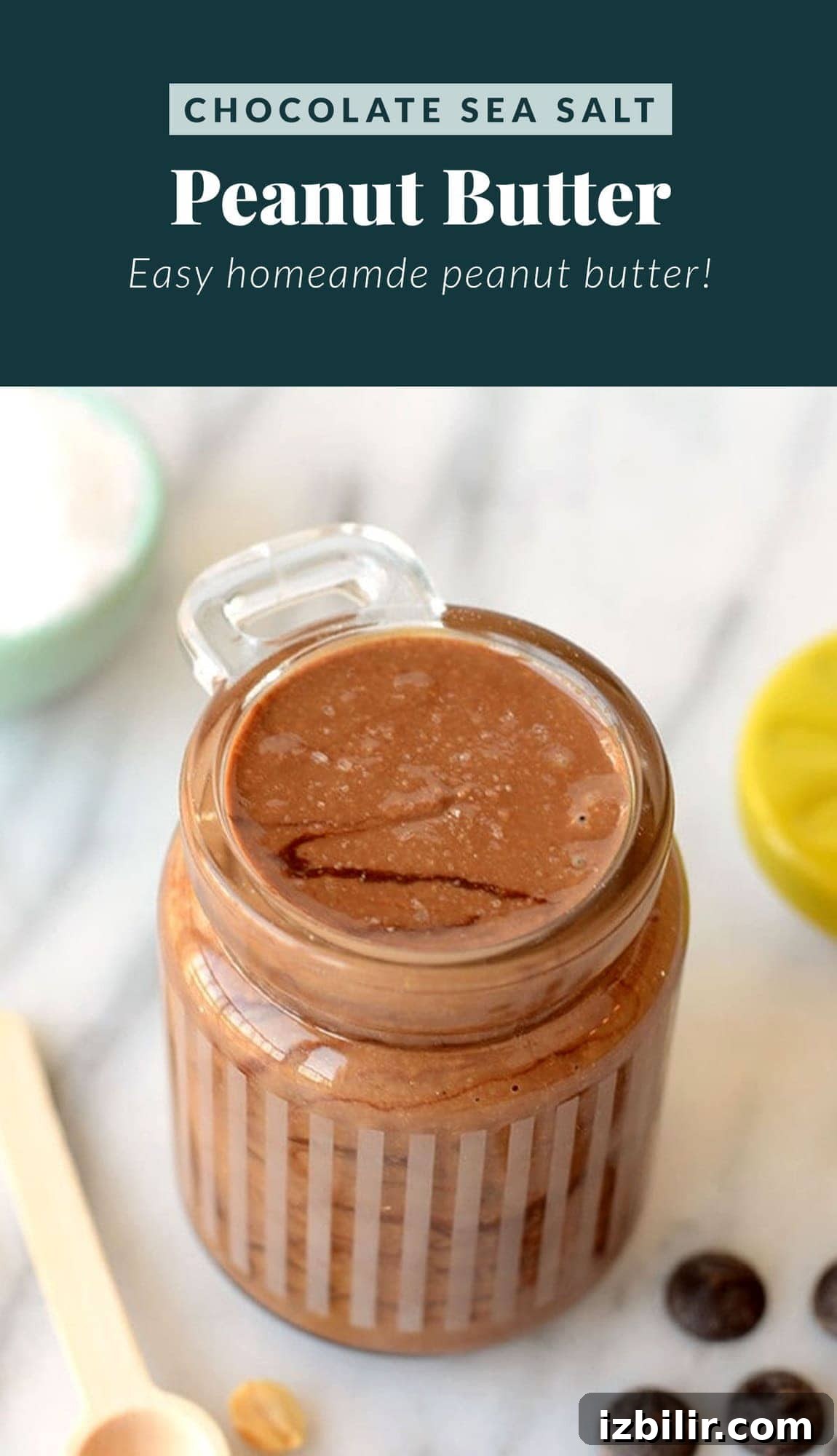
Chocolate Sea Salt Peanut Butter
Sweet and salty with a hint of dark chocolate.
- 3 cups unsalted dry roasted peanuts
- 1/4 cup dark chocolate chips, at room temperature
- 1/8 teaspoon sea salt
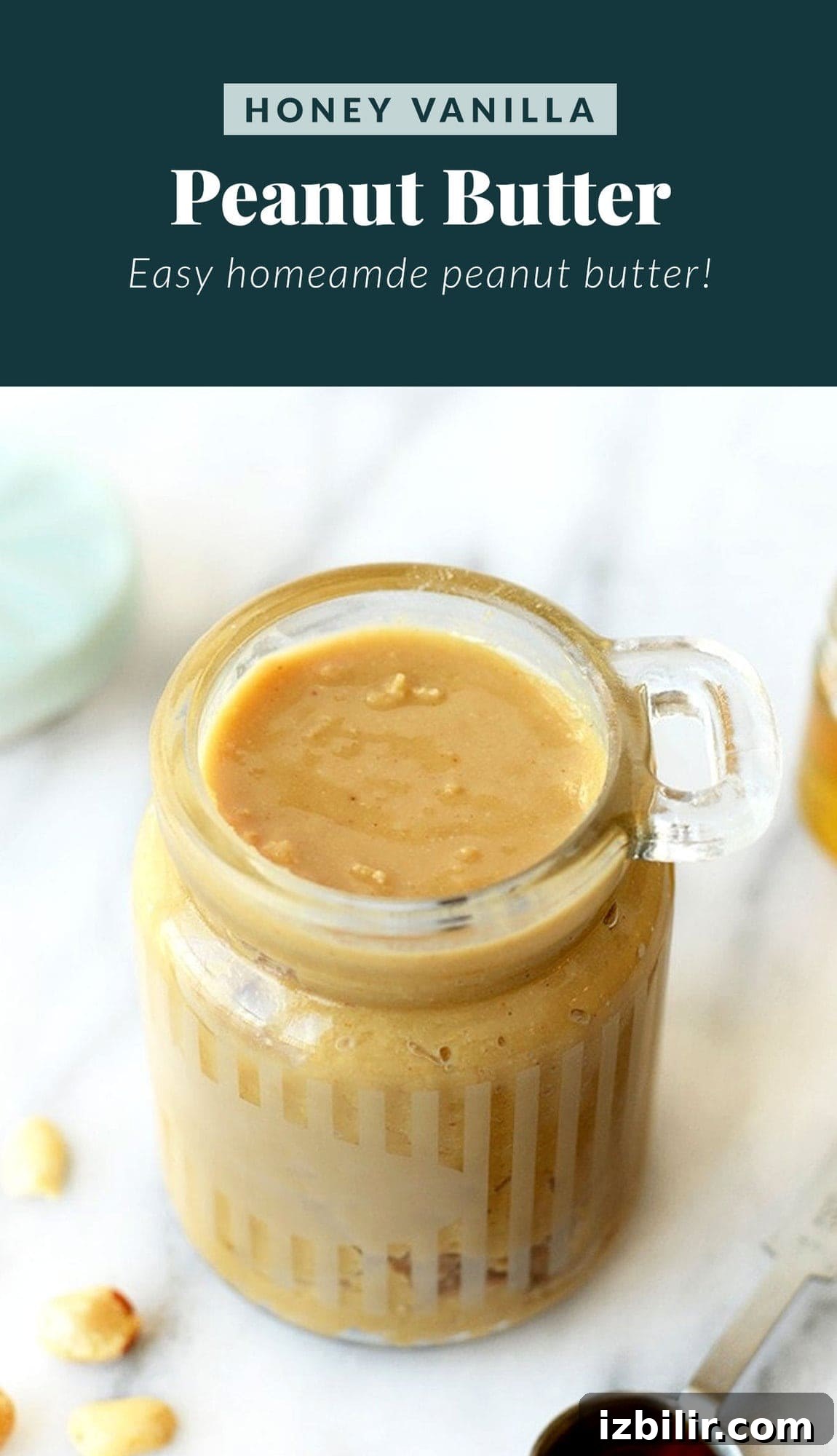
Honey Vanilla Peanut Butter
Lightly sweetened with honey and rounded with vanilla.
- 3 cups unsalted dry roasted peanuts
- 2 tablespoons honey
- 1 teaspoon vanilla extract
- 1–2 tablespoons coconut oil (optional, for creaminess)
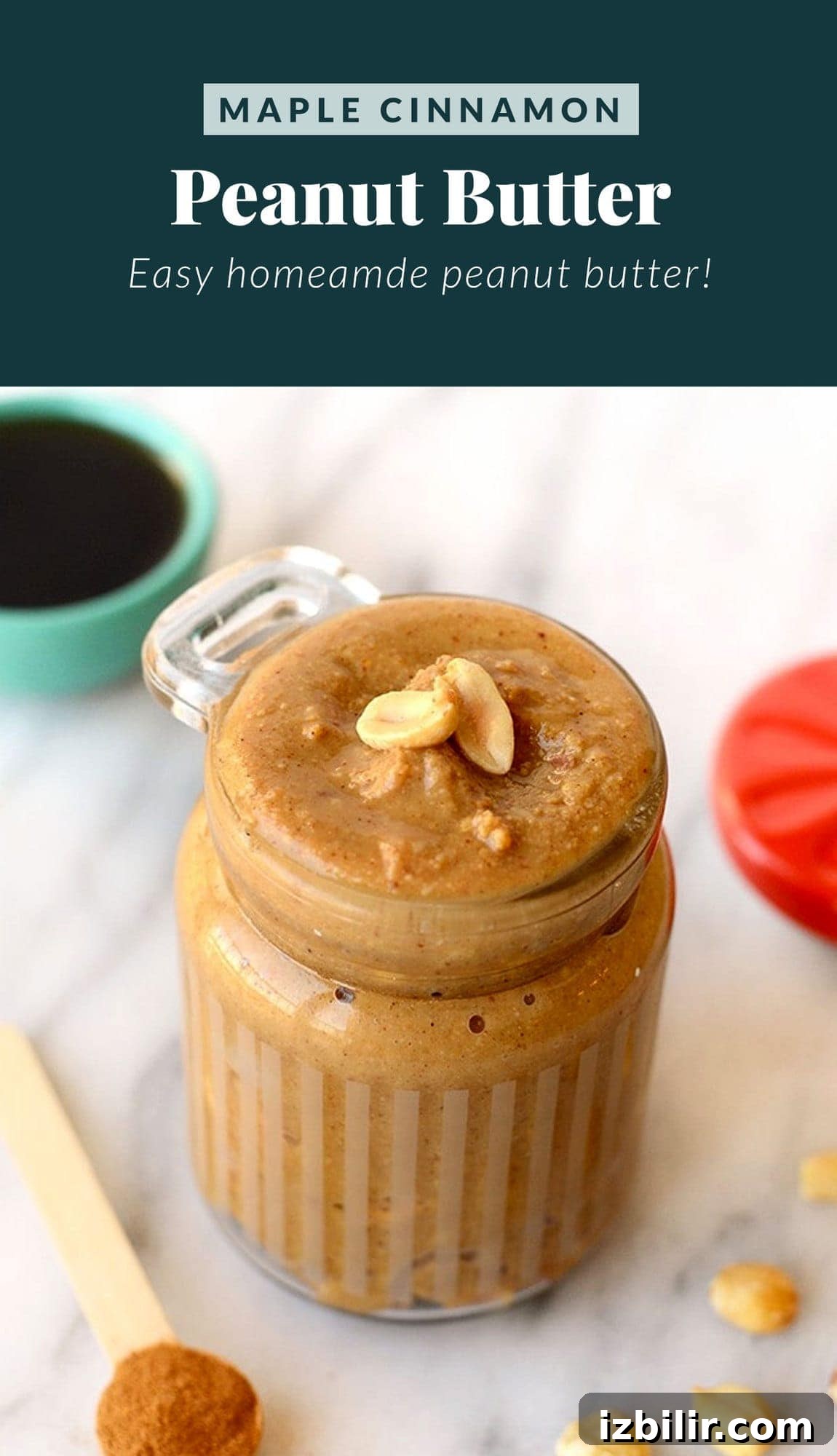
Crunchy Maple Cinnamon Peanut Butter
Sweet and spiced, with extra texture from chopped peanuts.
- 3 cups unsalted dry roasted peanuts, plus 1/3 cup reserved whole peanuts for texture
- 2 tablespoons 100% pure maple syrup
- 1 teaspoon ground cinnamon
- 1–2 tablespoons coconut oil (optional)
How Long Does Homemade Peanut Butter Last?
Because homemade peanut butter contains no preservatives, it should be refrigerated and used within about three months. Store it in an airtight container and always use a clean spoon to avoid introducing moisture or contaminants. If the peanut butter smells sour, rancid, or otherwise off, discard it.
How to Store Homemade Peanut Butter
Keep peanut butter refrigerated in an airtight jar or container. Stir before refrigerating if oils have separated. For extended shelf life and best flavor, label the jar with the date so you know when you made it.
More ways to enjoy homemade peanut butter:
Ways to Use Peanut Butter
- Peanut butter cups and bars — use peanut butter as a filling or base for no-bake treats.
- Baked oatmeal and overnight oats — swirl peanut butter into warm or chilled oats for added protein and flavor.
- Cookies and bars — peanut butter adds moisture and richness to baked goods.
- Smoothies — add a spoonful to shakes for creaminess, protein, and healthy fats.
Recipe: How to Make Peanut Butter (+3 flavors)
Ingredients — Classic Homemade Peanut Butter
- 3 cups unsalted dry roasted peanuts
Honey Vanilla Variation
- 3 cups unsalted dry roasted peanuts
- 2 tablespoons honey
- 1 teaspoon vanilla extract
- 2 tablespoons coconut oil (room temperature), if needed
Chocolate Sea Salt Variation
- 3 cups unsalted dry roasted peanuts
- 1/4 cup dark chocolate chips (room temperature)
- 1/8 teaspoon sea salt
Crunchy Maple Cinnamon Variation
- 3 cups unsalted dry roasted peanuts
- 2 tablespoons pure maple syrup
- 1 teaspoon ground cinnamon
- 2 tablespoons coconut oil (room temperature), if needed
- 1/3 cup whole peanuts (for crunch)
Instructions
- Place the peanuts in a high-speed food processor. Process on high for 5–8 minutes, pausing every minute or so to scrape down the sides. The mixture will go from crumbs to a thick paste, then to a drippy, creamy butter. Expect about 6 minutes with a good processor.
- For flavored variations: once the peanuts are nearly smooth, add your chosen mix-ins (honey, vanilla, chocolate chips, maple syrup, cinnamon, salt, and/or coconut oil). Blend until fully incorporated. If the mixture seizes or becomes grainy, the coconut oil will help smooth it—blend another 2–3 minutes.
- For crunchy style, reserve a handful of peanuts, chop them coarsely, and stir or pulse them in at the end so you retain texture.
- Transfer peanut butter to an airtight jar and refrigerate. Stir before serving if oil separates.
Tips & Notes
- Storage: Refrigerate in an airtight container for up to 3 months.
- Yield: About 1.5 cups from 3 cups of peanuts.
- Nutrition: Values listed earlier reflect a typical 2-tablespoon serving of classic peanut butter.
Nutrition (approx. per 2 TBSP)
Calories: 190 kcal, Carbohydrates: 7 g, Protein: 8 g, Fat: 16 g, Fiber: 3 g, Sugar: 2 g.
Nutrition information is an approximation and will vary depending on exact ingredients and portion sizes.
If you try this recipe, tag your photos with the hashtag #fitfoodiefinds to share your results. Happy blending!