
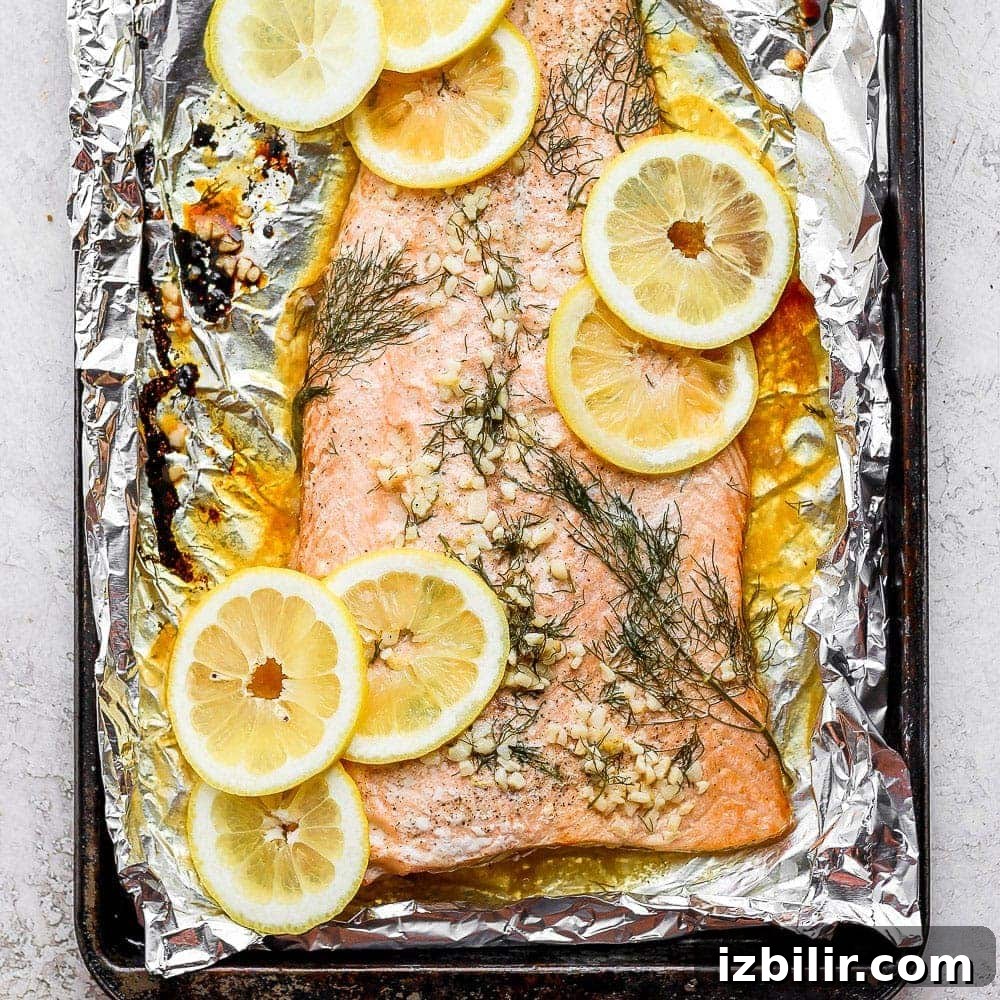
Bland, dry salmon is a thing of the past. Growing up, my parents taught me a simple trick: wrap the fish in foil before baking. The foil traps heat and moisture, so the salmon cooks quickly and stays tender while absorbing the flavors of the marinade.
I usually buy a large salmon fillet for this method, but single-serving portions work just as well. Whatever size you choose, follow the lemon-dill marinade in this recipe for reliably flaky, flavorful salmon.
Recipe Highlights
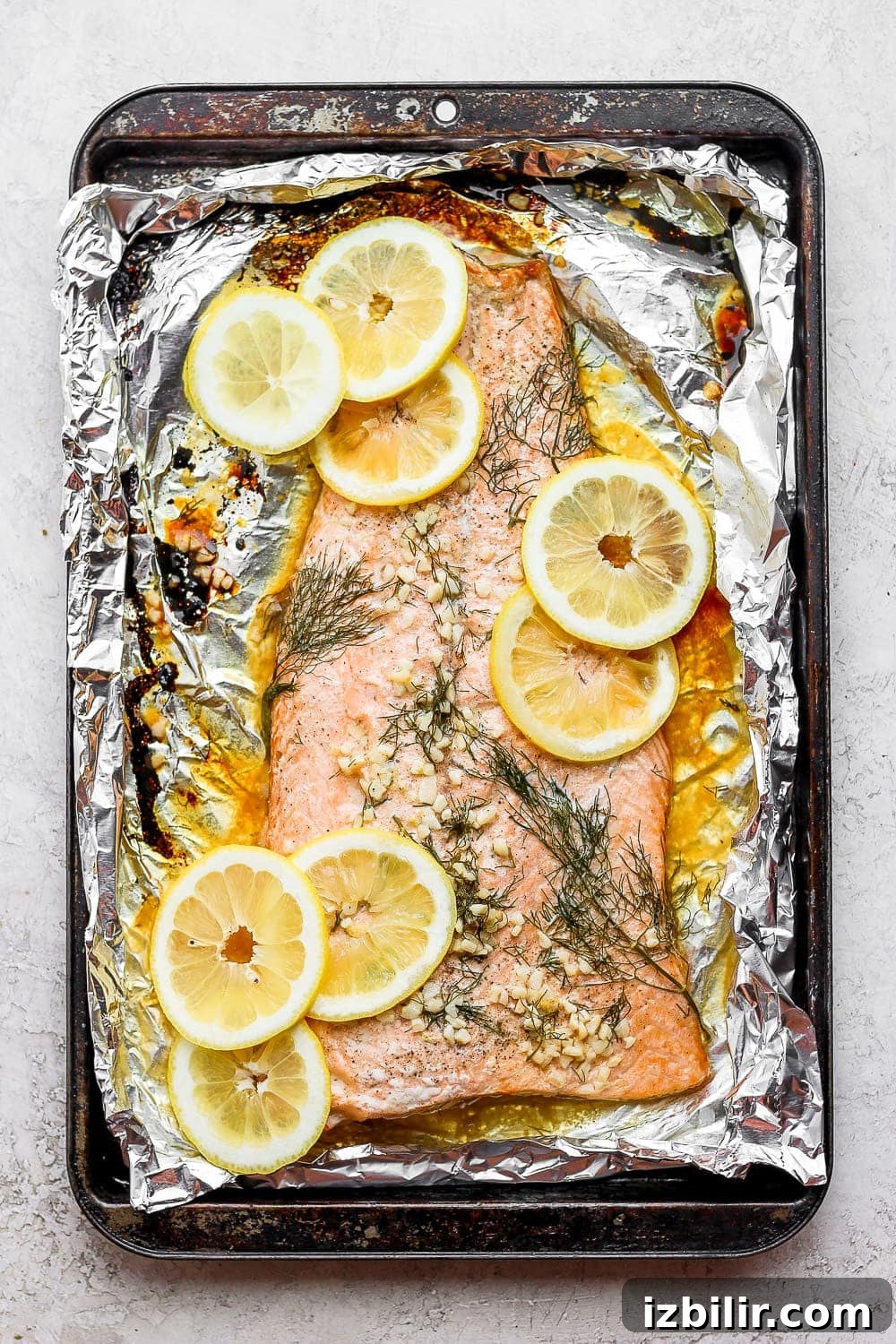
This foil-baked salmon produces consistent results: moist, tender, and flaky every time. The method is fast and simple—marinate briefly, seal in foil to concentrate moisture and flavor, then bake and finish under the broiler for a lightly caramelized top.
I’ve tested this recipe on fillets between 2 and 4 pounds and it turns out great across that range. It’s ideal for weeknight dinners, special occasions, or meal prep.
Featured Comment
“One of my husband’s favorite salmon recipes! We made this for the main entree for our untraditional Thanksgiving dinner, and it was a hit! The tartar sauce takes this salmon to the next level!”
– Kendra N.
How to Choose Your Salmon
Salmon varies by species, size, and fat content. For the juiciest results, choose a fattier variety—King, Atlantic, and Sockeye tend to be richer and more forgiving during cooking. This recipe calls for a 2.5–3 lb. fillet; skin-on is my preference because the skin helps retain fat and flavor, though skinless fillets work fine too.
If you can only find pre-cut portions, arrange them side-by-side on the foil to simulate a single large fillet and use the same bake time. For fillets under 2.5 lbs., reduce the bake time—start checking at 20 minutes.
Try Surrender Salmon!
My favorite salmon comes from Surrender Salmon, which harvests wild Alaskan salmon in Bristol Bay. Their fish is bright, flavorful, and consistently excellent. They are a family-run company based in Minneapolis—support local producers when you can.
How to Bake Salmon in Foil
1. Marinate
Start by marinating the salmon for 15–30 minutes in a lemon-dill mixture so the flavor penetrates the flesh. Avoid marinating much longer than that—acidic ingredients like lemon juice can begin to “cook” the fish if left too long.
Here’s a tip
Don’t over-marinate. Fifteen to thirty minutes is sufficient for this recipe.
2. Create a Foil Pack
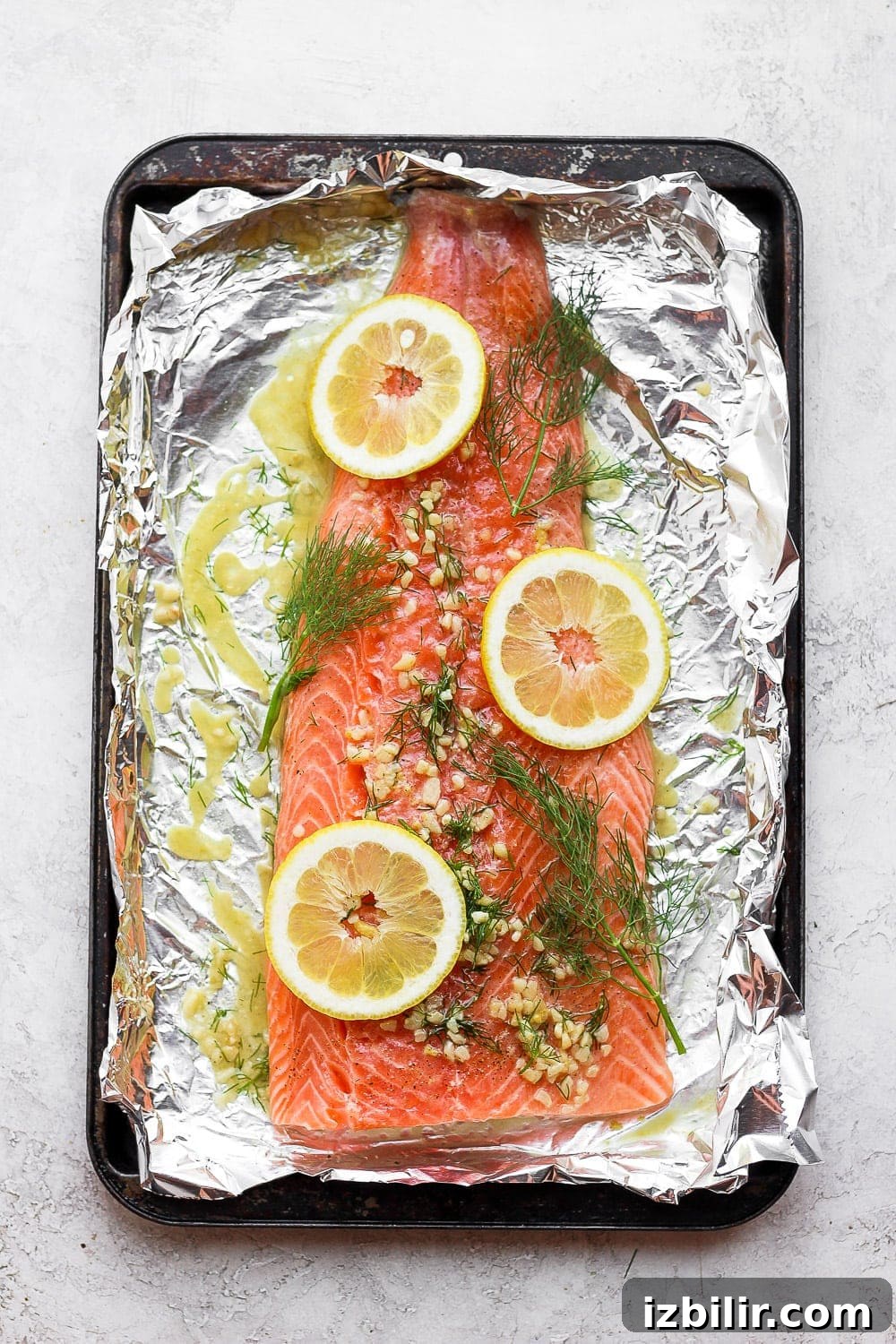
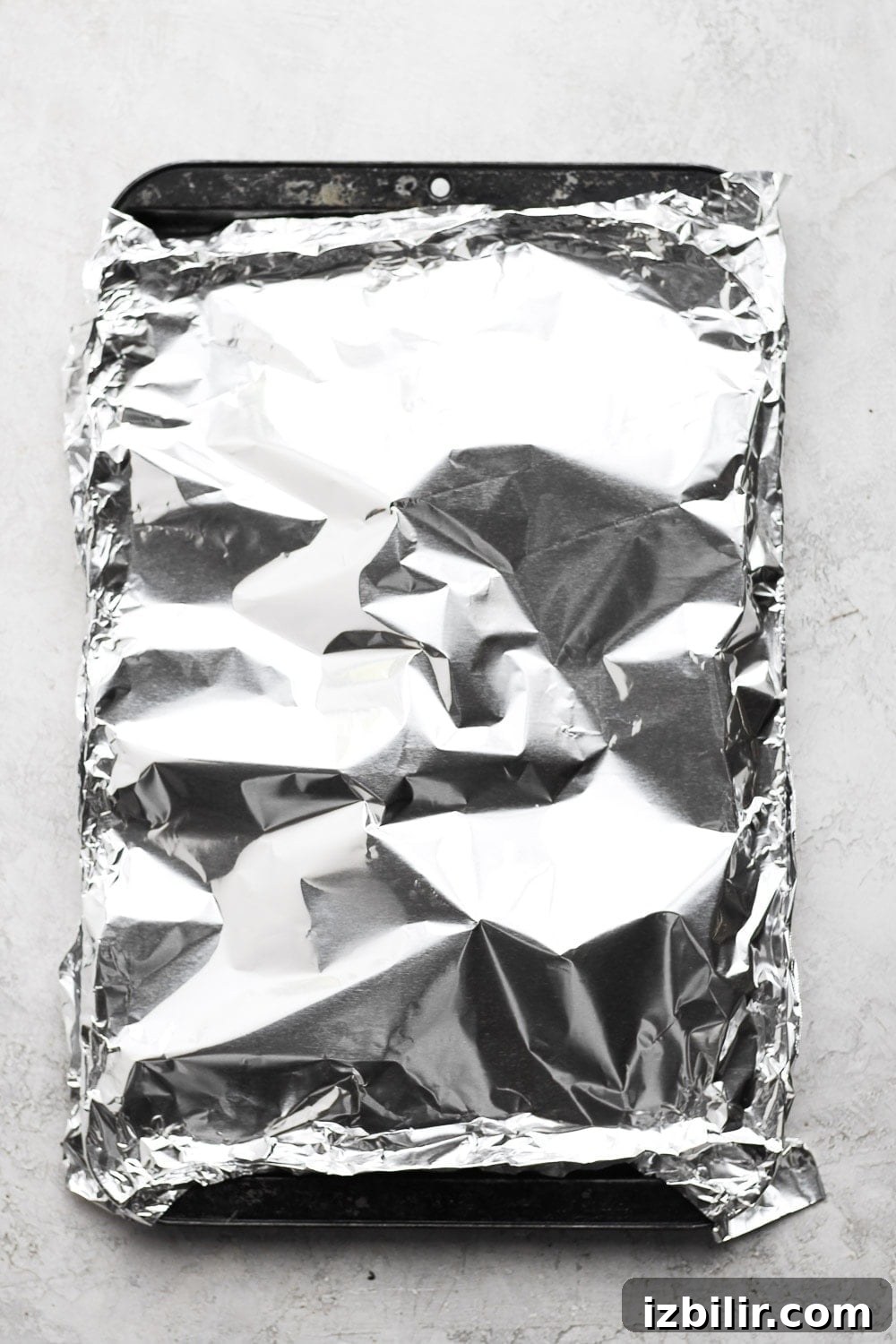
Place a large sheet of foil on a baking sheet or in a 9×13 pan and fold the edges up to contain any liquid. Pour the marinade onto the foil, place the salmon on top, and then seal the foil tightly so moisture remains trapped during baking.
3. Bake
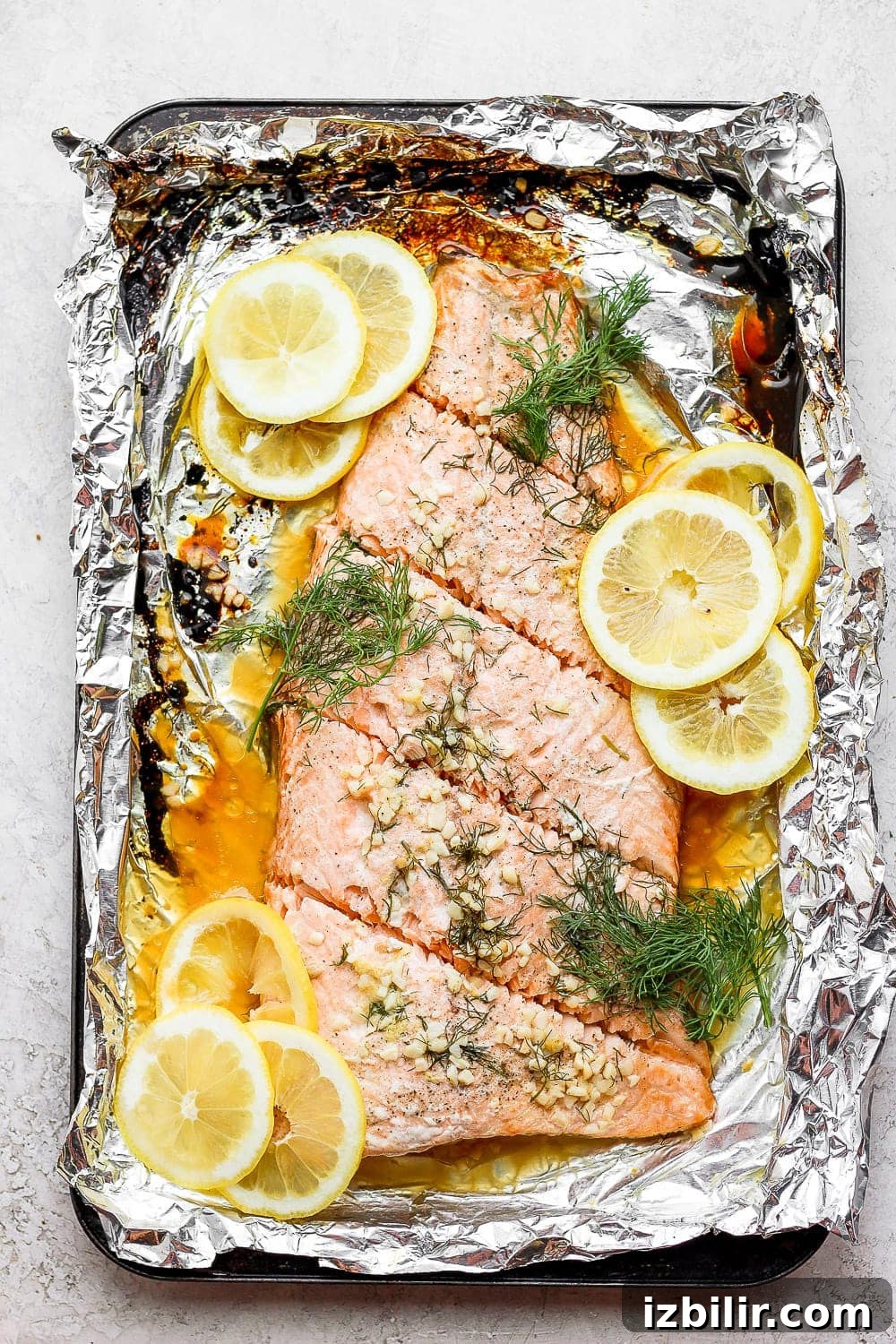
Preheat your oven to 375ºF. Bake the sealed salmon for 25–35 minutes depending on thickness; a 2-inch-thick fillet usually needs toward the upper end of that range. Cook until the flesh changes from translucent bright orange to an opaque, pale pink and flakes easily with a fork.
4. Broil
When the salmon is almost done, open the foil, add 2 tablespoons of cold butter on top, and broil for 2–5 minutes to melt the butter and create a lightly caramelized finish. Watch closely so it doesn’t over-brown.
Doneness and Cooking Times
The FDA recommends a minimum internal temperature of 145ºF for salmon; if you use a thermometer, aim for about 145ºF for a fork-tender, flaky texture. A useful rule of thumb is roughly 4–5 minutes per 1/2 inch of thickness.
Flavor Variations and Substitutions
This method is versatile—try different marinades such as stir-fry sauce, firecracker sauce, or an Italian-style dressing. If you’re out of lemon, use lime or orange. For dried dill in place of fresh, use about 2 teaspoons of dried dill to replace 2 tablespoons of fresh.
Health Benefits of Salmon
Salmon is a nutrient-dense choice—high in protein and omega-3 fatty acids, naturally gluten-free and low-carb. It makes a healthy addition to a balanced diet.
Serving and Pairing Ideas
- Oven-Roasted Asparagus with Parmesan
- Chili Crunch Brussels Sprouts
- Roasted Brussels Sprouts
- Crockpot Baked Potatoes
- Roasted Red Potatoes
- Perfect Quinoa
- Cilantro Lime Rice
- Wild Rice
How to Reheat Baked Salmon
The quickest method is the microwave: reheat on high for 60–90 seconds on a microwave-safe plate. You can also reheat gently in the oven or on the stovetop. If you used foil for baking, discard the foil before microwaving.
FAQ
What seasonings work well for baked salmon?
Garlic, lemon, and dill are classic pairings. Pre-mixed blends like lemon pepper or seafood seasoning also work well.
Can I use olive oil spray to coat the salmon?
Yes—olive oil or an olive oil spray can be used to lightly coat the salmon prior to adding the marinade.
Is it better to bake salmon in the oven or cook it on the stove (especially for beginners)?
For beginners, baking in the oven is more forgiving and easier to manage than stovetop methods.
Storage
Leftover salmon stores well. Keep it in an airtight container in the refrigerator for up to 3 days. Glass meal-prep containers are convenient for reheating.
More Salmon Recipes
- Air Fryer Salmon Bites
- Maple Ginger Baked Salmon
- Salmon Meatballs
- Air Fryer Salmon
Foil-Pack Baked Salmon Recipe
Learn how to bake salmon in foil with this straightforward method. The fillet is marinated in a lemon-dill mixture and finishes under the broiler for a lightly caramelized top. Ready in under an hour.
Prep: 30 mins • Cook: 25 mins • Total: 55 mins • Serves: 8
Ingredients
Salmon
- 2 to 3 lbs salmon fillet, skin on or off (about 2 inches thick)
- 1/8 teaspoon salt
- 1/8 teaspoon pepper
- 1 medium lemon, sliced
- 4 sprigs fresh dill
- 2 tablespoons cold butter
Salmon Marinade
- 1/4 cup olive oil
- 2 tablespoons lemon juice
- 1 teaspoon Dijon mustard
- 2 teaspoons honey
- 2 tablespoons fresh chopped dill
- 1/8 teaspoon salt
- 5 cloves garlic, diced
Tartar Sauce
- 1/2 cup Greek yogurt
- 1/2 cup chopped dill pickles
- 1 tablespoon olive oil
- 1/8 teaspoon garlic powder
- 1/8 teaspoon onion powder
- 1 tablespoon pickle juice
- 1 teaspoon lemon juice
- 1 tablespoon fresh chopped dill
Instructions
- Pat the salmon dry with paper towels and season lightly with salt and pepper.
- Whisk together the olive oil, lemon juice, Dijon, honey, dill, salt, and garlic to make the marinade.
- Lay a large piece of foil on a baking sheet or in a 9×13 pan with the edges folded up to catch liquid. Pour the marinade onto the foil.
- Place the salmon on the marinade (skin side up) and let it sit 15–30 minutes—no longer.
- Preheat the oven to 375ºF.
- Flip the salmon so skin side is down. Top with lemon slices and fresh dill sprigs.
- Wrap the salmon securely in foil, sealing the edges so steam does not escape. Use an extra sheet if needed.
- Bake for 25–35 minutes depending on thickness. A 2-inch-thick fillet may need about 35 minutes.
- While the salmon bakes, combine tartar sauce ingredients in a bowl, mix, and chill.
- When the salmon is opaque and flakes easily, remove it from the oven. Discard dill and lemon slices from the foil. Turn the oven to broil.
- Top the salmon with 2 tablespoons cold butter and broil uncovered for 2–5 minutes until the top is caramelized to your liking.
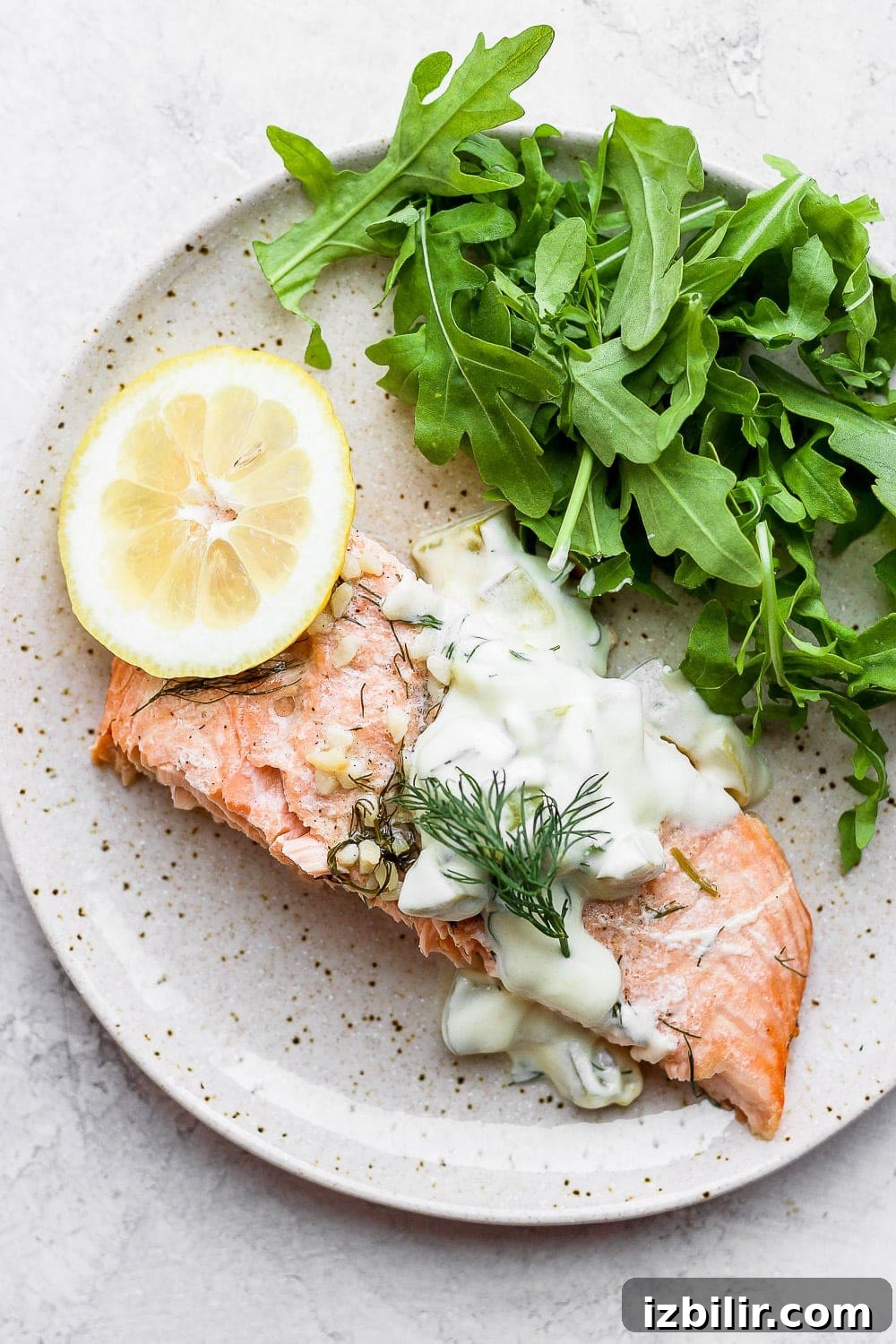
- Remove from oven, let rest 5 minutes, then serve with tartar sauce.
Tips & Notes
- Nutrition values below reflect the salmon and marinade for a 2 lb portion.
- Store leftovers in an airtight container in the refrigerator for up to 3 days.
- To grill in foil: marinate and wrap as directed, then grill over medium-high direct heat (375–400ºF) for about 15 minutes. Move to indirect heat and continue grilling 10–15 more minutes or until internal temperature reaches 145ºF.
Nutrition (per serving, approximate)
Calories: 269 kcal • Carbohydrates: 2 g • Protein: 30 g • Fat: 15 g • Fiber: 0 g • Sugar: 2 g
Photography by: The Wooden Skillet