How many teaspoons in a tablespoon? It’s one of the most commonly asked questions in the kitchen. How many tablespoons are in a cup? How many ounces are in a cup? Below you’ll find clear answers and practical measuring tips to help with everyday cooking and baking conversions.
How Many Teaspoons in a Tablespoon?
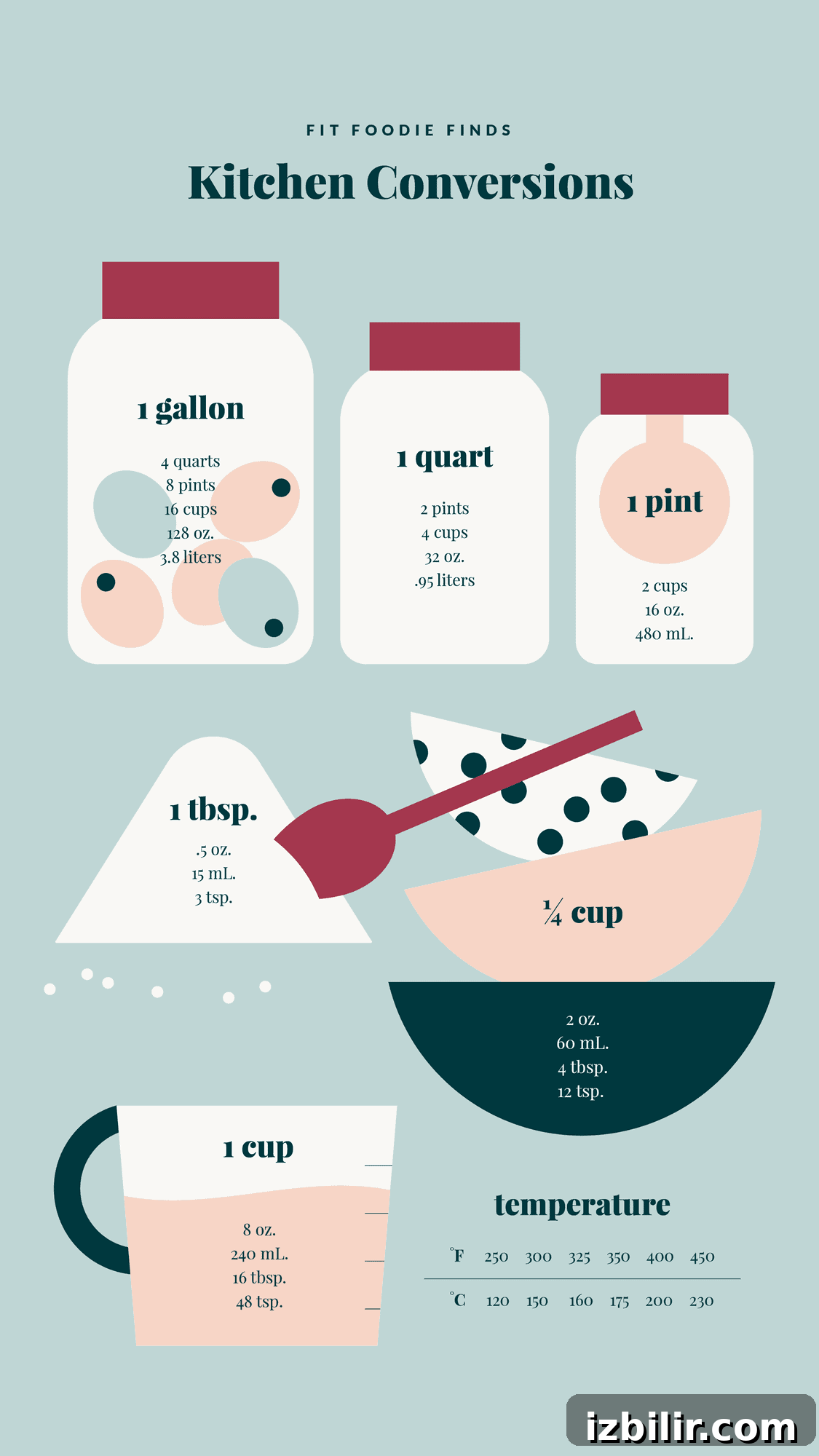
There are 3 teaspoons in 1 tablespoon.
Even experienced cooks have that moment mid-recipe when they need a quick reminder of basic conversions. Whether you’re doubling a recipe or adjusting a spice level, knowing that one tablespoon equals three teaspoons saves time and prevents mistakes. Keep this simple conversion in mind or keep a note nearby for quick reference.
For convenience, many people keep a small printable conversion chart in the kitchen or save a digital version on their phone or desktop so they can quickly confirm measurements without interrupting their workflow.
Dry vs. Wet Ingredients
Can you use the same measuring tools for both wet and dry ingredients? The short answer is yes, but accuracy matters. How you measure depends on the ingredient and on whether you need precise results (as in baking) or approximate amounts (as in many savory dishes).
Generally, there are dedicated tools that work better for wet ingredients and others that are best for dry ingredients. Choosing the right tool improves consistency and makes recipes turn out as intended.
Dry Ingredients
For dry ingredients like flour, sugar, and cocoa powder, use nested dry measuring cups. These cups allow you to scoop and then level off excess with a straight edge, which gives a more accurate volume measurement for dry goods. When measuring dry ingredients in a liquid-style cup, be careful to level off precisely — domes or depressions will alter the measurement.
Wet Ingredients
For liquids, a clear graduated measuring cup with a spout is ideal. These cups let you view the liquid line at eye level and measure to the marked increments, which is more precise than estimating from above. When reading the measurement, make sure the bottom of the meniscus lines up with the measurement mark.
Although you can use a liquid measuring cup for dry ingredients in a pinch, it’s less convenient because it’s hard to level off dry ingredients accurately in that type of container. For consistent baking results, use the tools intended for each ingredient type.
The Best Tool for Both Wet + Dry Ingredients
If you want the most reliable method for both wet and dry components, weigh your ingredients. A kitchen scale eliminates volume-to-mass variation and gives consistent results every time. To use a scale: turn it on, place your bowl or container on the platform, zero (tare) the scale, and add ingredients until you reach the desired weight. This method is especially useful for baking, where precision matters.
The Best Measuring Tools
We recommend keeping a set of measuring spoons, a set of nested dry measuring cups, a clear liquid measuring cup, and a kitchen scale in your kitchen. These are the basic tools that cover nearly every measuring situation, from stirring a simple sauce to baking a multi-step dessert.
Cooking Measurement Abbreviations
Understanding common measurement abbreviations makes reading recipes faster and more accurate. Below are typical metric and standard (imperial) abbreviations you’ll see on recipe cards and food labels.
Metric measurement abbreviations
- mL = milliliter
- kg = kilogram
- L = liter
- g = gram
Standard (imperial) measurement abbreviations
- lb = pound
- gal = gallon
- pt = pint
- qt = quart
- c = cup
- fl oz = fluid ounce
- oz = ounce
- tsp = teaspoon
- Tbsp = tablespoon
Kitchen Measurement Questions
Is there a difference between metric and imperial teaspoons?
Yes — teaspoon sizes can vary slightly by region. In the metric system a teaspoon is commonly defined as 5 mL. In the United States a teaspoon is about 4.93 mL. These small differences rarely matter for casual cooking but can be important in precise baking or when working with very small quantities.
What is the difference between ounces and fluid ounces?
They measure different things:
- Ounces (oz) measure weight or mass.
- Fluid ounces (fl oz) measure volume.
Because an ounce by weight and a fluid ounce by volume are different units, you can’t directly substitute one for the other unless you know the density of the ingredient.
More Kitchen Conversions
Here are additional handy conversions to keep in your kitchen reference. These are useful for scaling recipes and converting between systems.
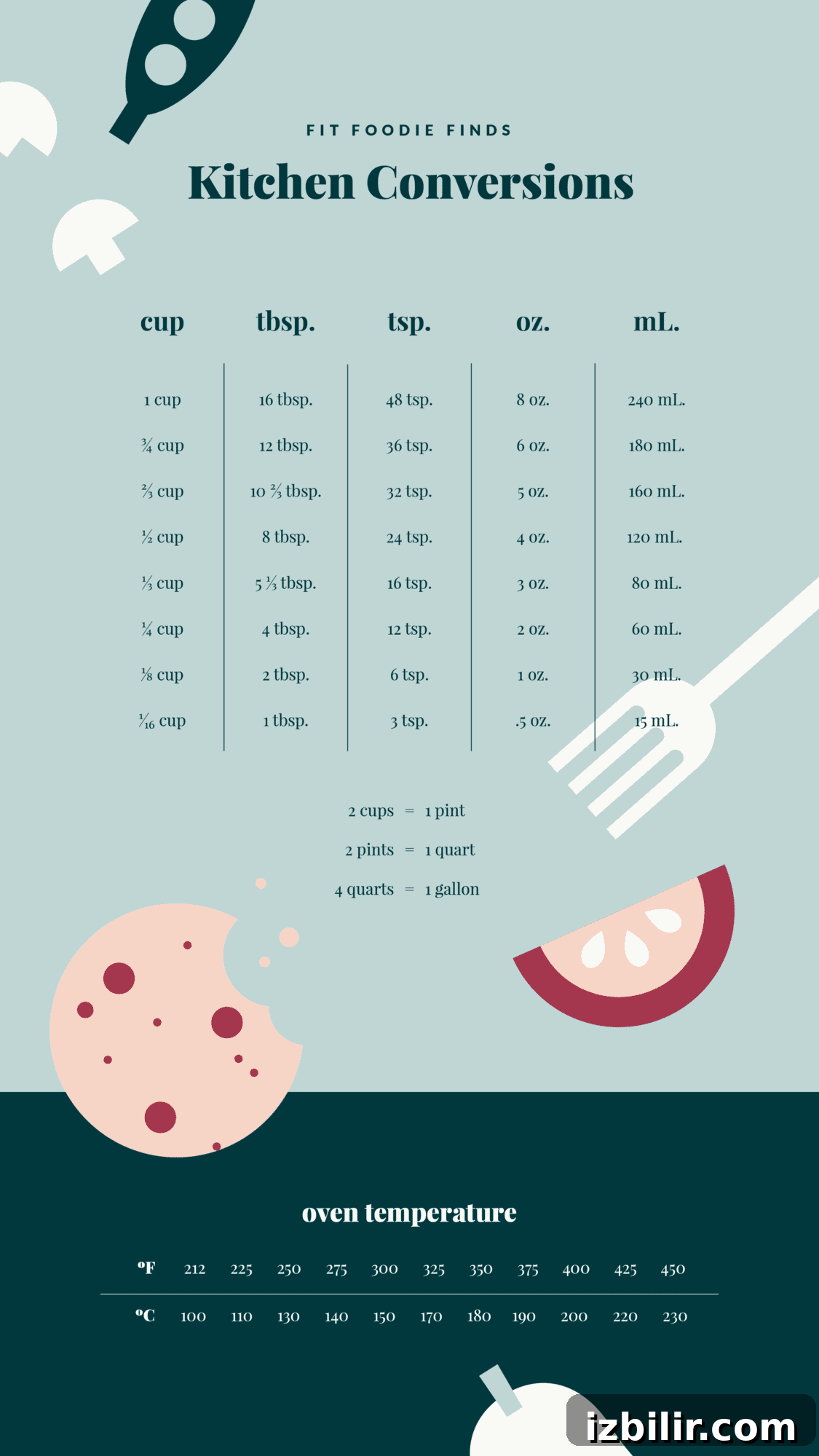
How many ounces in a cup? There are 8 fluid ounces in 1 US cup.
How many ounces in a gallon? There are 128 fluid ounces in 1 US gallon.
How many ounces in a pound? There are 16 ounces in 1 pound (by weight).
How many cups in a quart? There are 4 cups in 1 quart.
How many grams in an ounce? There are approximately 28.35 grams in 1 ounce.
How many liters in a gallon? One US gallon equals about 3.785 liters.
How many tablespoons in a cup? There are 16 tablespoons in 1 cup.
How many cups in a gallon? There are 16 cups in 1 US gallon.
How many grams in a pound? There are approximately 453.59 grams in 1 pound.
How many cups in a pint? There are 2 cups in 1 pint (US).
How many ounces in a liter? There are about 33.814 fluid ounces in 1 liter.