
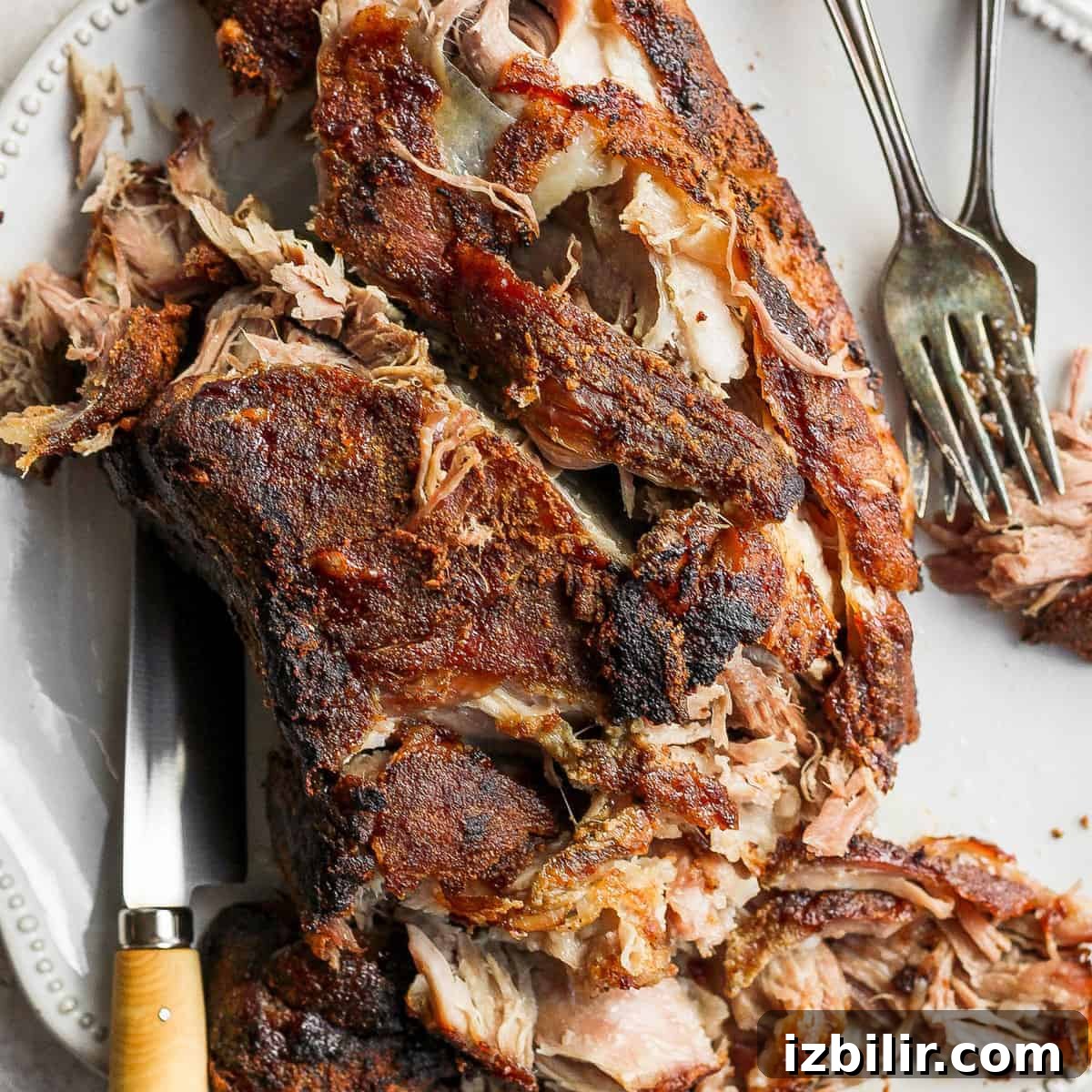
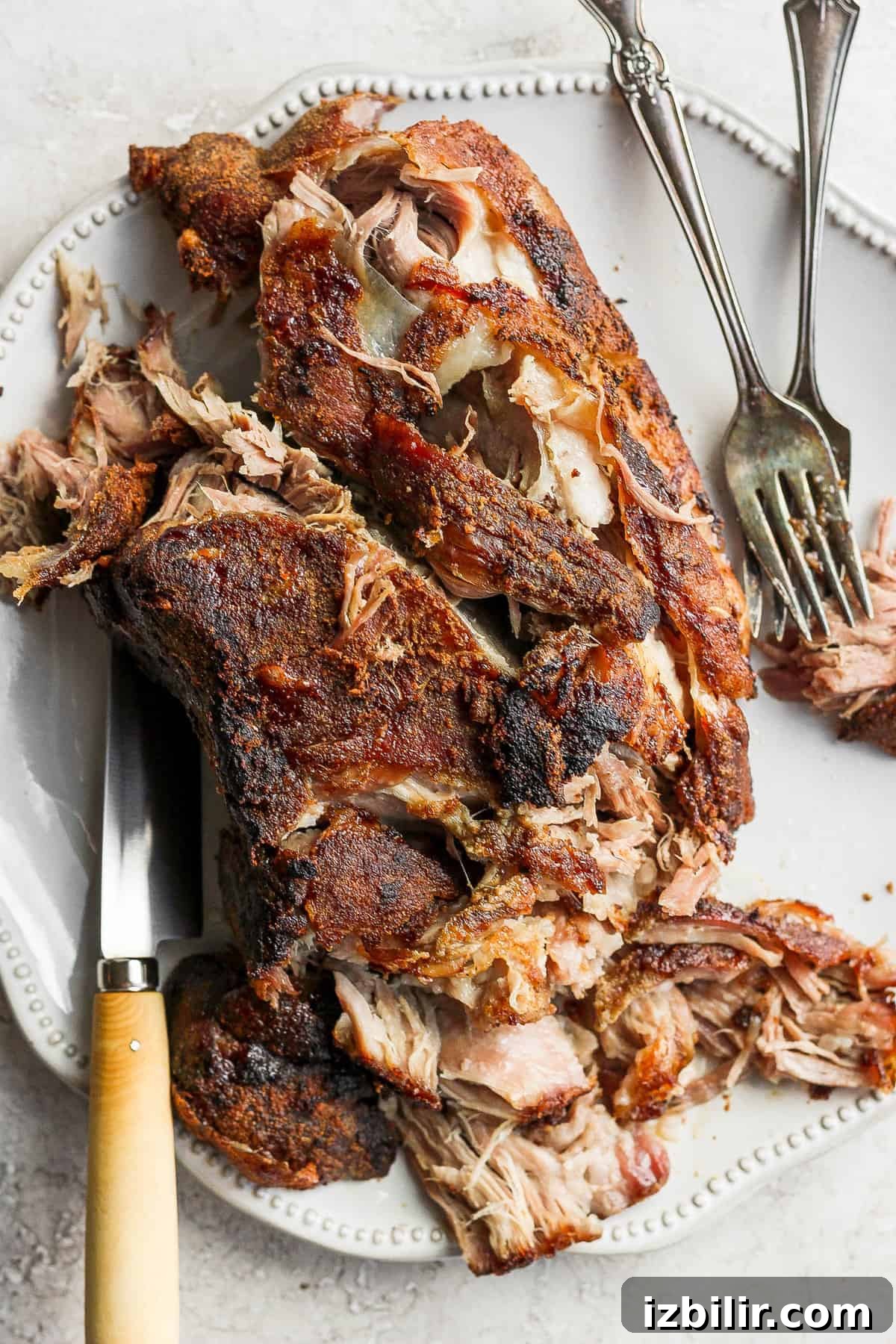
I am excited to share one of my favorite pork shoulder preparations: slow roasted pork shoulder. Cooked low and slow, this roast develops a crisp, flavorful crust while the interior becomes tender and easy to shred. It’s an economical, crowd-pleasing dish that yields plenty of leftovers for sandwiches, tacos, nachos, and more.
This slow roasted pork shoulder recipe is slightly sweet, savory, and has a hint of smokiness from smoked paprika. The method is straightforward: a generous dry rub, a quick sear to encourage browning, then hours of slow roasting at low temperature until the meat reaches a shreddable tenderness.
Featured Comment
“This was so delicious! Crispy on the outside and juicy on the inside. Absolutely simple way to turn an inexpensive cut of meat into a feast. I will make this again gladly. I loved how easy the prep was. I was able to leave it in the oven and go about my day. Worried that it might come out dry but it was absolutely perfect.” – Niki
A quick rundown: the pork shoulder cooks low and slow for hours, creating a crunchy exterior and a soft, shreddable interior. This oven method gives you almost the same texture and depth as smoked pork shoulder without a smoker.
What You Need for this Pork Shoulder Recipe
- 3–4 lb boneless pork shoulder roast: a boneless shoulder of this size works well for home ovens and serves a crowd. Look for this cut at your grocery store or butcher.
- Butter: used to sear the roast and add rich flavor. If you prefer not to use butter, olive oil is an acceptable substitute.
- Pork dry rub: a simple mix of garlic powder, brown sugar, kosher salt, ground black pepper, and smoked paprika creates a well-balanced, slightly sweet and savory crust.
If you want a smokier profile, increase the smoked paprika slightly. To add heat, stir in 1/8 teaspoon cayenne pepper to the rub.
What is pork shoulder?
Pork shoulder is a cut from the front shoulder of the pig. It contains more connective tissue and fat than leaner cuts like pork loin, which makes it ideal for slow roasting since the collagen melts and tenderizes the meat during long, low-temperature cooking.
Other common names: picnic shoulder, picnic roast, pork shoulder roast.
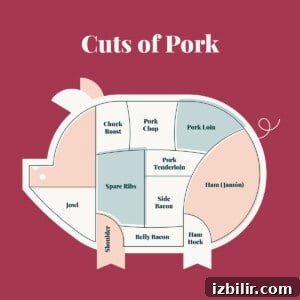
Cuts of Pork
Different pork cuts come from specific areas of the animal; shoulder cuts are best for slow cooking and pulled pork applications.
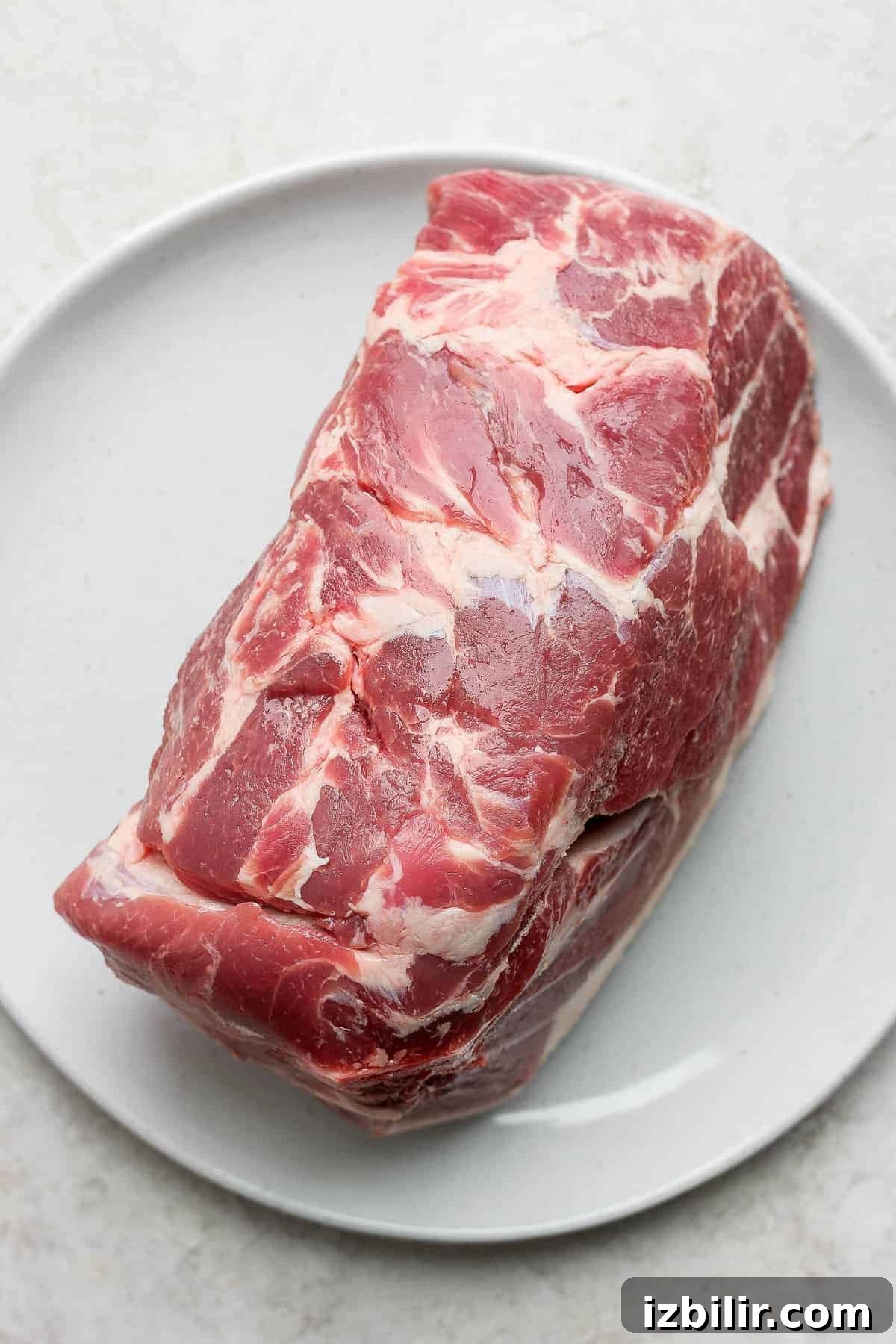
How to Cook a Pork Shoulder Roast (Oven Method)
There are many ways to prepare pork shoulder—instant pot, slow cooker, smoker, or oven. This recipe explains a simple oven method that produces a crispy exterior and tender inside.
- Prepare the dry rub: Combine 3 tablespoons garlic powder, 2 tablespoons brown sugar, 2 teaspoons kosher salt, 1 teaspoon ground black pepper, and 1 teaspoon smoked paprika in a small bowl. Mix well.
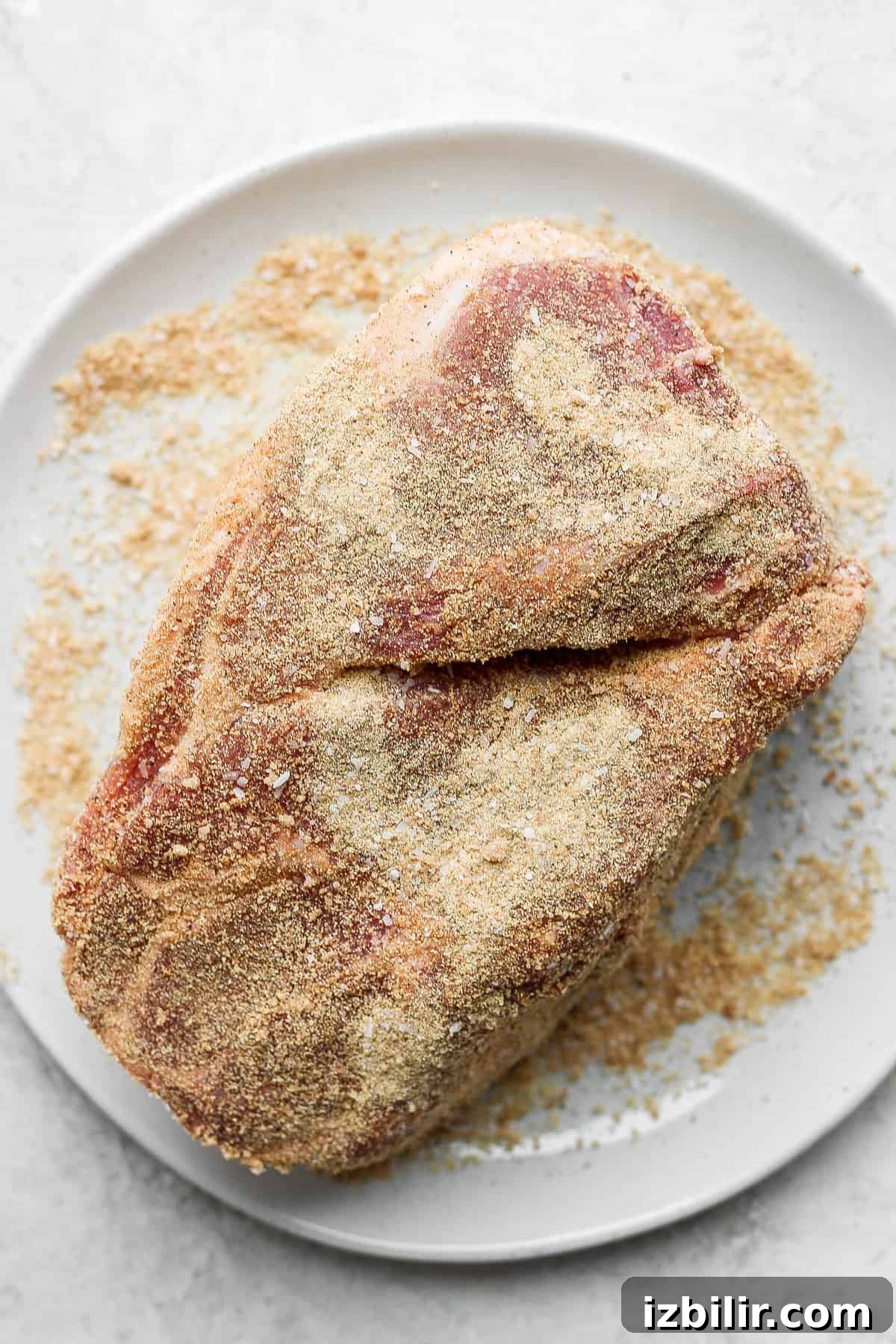
- Rub the meat: Generously coat the entire pork shoulder with the dry rub, massaging it into any crevices so the roast is evenly seasoned.
- Sear: Heat 3 tablespoons butter in a large cast-iron skillet or heavy pan over medium-high heat. When the butter is hot and fragrant, sear the pork shoulder 2–3 minutes per side until browned. This quick sear helps build the crust.
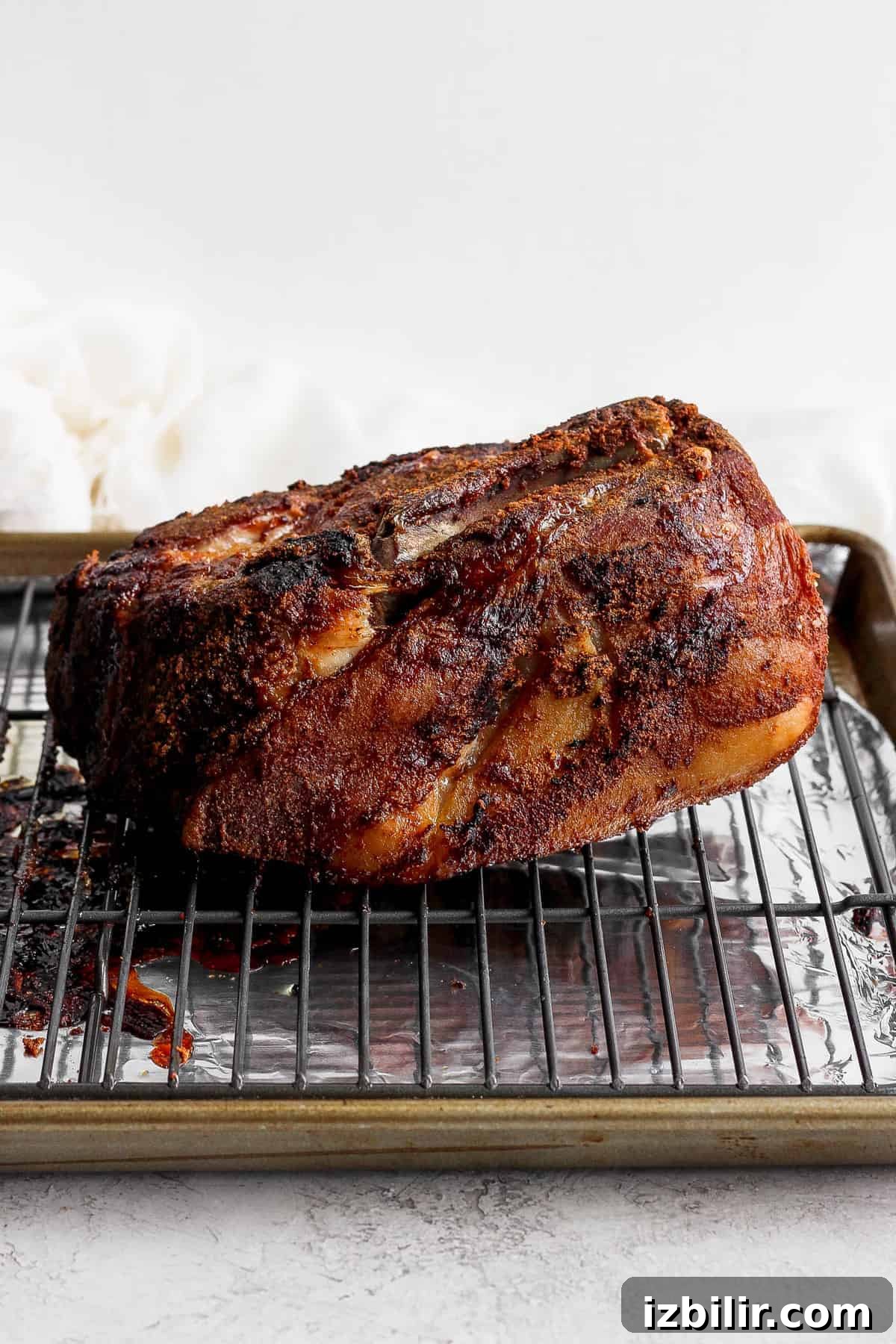
- Slow roast: Line a baking sheet with foil and set a wire rack on top. Place the seared pork on the rack and roast in an oven preheated to 250ºF. Cook for 7–8 hours for a 3–4 lb roast, or until the internal temperature reaches about 200ºF. The low-and-slow approach breaks down connective tissue and yields shreddable meat.
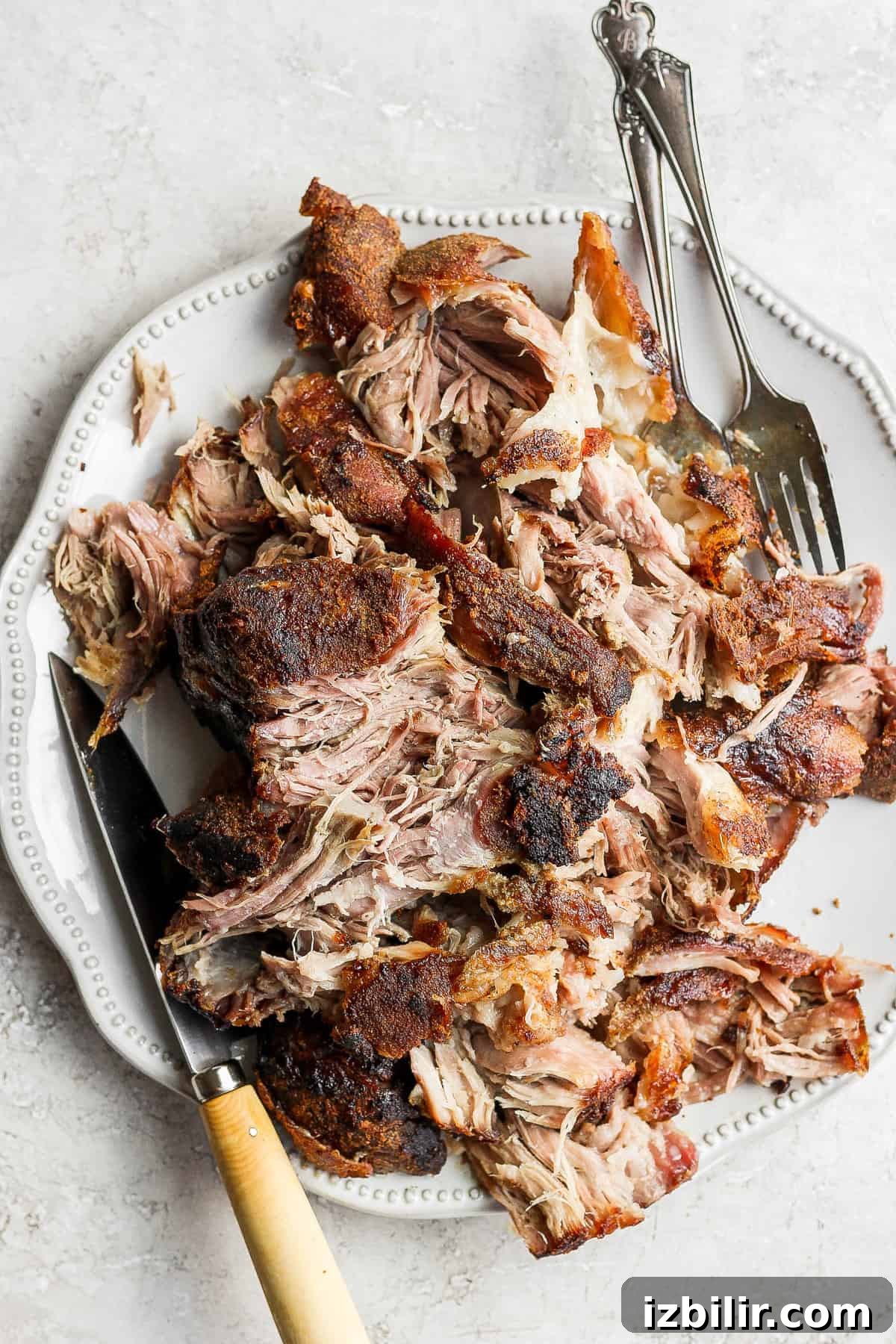
- Rest and shred: Remove the roast and let it rest for 5–10 minutes. Use two forks to shred the pork into large, bite-sized pieces.
Adjusting for Different Roast Sizes
If your roast is larger or smaller, adjust the cooking time accordingly and rely on internal temperature rather than clock time. Slow cook until the pork reaches about 200ºF for easy shredding. A 3.5 lb roast used as an example in testing took about 8 hours.
Can Pork Shoulder Be Pink?
Pork can remain slightly pink in the center while being safe to eat; the USDA recommends a minimum safe temperature of 145ºF for pork. For shreddable, fork-tender pork shoulder, cook until the internal temperature reaches around 200ºF so the collagen has fully broken down.
Can I Dry Rub and Sear the Night Before?
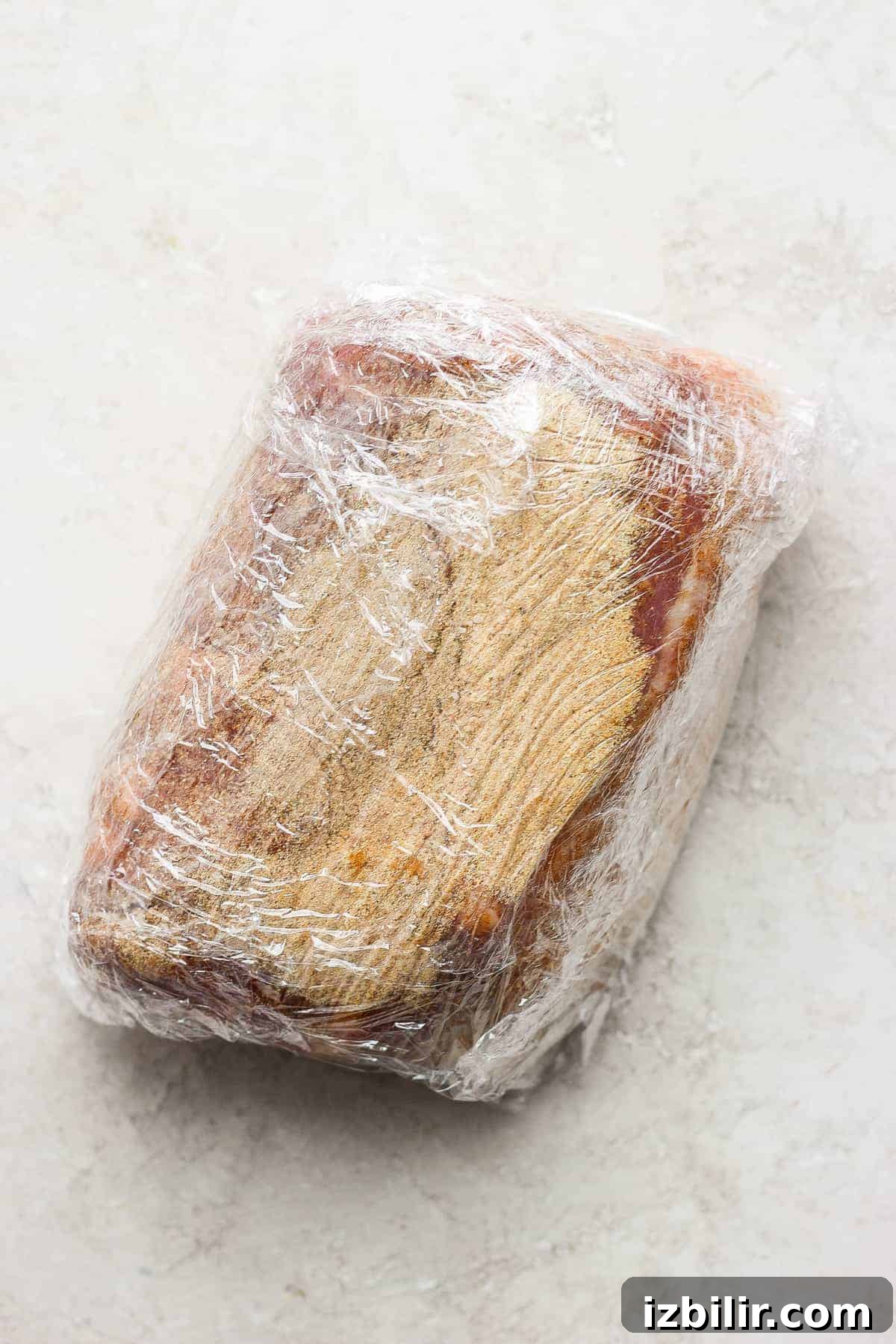
You may apply the dry rub the night before and refrigerate the roast wrapped tightly in plastic to let the flavors develop. Do not sear the meat the night before; searing partially cooks the surface and letting partially cooked meat sit overnight increases the risk of bacterial growth. Sear immediately before roasting.
Pork Shoulder Internal Temperature
We aim for roughly 200ºF internal temperature so the meat becomes tender enough to shred easily. While pork is considered safe to eat at 145ºF (per USDA guidance), the higher temperature is necessary for breaking down connective tissue in slow-roasted shoulder cuts.
Pork Shoulder vs. Pork Butt
Pork butt (also called Boston butt) and pork shoulder come from the same general shoulder area but are distinct cuts. Pork butt tends to be a bit fattier and is often used for pulled pork; both cuts work well for slow-roasting depending on the texture and fat content you prefer.
What Pork Shoulder Is Used For
Pork shoulder is ideal for recipes like oven roasts, slow-cooker roasts, pulled pork, carnitas, and other dishes where long, gentle cooking transforms the meat into tender, flavorful shreds.
Where to Buy Pork Shoulder
You can usually find pork shoulder in the pre-packaged meat section or at the meat counter of most grocery stores; ask your butcher for a boneless shoulder if you prefer not to handle the bone.
Pork Shoulder Nutrition (approximate per 4 oz cooked)
- Calories: 240
- Fat: 18 g
- Protein: 19 g
- Carbs: 0 g
- Fiber: 0 g
- Sugar: 0 g
How Much Pork Shoulder Per Person
Plan for about 4 oz of cooked pork per person. A 3 lb raw roast typically yields about 8–12 portions depending on trim and fat content.
How to Serve Your Pork Shoulder Roast
On the plate: Serve simply with roasted vegetables, baked potatoes, or steamed greens for a classic meal.
Tacos: Use shredded pork as you would carnitas—warm tortillas, avocado, diced onion and cilantro make a great accompaniment.
Sandwiches: Toss shredded pork with your favorite barbecue sauce and pile it onto buns with coleslaw for a satisfying sandwich.
More Serving Suggestions
- Shaved Brussels sprout salad or other crisp salads
- Baked or roasted vegetables such as zucchini, asparagus, or root vegetables
- Baked beans or hearty sides for a comfort-food plate
What to Do with Leftover Pork Shoulder
Leftovers are versatile. Here are a few ideas:
- Nachos: Top tortilla chips with warmed shredded pork, cheese, diced tomatoes, onions, olives, and guacamole.
- Freezer burritos: Fill tortillas with shredded pork, rice, beans, cheese, and freeze for quick meals.
- Pork chili: Substitute leftover pork for ground meat in chili recipes for a smoky, hearty dish.
Storage
Allow the pork to cool completely, then transfer to an airtight container and refrigerate for up to five days. For longer storage, freeze in portions for 2–3 months.
Ingredients (for about 10 servings)
- 3–4 lbs boneless pork shoulder
- 3 tablespoons garlic powder
- 2 tablespoons brown sugar
- 2 teaspoons kosher salt
- 1 teaspoon ground black pepper
- 1 teaspoon smoked paprika
- 3 tablespoons butter (or olive oil)
Instructions
- Preheat your oven to 250ºF. Line a baking sheet with foil and set a wire rack on top.
- Combine the garlic powder, brown sugar, kosher salt, ground pepper, and smoked paprika. Mix thoroughly to make the dry rub.
- Coat the pork shoulder evenly with the dry rub, pressing the rub into the meat so it adheres well.
- Heat a large skillet over medium-high heat and add the butter. When the butter is hot and sizzling, sear the pork on all sides for 2–3 minutes per side until nicely browned.
- Transfer the seared pork to the wire rack on the prepared baking sheet and roast at 250ºF for 7–8 hours (for a 3–4 lb roast) or until the internal temperature reaches about 200ºF.
- Remove the roast and rest for 5–10 minutes. Shred with two forks into large, bite-sized pieces and serve as desired.
Tips & Notes
- A 3.5 lb roast took about 8 hours to reach 200ºF in testing; times will vary by oven and roast size.
- You may season the roast and refrigerate it overnight, but do not sear it ahead of time.
- 200ºF internal temperature is recommended for shreddable pork shoulder because the collagen needs that heat to break down.
- Quick searing jumpstarts crust formation; using a wire rack allows fat to drip away so the exterior crisps evenly.
- Cook low and slow—keep the oven at 250ºF for best results; higher temperatures reduce the time but can compromise tenderness.
Nutrition (approximate per serving): Calories 274 kcal, Carbohydrates 9 g, Protein 24 g, Fat 16 g, Fiber 0 g, Sugar 2 g. Nutrition values are approximate and depend on exact portion sizes and ingredients.
Photography credit: The Wooden Skillet