

This creamy orzo pasta is a cozy, flavorful dish you’ll return to for busy weeknights or relaxed weekend dinners. The sauce gets its silky texture by blending cottage cheese with garlicky sautéed cherry tomatoes, creating a rich, protein-forward creaminess without heavy cream. Bright zucchini and fresh basil keep the recipe vegetable-forward, while the toasted orzo soaks up every bit of the sauce for a satisfying one-pot meal.

Simple to make and easy to customize, this creamy orzo combines pantry-friendly ingredients—olive oil, garlic, tomato paste, and orzo—with a blended cottage cheese sauce that adds extra protein and a luscious mouthfeel. The total time is about 40 minutes, making it a reliable option when you want something comforting but not complicated.
What’s in Creamy Orzo Pasta
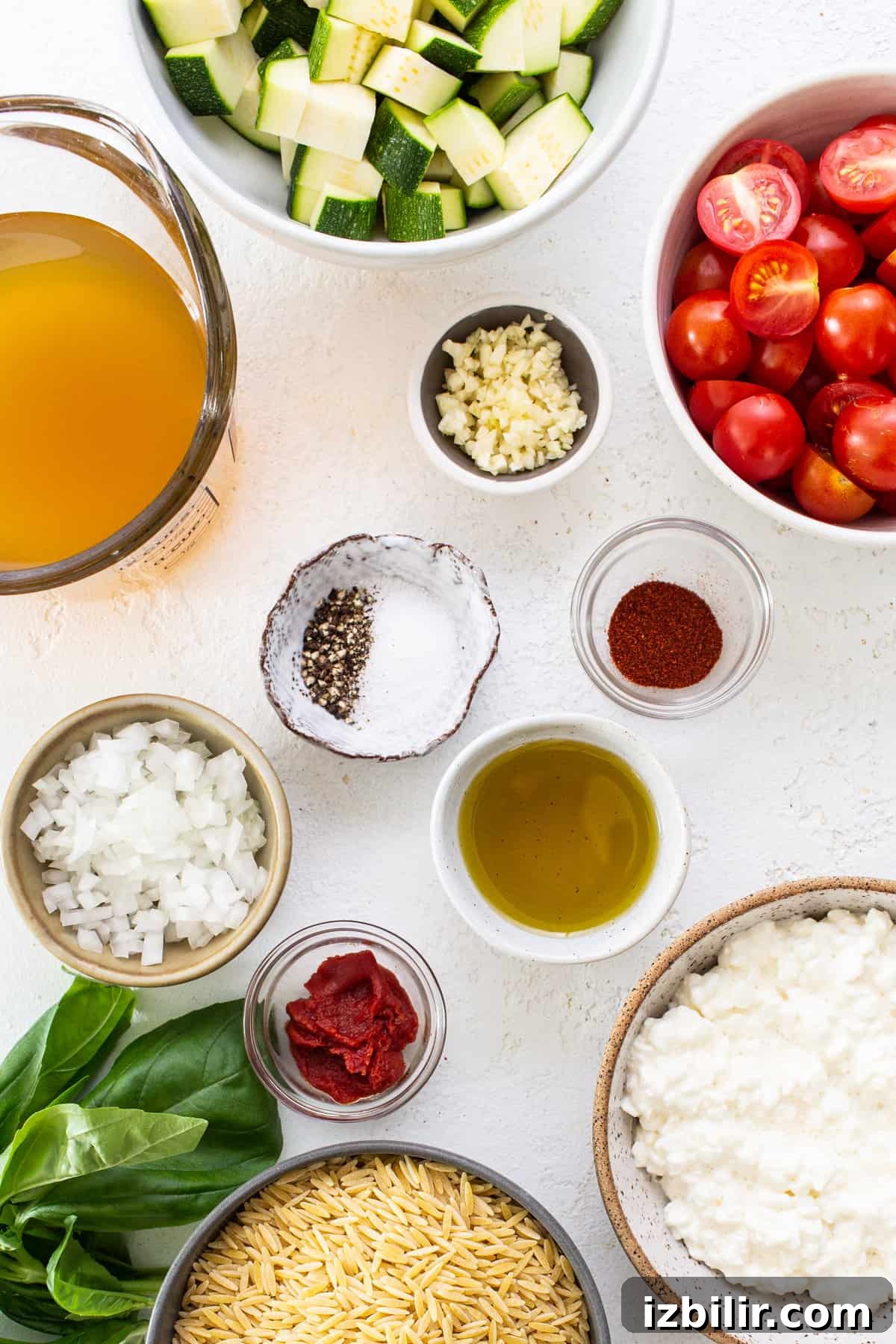
- Cherry tomatoes: Sweet and juicy, they’re sautéed to release their flavor and then blended into the sauce.
- Cottage cheese: When pureed with the tomato mixture and garlic, it makes a creamy, lower-fat alternative to heavy cream.
- Tomato paste: Adds concentrated tomato depth and helps thicken the sauce.
- Orzo pasta: Small, rice-shaped pasta that captures sauce and provides a pleasant, tender bite.
- Zucchini: Adds freshness and a slight crunch to balance the creamy sauce.
- Fresh basil: Finishes the dish with a bright, herbal note that complements the tomatoes.
Variations and Substitutions
This tomato orzo is a versatile base—adjust it to match what you have on hand or your dietary preferences.
- Change the cheese: If you prefer, substitute ricotta or cream cheese for cottage cheese. Textures and richness will vary slightly, but each produces a creamy result.
- Add protein: For a heartier meal, stir in cooked chicken, shrimp, or drained white beans toward the end of cooking.
- Make it vegetarian: Use vegetable broth instead of chicken broth. The tomato and cottage cheese blend still delivers satisfying flavor and protein.
- Swap or add veggies: Bell peppers, spinach, mushrooms, or roasted eggplant all work well. Stir in leafy greens at the end so they wilt but stay vibrant.
- Try different herbs: Basil is classic here, but parsley, thyme, or rosemary can give the dish a different aromatic profile.
More Pasta Ideas
- One Pot Lasagna-style Pasta
- Instant Pot Hamburger-style Pasta
- Mushroom Stroganoff
- One Pot Spaghetti Casserole
Tips for Success
- If you’re short on time, use pre-cooked orzo and shorten the stovetop cooking step—just heat through and combine with the sauce.
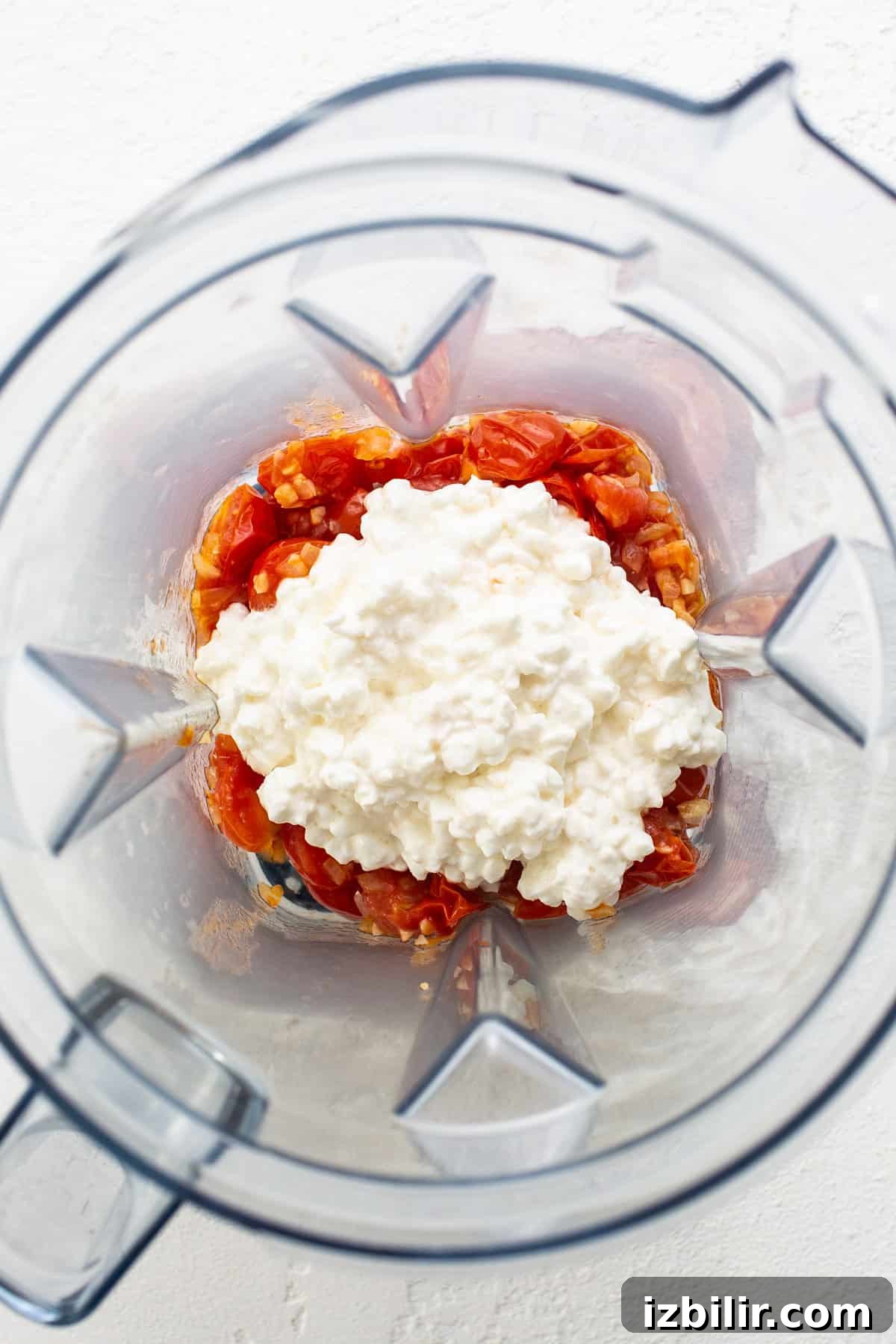
- Blend the cottage cheese and tomato mixture until it is very smooth and slightly frothy. Blending thoroughly prevents curdling and delivers the creamiest texture.
- Toast the orzo briefly in the pan before adding liquid; this adds a subtle nutty flavor and helps the pasta hold its shape.
- Allow the finished pasta to rest off the heat for 5 minutes so the sauce thickens and flavors meld.

Storage and Freezer Directions
Store leftovers in an airtight container in the refrigerator for up to 3 days. Because this is a cream-based sauce made with blended cottage cheese, freezing is not recommended; freezing and thawing can change the texture and separate the sauce.
Serving Suggestions
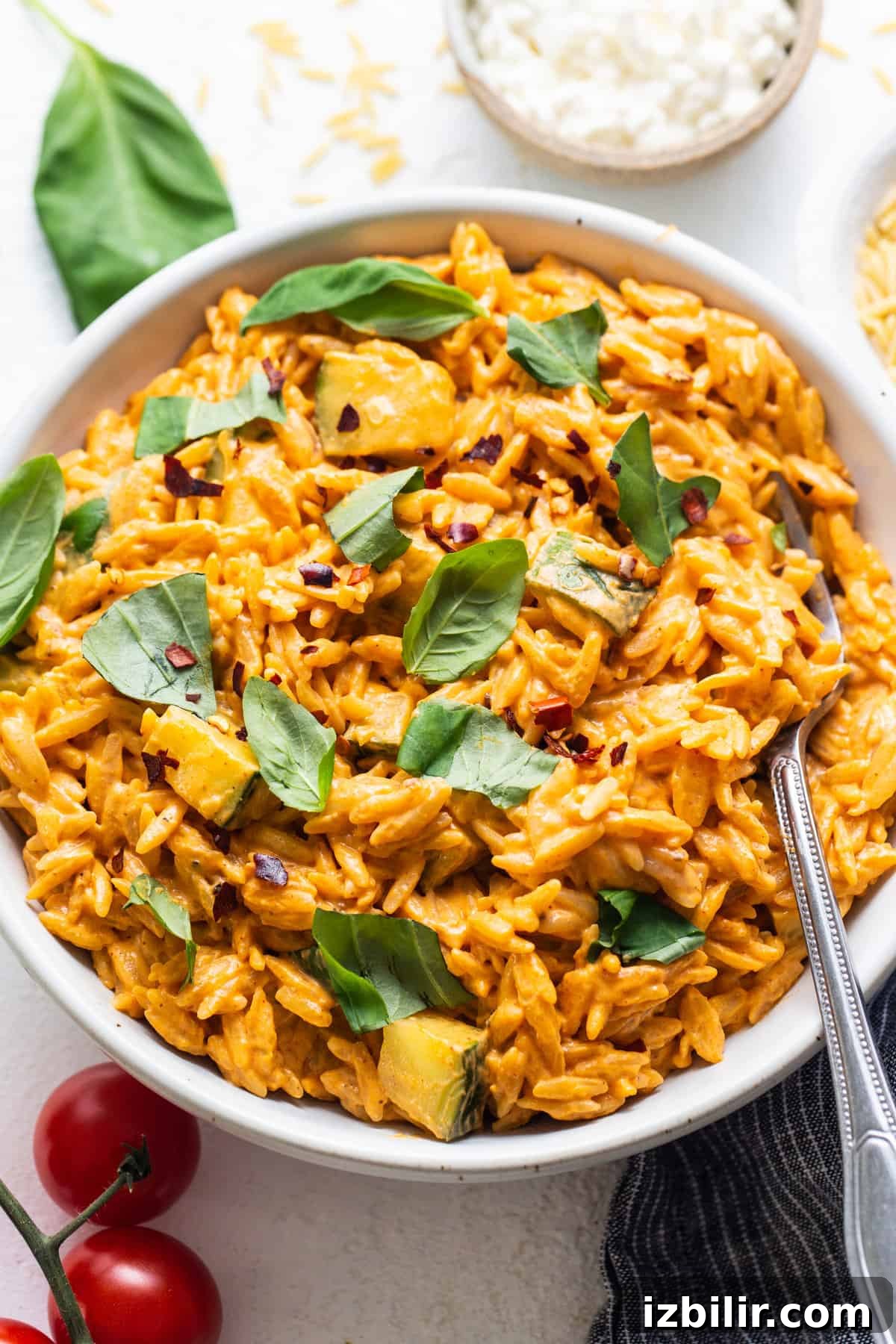
This creamy tomato orzo pairs well with simply seasoned roasted or pan-seared meats, such as a seared beef roast, a cast-iron steak, or a herb-roasted whole chicken. To balance the richness, serve with a crisp salad—an apple and burrata salad or a peppery arugula salad both make excellent companions.
Creamy Tomato Orzo Pasta Recipe
Prep time: 15 minutes • Cook time: 25 minutes • Total: 40 minutes • Serves: 4
Ingredients
- 3 tablespoons olive oil, divided
- 1/4 white onion, minced
- 5 cloves garlic, minced
- 1 pint cherry tomatoes, halved
- 1 cup 2% or whole-milk cottage cheese
- 1/2 teaspoon paprika
- 2 teaspoons kosher salt, divided
- 1/2 teaspoon ground black pepper
- 1 tablespoon tomato paste
- 1 1/4 cups orzo pasta
- 1 medium zucchini, cubed (about 2 cups)
- 1 1/2 cups chicken broth (or vegetable broth for vegetarian)
- 1/4 cup thinly sliced fresh basil
- Optional: red pepper flakes for serving
Instructions
- Heat 2 tablespoons of olive oil in a large skillet over medium heat. When fragrant, add the minced onion and cook 2–3 minutes until translucent.
- Add the paprika, 1½ teaspoons of the salt, and black pepper. Stir to combine.
- Add the garlic and halved cherry tomatoes. Cook 2–3 minutes until the tomatoes begin to soften and release their juices.
- Transfer the tomato mixture to a blender. Add the cottage cheese and blend on high for 2–3 minutes until the sauce is very smooth and slightly frothy. Set the blended sauce aside.
- Return the skillet to medium heat and add the remaining tablespoon of olive oil. When the oil is hot, stir in the tomato paste and cook for about 1 minute to deepen its flavor.
- Add the orzo to the pan and toast it for about 2 minutes, stirring so it browns lightly and picks up the tomato paste.
- Add the cubed zucchini, the remaining 1/2 teaspoon salt, and the chicken (or vegetable) broth. Stir and bring to a boil. Cover, reduce the heat to a simmer, and cook 10–12 minutes until the orzo is tender and most liquid is absorbed.
- Remove from heat. Pour the blended cottage cheese-tomato sauce into the skillet and stir until everything is evenly coated. Let the dish rest for 5 minutes off the heat so the sauce sets slightly.
- Serve topped with thinly sliced fresh basil and a pinch of crushed red pepper flakes if desired.
Tips & Notes
- To make this dish vegetarian, swap chicken broth for vegetable broth.
- If you substitute ricotta or cream cheese for cottage cheese, expect a slightly different flavor and richness.
- Blend the tomato and cottage cheese mixture until completely smooth and lightly aerated to avoid curdling when combined with the warm pasta.
- Leftovers keep well in the fridge for up to 3 days; avoid freezing for best texture.
Nutrition (per serving, approximate)
Calories: 366 kcal • Carbohydrates: 46 g • Protein: 15 g • Fat: 14 g • Fiber: 3 g • Sugar: 8 g
Nutrition information is an approximation and should be used for general guidance only.
Photography credit: photos in this post were taken by Ashley McGlaughlin from The Edible Perspective.